wayground logo

Free Printable Worksheets

Font size

S
M
L
XL
Worksheets

Heredity Unit Review

Total questions: 94

Worksheet time: 5hrs 42mins

Name
Class
Date
1.

The genes in DNA have the information to make ___.

a)

carbs

b)

proteins

c)

vitamin C

d)

All of the choices given.

2.

What role do proteins play in the human body?

a)

create muscles

b)

carry oxygen to cells

c)

control chemical reactions

d)

All of the choices given.

3.

Since DNA cannot leave the cell nucleus how do the instructions for making the proteins get to the cytoplasm?

a)

tRNA carries it there

b)

rRNA carries it there

c)

mRNA carries it there

d)

All of the choices given

4.
DNA travels outside of the nucleus.
a)
true
b)
false
5.
Protiens are 
a)
chains of amino acids
b)
information molecules
c)
tRNA codon chains
6.
What are the four bases found in DNA?
a)
Adenine, Thymine, Guanine and Cytosine
b)
Uracil, Thymine, Adenine and Guanine
c)
Guanine, Phosphate, Adenine, Thymine
d)
Adenine, Uracil, Guanine and Cytosine
7.
Why is DNA important?
a)
it is very small and very complicated
b)
it's in everything
c)
it serves as the blueprint for traits of all living things
d)
because we eat it every day for energy
8.

DNA is located where?

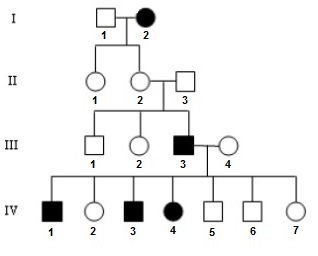
a)

on the ribosomes

b)

floating in the cytoplasm

c)

outside the cell

d)

Inside the nucleus, on chromosomes

9.

Define a gene.

a)

a section of DNA that codes for a trait

b)

what a ribosome makes

c)

a fashion statement that you can buy at the mall

d)

the nuclear membrane pore

10.

What do ribosomes do for the cell?

a)

Make proteins for the cell

b)

Package and deliver items in the cell

c)

Produce energy for the cell

d)

Controls what exits/enters the cell

11.
what does mRNA do?
a)
carry info from genes to ribosomes
b)
carry amino acids to ribosomes
c)
help with RNA splicing
d)
make up ribosomes
12.
What process does a multi-cellular organism use to replace its damaged body cells?
a)
mitosis
b)
meiosis
c)
replication
d)
transcription
13.

The correct order of mitosis is...

a)

prophase, metaphase, anaphase, telophase

b)

metaphase, telophase, anaphase, prophase

c)

prophase, metaphase, telophase, anaphase

d)

anaphase, prophase, telophase, metaphase

14.
The two cells that result after division are called the
a)
Sister cells
b)
Brother cells
c)
Son cells
d)
Daughter cells
15.
Chromosomes contain what?
a)
DNA
b)
RNA
c)
FBI
d)
GNC
16.
Humans have 46 chromosomes, which means we have _______ of chromosomes.
a)
46 pairs 
b)
23 pairs
c)
20 pairs
d)
56 pairs
17.
How many cells are created at the end of Mitosis?
a)
1
b)
2
c)
3
d)
4
18.
What is the correct sequence?
a)
RNA --> DNA --> Protein
b)
Protein --> RNA --> DNA
c)
DNA --> RNA --> Protein
d)
DNA --> Protein --> RNA
19.

Where are proteins made?

a)

muscles

b)

nucleus

c)

outside the nucleus in the cytoplasm

20.
The type of reproduction in which the genetic material from two different cells combine
a)
budding
b)
chromosomes
c)
diploid
d)
sexual reproduction
21.
How many daughter cells are produced from meiosis ?
a)
10
b)
6
c)
4
d)
2
22.

The different forms of a gene are called

a)

factors

b)

alleles

c)

masks

d)

traits

23.

An organism’s genotype is its

a)

physical appearance

b)

stem height

c)

genetic makeup

d)

feather color

24.

Genes provide the blueprint for making

a)

leaves

b)

cells

c)

hair

d)

proteins

25.

An organism’s physical appearance is its

a)

phenotype

b)

genotype

c)

allele

d)

chromosome

26.

How many alleles do we inherit for each gene?

a)

1

b)

2

c)

3

d)

4

27.

Why did Gregor Mendel use pea plants for his experiments on heredity?

a)

Peas taste good and are easy to cook.

b)

Pea plants look very lovely in the garden and produce beautiful flowers.

c)

Pea plants have easily observable traits, produce several generations in a year, and self pollinate.

d)

Peas are a good source of vitamin A, vitamin C, folate, thiamine, iron and phosphorus. They are rich in protein, carbohydrates, and fiber and low in fat.

28.

What is heredity?

a)

The passing of traits from parent to offspring.

b)

A family tree that shows the relationships between an organism and its ancestors.

c)

A diagram that is used to predict the genotypes of offspring produced by two parents.

d)

A notable feature or characteristic of an organism.

29.

When Gregor Mendel cross fertilized pea plants that had purple flowers with pea plants that had white flowers, the white flower trait disappeared in the offspring. This is because the purple flower trait is ___________________ over the white flower trait.

a)

dominant

b)

recessive

c)

masked

d)

hidden

30.

What did Mendel use to represent the "factors" pass on by parent to offspring?

a)

Capital and lower case letters

b)

Letters and numbers

c)

Large and small numbers

d)

A color scale

31.

In the Parent (or P) generation, Gregor Mendel cross fertilized pea plants that had purple flowers with pea plants that produced white flowers. In the F1 generation, all the plants produced purple flowers, but Mendel predicted that the white flower factor was still present hidden on the flowers. Mendel used the letters Pp to represent the factors that the F1 generation plants had for flower color. Which term is used to describe the genotype Pp?

a)

Homozygous dominant

b)

Heterozygous

c)

Homozygous recessive

d)

Heterogeneous mixture

32.

What does Homozygous dominant mean?

a)

That both alleles for a gene are recessive, so the recessive form of the trait will be expressed.

b)

That one allele is dominant and one is recessive, which mean the dominant trait will be expressed in the offspring.

c)

That both alleles for a gene are dominant, so the dominant form of the trait will be expressed.

d)

That no alleles are present.

33.

The hybrid seeds from the F1 generation pea plants were collected, planted, and then allowed to self-fertilize. Mendel called this generation the F2 generation. What ratio of traits did Mendel observe in the F2 generation?

a)

1:1

b)

2:1

c)

3:1

d)

4:1

34.

Which choice contains a group of traits from our class traits survey that also had very close to a 3:1 ratio?

a)

Height, dimples, and detached earlobes

b)

Dimples, allergies, and tongue rolling

c)

Cleft chin, color blindness, and thumb crossing

d)

Detached earlobes, tongue rolling, and naturally curly hair

35.

Mendel initially focused his experiments on manipulating one trait at a time. Eventually, Mendel expanded his experiments to include two traits at the same time, such as seed color and shape, in order to find out if having one trait affected having a second trait. Based on his results, what is the answer to this question? Do people with blonde hair have to have blue eyes?

a)

Yes

b)

No

36.

Which word means to be masked or hidden?

a)

dominant

b)

recessive

37.
Aa, DD, bB, yy are all examples of
a)
genotypes
b)
phenotypes
38.
AA and Aa always show up as
a)
dominant
b)
recessive
39.
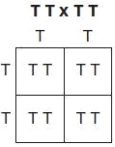
What ratio of the offspring from the cross shown will be homozygous recessive for the  trait of tallness? 
a)
0 in 4
b)
1 in 4
c)
2 in 4
d)
4 in 4
40.
Which of the following genotypes is homozygous dominant?
a)
A
b)
Aa
c)
AA
d)
aa
41.
Which of the following genotypes is heterozygous?
a)
Bb
b)
BB
c)
bb
d)
B
42.
Which of the characteristics is a lion least likely to pass on to its offspring?
a)
fur color
b)
length of tail
c)
scars on leg
d)
body size
43.
In a heterozygous genotype, the ___________ allele takes over in the phenotype.
a)
recessive
b)
dominant
c)
lower case letter
d)
both 
44.
What you see, or the physical appearance.
a)
Genotype
b)
Phenotype
c)
Homozygous
d)
Heterozygous
45.
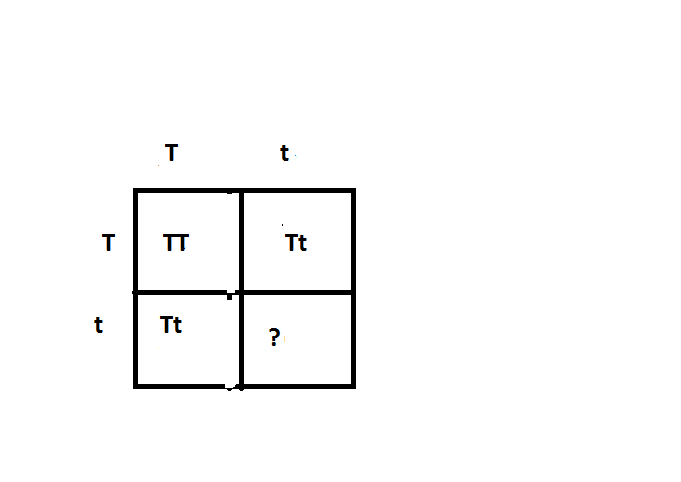
T - tall and t = short
In the punnett square below, what belongs in the missing square
a)
tt
b)
Tt
c)
Bb
d)
TT
46.
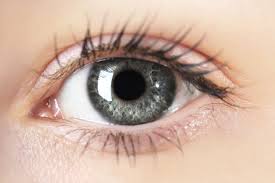
B = brown eyes
b = blue eyes
What is true about these two brothers that have brown eyes?
One has genotype BB the other Bb.
a)
they have same phenotype and genotype
b)
they have different genotypes and phenotypes
c)
they have same phenotype but different genotypes
d)
they have same genotype but different phenotypes
47.
aa always shows up as
a)
dominant
b)
recessive
48.
Aa is
a)
homozygous
b)
heterozygous
49.
Which of the following is a phenotype?
a)
Aa
b)
red hair
c)
heterozygous
d)
DNA
50.
Which of the following is homozygous dominant?
a)
Yy
b)
Y
c)
yy
d)
YY
51.
Which of the following is homozygous recessive?
a)
Tt
b)
tt
c)
TT
d)
T
52.
Dominant alleles are represented by a:
a)
Male gene
b)
lowercase letter
c)
recessive trait
d)
capital letter
53.
In pea plants, the tall allele is dominant to the short allele. What key would demonstrate this?
a)
Tall = T
Short = S
b)
Tall = T
Short = t
c)
Tall = t
Short = T
d)
Tall = TT
Short = tt
54.
A heterozygous long-tusked elephant is crossed with a homozygous recessive short-tusked elephant. What is the probability of the offspring having short tusks?
a)
0%
b)
25%
c)
50%
d)
75%
55.
A heterozygous long-tusked elephant is crossed with a homozygous recessive short-tusked elephant. What is the probability of the offspring having short tusks?
a)
0%
b)
25%
c)
50%
d)
75%
56.
What is the probability of a purple-horned unicorn if a heterozygous pink-horned unicorn is crossed with a heterozygous pink-horned unicorn?
a)
0%
b)
25%
c)
50%
d)
75%
57.
Leonardo bet his friend Olivet that two heterozygous green-eyed sea monsters could not have a recessive blue-eyed baby sea monster. Olivet said they can have a blue-eyed sea monster.
Who wins the bet?
a)
Leonardo
b)
Olivet
c)
Both
d)
Neither
58.
Who was the first naturalist to study evolution?
a)
Charles Darwin
b)
Gregor Mendal
c)
Carolus Linneaus
d)
Thomas Edison
59.
This is a process by which organisms inherited advantageous traits that tend to reproduce more successfully than the other organisms do. 
a)
Artificial selection
b)
Natural selection
c)
Populations
d)
Environment
60.
This is a process in which organisms gradually change over time.
a)
Environment
b)
Competition
c)
Evolution
d)
Fossils
61.
This is a group of organisms of the same species that live in a specific geographical area.
a)
Environment
b)
Evolution
c)
Biological diversity
d)
Populations
62.
These are natural differences within a species.
a)
Evolution
b)
Genetic variation
c)
Biological diversity
d)
Populations
63.
This is an inherited trait that helps an organism survive and reproduce in its environment.
a)
Evolution
b)
Population
c)
Environment
d)
Adaptation
64.

A chameleon lies next to a large blue flower, so predators can NOT find it. This is an example of ....

a)

camouflage

b)

mimicry

c)

migration

d)

reproduction

65.
Which organisms are most likely to survive?
a)
the best adapted
b)
the fastest
c)
the strongest
d)
the most domesticated (tamed)
66.
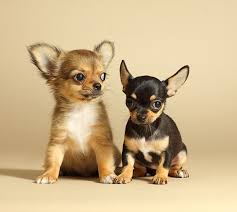
Dogs such as Chihuahuas are examples of....
a)
Artificial Selection 
b)
Natural Selection 
c)
Mutations 
67.

Which term refers to a farmer choosing the best corn from this year to plant next year?

a)

natural selection

b)

selective breeding

c)

genetic engineering

d)

genetic transformation

68.

A group of organisms that share similar characteristics and can reproduce among themselves to produce fertile offspring.

a)

Mutation

b)

Species

c)

Adaptation

d)

Variation

69.

How do adaptations help animals?

a)

To escape animals

b)

to hunt for food

c)

to survive in their habitats

d)

All of these are correct

70.

Organisms of the same species that are at the same level of descent from a common ancestor; a parent is a member of one generation, and its offspring are members of the next generation:

a)

generation

b)

variation

c)

selective breeding

d)

trait

71.

A characteristic of an organism; can be genetic or acquired:

a)

physiology

b)

dichotomous key

c)

trait

d)

taxonomy

72.

Success of an organism to survive is determined by which characteristic.

a)

Dominates environment

b)

Useful to humans

c)

Surviving harsh conditions

d)

Passing genes onto offspring

73.

What organism did Mendel study?

a)

pea plants

b)

onions

c)

mice

d)

cats

74.
T - tall and t = short
In the punnett square below, what belongs in the missing square
a)
tt
b)
Tt
c)
Bb
d)
TT
75.
A ________________________ is used to predict the possible genotype from certain parents
a)
Mendel Grid
b)
Genetic Tic Tac Toe
c)
Punnett Square
d)
Pedigree Plot
76.
Heredity is the passing of traits from _____________________ to _____________________
a)
predators to prey
b)
water to rain
c)
parents to offspring
d)
fungi to protists
77.
Which is a true statements about this picture?
a)
Brown is recessive
b)
Brown is dominant
c)
Blue is dominant
d)
Blue is codominant
78.
What is a gene?
a)
An entire chromosome that  codes for a trait
b)
a piece of clothing
c)
a piece of a DNA on chromosome that codes for a trait
d)
Chemical messengers in your brain that code for a trait
79.

Which of the following is a genetic trait?

a)

time

b)

temperature

c)

eye color

d)

diet

80.

In a pedigree, what does a filled in square represent?

a)
Not affected Female
b)
Not affected Male
c)
Affected Male
d)
Affected Female
81.
How many generations are shown in this pedigree?
a)
1
b)
2
c)
3
d)
4
82.
How many kids did the mother and father from the first generation have?
a)
2
b)
4
c)
5
d)
6
83.
This pedigree represents the inheritance of hemophilia in this family. How many of the females have the hemophilia trait?
a)
8
b)
5
c)
2
d)
3
84.
What do half colored symbols represent?
a)
The individual is a carrier (heterozygous).
b)
The individual expresses the trait.
c)
The individual has both recessive alleles.
d)
The individual has both dominant alleles.
85.
What does an open circle represent?
a)
Not Affected Male
b)
Not Affected Female
c)
Affected Male
d)
Affected Female
86.
Is this trait (the shaded individuals) dominant or recessive?
a)
dominant
b)
recessive
87.
In the second generation-how many people are carriers of the trait?
a)
2
b)
3
c)
5
d)
6
88.
How many people in this whole pedigree have the trait/disease?
a)
2
b)
3
c)
4
d)
6
89.
How many females are in this pedigree?
a)
3
b)
4
c)
6
d)
7
90.
What is this?
a)
Pedigree
b)
Karyotype
c)
Venn diagram
d)
Punnett Square
91.
Which individual in the first generation is a carrier?
a)
The male
b)
The female
c)
individual 1
d)
None of the above
92.
How many individuals are there in the 3rd generation?
a)
2
b)
3
c)
4
d)
6
93.
Which gender can be carriers of colorblindness and not have it?
a)
Just males
b)
Just females
c)
Both genders
94.
How many people in the pedigree are carriers for the disorder? 
a)
b)
8
c)
2
d)
9