wayground logo

Free Printable Worksheets

Font size

S
M
L
XL
Worksheets

Practice Test - Cell Energy

Total questions: 63

Worksheet time: 1hrs 4mins

Name
Class
Date
1.

What are the products of photosynthesis?

a)

Oxygen

b)

Sugar

c)

Carbon Dioxide

d)

Water

2.

Pigment in green plants that captures the energy in sunlight is called


(a)  
Choose from the below words
Chlorophyll
Pigment
Stomata
Green Thing
3.
Which of the following is the correct equation for PHOTOSYNTHESIS?
a)

CO+ light + H2O --> O+ Sugar

b)

CO+ sugar + H2O --> O+ light

c)

O+ light + H2O --> CO+ Sugar

d)

CO+ O2 + H2O --> Light+ Sugar

4.
What is photosynthesis?
a)

The process in which humans convert chemical energy into mechanical energy by consuming food.

b)

When a photographer takes a photo.

c)

The process of producing ATP by adding a phosphate to an ADP molecule.

d)

The process in which plants convert light energy into chemical energy by making their own food.

5.

Photosynthesis happens in the ​ (a)   of ​ (b)   cells.

Choose from the below words
chloroplast
plant
mitochondria
cytoplasm
animal
fungi
6.
The main source of energy for all life comes from ____.
a)
the Earth
b)
the moon
c)
the sun
d)
the food we eat/make
7.
What are the reactants of photosynthesis?
a)

carbon dioxide

b)

water

c)

oxygen

d)

glucose

8.

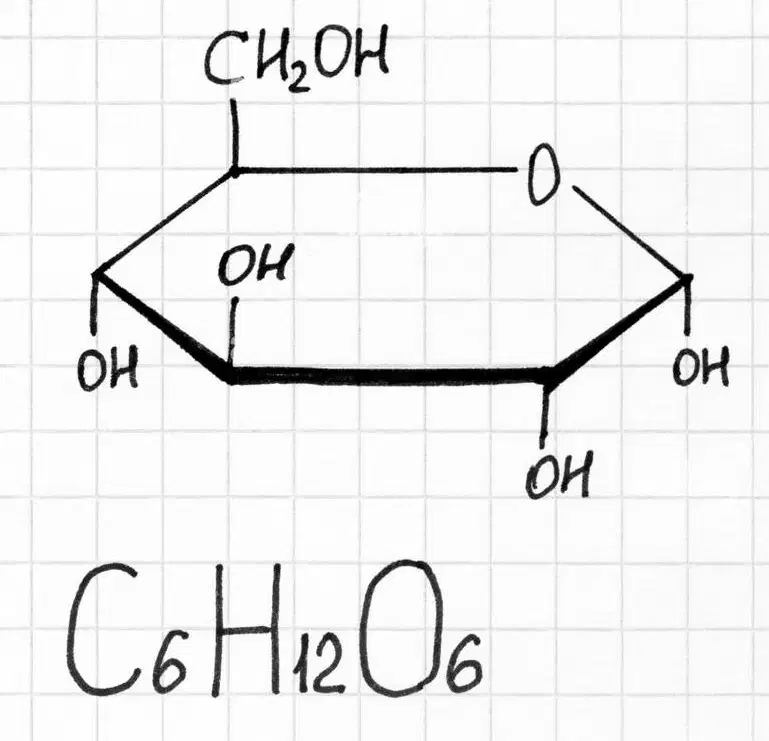
This is the chemical formula for a molecule of...

a)

Oxygen

b)

Carbon dioxide

c)

Glucose

d)

Water

9.

The site of the Light-Independent Reaction

a)

Grana/Granum

b)

Thylakoid

c)

Stroma

d)

Jelly Filling

10.

​ (a)   - Stack(s) of ​ chlorophyll-filled sacks called ​ (b)   ; the site of the ​ (c)   reaction of photosynthesis

Choose from the below words
Grana/Granum
thylakoids
Light-Dependent
Flapjack Stack
Cytoplasm
Stroma
Light-Independent
11.

(a)   = Cell Energy

12.

Lable the picture.

13.

Match the following

a)

phosphorylation

1.

the process of adding a phosphate to ADP to make ATP

b)

ATP

2.

Adenosine Triphosphate

c)

ADP

3.

Adenosine Diphosphate

d)

Homeostasis

4.

the process of maintaining internal Balance

14.

What are the reactants (taken into) of cellular respiration? (Mark all of them!)

a)

oxygen

b)

glucose

c)

carbon dioxide

d)

water

e)

energy

15.

Which of the following structure is where cellular respiration (Kreb's Cycle and Electron Transport Chain) occurs in the cell?

a)

nucleus

b)

cytoplasm

c)

mitochondria

d)

vacuoles

16.

What is the correct equation for cellular respiration?

a)

6O2 + C6H12O6 -> 6CO2 + 6H2O + Energy

b)

6O2 + C6H12O6 + Energy -> 6CO2 + 6H2O

c)

6CO2 + 6H2O -> 6O2 + C6H12O6 + Energy

d)

6CO2 + 6H2O + Energy -> 6O2 + C6H12O6

17.

Cellular Respiration's goal is to

a)

make water

b)

make ATP

c)

make glucose

d)

make oxygen

18.

What type of respiration requires oxygen?

a)

Aerobic

b)

Anaerobic

19.

How many ATP are produced in aerobic respiration?

a)

2

b)

33

c)

4

d)

36

20.

What are the products (what is released) of cellular respiration? (Mark all of them!)

a)

oxygen

b)

glucose

c)

carbon dioxide

d)

water

e)

ATP (energy)

21.

Which stage of the cellular respiration process produces the most ATP?

a)

Glycolysis

b)

Acetyl CoA

c)

Kreb's Cycle

d)

Electron Transport Chain

22.
This is referred to as the energy currency of the cell
a)
ADP
b)
ATP
c)
Mitochondria
d)
Nucleus
23.
What does it mean for something to be anaerobic?
a)
It requires CO2
b)
It does not require CO2
c)
It requires oxygen
d)
It does not require oxygen
24.

Match the following

a)

Glycolysis

1.

Glucose is broken down into 2 pyruvates, No oxygen is required,

2 ATP are produced

b)

Krebs Cycle

2.

Pyruvate is broken down to produce Carbon Dioxide. Oxygen is required. 2 ATP are produced

c)

Electron Transport Chain

3.

Hydrogen is combined with Oxygen to produce water. 34 ATP are produced

25.

Reorder the following stages of cellular respiration in the correct order

a)

Krebs Cycle

b)

Electron Transport Chain

c)

Glycolysis

1)
2)
3)
26.

Match the following stages of cellular respiration to their locations

a)

Electron Transport Chain

1.

Cristea of Mitochondria

b)

Glycolysis

2.

Cytoplasm

c)

Krebs Cycle

3.

Matrix of Mitochondria

27.

The most energy is stored in the bonds between which phosphate groups

a)

between ribose and the 1st phosphate group

b)

between the first and second phosphate group

c)

between the second and third phosphate group

28.
What are the parts of the ATP molecule?
a)
adenine, thylakoids, stroma
b)
stroma, grana, chlorophyll
c)
adenine, ribose, phosphate groups
d)
NADH, NAHPH, FADH
29.
Where is the energy stored in ATP molecules
a)
In the Ribose Sugar
b)
In the Adenine group
c)
In the Phosphate bonds
d)
In the Bank
30.
What type of macromolecule is ATP/ADP?
a)
Carbohydrate
b)
Nucleic Acid
c)
Lipid
d)
Protein
31.
Which cellular organelle is responsible for manufacturing ATP?
a)
Ribosome
b)
Nucleus
c)
Mitochondria
d)
Chloroplast
32.

Where in a plant cell does photosynthesis take place

a)

Palisade cells

b)

Chlorophyll

c)

Chloroplasts

d)

Vacuole

33.

What is the purpose of photosynthesis?

a)

To release energy

b)

To create glucose

c)

To grow

d)

To get oxygen for respiration

34.

Which of these is not a limiting factor for photosynthesis?

a)

Light

b)

CO2

c)

Temperature

d)

Water

e)

Oxygen

35.

Which of these is the correct equation for photosynthesis?

a)

6O2 + C6H12O6 --> 6CO2 + 6H2O

b)

6O2 + 6CO2 --> C6H12O6 + 6H2O

c)

6CO2 + 12H2O --> C6H12O6 + 6H2O + 6O2

d)

6CO2 + 6H2O --> O2 + C6H12O6

36.

What are the products of photosynthesis?

a)

Oxygen and Energy

b)

Carbon Dioxide and Glucose

c)

Glucose and Oxygen

d)

Oxygen and Water

37.

The main source of energy (directly or indirectly) for all life comes from ____.

a)
the Earth
b)
the moon
c)
the sun
d)
the food we eat/make
38.
The purpose of cellular respiration is to produce ?
a)

ATP

b)
oxygen
c)
sugar
d)
protein
39.

What molecule provides energy for cells?

a)
DNA
b)
ATP
c)
RNA
d)
AAA
40.

What organelle produces energy?

a)
nucleus
b)
mitochondria
c)
ribosomes
d)

cytoplasm

41.
The splitting of the glucose molecule is called?
a)

photolysis

b)
denaturalization
c)
glycolysis
d)
dissolving
42.
The two type of fermentation are alcohol and _____________ acid fermentation. 
a)
lactic
b)
sulfuric
c)
hydrochloric
d)
acetic 
43.
To get the most ATP molecules for energy in cellular respiration, you have to have lots of ?
a)
hydrogen
b)
oxygen
c)
carbon dioxide
d)
water
44.
The waste gas given off by cellular respiration is?
a)
oxygen
b)
carbon dioxide
c)
nitrogen
d)
methane
45.

The process that converts food (glucose) into energy (ATP) is called

a)
Cellular Respiration
b)
Photosynthesis
c)
Chloroplast
d)
Carbon dioxide
46.
One molecule given off by plants during photosynthesis is
a)
Carbon dioxide
b)
Water
c)
Oxygen
d)
Mitochondria
47.
Organisms that cannot make their own food and must obtain energy from external sources are called
a)
autotrophs
b)
heterotrophs
c)
thylakoids
d)
plants
48.
What is an autotroph?
a)
an organism that can make their own food. 
b)
an organism that cannot make their own food
c)
Herbivore
d)
Omnivore
49.
Energy is released from ATP when
a)
a phosphate group is added
b)
adenine bonds to ribose
c)
ATP is exposed to sunlight
d)
a phosphate group is removed
50.
Which term is the part of photosynthesis which uses ATP from the first stage in order to produce glucose? Hint:  Occurs in the stroma!
a)
light- independent reactions
b)
cellular respiration
c)
light- dependent reactions
d)
 photosynthesis
51.
Which bond of the ATP molecule is broken in order to release energy?
a)
A
b)
B
c)
C
d)
D
52.

Plants gather energy with light-absorbing molecules called

a)

thylakoids.

b)

pigments.

c)

chloroplasts.

d)

glucose.

53.

Which structure in the figure above represents a single thylakoid?

a)

Structure A

b)

Structure B

c)

Structure C

d)

Structure D

54.

What two energy molecules are made by the light reaction? Select both answers.

a)

hydrogen (NADPH)

b)

glucose

c)

ATP

d)

oxygen gas

55.

What is this reaction showing? (select 2 correct)

a)

production of carbon dioxide

b)

production of oxygen gas

c)

production of sugar

d)

production of water

56.

Which of the following is NOT a limiting factor for photosynthesis? (It is not needed for photosynthesis)

a)

light

b)

oxygen

c)

carbon dioxide

d)

temperature

57.

Which wavelengths of light do chlorophyll absorb the best

a)

Green and red

b)

Green and blue

c)

Red and blue

d)

Red green and blue

58.
Why do leaves look green?
a)
it reflects all colors but green
b)
it reflects yellow and blue
c)
it reflects green light
d)
it absorbs green light
59.
This is the second step of cellular respiration.
a)
Calvin Cycle
b)
Kreb's Cycle
c)
ETC
d)
Glycolysis
60.
This is the part of cellular respiration that makes the most ATP.
a)
glycolysis
b)
kreb's cycle
c)
ETC
d)
fermentation
61.
What is the correct equation for cellular respiration?
a)
6O2 + C6H12O6 -> 6CO2 + 6H2O + Energy
b)
6O2 + C6H12O6 + Energy -> 6CO2 + 6H2O
c)
6CO2 + 6H2O -> 6O2 + C6H12O6 + Energy
d)
6CO2 + 6H2O + Energy -> 6O2 + C6H12O6
62.
If oxygen is not present what process will occur in yeast cells?
a)

Anaerobic Respiration

b)
Respiration
c)
Photosynthesis
d)
Lactic acid fermentation
63.
Which process produces the most ATP per molecule of glucose?
a)
lactic acid fermentation
b)
aerobic respiration
c)
alcoholic fermentation
d)
all are about the same