
NEW
Font size
 Worksheets
1-9A REVIEW
Total questions: 75
Worksheet time: 46mins

Maintaining a stable internal
environment is called
homeostasis
equilibrium
balance
evenness
When you step out into the cold, your body shivers in order to keep its temperature at 98.6F. Which characteristic of life does this represent?
All living things use energy
All living things contain cells
All living things maintain homeostasis
All living things grow
Green plants produce their own food through the process of photosynthesis. Which characteristic of life does this represent?
All living things use energy
All living things contain cells
All living things maintain homeostasis
All living things grow
A baby song bird hatches from its egg with both parent songbirds watching. Which characteristic of life does this represent?
All living things reproduce
All living things maintain homeostasis
All living things use energy
All living things grow
A camel has eyelashes that work to keep the dust and sand out of its eyes. Which characteristic of life does this represent?
All living things adapt to their environment
All living things grow
All living things have cells
All living things use energy
Over three years, Tim's height has increased from 5'4" to 5'11". Which characteristic of life does this represent?
All living things contain cells
All living things maintain homeostasis
All living things use energy
All living things grow
What macromolecule is made up of C,H,O,N?
Carbohydrates
Lipids
Proteins
Nucleic acids
What is the function of Carbohydrates?
Long-term energy
Muscle development
Short-term energy
enzyme activity
Which macromolecule has amino acids as monomers?
Carbohydrates
Lipids
Proteins
Nucleic acids
Which one of the macromolecules are instrumental in the cell membrane?
Carbohydrates
Lipids
Proteins
Nucleic acids
This macromolecules is responsible for providing our genetic material. Choose the macromolecule that best fits.
Carbohydrates
Lipids
Proteins
Nucleic acids
Which one of our macromolecules would you consume in order to receive long-term energy?
Carbohydrates
Lipids
Proteins
Nucleic acids
My monomers are monosaccharides. Which macromolecule am I?
Carbohydrates
Lipids
Proteins
Nucleic acids
My monomers are glycerol and fatty acids. Which macromolecule am I?
Carbohydrates
Lipids
Proteins
Nucleic acids
My monomers consist of a phosphate group, a sugar, and a nitrogenous base. Which macromolecule am I?
Carbohydrate
Lipids
Proteins
Nucleic Acids

Which macromolecule is structured in this way?
Carbohydrates
Lipids
Proteins
Nucleic acids

What is the function of the cell membrane?
To control what comes in and out of the cell
To break down food inside the cell
to serve as a barrier
to eat the cells food

Which organelle is found inside the nucleus and produces ribosomes
Nucleolus
Cell Membrane
Lysosome
Golgi Bodies

What is a fun way to remember what lysosomes do?
I clean things up!
Make something sweet
The control center
Tin of information

What is the function of the Vacuoles
Store food, water and waste
Receive proteins
Assembles amino acids
Found inside the nucleus

Which organelle receives proteins and materials from the ER, packages them and distributes them
Vacuoles
Golgi Bodies
Nucleus
Chromatin

what is the function of ribosomes
to assemble amino acids to create proteins
to pack proteins
to clean proteins

The control center of cell is
the nucleus
ribosomes
chromatin

Which type of cells have ribosomes?
Prokaryotic Cells
Eukaryotic Cells
Both

Identify the following structure
Phospholipid
Cell
Cell membrane
Protein
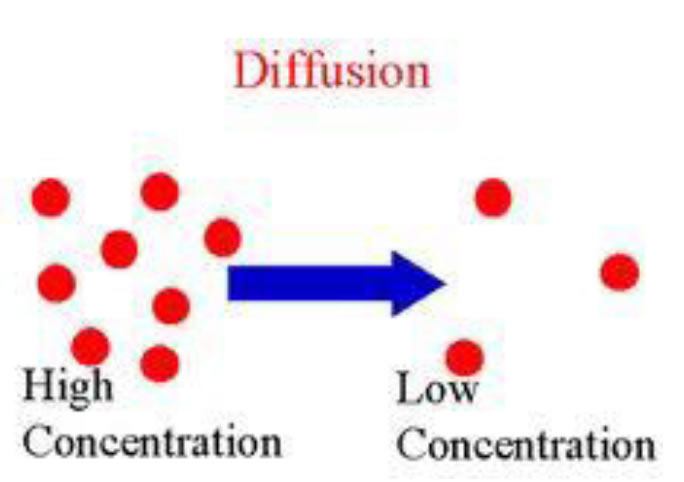
A solution in which the concentration of solutes is the same inside and outside of a cell is a _____________________ solution.
hypertonic
hypotonic
isotonic
homeotonic
If a red blood cell is placed in a solution that has a concentration gradient higher than the red blood cell, this type of solution is called:
Isotonic
Hypotonic
Hypertonic
Homeotonic
If a red blood cell is placed in a hypotonic solution, it will eventually
shrink up
swell and burst
no change will occur
swell and not burst
A cell that is 70% water and 30% solute is placed in a solution that is 75% water and 25% solute. Which of the following is correct?
It is isotonic because the concentration is the same inside and outside the cell.
It is hypertonic because water is exiting the cell.
It is hypotonic because water is entering the cell.
It is hypertonic because water is entering the cell.
Which does only eukaryotic cells contain?
nucleus
DNA
cell membrane
ribosomes
Prokaryotic cells do not have…….
membrane bound organelles
cell membrane
DNA or RNA
life
What is the first source of energy for living things?
food
glucose
the sun
water
What are the inputs (reactants) of photosynthesis?
glucose and oxygen
glucose and carbon dioxide
carbon dioxide and oxygen
carbon dioxide and water
Where does photosynthesis take place?
mitochondria
nucleus
chloroplast
ribosome
What is the main pigment in plants?
chlorophyll
glucose
oxygen
carotene
What are the outputs (products) of photosynthesis?
carbon dioxide and water
glucose and oxygen
glucose and carbon dioxide
water and oxygen
What are the inputs (reactants) of cellular respiration?
carbon dioxide and water
glucose and water
carbon dioxide and oxygen
glucose and oxygen
Where does cellular respiration take place?
chloroplast
lungs
mitochondria
nucleus
What are the outputs (products) of cellular respiration?
glucose, oxygen, and energy
carbon dioxide, water, and energy
water, oxygen, and glucose
water and energy
What organisms use cellular respiration to get energy?
animals only
plants only
heterotrophs only
plants and animals
What is the purpose of cellular respiration?
to convert sunlight to glucose
to breathe in oxygen and breathe out carbon dioxide
to have cells grow and develop
to convert glucose to usable energy
What is the longest phase of the cell cycle?
Metaphase
Prophase
Cytokinesis
Interphase
Does mitosis or meiosis produce more genetic variation?
Mitosis
Meiosis
What is the final result of meiosis?
4 genetically different haploid cells
4 genetically identical haploid cells
4 genetically different diploid cells
4 genetically identical diploid cells
What is cancer?
Regulated meiosis
Uncontrolled meiosis
Regulated Mitosis
Uncontrolled Mitosis
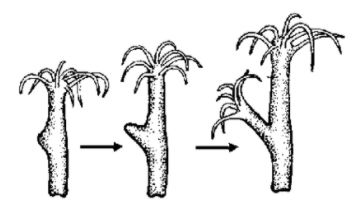
What type of asexual reproduction is illustrated in the diagram?
binary fission
budding
sporulation
regeneration
A cell with 46 chromosomes divides by mitosis, how many chromosomes will be present in the resulting daughter cells?
92
46
23
12
The idea that all living things are composed of cells, the cell is the basic unit of structure and function, and all cells come from cells is known as the
Theory of relativity
Agenda Theory
Cell Theory
Theory of naturalization
Which statement was NOT included in cell theory?
All living things are composed of cells.
Living cells come only from other living cells.
Each cell contains a cell membrane, cytoplasm, nucleus, mitochondria, and endoplasmic reticulum.
Cells are the smallest structure of living things that can perform the functions necessary for life.
What was Schleiden convinced of?
All plants are made of cells
All animals are made of cells
All cells are prokaryotic
None of the above
Who noted that all animals are made of cells and helped write the first two parts of cell theory?
Rudolf Virchow
Anton van Leeuwenhoek
Theodor Schwann
Robert Hooke
Who discovered that all cells come from other living cells and had research that lead to the last major principle of cell theory?
Matthias Schleiden
Theodore Schwann
Robert Hooke
Rudolf Virchow
Who discovered and named cells while looking at cork?
Captain Hook
Robert Hooke
Matthais Schleiden
Rudolf Virchow
Why must transcription occur in the nucleus?
because DNA can't leave the nucleus
because ribosomes are in the nucleus
because DNA polymerase is found there
because helicase unzips the DNA
Choose the sequence of the mRNA strand that would match up with to the following DNA strand:
GTACAT
CATGTA
GAUCUA
CAUGUA
CUTGTU

What brings the amino acids to the ribosome to assemble a protein?
DNA
How many nucleotides code for 1 amino acid?
1
2
3
4
When these bond together, they form a protein
Amino Acids
Peptide Bonds
Ribose
Nucleotides

Which process does this diagram illustrate?
transcription
DNA replication
translation
What determines the shape and function of a protein?
The sequence of amino acids
The type of ribosome that assembles the protein
The cell that manufactures the protein

In animals, shaggy fur is dominant to short fur. The Punnett Square shows the genotypes of the offspring of a shaggy fur animal and a short fur animal. What were the genotypes of the parents?
FF and FF
Ff and ff
ff and ff
Ff and Ff
In a Punnett square, a lower case letter stands for a ____________ allele.
dominant
recessive
homozygous
heterozygous

T = tall and t = short
In the punnett square shown, what belongs in the missing square
tt
Tt
Bb
TT

The trait this pedigree traces is recessive because it skips a generation and individuals can be carriers. What is the most likely genotype for person III-3?
GG
Gg
gg

If this pedigree shows a recessive disorder, what MUST the genotype of individual 4 be?
HH
Hh
hh

