wayground logo

Free Printable Worksheets

NEW

Font size

S
M
L
XL
Worksheets

AP Bio Gene Expression

Total questions: 60

Worksheet time: 3hrs 40mins

Name
Class
Date
1.

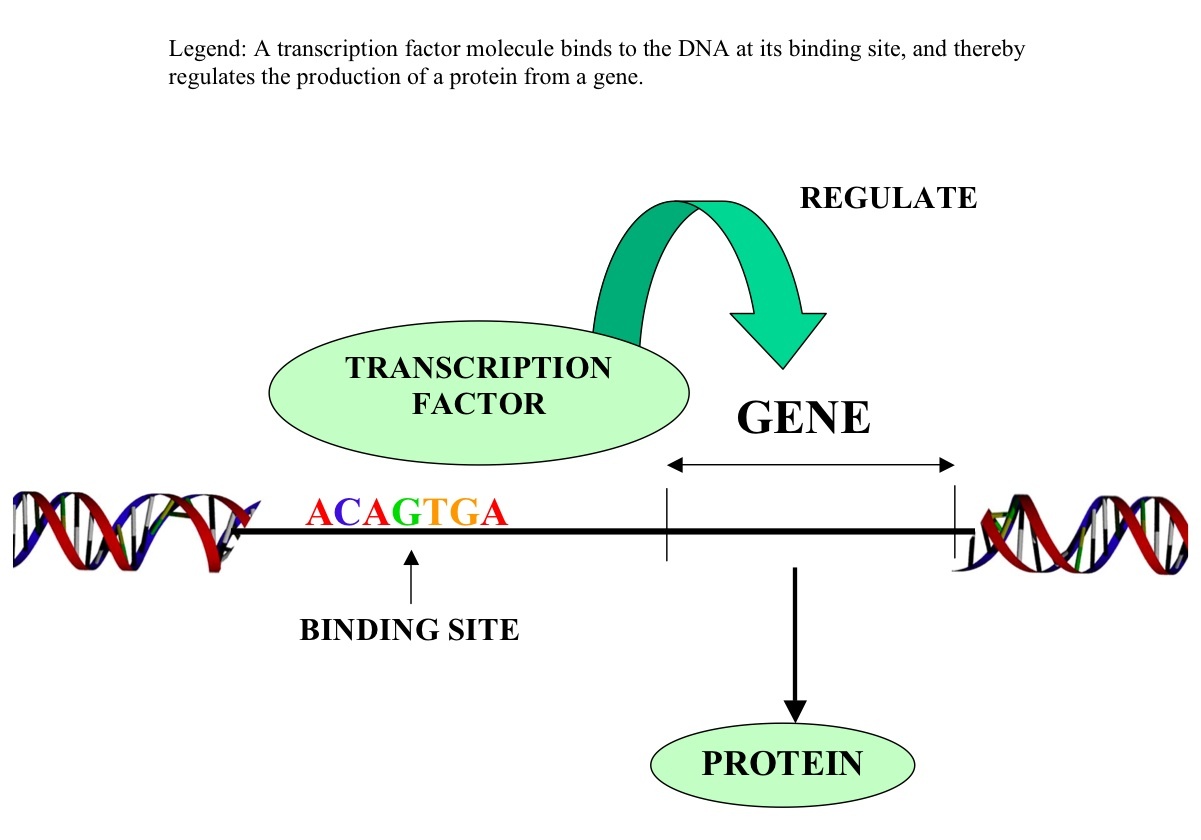
In order for a gene to be expressed, ___ must bind to the gene's ___, a specific sequence of nucleotides at one end of the gene, thus initiating transcription.

a)

DNA polymerase, promotor

b)

DNA polymerase, operator

c)

RNA polymerase, promotor

d)

RNA polymerase, operator

2.
In eukaryotes, proteins that help the RNA polymerase bind to the regulatory region for transcription are called ____________.
a)
transcription factors
b)
topoisomerase
c)
regulatory genes
d)
activators
3.

What binds to the promoter?

a)

DNA polymerase

b)

Operator

c)

Repressor

d)

RNA polymerase

4.
The production of mature mRNA in eukaryotes involves
a)
cutting introns out and spicing exons together
b)
adding the 5' cap
c)
adding the 3' poly A tail
d)
all of these are correct
5.
The parts of a gene that do NOT code for amino acids in a protein are called
a)
introns
b)
exons
c)
codons
d)
anticodons
6.

What is the primary function of transcription factors?

a)

Mediate the binding of RNA Polymerase to the Promoter.

b)

Mediate the binding of the Ribosome to mRNA.

c)

Help mRNA find its way to the ribosome.

d)

Transcribe the DNA template into mRNA.

7.
Which of the following would result in a frameshift mutation?
a)
Insertions only
b)
Substitution only
c)
Deletion only
d)
Insertions and Deletions
8.
If you are missing or have an extra base  at the end of your mutated DNA . What type of mutation occurred?
a)
Substitution
b)
Frameshift
c)
Duplication 
d)
Insertion
9.
A type of substitution in which no  amino acids change is called 
a)
Missense
b)
Nonsense
c)
Silent
d)
Deletion
10.
Normal-
GAG-CTC-GAC-AGA
Mutant
GAG CTC-CAC-AGA
a)
no mutation
b)
substitution
c)
insertion
d)
deletion
11.
Why are insertion and deletion (frameshift) mutations so harmful?
a)
They change all of the codons from the mutation on down the line, which changes the amino acid sequence
b)
They insert things that an organism doesn't need.
c)
They often delete things that organisms need.
d)
Insertion and deletions are not any more harmful than substitution mutations.
12.
What is the term for making an RNA copy of DNA?
a)
Transription
b)
Translation
c)
Folding
d)
Coding
13.
Which RNA bases would pair with TACGAA in transcription
a)
AUGCUU
b)
ATGCTT
c)
GCATCC
d)
GCAUCC
14.

In eukaryotic cells, transcription cannot begin until

a)

the two DNA strands have completely separated and exposed the promoter.

b)

transcription factors have bound to the promoter.

c)

the 5' caps are removed from the mRNA.

d)

the DNA introns are removed from the template.

15.
Which of the follwoing best describes the significance of the TATA box in eukaryotic promoters?
a)
it is the recognition site for a specific transcription factor
b)
it sets the reading frame of the mRNA
c)
it is the recognition site for ribosomal binding
d)
it signals the end of the nucleotide sequence of the gene
16.
RNA polymerase moves in which direction along the DNA?
a)
5' to 3' 
b)
3' to 5' along the template strand
c)
3' to 5' along nontemplate(coding) strand
d)
5' to 3' along the template strand
17.
What is the function of the poly-A tail in mRNA?
a)
to add modified guanin to the 3' end of the mRNA
b)
to indicate the site of translational termination
c)
to code for the binding of RNA polymerase to the DNA
d)
to help protect the mRNA from degradation by hydrolytic enzymes 
18.
Which of the following events in translation is the first to occur in eukaryotes?
a)
elongation of the polypeptide
b)
base pairing of activated methionine-tRNA to AUG of the messenger RNA
c)
binding of the larger ribosomal subunit to smaller ribosomal subunits
d)
the small subunit of the ribosome recognizing and attaching to the 5'cap
19.
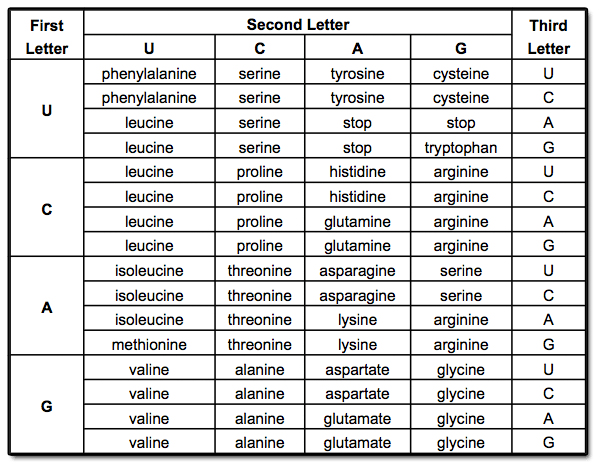
What amino acid sequence will be produced based on the mRNA codon sequence
5'-AUG-UCU-UCG-UUA-UCC-UUG-3'
a)
met-ser-leu-ser-leu-ser
b)
met-ser-ser-leu-ser-leu
c)
met-leu-phe-arg-glu-glu
d)
met-glu-arg-arg-glu-leu
20.
Translation is crucial to the process of making proteins. Which statement best describes what takes place during translation? 
a)
A copy of chromosomal DNA is created 
b)
Information in mRNA is converted into a sequence of amino acids in a protein 
c)
A RNA copy of a DNA strand is made.
d)
Instructions from DNA in the nucleus are brought to the cytoplasm 
21.
The anticodon is located on 
a)
DNA
b)
mRNA
c)
tRNA
d)
rRNA
22.

Change of one base only in the sequence of bases in a gene.

a)

substitution

b)

point mutation

c)

frameshift mutation

d)

deletion

23.
What is the basis for the difference in how the leading and lagging strands of DNA molecules are synthesized?
a)
DNA polymerase can join new nucleotides to the 3' end of the preexisting strand.
b)
Helicases and single-strand binding proteins work at the 5' end.
c)
The origins of replication occur only at the 5' end.
d)
DNA ligase works only in the 3' to 5' direction
24.
Seals the Okazaki fragments together
a)
DNA Polymerase
b)
ligase
c)
helicase
d)
primase
25.

How do the leading and the lagging strands differ?

a)

The leading strand is synthesized in the same direction as the movement of the replication fork, and the lagging strand is synthesized in the opposite direction.

b)

The leading strand is synthesized at twice the rate of the lagging strand.

c)

The leading strand is synthesized in short fragments that are ultimately stitched together, whereas the lagging strand is synthesized continuously.

d)

The leading strand is synthesized by adding nucleotides to the 3' end of the growing strand, and the lagging strand is synthesized by adding nucleotides to the 5? end.

26.
Which enzyme is needed to start DNA replication?
a)
DNA Polymerase
b)
Topoisomerase
c)
Ligase
d)
Primase
27.
What is meant by the description "antiparallel" regarding the strands that make up DNA?
a)
The twisting nature of DNA creates nonparallel strands.
b)
One strand is positively charged and the other is negatively charged.
c)
The 5' to 3' direction of one strand runs counter to the 5' to 3' direction of the other strand.
d)
Base pairings create unequal spacing between the two DNA strands
28.
What is meant that DNA replication follows a “semi-conservative” model?
a)
After DNA replication, each strand contains one side that is a parental strand and the other side is a daughter strand.
b)
After DNA replication, one completed strand contains only parental DNA while the other contains only daughter DNA.
c)
None of these identify the “semi-conservative” model.
d)
After DNA replication, one completed strand contains a mixture of both parental DNA and daughter DNA dispersed throughout the strand.
29.
Suppose a double-stranded DNA molecule was shown to have 15% adenine bases. What would be the expected percentage of guanine bases in that molecule?
a)
15%
b)
35%
c)
85%
d)
Not enough information
30.

Function of Poly A tail...

a)

Add phosphates to the RNA

b)

Provide ATP for transcription

c)

Protect from hydrolytic enzymes 

d)

Site of ribosome binding 

31.

Function of 5' Cap...

a)

Add phosphates to the RNA

b)

Provide ATP for transcription

c)

Protect from hydrolytic enzymes

d)

Site of ribosome binding 

32.

In transcription, which direction is DNA read?

a)

3' to 5’

b)

5' to 3’ 

c)

C terminus to N terminus

d)

N terminus to C terminus

33.
Carries the genetic code to the ribosome
a)
mRNA
b)
tRNA
c)
rRNA
d)
DNA
34.
Which of the following best describes how DNA and RNA are similar?
a)
they both contain A and T
b)
They both have a double helix
c)
They are both composed of 5 different nucleotides
d)
they both have C and G
35.
Which molecule brings the amino acid to the ribosome?
a)
DNA
b)
mRNA
c)
tRNA
d)
rRNA
36.
DNA molecule segment is : TTACGCAAG
The mutated DNA segment is TTATCGCAAG. This is an example of ___ mutation.
a)
Deletion
b)
Substitution
c)
Insertion
d)
Inversion
37.

Which of the following polypeptides is coded for by the mRNA sequence 5' AUGGUUAAA 3'?

a)

Val, Lys, Phe, Gly

b)

Met, Asp, Phe

c)

Met, Val, Phe

d)

Ile, Gln, Leu, Ser

38.
What type of frameshift mutation happens when the mRNA codes for a stop too soon?
a)

Missense

b)

Nonsense

c)

Frameshift

d)

Silent

39.

This enzyme is capable of breaking Hydrogen bonds found between the bases of DNA

a)

Topoisomerase

b)

DNA Helicase

c)

DNA Polymerase

d)

Exonuclease

40.
Which enzyme is responsible for adding nucleotides?
a)
Topoisomerase
b)
DNA Polymerase
c)
Ligase
d)
Primase
41.

This enzyme helps helicase unzip DNA by relieving supercoiling

a)

Topoisomerase

b)

Exonuclease

c)

DNA Primase

d)

DNA Polymerase

42.
A type of substitution in which one amino acid changes is called 
a)
Nonsense
b)
Missense
c)
Silent
d)
all of the above
43.
Alternative RNA splicing ____.
a)
is a mechanism for increasing the rate of translation
b)
can allow the production of proteins of different sizes and functions from a single mRNA
c)
can allow the production of similar proteins from different RNAs
d)
increases the rate of transcription
44.
What is meant by the description "antiparallel" regarding the strands that make up DNA?
a)
The twisting nature of DNA creates nonparallel strands.
b)
One strand is positively charged and the other is negatively charged.
c)
The 5' to 3' direction of one strand runs counter to the 5' to 3' direction of the other strand.
d)
Base pairings create unequal spacing between the two DNA strands
45.
What is meant that DNA replication follows a “semi-conservative” model?
a)
After DNA replication, each strand contains one side that is a parental strand and the other side is a daughter strand.
b)
After DNA replication, one completed strand contains only parental DNA while the other contains only daughter DNA.
c)
None of these identify the “semi-conservative” model.
d)
After DNA replication, one completed strand contains a mixture of both parental DNA and daughter DNA dispersed throughout the strand.
46.
What is the basis for the difference in how the leading and lagging strands of DNA molecules are synthesized?
a)
DNA polymerase can join new nucleotides to the 3' end of the preexisting strand.
b)
Helicases and single-strand binding proteins work at the 5' end.
c)
The origins of replication occur only at the 5' end.
d)
DNA ligase works only in the 3' to 5' direction
47.
What is the name given to the short stretches of DNA formed on the lagging strand? 
a)
Okazaki fragments
b)
Hiorshimi fragments
c)
introns
d)
Chargraff's fragmentation
48.
What amino acid is represented by the codon UUA?
a)
Phenylalanine
b)
Tyrosine
c)
Leucine
d)
Stop codon
49.

Which 2 molecules form the sides of the DNA ladder?

a)

deoxyribose and adenine

b)

deoxyribose and phosphate

c)

cytosine and guanine

d)

ribose and cytosine

50.

DNA replication results in two DNA molecules,

a)

each one with two original strands

b)

each one with two new strands

c)

each one with one new strand and one original strand

51.

Which enzyme is responsible for adding DNA nucleotides to a RNA primer?

a)

Topoisomerase

b)

DNA Polymerase

c)

Ligase

d)

Primase

52.

If a portion of DNA strand reads:

3' A A A T T T C 5'

The matching strand would read...

a)

5' T T T A A A G 3'

b)

3' T T T A A A G 5'

c)

5' A A A T T T C 3'

d)

3' U U U A A A G 5'

53.

The strand of DNA that is replicated continuously from 5' to 3' is known as

a)

leading strand

b)

lagging strand

c)

parallel strand

d)

antiparallel strand

54.

What group do the "smaller", single ringed bases such as thymine and cytosine belong to?

a)

complementary

b)

enzymes

c)

purine

d)

pyrimidine

55.

Which enzyme is responsible for adding the RNA primer to the template strand?

a)

Helicase

b)

DNA Polymerase

c)

Ligase

d)

Primase

56.

Which of the following would be transcribed from the following DNA sequence? 3' ATC GAA TTA CGA 5'

a)

5' UAG CUU AAU GCU 3'

b)

5' AUC GAA UUA CGA 3'

c)

3' UCG UAA UUC UAG 5'

d)

3' TAG CTT AAT GCT 5'

e)

5' TAG CTT AAT GCT 3'

57.

What group do these bases belong to?

a)

Purines

b)

Pyrimidines

58.

Which of the following help(s) to hold the DNA strands apart and stabilize them while they are being replicated?

a)
RNA primase
b)
single–strand binding proteins
c)
DNA polymerase I
d)
DNA ligase
59.

What is a promoter?

a)

Sequence of DNA at the beginning of the gene that tells RNA polymerase where to start transcription.

b)

Sequence of RNA that tells the ribosome where to start translation.

c)

Sequence of DNA at the beginning of the gene that tells the ribosome where to start transcription

d)

Sequence of RNA that tells RNA polymerase where to start translation.

60.

In 1952, Rosalind Franklin took the X-ray photograph shown, which gave the world its first look at DNA. By studying this photograph, scientists gained knowledge about the.....

a)

role of DNA in protein synthesis

b)

mutation of nucleotide sequence in DNA

c)

sequence of DNA that makes up the human genome

d)

double helix structure of DNA