
 Worksheets
Chapter 5: Earth's Structure
Total questions: 60
Worksheet time: 33mins
Temperature ___________as depth below the surface of Earth increases.
increases
decreases
does not change
creases
Pressure ___________as depth below the surface of Earth increases.
increases
decreases
does not change
creases
This layer of Earth's interior is the least dense.
Asthenosphere
Mantle
Core
Crust
This layer of Earth's interior is the thinnest.
Asthenosphere
Mantle
Core
Lithosphere
What is the scientific name for the brittle, rocky, outermost layer of Earth?
asthenosphere
atmosphere
lithosphere
core
What is the more commonly used name given to the outermost rocky layers of Earth?
asthenosphere
core
atmosphere
crust
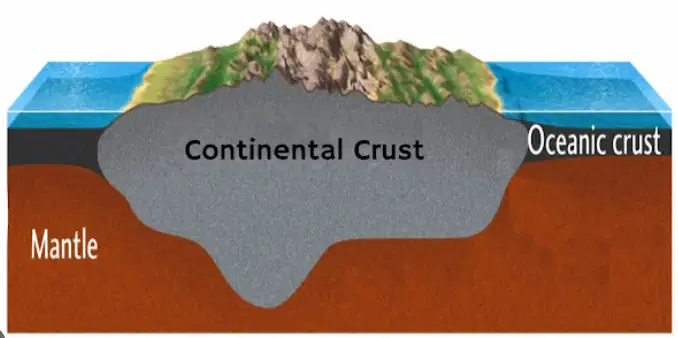
Which type of crust is made up of more dense material?
inner crust
continental crust
outer crust
oceanic crust
Which layer shown in the diagram is not part of the lithosphere?
mantle
continental crust
outer crust
oceanic crust
Which part of the lithosphere is found on land?
mantle
continental crust
outer crust
oceanic crust

What is denser? The lithosphere or the asthenosphere?
Lithosphere
Asthenosphere
Which layer of Earth is the most dense?
outer core
inner core
asthenosphere
lithosphere
What is the correct order of the layers of the earth from decreasing (most to least) density
inner core, outer core, mantle, crust
crust, mantle, outer core, inner core
crust, mantle, inner core, outer core
inner core, outer core, crust, mantle

inner mantle
lower mantle
upper mantle


They would all increase
They would all decrease.

Which layer is represented by the yellow layer?
inner core
outer core
mantle
crust

Which layer is made up of only iron and nickel?
Core
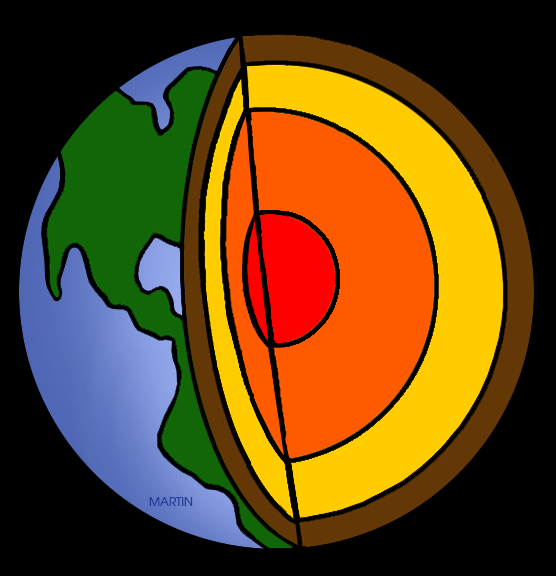
Which layer is shown in red?
crust
mantle
outer core
inner core
Which layer is shown in brown?
crust
mantle
outer core
inner core


Which layer of the Earth is SOLID Iron and Nickle?
Crust
Mantle
Outer Core
Inner Core
Which layer of the Earth is liquid Iron and Nickle?
Crust
Mantle
Outer Core
Inner Core

Where is the Asthenosphere located?
Inner Core
Outer Core
Uppermost part of the Mantle
Inner Crust
Which layer is shown in orange?
crust
mantle
outer core
inner core
Which part of the Mantle is more liquid like?
Inner mantle
Lower mantle
Upper mantle
Outer Mantle
Which part of the Mantle is more of a solid rock material?
Inner mantle
Lower mantle
Upper mantle
Outer Mantle
The movement between these two layers creates Earth's Magnetic field.
crust & mantle
upper mantle & lower mantle
inner core & outer core
Asthenosphere & Lithosphere

The Earth produces its own magnetic field called
magnetic North Pole
Aurora Borealis
magnetosphere
Geographic North Pole
The presence of what shows us that Earth has a magnetic field.
AI-tmosphere
Chat GPT
Northern Lights
Mantle
What is the name for the location on the surface where an earthquake originates from?
epicenter
epic center
focus
concentrate
What is the name for the location below the surface where an earthquake originates from?
epicenter
epic center
focus
concentrate

Where does an earthquake begin?
Epicenter
atmosphere
Focus

How can Earthquakes be measured?
accelerometer
spectrometer
anemometer
seismograph
Energy that travels as vibrations or waves on and within Earth generated by earthquakes is called what?
energy wavez
seismic waves
sound waves
tides

Which type of seismic wave can travel all the way from one side of the Earth to the other?
P-Waves
S-Waves
Love Waves
Rayleigh Waves
Which type of seismic wave cannot travel all the way from one side of the Earth to the other?
P-Waves
S-Waves

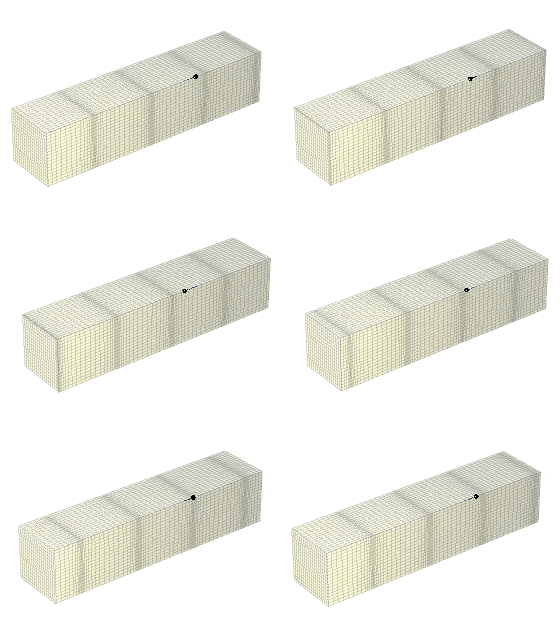
Which image models secondary waves?
Top
Bottom
Both


Which seismic station will register the earthquake first?
Station X
Station Y
Station Z
They will all register them at the same time.

Which letter identifies the epicenter of this earthquake?
A
B
C
D

Primary and secondary waves are both classified as what type of seismic waves?
surface
eternal
body
inetranl
Love and Rayleigh waves are both classified as what type of seismic waves?
surface
eternal
body
inetranl
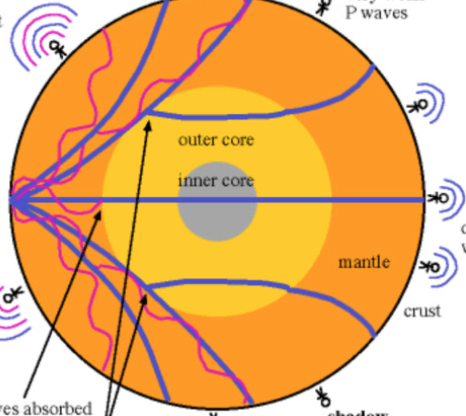
The pink lines are
p waves
s waves
rayleigh waves
love waves
The blue lines are
p waves
s waves
rayleigh waves
love waves

What kind of earthquake wave is this?
P-wave
S-wave

According to the picture above which shows the secondary waves?
A
B
C
According to the picture above which shows the primary waves?
A
B
C
According to the picture above which shows the surface waves?
A
B
C

How many cities do scientists read seismograms from to determine the epicenter of an earthquake?
1
2
3
4
What do we call scientists who study earthquakes?
quakers
seismologists
shakeologists
waveologists
What is the name for the region on Earth's surface that does not detect body waves from an earthquake?
shadow zone
end zone
primary zone
time zone

What is the instrument used to measure earthquakes?
Seismograph
Sling Psychrometer
Spring Scale
Balance
Anemometer
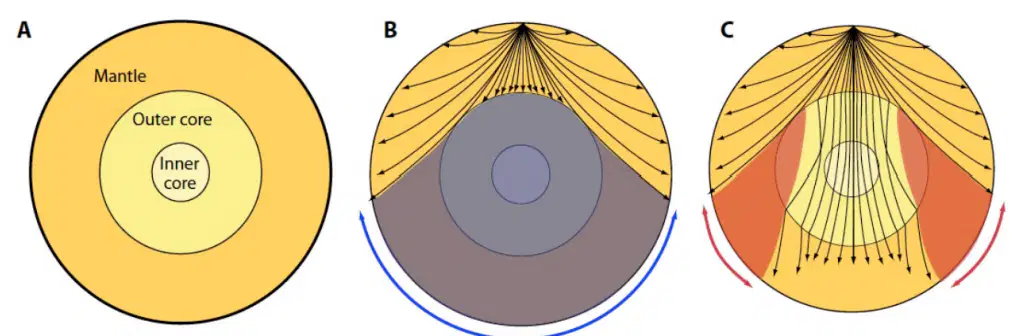
Which diagram shows where the p-wave shadow zone is located?
A
B
C
None
Which diagram shows where the s-wave shadow zone is located?
A
B
C
None
P waves travel faster than S waves
True
False
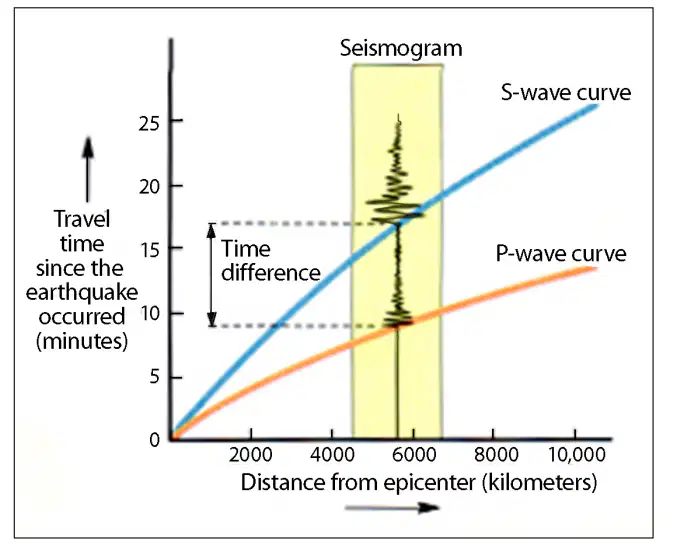
Which method to find information about an earthquakes location is shown in the image?
wedge
triangulation
non
method man
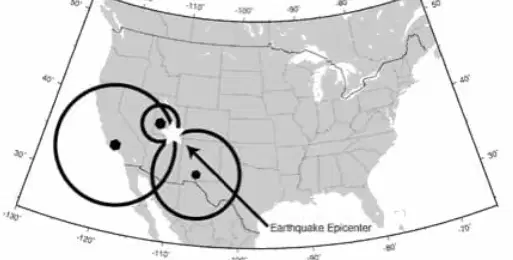
Which method to find information about an earthquakes location is shown in the image?
wedge
triangulation
non
method man
Secondary Waves cannot travel through which of the layers of Earth?
Mantle
Outer Core
Inner Core
Lithosphere

