
 Worksheets
Fusion
Total questions: 100
Worksheet time: 1hrs 2mins

2
6
12
proton
positive charge
neutron
no charge
electron
negative charge
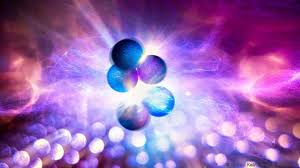
In the sun
In Einstein's Equation, the loss of mass is converted into
(a)

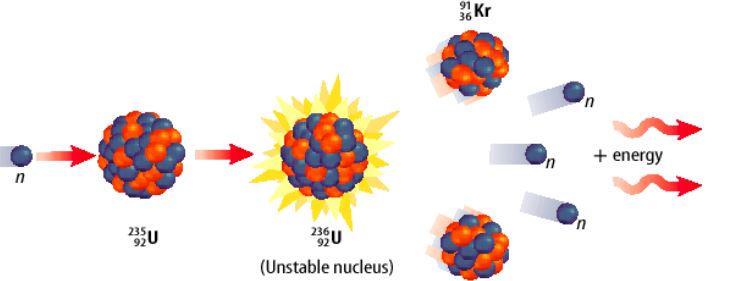
What nuclear process is shown in the picture?
alpha decay
gamma emission
fusion
fission
When two H-1 atoms combine it is now....
H-2
He-2
He-3
H-3
Match the following
H-1
1 p+
H-2
1p+ 1n0
He-3
2p+ 1n0
He-4
2p+ 2n0
H-3
1p+ 2n0

How does the sun produce energy?
nuclear fission of uranium atoms
nuclear fusion of hydrogen atoms
nuclear fission of hydrogen atoms
nuclear fusion of uranium atoms
Most the energy from the sun comes from
light reactions
chemical reactions
gravity
nuclear reactions
When two hydrogen atoms fuse together in the core of the sun a little bit of mass of mass is lost and...
is changed into smaller pieces of matter
is changed into lots of gas
is changed into a huge amount of energy
is changed into dark matter

What atom is this?
Deuterium H-2
Hydrogen H-1
Tritium H-3
Helium He-2
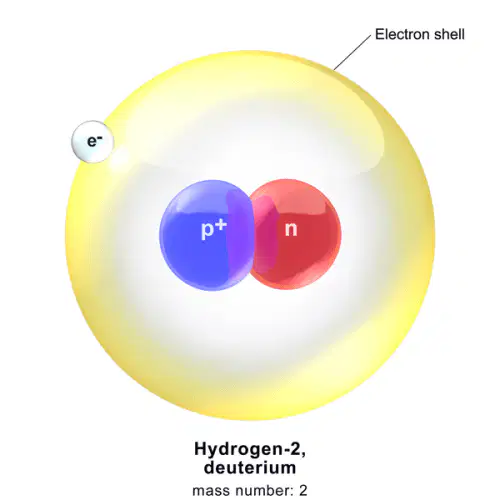
Which of the symbols below label this atom correctly?
H-1
He-1
H-2
H-3
He-3
Which element modeled shows Li-7

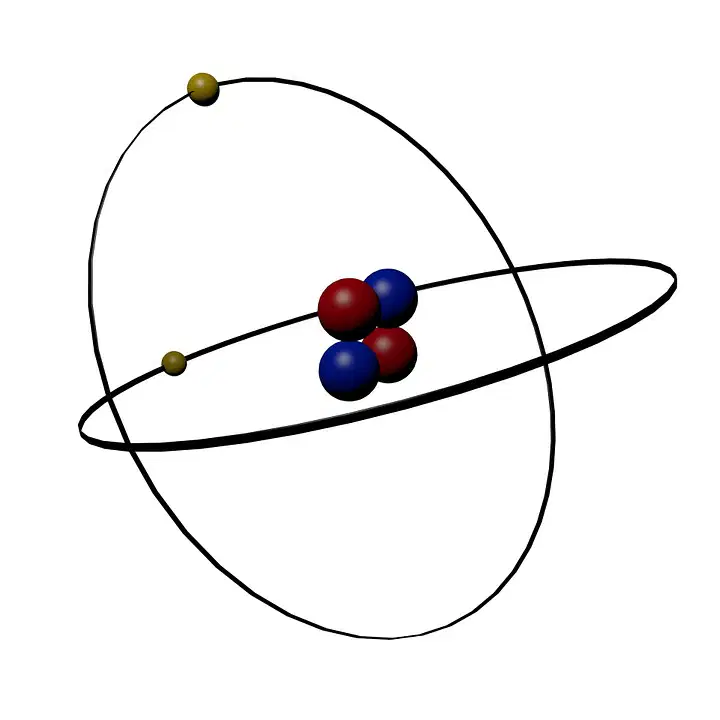


Click where the nuclear fusion occurs on the sun.
Click the TWO reasons that atoms can fuse together in the sun's core.
Incredible Heat
Enormous Pressure
High Electromagnetic Attraction
High Electromagnetic Repulsion
Fusion changes hydrogen into what?
helium
uranium
U-238
U-235
Which of the following electromagnetic waves travels the fastest?
gamma rays
radio waves
ultraviolet waves
they all travel the same speed
What is the most accurate measured value of the speed of light?
3 x 10⁸ m/s
186,000 miles/s
300,000 km/s
784 miles/hr
Which is a source of light?
Chair
Mirror
Flashlight
ball
Where does light come from?
The fish
The clouds
A coral reef
The sun
Plants depend on the sun’s light energy to ____________.
Make carbon dioxide
Perform photosynthesis (make their own food)
Produce a spectrum
Make water
How is light energy transmitted? Light energy is transmitted as _________.
Cells
Waves
Circles
wires
Define nuclear fusion.
Nuclear fusion – combining lighter atoms to make heavier ones – is what makes it possible.
Nuclear fusion – splitting lighter atoms to make heavier ones – is what makes it possible.
Nuclear fusion – combining heavier atoms to make lighter ones – is what makes it possible.
Nuclear fusion – splitting heavier atoms to make lighter ones – is what makes it possible.
This process, called nuclear fusion, is the energy source of all __________.
There may be more than one answer for this questions.
planets
suns
stars
plants
When hydrogen is "fused" together on the Sun, what new element is created?
Helium
Carbon Dioxide
Oxygen
Light
Stars have loads of proton - proton chain reactions happening in its core. What charge do protons have?
neutral - no charge
positive
negative
neutrino
Nuclear fusion is the reaction that generates energy in stars.
True
False
Why does nuclear fusion require high pressures and temperatures?
To provide enough energy to split the nucleus.
The two nuclei are both negatively charged and repel each other.
To lower the cost.
To overcome the electrostatic repulsion of the nuclei.
Where does fusion occur?
On the Sun and stars
underwater
all around us
nuclear power plant
When hydrogen is "fused" together on the Sun, what new element is created?
Helium
Carbon Dioxide
Oxygen
Light
Fusion in the ____________ produces Helium and energy.
Where in our Sun is energy produced, and how does the process occur?
What process is primarily responsible for the Sun's energy and light?
Nuclear fission
Nuclear fusion
Chemical reactions
Gravitational contraction
How long does it take for the Sun's light to reach Earth?
8 minutes
8 seconds
24 hours
1 year
What is responsible for 85% of the energy from the sun?
the break down of heavy elements by fission
the burning of plasma
hydrogen fusing into helium in the sun's core
the burning of electrons from the outsides of atoms

What is the SECOND most common element in a star?
Hydrogen
Helium
Carbon
Iron
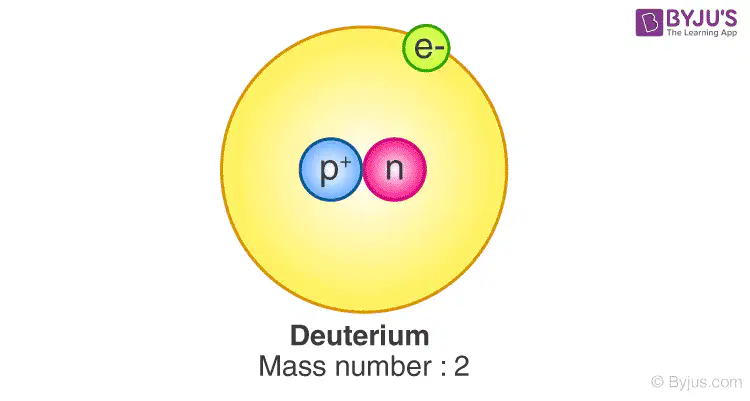
What is the code for this atom?
H-1
H-2
H-3
He-1
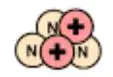
What is the code for this atom?
H-5
He-5
Li-3
He-4
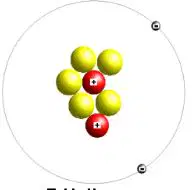
What is the code for this atom?
Li-5
He-7
H-6
B-7
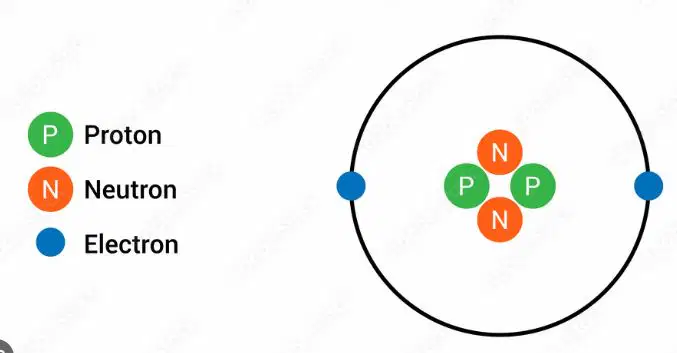
What is the code for this atom?
H-4
Li-4
He-5
He-4

What is the code for this atom?
He-6
Li-7
He-6
Li-6
Define nuclear fusion.
Nuclear fusion – combining lighter atoms to make heavier ones – is what makes it possible.
Nuclear fusion – splitting lighter atoms to make heavier ones – is what makes it possible.
Nuclear fusion – combining heavier atoms to make lighter ones – is what makes it possible.
Nuclear fusion – splitting heavier atoms to make lighter ones – is what makes it possible.
What element is most the sun made of?
Hydrogen
Helium
Carbon
Iron
Which wavelength can humans see?
Microwaves
Radio waves
Visible light
Gamma rays
What type of wave is a light wave?
A sound wave
A seismic wave
A electromagnetic wave
A mechanical wave

What is the frequency of this model wave?
10 waves per second
3 waves per second
6 waves per second
2 waves per second
Gamma Rays are
High energy
Low energy
Medium energy
Just right
What is ultraviolet light
Light that has more energy than regular light so we can't see it.
Light that has less energy than regular light so we can't see it.
Light that is only given off at night.
Light that only All Might can see.

When looking at an example of a light wave, what is the highest point on the wave called?
trough
amplitude
crest
wavelength
Can light cause a genetic material to be damaged?
Yes. The genetic material can take in energy from the light.
Yes. The light pulled out energy from the genetic material.
No. Light can only heat up materials.
No. Light is not a physical thing so it cannot change physical things.
When looking at an example of a light wave, the measurement of one wave to the next is called what?
trough
amplitude
crest
wavelength
When looking at an example of a light wave, what is the lowest point on the wave called?
trough
amplitude
crest
wavelength
In the equation E = mc2 what does the E stand for?
energy
efficiency
exertion
endurance
In the equation E = mc2 what does the variable C represent?
change
compression
speed of light
speed of sound
Who created the equation E = mc2?
Niels Bohr
Albert Einstein
Isaac Newton
Galileo Galilei
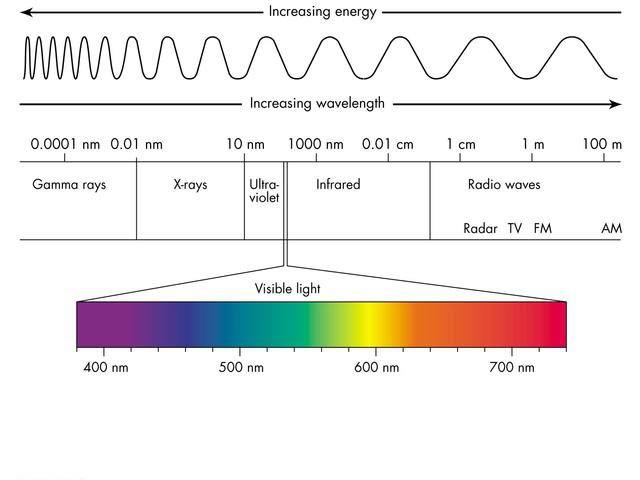
What is the correct order of the visible light spectrum starting with the longer wavelength?
Red, yellow, orange, blue, violet, indigo
Violet, indigo, blue, green, yellow, orange, red
Green, yellow, blue, indigo, red, orange
Red, orange, yellow, green, blue, indigo, violet

Which color has the longest wavelength?
Yellow
Red
Green
Purple

The lower the frequency the ______ the energy.
higher
lower
neither, stays the same

A wave with a large wavelength will have (a)

