
 Worksheets
Nervous System Review
Total questions: 108
Worksheet time: 54mins
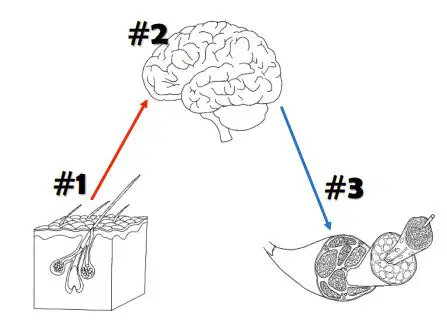
peripheral integration
peripheral input
sensory input
somatic input
sensory output
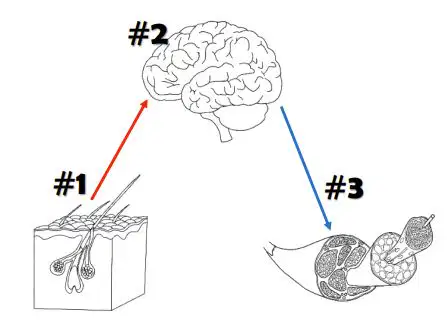
accommodation
integration
regulation
motor input
adaptation
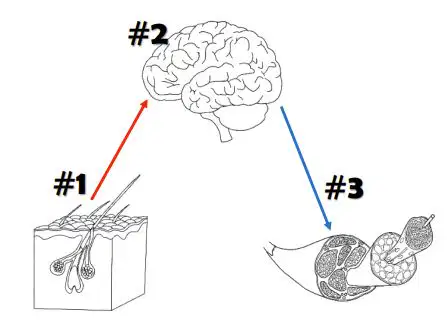
motor output
motor input
peripheral output
peripheral input
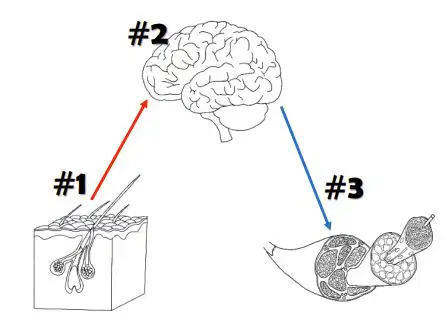
motor neuron (efferent neuron)
motor neuron (afferent neuron)
sensory neuron (efferent neuron)
sensory neuron (afferent neuron)
interneuron
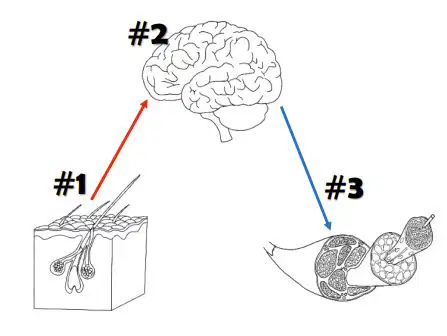
motor neuron (efferent neuron)
motor neuron (afferent neuron)
interneuron
sensory neuron (afferent neuron)
sensory neuron (efferent neuron)
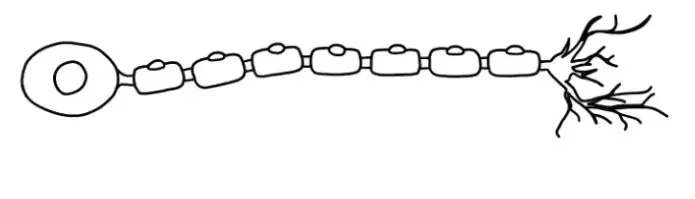
What type of neuron is shown in the picture?
unipolar
bipolar
multipolar
Also known as the cell body
(a)
Gaps in the myelin sheath
(a)
Insulates the axon of a neuron
(a)
Locations on the axon that impulses jump to
(a)
Many projections coming off of the soma in a multipolar neuron; receives impulses from neighboring neurons
(a)
One, long projection on a neuron that sends messages away to the next neuron
(a)
Produce the myelin sheath in the peripheral nervous system
(a)
Swellings at the end of axon terminals that store neurotransmitters
(a)
The fine projections at the end of the axon
(a)
Where proteins and necessary molecules are produced
(a)
Where the axon connects with the cell body
(a)
How many neurons are in the human body?
(a)
What are the cells called that support and fill spaces between neurons?
(a)
What are two other terms for an action potential?
(a)
Allows "muscle memory" and muscle coordination
(a)
Also known as the "interbrain"
(a)
Connects the left and right hemisphere of the cerebrum
(a)
Contains the midbrain
(a)
Contains the thalamus
(a)
Divided into 4 lobes
(a)
Largest part of the brain
(a)
Major part of the brain that cannot be seen from the outisde
(a)
Means "little brain" in Latin
(a)
Meets the basic needs (breathing, circulation, and digestion)
(a)
Outer layer of the brain
(a)
Peaks in the surface of the cerebrum
(a)
Part of the brain that allows you to move your mouth/tongue right to form speech
(a)
Part of the brain that allows you to understand speech
(a)
Part of the brain that changes your short-term memories into long-term memories
(a)
Part of the brain that receives most sensory information (ex. Touch, hot, cold)
(a)
Part of the brain that starts all movements
(a)
Part of the brain that triggers fear and anxiety
(a)
Lobe of the brain responsible for "executive function" (planning, organizing, and decision making)
(a)
Lobe of the brain that allows you to develop memories
(a)
Lobe of the brain that allows you to know what is around you (spatial awareness)
(a)
Lobe of the brain that determines your personality
(a)
Lobe of the brain that receives and interprets sensory information
(a)
Lobe of the brain that receives and interprets auditory information
(a)
Lobe of the brain that receives and interprets smell information
(a)
Lobe of the brain that receives and interprets visual information
(a)
Lobe of the brain that helps you control your emotions
(a)
Below the thalamus
(a)
Controls blood vessels dilation and constriction
(a)
Controls other hormone releasing glands (ex. The adrenal glands)
(a)
Controls the pituitary gland
(a)
"Bridge" between the cerebellum and motor cortex/sensory cortex
(a)
In charge of the auditory and visual reflexes, such as turning your head automatically when you hear a loud noise
(a)
Maintains homeostasis (ex. Body temperature)
(a)
Sorts data as it comes to the brain and sends that data to the proper part of the cerebrum
(a)
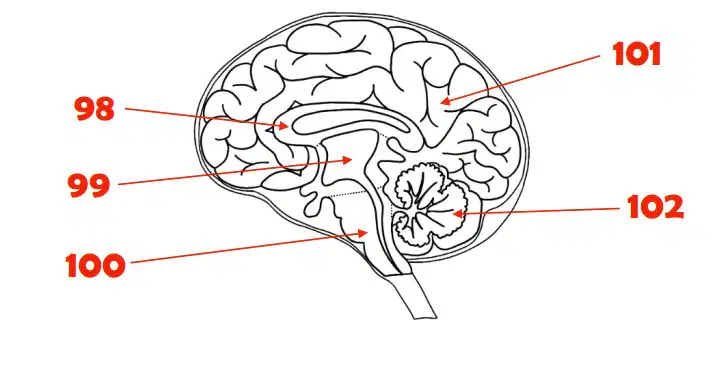
#98
(a)
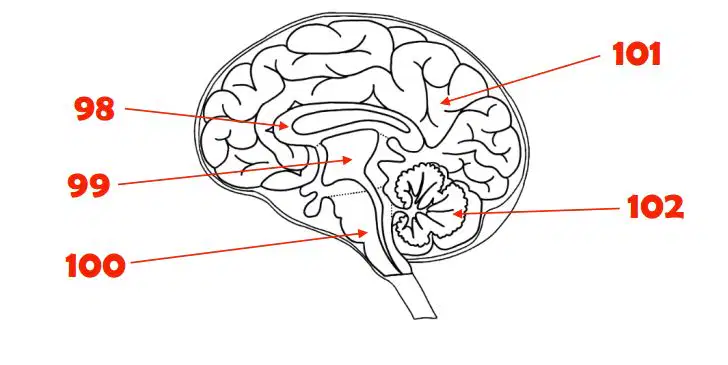
#99
(a)
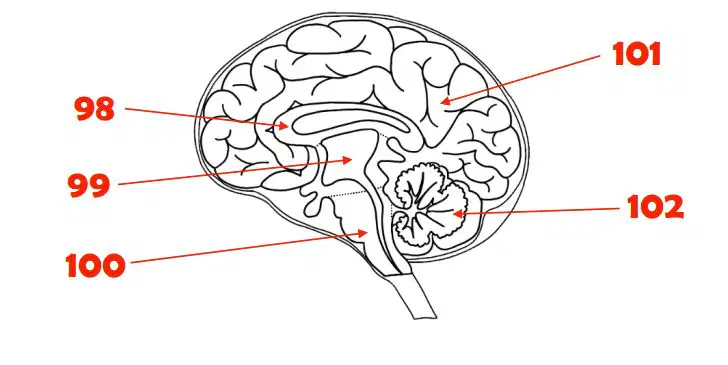
#100
(a)
#101
(a)
#102
(a)
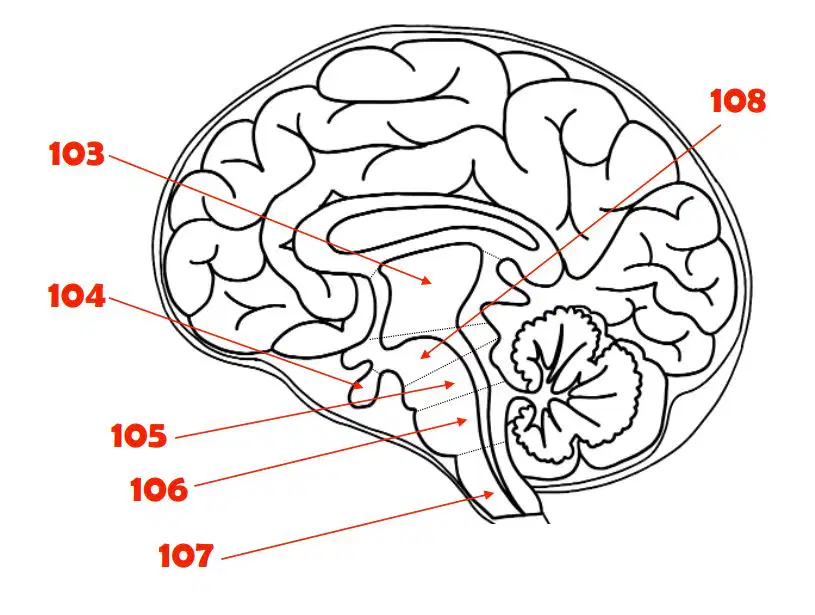
#103
(a)
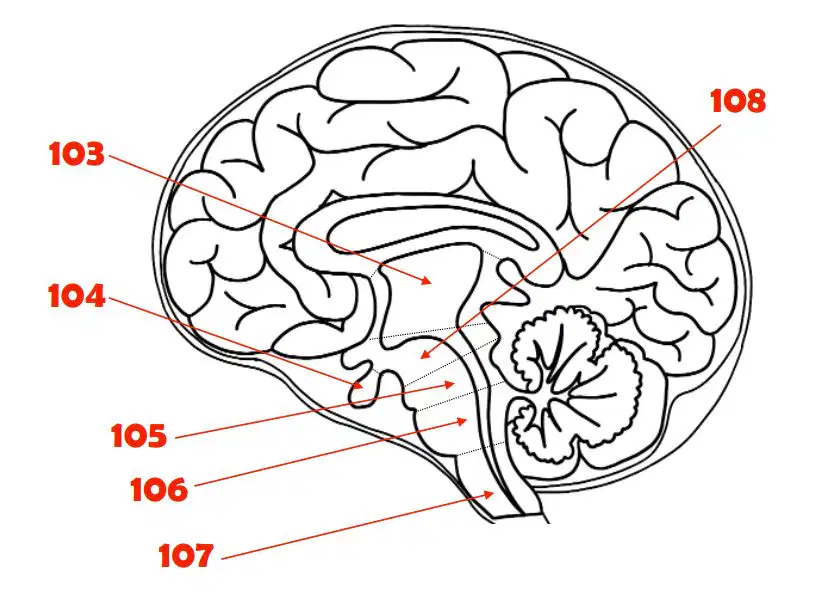
#104
(a)
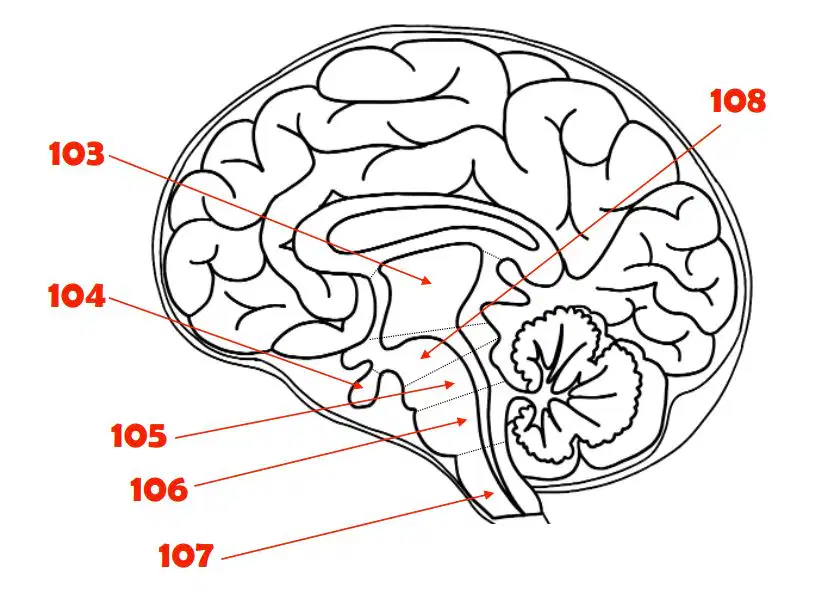
#105
(a)
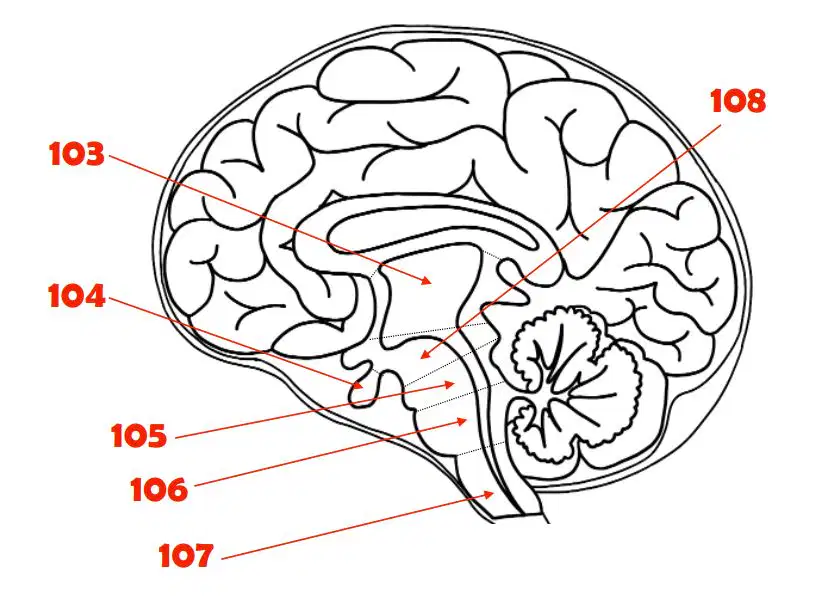
#106
(a)
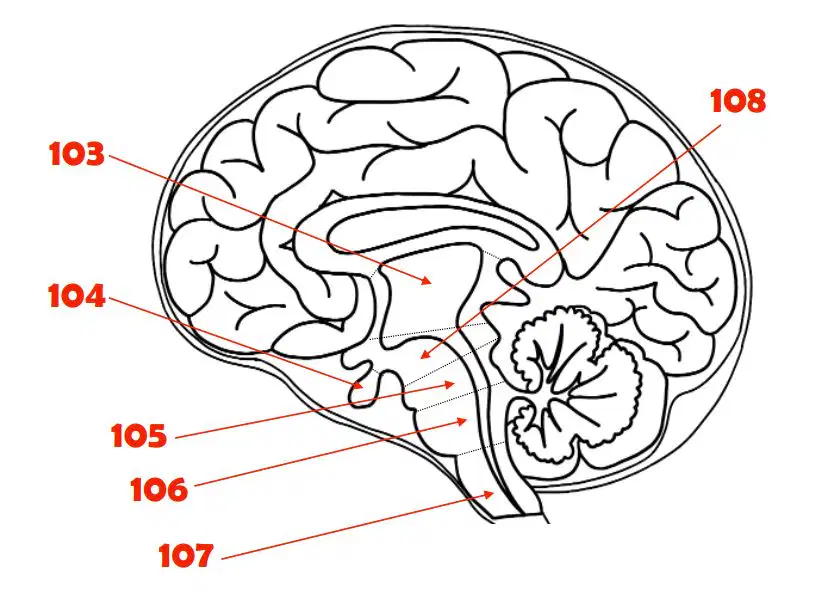
#107
(a)
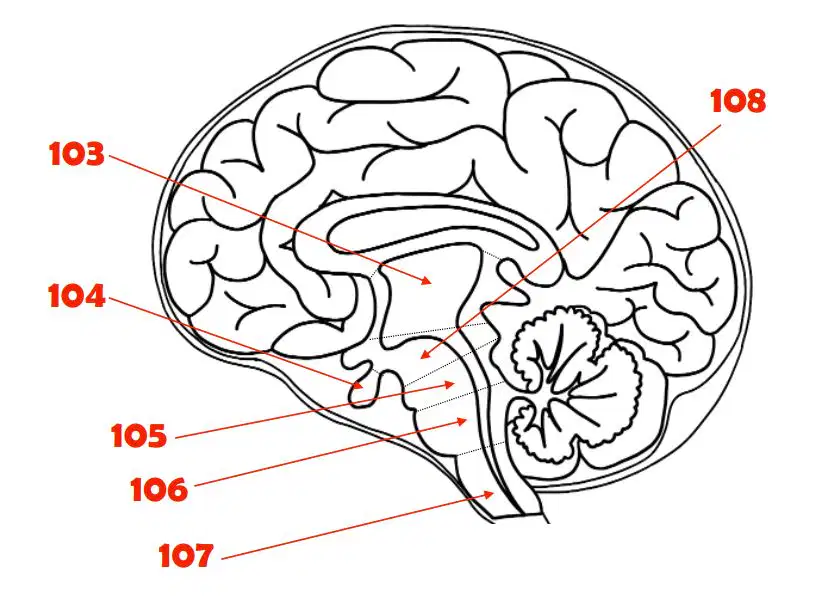
#108
(a)

