wayground logo

Free Printable Worksheets

Font size

S
M
L
XL
Worksheets

Chem chapter 4 practice test

Total questions: 86

Worksheet time: 2hrs 30mins

Name
Class
Date
1.
What atom matches this electron configuration?
1s22s22p63s23p64s23d10
a)
Zinc
b)
Copper
c)
Nickel
d)
Germanium
2.
What atom matches this electron configuration?
1s22s22p63s2
a)
Neon
b)
Magnesium
c)
Aluminum
d)
Potassium
3.
What electron configuration matches an oxygen atom?
a)
1s22s22p63s2, 3p64s23d104p5
b)
1s22s22p4
c)
1s22s22p6
d)
1s22s22p63s23p64s23d1
4.
How many electrons does Si contain? (click to see image)
a)
14
b)
28
c)
2
d)
4
5.
How many electrons can the first energy level hold?
a)
1
b)
2
c)
8
d)
0
6.

What do you start all electron configurations with?

a)

1s2

b)

1d10

c)

1f14

d)

1p6

7.
Which electron configuration belongs to Chlorine (Cl)?
a)
1s2s2p3s3p5
b)
1s2s2p3s3p6
c)
1s2s2p3s3p7
8.

The 4 orbitals are

a)

s, p, d, f

b)

a, b, c, d

c)

2, 4, 6, 8

9.
How many electrons can the d sublevel hold?
a)
8
b)
10
c)
2
d)
4
10.
What is the shorthand electron configuration for Sulfur atom?
a)
[Ar] 3p4
b)
[He] 3s23p4
c)
[Ne] 3s23p4
d)
[Na] 3s23p3
11.
What atom matches this electron configuration?
[Xe] 6s2 4f14 5d9
a)
Mercury
b)
Gold
c)
Platinum
d)
Thallium
12.
What noble gas should be used to write the shorthand configuration for Te?
a)
Ar
b)
Kr
c)
Xe
d)
Sb
13.

Each row on the periodic table represents:

a)

an energy level

b)

a sublevel

c)

an electron

d)

an orbital

14.

What is the noble gas configuration for silicon?

a)

[Ne] 3s2 3p1

b)

[Ar] 4s1

c)

[Kr] 5s1

d)

[Ne] 3s2 3p2

15.

The electron configuration 1s2 2s22p6 3s23p6 represents which noble gas?

a)

neon

b)

argon

c)

helium

d)

krypton

16.
How many electrons can the first energy level hold?
a)
1
b)
2
c)
8
d)
0
17.
The electron configuration of an atom is 1s22s22p6.  The number of electrons in the atom is 
a)
3
b)
6
c)
8
d)
10
18.
Which electron configuration belongs to Chlorine (Cl)?
a)
1s2s2p3s3p5
b)
1s2s2p3s3p6
c)
1s2s2p3s3p7
19.
What atom matches this electron configuration?
1s22s22p63s23p64s23d10
a)
Zinc
b)
Copper
c)
Nickel
d)
Germanium
20.
What electron configuration matches an oxygen atom?
a)
1s22s22p63s2, 3p64s23d104p5
b)
1s22s22p4
c)
1s22s22p6
d)
1s22s22p63s23p64s23d1
21.
How many electrons can the d sublevel hold?
a)
14
b)
10
c)
2
d)
6
22.
How many electrons can the s sublevel hold?
a)
14
b)
10
c)
2
d)
6
23.
What atom matches this electron configuration?
1s22s22p63s2
a)
Neon
b)
Magnesium
c)
Aluminum
d)
Potassium
24.

Which area on the periodic table represents the electrons in the "d" sublevel?

a)

representative elements

b)

columns 3-8

c)

rare earth elements

d)

transition elements

25.

Each row on the periodic table represents:

a)

an energy level

b)

a sublevel

c)

an electron

d)

an orbital

26.
What's a valence electron?
a)
electrons in the second energy level
b)
electrons in the outermost energy level
c)
the atomic number
d)
electrons in the first level
27.
How many valence electrons are in Phosphorus?
a)
15
b)
4
c)
5
d)
31
28.
How many electrons are in the outer shell of Sodium (Na)?
a)
3
b)
1
c)
2
d)
4
29.
How many electrons should Beryllium have around its Lewis dot model?
a)
1
b)
2
c)
3
d)
4
30.
How many electrons should Flourine have around its Lewis dot model?
a)
5
b)
6
c)
7
d)
8
31.

This could be the dot diagram of

a)

Mg

b)

Cl

c)

C

d)

O

32.
Which element is pictured?
a)
neon
b)
fluorine
c)
magnesium
d)
argon
33.
Which element is depicted from this orbital diagram
a)
Fluorine
b)
Neon
c)
Chlorine
d)
Argon
34.
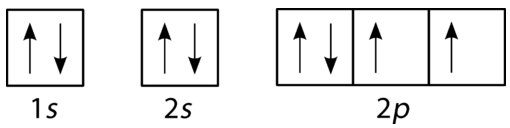
This orbital diagram represents:  
a)
C
b)
B
c)
N
d)
O
35.
This orbital diagram represents:  
a)
C
b)
B
c)
N
d)
O
36.
What is incorrect about this orbital diagram?
a)
Both arrows in the 2p box should be pointing up
b)
There is nothing incorrect with this diagram
c)
In the 2p box there should only be 1 electron in the first 2p box and one in the 2nd 2p box
d)
All the arrows should be pointing up.
37.
Electrons occupy orbitals of lowest energy first is part of what electron configuration rule?
a)
Hund’s Rule
b)
Aufbau Principle
c)
Pauli Exclusion Principle
38.
What is the Pauli Exclusion Principle?
a)
An atomic orbital can only hold a maximum of 2 electrons, each with opposite spins
b)
An atomic orbital can hold a minimum of 6 electrons, each with opposite spins
c)
An atomic orbital can hold a maximum of 6 electrons, each with the same spin
d)
An atomic orbital can hold a minimum of 2 electrons, each with opposite spins
39.
Which orbital shows a violation of Hund's Rule?
a)
A
b)
B
c)
C
d)
D
40.
Which orbital shows a violation of the Aufbau Principle?
a)
A
b)
B
c)
C
d)
D
41.
Which orbital shows a violation of the Pauli Exclusion Principle?
a)
A
b)
B
c)
C
d)
D
42.
All orbitals of equal energy are occupied by one electron before any single orbital is occupied by a second electron.
a)
Aufbau principle
b)
Pauli exclusion principle
c)
Hund’s rule
d)
Core Notation
43.
Maximum number of electrons that can be placed in an s orbital.  
a)
2
b)
6
c)
10
d)
14
44.
The maximum number of electrons that can be placed in an p orbital.  
a)
2
b)
6
c)
10
d)
14
45.
The maximum number of electrons that can be placed in an d  orbital.  
a)
2
b)
6
c)
10
d)
14
46.
The maximum number of electrons that can be placed in an f orbital.  
a)
2
b)
6
c)
10
d)
14
47.
In an orbital diagram,  an arrow represents: 
a)
an electron
b)
an orbital
c)
an element
48.

Electrons that have not been excited are said to be at:

a)

high level

b)

base line

c)

set state

d)

ground state

49.

This shape is that of a...

a)

s orbital

b)

d orbital

c)

p orbital

d)

f orbital

50.

The principle quantum number, n, represents the:

a)

spin value

b)

suborbital value

c)

energy level

d)

magnetic value

51.

The proper pair of the l value with the orbital shape.

a)

0; f

b)

3; p

c)

1; s

d)

2; d

52.

With each higher energy level, the electrons are

a)

lower in energy

b)

more stable

c)

weaker

d)

farther from the nucleus

53.

How many electrons total are found in the f orbital?

a)

2

b)

6

c)

10

d)

14

54.

Which of the following is NOT a possible pair of quantum numbers?

a)

2p

b)

2d

c)

4p

d)

4f

55.
Why is the 3rd energy able to fit more electrons?
a)
Because 3 is a sacred number, just look at it!
b)
Because the p-block that looks like it is part of the 3rd energy level is actually part of the 2nd energy level
c)
Because the d-block that looks like it is part of the 4th energy level is actually part of the 3rd energy level
d)
Because the third energy level has 7 s orbitals
56.

n=4, l=3?

a)

4f

b)

4d

c)

3s

d)

3p

57.

orbital sublevels, or l, implies:

a)

orbital color

b)

electron spin

c)

orbital shape

d)

energy level

58.

Properly pair the l-value is with the orbital shape.

a)

0; f

b)

1; s

c)

3; p

d)

2; d

59.

Which of the following is incorrect about the quantum variable m, or ml?

a)

m = -l...l

b)

the value for p is -1, 0, 1

c)

when l is 2, there are 5 values for m

d)

the value is either +1/2 or -1/2

60.

This is a ____ orbital

a)

s

b)

d

c)

p

d)

d

61.

Write a set of quantum numbers for a 4d orbital.

a)

(4,1,0, -1/2)

b)

(4,2,-2, +1/2)

c)

(4,0,2,-1/2)

62.

Which set of Quantum numbers is not allowed

a)

(3,1,1,-1/2)

b)

(2,1,-2,+1/2)

c)

(4,2,-1,-1/2)

63.

The maximum number of electrons with quantum numbers with n=3 and l=2 is

a)

2

b)

4

c)

6

d)

10

64.

If n = 2, what are the allowed values of l? Tick all that apply:

a)

0

b)

1

c)

2

d)

3

65.

For l = 0, tick the possible values of m:

a)

-2

b)

-1

c)

0

d)

1

e)

2

66.

For l = 2, tick the possible values of m:

a)

-2

b)

-1

c)

0

d)

1

e)

2

67.

What are the possible values of s?

a)

-1

b)

-1/2

c)

0

d)

1/2

e)

1

68.

Which of the following sub levels correspond to n=3 l=2

l = 0–>n-1

a)

2p

b)

3s

c)

3p

d)

3d

e)

3f

69.

N=5 l=2

a)

3s

b)

4sp

c)

5d

d)

5p

70.

Which of the following sub levels does not exist

a)

2p

b)

3d

c)

2d

d)

5f

e)

4f

71.

If n = 1, what are the allowed values of L? Tick all that apply:

a)

0

b)

1

c)

2

d)

3

72.

If n = 2, what are the allowed values of L? Tick all that apply:

a)

0

b)

1

c)

2

d)

3

73.

Which light wave has the most energy?

a)

Gamma rays

b)

Visible light

c)

X-rays

d)

Microwaves

74.

Which light wave has the lowest energy?

a)

Microwaves

b)

Visible light

c)

Radiowaves

d)

Ultraviolet light

75.

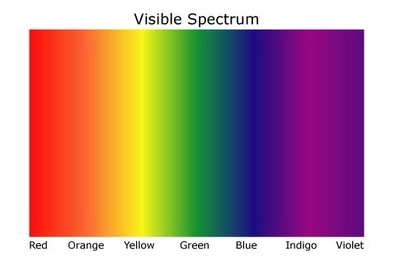
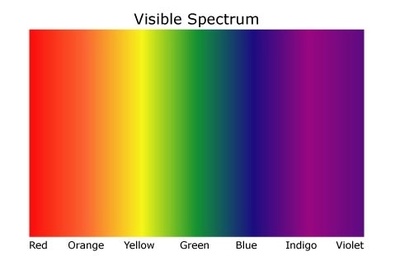
What color of light has the longest wavelength?

a)

red

b)

green

c)

yellow

d)

violet

76.

What color of light has the shortest wavelength?

a)

red

b)

indigo

c)

yellow

d)

violet

77.
Who developed the wave theory?
a)
DeBrogile
b)
Heisenberg
c)
Thompson
d)
Dalton
78.

The aufbau principle states that each electron wants to occupy the ______ energy orbital available.

a)

highest

b)

lowest

79.

What is the ground-state electron configuration for potassium?

a)

1s2 2s2 2p2 3s2 3p2 4s2 3d2 4p2 5s2 4d2

b)

1s2 1p6 1d10 1f1

c)

1s2 2s2 3s2 2p6 3p6 4p1

d)

1s2 2s2 2p6 3s2 3p6 4s1

80.

What is the ground-state electron configuration for aluminum?

a)

1s2 2s2 2p2 3s2 3p2 4s2 3d2

b)

1s2 2s2 2p6 3s2 3p1

c)

1s2 2s2 3s2 2p6 3p1

d)

1s2 2s2 3s2 4s2 5s2 6s2 7s1

81.
An electron occupies the lowest energy orbital that can receive it.
a)
Hund’s rule
b)
Pauli exclusion principle
c)
Bohr model of the atom
d)
Aufbau principle
82.
All orbitals of equal energy are occupied by one electron before any single orbital is occupied by a second electron.
a)
Aufbau principle
b)
Pauli exclusion principle
c)
Hund’s rule
d)
Core Notation
83.
No two electrons in the same atom can have the same four quantum numbers.
a)
Aufbau principle
b)
Pauli exclusion principle
c)
Hund’s rule
d)
Noble gas notation
84.
Which guideline, Hund’s rule or the Pauli exclusion principle, is violated in the following orbital diagrams?
a)
Hund's
b)
Aufbau's
c)
Pauli's Exclusive
85.
Which guideline, Hund’s rule or the Pauli exclusion principle, is violated in the following orbital diagrams?
a)
Aufbau's
b)
Hund's
c)
Pauli exclusive
86.
Electrons occupy orbitals of lowest energy first is part of what electron configuration rule?
a)
Hund’s Rule
b)
Aufbau Principle
c)
Pauli Exclusion Principle