wayground logo

Free Printable Worksheets

Font size

S
M
L
XL
Worksheets

Energy Review

Total questions: 85

Worksheet time: 1hrs 6mins

Name
Class
Date
1.

What is energy?

a)

Force

b)

The ability to do work

c)

Electricity

d)

The ability to transform work

2.

Which type of energy is best seen in the picture?

a)

Chemical

b)

Sound

c)

Electrical

d)

Thermal

3.

What type of energy is seen here?

a)

Sound

b)

Light

c)

Thermal

d)

Mechanical

4.

What kind of energy does this device use?

a)

Mechanical

b)

Chemical

c)

Light

d)

Electrical

5.

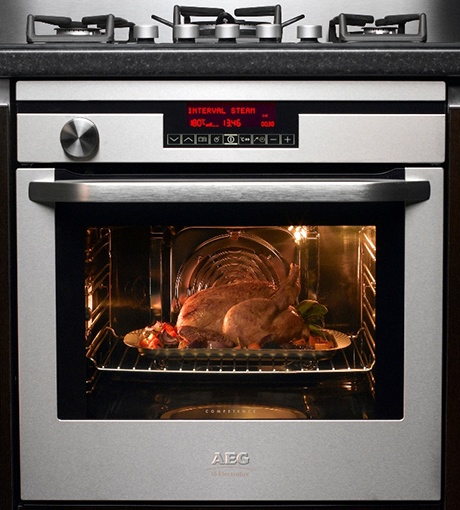
What type of energy do we use to cook food?

a)

Light

b)

Electrical

c)

Sound

d)

Thermal

6.

_______ energy is the energy that moves objects.

a)

Thermal

b)

Electrical

c)

Mechanical

d)

Sound

7.

Sound energy is produced when an object ______.

a)

moves

b)

heats up

c)

vibrates

d)

falls

8.

A radio, siren, and television are all designed to produce ______ ______.

a)

light energy

b)

sound energy

c)

mechanical energy

d)

electrical energy

9.

What forms of energy come from the flame of a candle?

a)

Thermal and light

b)

Electrical and thermal

c)

Mechanical and light

d)

Thermal and sound

10.

What form of energy is being demonstrated?

a)

Thermal

b)

Sound

c)

Mechanical

d)

Electrical

11.
Energy of motion is which type of energy?
a)
Potential
b)
Kinetic
c)
Sound
d)
Gravitational
12.

A plant turns thermal energy from the sun into chemical energy during photosynthesis. This is an example of a(n)...

a)

Energy transformation

b)

Matter transformation

c)

Energy change

d)

Physical Change

13.

Which of the following is an example of thermal energy?

a)

A light bulb

b)

The movement of a car

c)

The digestion of food

d)

Heat from a fire

14.

Energy from the sun is called...

a)

Conduction

b)

Rays

c)

Radiation

d)

Heat

15.

Which has more gravitational energy?

a)

A snowboarder at the top of a mountain

b)

A person laying on the beach

16.

Which of the following is NOT a form of energy?

a)

Thermal

b)

Mechanical

c)

Sound

d)

Water

17.

Energy that is stored is called...

a)

Kinetic Energy

b)

Potential Energy

c)

Mechanical Energy

d)

Thermal Energy

18.

Which has the most kinetic energy?

a)

A caught baseball

b)

A turtle swimming

c)

A parked car

19.

Which object shows an energy transformation from electrical to mechanical?

a)
b)
c)
d)
20.
Electrical Energy is transferred to _____ Energy.
a)
Thermal
b)
Solar
c)
Electrical
d)
None
21.

What sort of energy transformation is this?

a)

Chemical to Thermal

b)

Thermal to chemical

c)

Kinetic to potential

d)

Open to closed

22.
What is the best example of a machine that converts electrical energy into kinetic energy and sound energy?
a)
an electric toothbrush
b)
a toaster
c)
a flashlight
d)
an iron
23.
What best describes the energy conversion that takes place in a microwave oven?
a)
electrical to light to thermal
b)
chemical to thermal to light
c)
electrical to thermal to sound
d)
nuclear to thermal to chemical
24.
What type of energy includes both kinetic and potential energy?
a)
mechanical energy
b)
chemical energy
c)
heat energy
d)
sound energy
25.
What kind of energy is represented in the picture?
a)
Thermal
b)
Chemical
c)
Sound
d)
Nuclear
26.
Energy that is stored in the nucleus of an atom is called _________ energy.
a)
Chemical
b)
Nuclear
c)
Gravitational
d)
Elastic
27.

____________ is the ability to do work.

a)

Energy

b)

Force

c)

Friction

d)

Motion

28.
Electromagnetic energy (such as visible light waves, X-rays, gamma rays and radio waves) is called _______ energy.
a)
Thermal
b)
Radiant
c)
Sound
d)
Electrical
29.

What kind of energy is being shown in the picture?

a)

Light

b)

Gravitational

c)

Potential

d)

Kinetic

30.

As the ball is dropped, the potential energy decreases while the kinetic energy increases however the amount of energy stays the same.

a)

True

b)

False

31.

The rock has kinetic energy.

a)

True

b)

False

32.

Which is the best example of kinetic energy?

a)

A car sitting on top of a hill

b)

A skateboard on the sidewalk

c)

A wagon rolling down a hill

d)

A powerwheel parked in the yard

33.

What is changed to increase the potential energy of an object being dropped?

a)

Temperature

b)

Gravity

c)

Height

d)

Volume

34.

Which two points have the same potential energy?

a)

U & V

b)

S & T

c)

T & X

d)

S & X

35.

What happens as the ball on the pendulum goes from center to the right in the diagram?

a)

Kinetic energy increases while potential energy decreases

b)

Potential energy increases as kinetic energy decreases

c)

Potential energy increases as kinetic energy increases

d)

Potential and Kinetic energy is lost

36.

How does energy change?

a)

The cart has more kinetic energy at the top than when it is going down the hill.

b)

The cart has potential energy at the top while kinetic energy increases going down.

c)

The cart has potential energy that is lost going down the hill.

d)

The cart has kinetic energy at the top of the hill and no potential energy.

37.

How does energy transfer as the ball is bouncing?

a)

Kinetic, Potential, Potential, Kinetic

b)

Potential, Potential, Kinetic, Kinetic

c)

Kinetic, Kinetic, Potential, Potential

d)

Potential, Kinetic, Kinetic, Potential

38.

Before fruit falls from a tree, how does energy flow?

a)

Potential - Kinetic - Sound

b)

Light - Kinetic - Heat

c)

Potential - Sound - Heat

d)

Solar - Kinetic - Heat

39.

The ball's potential energy is equal to it's mechanical energy.

a)

True

b)

False

40.

A student places an orange on the table then the orange rolls across the table. Which below statement is true?

a)

The orange has potential energy but no kinetic energy at all.

b)

The orange has kinetic energy but no potential energy at all.

c)

The orange has kinetic and potential energy.

d)

The orange has no energy at all.

41.

A toy car is traveling up a ramp. What happens to the energy as it goes up the ramp?

a)

Kinetic energy increases while potential decreases.

b)

Potential energy increases while kinetic decreases.

c)

Both potential and kinetic energy increases.

d)

Both potential and kinetic energy decreases.

42.

Which two types of energy are seen in a roller coaster?

a)

Kinetic & Potential

b)

Potential & Light

c)

Kinetic & Thermal

d)

Kinetic & Chemical

43.

Which position has the most kinetic energy?

a)

1

b)

2

c)

3

d)

4

44.

Which type of energy is showing the greatest at the jumper's position?

a)

Mechanical

b)

Kinetic

c)

Potential

d)

Applied

45.

Which position has the highest potential energy?

a)

1

b)

2

c)

4

d)

6

46.

Where does kinetic energy transfer to potential energy?

a)

1 to 2

b)

2 to 3

c)

4 to 5

d)

none

47.

Which position has the most potential energy?

a)

1

b)

2

c)

3

d)

4

48.

Which position has the greatest amount of kinetic energy?

a)

1

b)

2

c)

3

d)

4

49.
Which of these best completes the circuit?
a)
rubber band
b)
metal nail
c)
leather shoelace
d)
wooden toothpick
50.
A fifth grade class constructed this circuit.  Which of these objects most likely made the light glow when connected to points X and Y?
a)
plastic straw
b)
cotton string
c)
aluminum foil
d)
rubber eraser
51.
The electrician in this picture is wearing rubber gloves for protection.  The purpose of the rubber gloves is to --
a)
keep the electrician dry
b)
create an electrical circuit
c)
produce electricity
d)
protect the electrician
52.
Which of these substances conducts electricity the best?
a)
wood
b)
brick
c)
copper
d)
plastic
53.
What material would be safest to use as an insulator to cover electrical wires?
a)
rubber
b)
tin
c)
aluminum
d)
water
54.
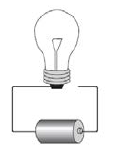
This image represents what type of circuit?
a)
open
b)
closed
c)
series
d)
parallel
55.
Will the light bulb in this circuit light and why/why not?
a)
yes, because it has two batteries
b)
no, because the switch is open
c)
yes, because it is in a circuit
d)
no, because the bulb is burned out
56.
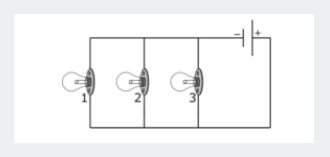
What type of circuit is represented by the diagram?
a)
closed
b)
series
c)
open
d)
parallel
57.
If bulb 1 burns out, what will occur?
a)
bulbs 2 and 3 will go out
b)
bulbs 2 and 3 receive more volts
c)
bulbs 2 and 3 will stay lit
d)
nothing will happen
58.

A student builds a circuit made up of a battery, two light bulbs, and a switch. What will the student most likely observe in this circuit?

a)

Light bulb 1 and light bulb 2 will both be on

b)

Light bulb 1 will be off, but light bulb 2 will be on

c)

Light bulb 1 and light bulb 2 will both be off

d)

Light bulb 1 will be on, but light bulb 2 will be off

59.

The diagram shows a series circuit with three lit bulbs. How many of the bulbs will remain lit if the wire is cut a the point shown by the arrow?

a)

0

b)

1

c)

2

d)

3

60.

A group of students built the circuit shown above. The lightbulb does not glow. Which statement explains this observation?

a)

The battery is not charged

b)

The lightbulb is not part of a complete circuit

c)

The circuit does not have a switch

d)

The bell uses most of the energy from the battery

61.

Students constructed a circuit using different-colored lightbulbs. What will happen if Switch 3 is closed and the other switches are left open?

a)

Only the white bulb will operate

b)

None of the bulbs will operate

c)

Only the white and yellow bulbs will operate

d)

Only the red and blue bulbs will operate

62.

The diagram shows an electric circuit with four bells that a student plans to build. When the student connects the wire as shown, which of the bells will ring?

a)

Bell 1 only

b)

Bells 1 and 4 only

c)

Bells 3 and 4 only

d)

Bells 1, 2, 3, and 4

63.
Is the following photo of an open circuit or closed circuit? 
a)
A closed circuit which allows electricity to flow
b)
An open circuit which does not allow electricity to flow
64.
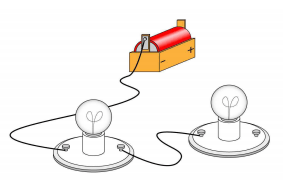
Why won’t the light bulb in the circuit pictured to the right light up?
a)
The wires from the second light bulb are not connected to the battery
b)
The wires are not connected between the light bulbs 
c)
The wires are not connected to both sides of the first light bulb
d)
The wires are too long to complete the circuit 
65.
What kind of circuit is this?
a)
series
b)
parallel
66.
What is a Parallel circuit? 
a)
Has only one path 
b)
Has more than one path 
c)
Allows energy to travel through easily 
d)
Has only one light bulb
67.
This object transforms mechanical energy into electrical energy
a)
Circuit
b)
Generator
c)
Motor
d)
Battery
68.
Which of these pairs of devices operate in reverse of each other?
a)
generator and motor
b)
generator and electromagnet
c)
motor and electromagnet
d)
electromagnet and resistor
69.
Which part of a circuit allows electrical current to flow between the battery and light bulb?
a)
load
b)
power source
c)
resistor
d)
conductor
70.
What device turns electrical energy into mechanical energy?
a)
a solenoid
b)
a motor
c)
an electromagnet
d)
an electric generator
71.
A device that increases or decreases the voltage of alternating current is a
a)
generator
b)
motor
c)
transformer
d)
turbine
72.
Which of these can apply a force without actually touching an object?
a)
motor
b)
generator
c)
magnetic field
d)
turbine
73.
A coil of wire spinning around a magnet or a magnet spinning around a coil of wire can form___
a)
a permanent magnet
b)
an iron core
c)
a turbine
d)
an electric current
74.
This type of energy is stored in a battery 
a)
chemical
b)
mechanical
c)
electrical
d)
thermal
75.
This type of circuit allows for electricity to flow 
a)
closed
b)
open
c)
both
d)
neither
76.
This kind of circuit does not allow electricity to flow 
a)
open
b)
closed
c)
both
d)
neither
77.
This device is used to open or close a circuit
a)
battery
b)
wire
c)
switch
d)
solar cell
78.
electricity can be transformed into this type of energy by connecting a circuit to a fan
a)
thermal
b)
chemical
c)
radiant
d)
mechanical
79.
This type of circuit allows electricity to flow in only one path
a)
series
b)
parallel
c)
open
d)
none of these
80.
This type of circuit allows electricity to flow in multiple paths
a)
open
b)
series
c)
parallel
d)
both
81.
This conductor allows electricity to travel through a circuit 
a)
battery
b)
switch
c)
bulb
d)
wire
82.
Which of the following do you need in order to form a circuit?
a)
power source
b)
conductor
c)
resistor/load
d)
all of these
83.
Which of the following is a power source?
a)
battery
b)
solar cell
c)
fossil fuels
d)
all of these
84.
What type of circuit does the image below represent?
a)
series
b)
parallel
c)
none
d)
open
85.
What type of circuit does the image below represent?
a)
series
b)
parallel
c)
open
d)
none of these