
Font size
 Worksheets
QUARTER 3 TEST REVIEW
Total questions: 100
Worksheet time: 17hrs 15mins
N or C?


What is a group
Up and down row on the table
Up and down column on the table
Side to side row on table
Side to side column on the table
What is a period
Up and down row on the table
Up and down column on the table
Side to side row on table
Side to side column on the table
What atom matches this electron configuration? 1s22s22p63s2
Neon
Magnesium
Aluminum
Potassium
What is the correct formula for when K and F bond?
KF
K2F
KF2
K2F3

Covalent bonds are usually formed between...
A metal and a non-metal
Two non-metals
Two metals
Of these 3 molecules, which represents a covalent bond?
O2
NaI2
NaCl
MgO
What are valence electrons?
The total number of electrons in an atom
The number of electrons in the outermost shell
The number of electrons in the second shell
The number of protons in the outermost shell

Students were asked to identify the location of elements in the periodic table based on clues printed on game cards.
Based on the data, which periodic table shows the correct location of the four elements?


What type of bond is depicted in the image?
Non-polar Covalent
Polar Covalent
Ionic

What type of bond is depicted in the image?
Non-polar Covalent
Polar Covalent
Ionic

What type of bond is depicted in the image?
Non-polar Covalent
Polar Covalent
Ionic
Which bond shares electrons evenly?
non polar Covalent
Polar Covalent
Ionic

The difference in electronegativity affects the type of bond will be formed. What type of bond would be formed with a difference of 2.0?
Non-polar Covalent
Polar Covalent
Ionic
What is the bond polarity if the electronegativity difference ranges from 0 to 0.3?
Nonpolar Covalent
Polar Covalent
Ionic

What is the difference in electronegativity for
SO2 ?0.5
1.0
2.0
3.5
Which bond shares electrons unevenly?
Covalent
Polar Covalent
Ionic
Which bond involves "stealing" electrons?
Covalent
Polar Covalent
Ionic
The difference in electronegativity affects the type of bond will be formed. What type of bond would be formed with a difference of 2.0?
Covalent
Polar Covalent
Ionic
The difference in electronegativity affects the type of bond will be formed. What type of bond would be formed with a difference of 0.6?
Covalent
Polar Covalent
Ionic
Identify the following compound as ionic or covalent: Na2SO4
ionic
covalent
Identify the following compound as ionic or covalent: CF4
ionic
covalent
A bond between a nonmetal and a nonmetal is called a(n)
covalent bond
ionic bond
metallic bond
transfer bond
A bond between a metal and a nonmetal is called a(n)
covalent bond
ionic bond
metallic bond
transfer bond
Identify the following compound as ionic or covalent: SO2
ionic
covalent

What type of bonding does this picture show?
Ionic
Covalent

What type of bonding does this picture show?
Ionic
Covalent
Generally high melting & boiling points
Ionic compounds
Covalent compounds
Can be a solid, liquid, or gas at room temperature
Ionic compounds
Covalent compounds
Always a solid at room temperature
Ionic compounds
Covalent compounds
Poor electrical conductivity
Ionic compounds
Covalent compounds
Conducts electricity well when melted or dissolved
Ionic compounds
Covalent compounds
Valence electrons are shared
Ionic bonds
Covalent bonds
Valence electrons are transferred
Ionic bonds
Covalent bonds
Carbon and Oxygen will make a ___________ bond.
ionic
covalent
metallic
Sodium and Bromine will make a _____ bond.
ionic
covalent
metallic

This image shows the bonding between Lithium and Fluorine. What does the red arrow show?
electrons being shared
electrons being transferred to Fluorine
electrons being transferred to Lithium
electrons being destroyed
Which of the following is NOT a step in forming an ionic bond?
One atom shares its electrons with another one
Opposite charged ions form due to the transfer of electrons
One atom gives electrons to another one
Oppositely charged ions attract
An ionic bond is the attraction between: (Select ALL that apply)
oppositely charged ions
similarly charged ions
metals and nonmetals
neutral atoms
cations and anions
Which of the following is the correct formula for these two ions: Al+3 & S-2
AlS3
Al2S3
Al3S2
Al3S
If I had a cation with a charge of 2+ how would you describe the formation of that ion?
gained 2 electrons
lost 2 electrons
gained 4 electrons
lost 4 electrons
What is responsible for bringing cations and anions together?
the size of the ions
the opposite charges are attracted to one another
the similar charges are attracted to one another
depends on what period they're in
Which is the correct name for CaBr2?
Calcium Bromine
Bromine Calcium
Calcium Bromide
Bromine Chloride
Calcium Bromate
Which of the below is an ionic compounds?
Ni
MgCl2
H2O
CH4
An example of an ionic compound is Sodium Chloride, which is made from Na+ and Cl- ions. Why do these ions form an ionic bond?
They have like charges
They are from the same group
They are from the same period
They have opposite charges
Which of the following is true for ionic bonding & ionic compounds? (3 correct statements)
They must be made of ions with like charges.
The negative ion must be written first.
Compounds must have an overall charge of zero.
They are made of metals and nonmetals.
The positive ion must be written first.

Which properties are all characteristics of ionic compounds?
solids with high melting and boiling points
soft solids which are highly malleable
when solid, the ions are held in place so the compounds cannot conduct electricity
conduct electricity when dissolved or molten
What properties does an ionic compound have?
A low boiling point and it conducts electricity when dissolved in water
A high melting point and it conducts electricity when molten or dissolved
A high boiling point and it conducts electricity when solid
Which of the following is NOT a property of ionic compounds?
They conduct electricity when molten
They conduct electricity when in solution
They have high boiling points
They are insoluble in water
Which of the following pairs of elements would NOT react to form an IONIC compound?
sulfur and phosphorus
sodium and iodine
iron and oxygen
aluminum and bromine

The diagram represents the general structure of a solid Z.
What is Z?
aluminium
iodine
silicon dioxide
sulfur
Metallic bonding is...
a type of covalent bond.
a type of ionic bond.
an attraction between positive ions and freely moving electrons.

Anions have ionic radii that are larger than their atomic radii.
True
False
Which is larger... P or P3- ? … and why?
P3- because it gains an energy level
P3- due to extra electron repulsion
P because it loses an energy level
P because of extra electron repulsion
Which is the smaller atom: Mg or Mg+2?
Mg because it gains an energy level since it gains 2 electrons.
Mg due to extra electron repulsion created by gaining 2 electrons.
Mg+2 because of extra electron repulsion created by gaining 2 electrons.
Mg+2 because it loses an energy level since it loses 2 electrons.

(a) bonds occur when the two bonding atoms have (b) electronegativities. (c) bonds occur when the two bonding atoms have different electronegativities.

Match the following bond types to their descriptions:
ionic
electrons are completely transferred from one atom to another (metals and nonmetals)
nonpolar covalent
electrons are shared equally between nonmetal atoms
polar covalent
electrons are shared unevenly between nonmetal atoms
metallic
collective sharing of a sea of electrons between metal atoms
FeCl3
tin (II) fluoride
Name the following covalent compound:
CCl4
monocarbon quadchloride
carbon tetrachloride
carbon chloride
monocarbon quadchloide
Name the following covalent compound:
NF3
nitrogen triflouride
mononitrogen triflouride
nitrogen flouride
tetranitroflouide
Write the formula for the covalent compound
dinitrogen pentoxide
NO
N2O5
2NO5
O5N
What is the correct name for the covalent compound C4H6?
Carbon Hexahydride
Pentacarbon Pentahydride
Hexacarbon Tetrahydride
Tetracarbon Hexahydride
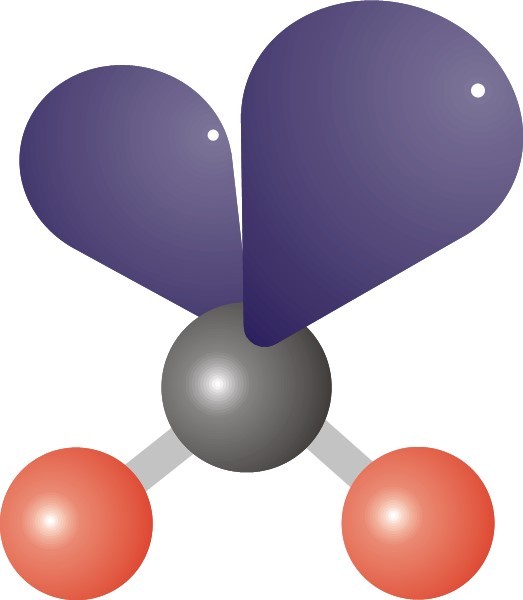
Which is the correct molecular structure for carbon dioxide?


What is the correct Lewis Dot Structure for ammonia NH3


Determine the molecular geometry of the given structure.
Trigonal Pyramidal
Trigonal Bipyramidal
Trigonal Planar
Tetrahedral
The geometry of a molecule with 4 bonded pairs of electrons and 0 lone pairs of electrons, AB4
Tetrahedral
Trigonal Planar
Bent
Trigonal Pyramidal
Linear

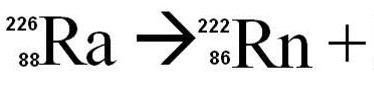
146C --> 0-1e + ________
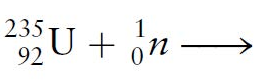
94Be + 11H → _____ + 42He
The % of the parent isotope remaining after 3 Half Lives.
50%
25%
12.5%
6.25%

The diagram shows 32 atoms
8 of the Red are parent isotopes
24 of the Green are daughter isotopes
How many half-lives have occurred?
0
1
2
3
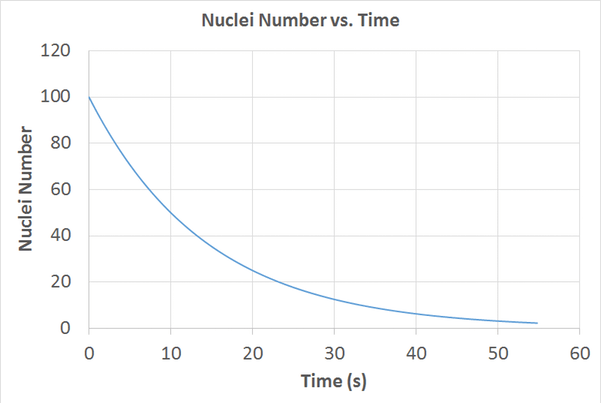
What is the Half life of this isotope?
5 seconds
10 seconds
15 seconds
20 seconds

Type in the measurement on the graduated cylinder to the correct number of significant digits. No unit.
6.300
6.3
6.32
7.70

Read the graduated cylinder
76.0
76.15
71.9

Type in the measurement on the ruler to the correct number of significant digits. No unit.
41.6
41
42
41.50

Which of the following choices best represents the length reading from the metric ruler pictured?
0.8 cm
0.80 cm
0.800 cm
8 cm

