
 Worksheets
Unit 8 test review
Total questions: 122
Worksheet time: 2hrs 28mins
What is a chemical reaction?
A process that leads to the transformation of weather patterns
A process that leads to the transformation of one set of chemical substances to another
A process that leads to the transformation of physical properties
A process that leads to the transformation of energy
Give an example of a physical change.
Melting of ice
Burning of wood
Boiling of water
Rusting of iron
What are some signs of a chemical change?
Change in temperature
Color change, production of gas, formation of a precipitate, and release of heat or light
Change in state of matter
Change in shape or size
Is burning wood a chemical or physical change? Why?
Spiritual change
Emotional change
Physical change
Chemical change
What happens to the composition of a substance during a physical change?
It disappears completely
It becomes radioactive
It turns into a different element
It remains the same
Explain the difference between a chemical change and a physical change.
A chemical change involves the change in color of a substance, while a physical change only alters the form or appearance of a substance without changing its chemical composition
A chemical change only alters the form or appearance of a substance without changing its chemical composition, while a physical change involves the formation of new substances with different properties
A chemical change involves the change in state of a substance, while a physical change only alters the form or appearance of a substance without changing its chemical composition
A chemical change involves the formation of new substances with different properties, while a physical change only alters the form or appearance of a substance without changing its chemical composition.
What are some examples of evidence of a chemical change?
Change in texture
Change in state of matter
Formation of a precipitate, color change, gas production, and temperature change
Change in shape
How can you tell if a chemical change has occurred?
By tasting the substance
By smelling the substance
By observing the change in temperature
By observing the formation of a new substance, change in color, production of gas, or release of energy.
What are some examples of physical changes?
Baking a cake, mixing salt and water, burning wood
Melting ice, boiling water, cutting paper
Freezing water, dissolving sugar, fermenting grapes
Digesting food, photosynthesis, rusting of iron
Why is it important to distinguish between chemical and physical changes?
To understand the nature of the changes and their impact on the substances.
Because it doesn't really matter, they are basically the same
To confuse students and make the topic more difficult
To waste time and make the learning process more tedious
First lets review!!
What are some signes that a chemical reaction has taken place?
change in shape
bubbles of gas appear
melting
dissolving
After you combine two substance together, a news substance forms. This is an example of :
physical change
chemical change
In an endothermic reaction, energy is
absorbed
released
If a chemical reaction is ENDOTHERMIC, the temperature would...
stay the same
increase
decrease
In an exothermic reaction, energy is
absorbed
released
If a chemical reaction is EXOTHERMIC, the temperature would...
stay the same
increase
decrease
What instrument would you use to detect an endothermic or exothermic reaction?
triple beam balance
ruler
thermometer
barometer

_____ reactions usually feel cool
endothermic reaction
exothermic reaction
Surrounding temperature gets warmer
endothermic
exothermic

Photosynthesis
endothermic
exothermic
The initial temperature was measured to be 20oC and the final temperature was 45oC. The reaction was
endothermic
exothermic

Rocket launch
endothermic
exothermic
The initial temperature was measured to be 20oC and the final temperature was 10oC. The reaction was
endothermic
exothermic
Which of the following are examples of an Endothermic Reaction?
Baking a cake
Candles burning
water evaporting
water freezing
Which of the following are examples of an Exothermic Reaction?
Baking a cake
Candles burning
water evaporating
water freezing

What type of reaction is this and how do you know?

What is this graph showing? How do you know?
How would you measure the rate of a reaction?
In order to determine the rate of a reaction would you measure the reactions
temperature
mass of the product over time
Catalyst is the opposite of an inhibitor... a catalyst will
speed up a reaction
slow down a reaction

We want to make elephant toothpaste, which is an exothermic reaction because heat is released... How can we create the biggest reaction?
How do you feel about endothermic and exothermic reaction and the rates of reactions?
5
4
3
2
1
PCl5 + ___ H2O → ___ HCl + H3PO4
4, 5
1, 6
3, 8
2,2
__ Al + __ FeO → Al2O2 + __ Fe
1, 1, 2
2,1,2
2, 2, 2
2,4,2
_SnO2 +_H2-->_Sn +_H2O
_CF4 + _Br2 -- _CBr4 + _F2
Example: H2
_Al +_HCl --> _H2 +_AlCl3
_CH4 + _O2 --> _CO2 + _H2O
_CF4 + _Br2 -- _CBr4 + _F2

The two sides of a chemical equation are called?
Reactants (left) and Products (right)
Ingredients (left) and Product (right)
Cations and Anions
Reactants (left) and Results (right)
H2SO4
chemical equation that uses coefficients to show that the number of atoms of each element that enters into a reaction is equal to the number of atoms of that same element produced during the reaction
balanced chemical equations
chemical equation
chemical reaction
neutralization reaction
a condensed statement that used chemical formulas and identifies the reactants and products of a chemical reaction
chemical equation
balanced chemical equation
chemical reaction
single displacement reaction
process in which one or more substances are converted into new substances with different chemical and physical properties
chemical reaction
chemical equation
single displacement reaction
synthesis reaction
a whole number that precedes a reactant or product symbol or formula in a chemical equation and indicates the relative number or representative particles involved in the reaction
coefficent
chemical reaction
chemical equation
double displacement reaction
a chemical reaction in which a hydrocarbon reacts with oxygen to produce carbon dioxide, water, and energy in the form of heat and/or light
combustion reaction
decomposition reaction
double displacement reaction
single displacement reaction
matter is neither created nor destroyed
conservation of matter
decompostion reaction
single displacement reaction
chemical reaction
a chemical reaction in which a single complex compound is broken down into two or more products; general form is
AB yields A + B
decomposition reaction
combustion reaction
single displacement reaction
neutralization reaction
a chemical reaction in which the cations from two ionic compound replace each other forming two new ionic compounds; the general form is AB + CD yields AD + CB
double displacement reaction
single displacement reaction
combustion reaction
synthesis reaction
a chemical reaction between an acid and a base that destroys the chemical and physical properties of both; the products are water and a salt formed from the cation of a base and the anion of an acid
neutralization reaction
decomposition reaction
combustion reaction
double displacement reaction
a chemical reaction in which a single element displaces another element that is part of a compound; general form is
A + BC yields B + AC
single displacement reaction
double displacement reaction
synthesis reaction
neutralization reaction
a chemical reaction in which two or more elements or compound combine to form a single product; general form is
A + B yields AB
synthesis reaction
double displacement reaction
single displacement reaction
decomposition

How many atoms in all are in a molecule of serotonin?
C10H12N2O

What is a substance that speeds up the rate of a chemical reaction?
Rate
Catalyst
Calorimeter
Hydrocarbon

radioactive decay in which an atomic radius emits an alpha particle (helium nuclei) and a stable isotope; the stable isotope can be identified by subtracting 4 from the mass number of the radioactive isotope and subtracting 2 from its mass number
alpha radioactive decay
gamma radioactive decay
nuclear reaction
combustion reaction
A french nobleman and chemist who had a big affection for the histories of chemistry and biology; developed the law of conservation of mass/matter
Antoine Lavoisier
coefficient
President Obama
Martin Luther King Jr.
a type of radioactive decay that does not emit charged particles; it emits a high energy form of electromagnetic called a gamma ray photon
gamma radioactive decay
beta radioactive decay
neutralization reaction
synthesis reaction
a reaction where the identity or characteristics of an atomic nucleus changes when it is bombarded with an energetic particle, such as in fission of radioactive decay
nuclear reaction
neutralization reaction
combustion reaction
decomposition reaction
Which of the following are examples of an Exothermic Reaction?
Cooking an egg
Plants making sugar through photosynthesis
Dynamite exploding
4CF2Cl2
C = 4, F = 4, Cl = 2
C = 1, F = 8, Cl = 8
C = 4, F = 8, Cl = 8
C = 1, F = 4, Cl = 8

What type of reaction involves the breaking down of a substance into simpler substances?
Single Displacement Reaction
Double Displacement Reaction
Synthesis Reaction
Decomposition Reaction

What type of reaction involves 2 substances combining to form 1 new compound?
Decomposition Reaction
Single Displacement Reaction
Double Displacement Reaction
Synthesis Reaction

What are the reactants in the chemical equation pictured?
CH4 and CO2
CH4 and O2
CO2 and H2O
O2 and H2O

What are the products of the chemical reaction pictured?
CH4 and CO2
CH4 and O2
CO2 and H2O
O2 and H2O
What type of chemical reaction is this one?
CUO + CO2 --> CuCO3
Decomposition
Combustion
Synthesis
Single Replacement

The right side of the equation below is called the
products
reactants
What type of reaction is illustrated below?
2HI --> H2 + I2
synthesis
decomposition
single replacement
double replacement
What type of chemical reaction is this one?
C2H2 + O2 --> CO2 + H2O
Decomposition
Combustion
Synthesis
Single Replacement
HNO₃ + NaOH → NaNO₃ + H₂O
Neutralization/acid base
Single Replacement
Combustion
Double Replacement
Which type of chemical reaction has two or more reactants to make one product?
combustion
single displacement
double displacement
synthesis
decomposition
What reaction has the following general formula:
AB --> A + B
Synthesis
Decomposition
Single Replacement
Double Replacement
Combustion
What reaction has the following general formula:
A + CD --> C + AD
Synthesis
Decomposition
Single Replacement
Double Replacement
Combustion
What reaction has the following general formula:
A + B --> AB
Synthesis
Decomposition
Single Replacement
Double Replacement
Combustion
Which chemical reaction always starts with a hydrocarbon that reacts with oxygen and produces carbon dioxide and water?
Decomposition
Synthesis
Combustion
Single Replacement
What is the general reaction scheme for a double replacement reaction?
A + B --> AB
AB --> A + B
A + CD --> C + AD
AB + CD --> CB + AD
CxHy+O2 −> CO2+H2O
What type of reaction is the following:
C11H24+17O2−> 11CO2 + 12H2O
Combination
Decomposition
Single Replacement
Double Replacement
Combustion
What type of reaction is the following:
Na2S +2HCl −> H2S+2NaCl
Combination
Decomposition
Single Replacement
Double Replacement
Combustion
It is the amount of disorder in a system.
Enthalpy
Entropy
Entrolpy
Enthralpy
Maybe Entropy or Enthalpy, they are the same ya know.
If Ice melts, its entropy increases.
Trulala
Falsemama
It will not change. So... none of the above.
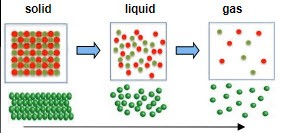
Which represents a decrease in entropy?
sublimation of CO2
boiling water
condensation of steam on cold glass
NaCl dissolving in water
The entropy will usually increase when
a molecule is broken into two or more smaller molecules
a reaction occurs that results in an increase in the number of moles of gas
a solid changes to a liquid
all of these
How many elements are in this chemical formula? NaHCO3
1
2
3
4
Which of the following is a neutralization reaction?
2Na + Cl2 → 2NaCl
CH4 + 2O2 → CO2 + 2H2O
HCl + KOH → KCl + H2O
CaCO3 → CO2 + CaO
HNO3 + H2O → H3O+ + NO31-
NO31- is the conjugate base of
H2O
HNO3
H3O+
none of the above
HCO3- + H2O → H3O+ + CO32-
Water is acting as
a Bronsted Lowry base
a Bronsted Lowry acid
a strong acid
a weak acid
HC2H3O2 + H2O → H3O+ + C2H3O21-
HC2H3O2 is acting as
a conjugate base
a Bronsted Lowry base
a Bronsted Lowry acid
none of the above
What is the conjugate base of H2SO4?
SO42-
H2SO3
HSO31-
HSO41-
HBr is the conjugate acid of
Br1-
Br2
H2Br
none of the above
Which of the following is a strong base?
NH3
Zn(OH)2
HCl
CsOH
Which of the following is a strong acid?
NaOH
HCl
HF
H2O

fuel + oxygen -->
water + ________ __________
What are the products of combustion?
Hydrogen + oxygen
Carbon dioxide + water
Carbon dioxide + hydrogen
Carbon + water

