
 Worksheets
Bio Quarterly 3 review '25
Total questions: 100
Worksheet time: 3hrs 42mins
What is the phenotype for Tt?

Recessive Allele
Sex linked gene
Punnett Squares
Dominant trait
The outward appearance of an organism, regardless of its genes.
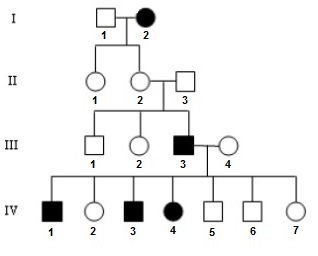
What is non-disjunction?
Cells do not divide during telophase
chromosomes are formed incorrectly
cells separate incorrectly during prophase
chromosomes separate incorrectly during anaphase
What is another name for down syndrome?
Trisomy 18
Trisomy 21
Trisomy 13
Trisomy 23
Choose all the mutagenic agents.
X-rays
UV radiation
Cigarette smoke
Organic compounds
Carcinogens
Can temperature effect gene expression?
Yes, Himalayan rabbits grow dark fur in extreme temperatures
No, Himalayan rabbits are born with a certain color fur and it stays that way
the process by which humans select who lives and reproduces based on traits of the animal or plant.
the process by which nature selects who lives and reproduces.
Which base is ONLY found in DNA?
Cytosine
Guanine
Thymine
Adenine
Which base is only found in RNA?
Uracil
Thymine
Adenine
Guanine

What molecule is shown here?
Peptide
Amino Acid
Nucleotide
Carbohydrate

Which sequence below would be complementary to this strand of DNA: AATCATGGA
In what process is mRNA synthesized?
Transcription
Translation
DNA Replication
Mitosis
Where does TRANSCRIPTION occur?
Nucleus
Ribosome
Cytoplasm
Mitochondria
How do you know when to STOP translating a strand of mRNA?
look for STOP on the decoder
you don't
when my teacher tells me to
TRANSCRIBE this DNA sequence: TACGTTACT
AUGCAAUGA
ATGCAATGA
AUGGATUGA
TACGTTACT
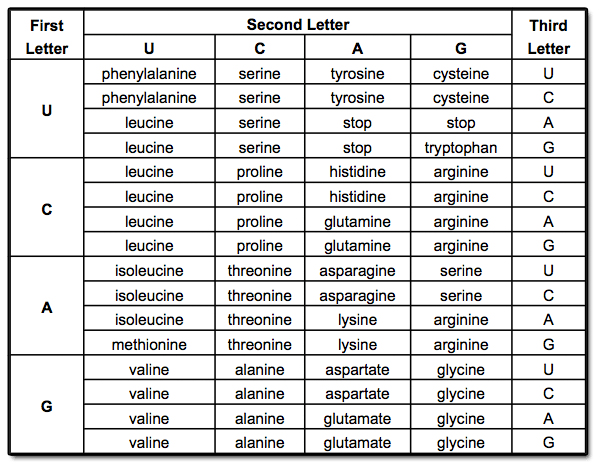
Molecular Bases
What is the location in the cell for translation?
nucleus
mitochondria in cytoplasm
ribosome in cytoplasm
chloroplast in cytoplasm

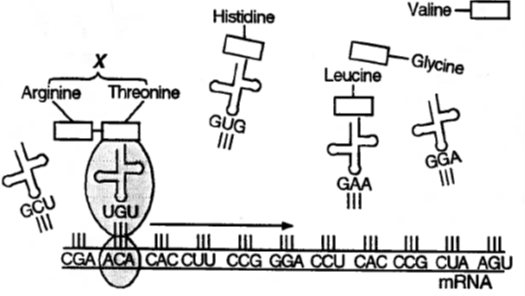
What process is happening in the diagram?
transcription
translation
dna replication
mitosis


Identify the picture in the image:
Karyotype
Gel Electrophoresis
DNA Fingerprint
Gene Analysis
XY
Female
Male

SELECT ALL THAT APPLY:
Male
Female
No chromosomal abnormalities
Trisomy 21

SELECT ALL THAT APPLY:
Male
Female
No chromosomal abnormalities
Trisomy 18
A sequence of three nucleotide bases on mRNA that refers to a specific amino acid.
anticodon
codon
deletion mutation
chromosomal mutation
An environmental agent that increases the rate of mutation
genetic code
mutagenic agent (Mutagen)
mutation
point mutation
True or False: Traits are influenced by either genetics or the environment, but not both.
True
False
Himalayan rabbits are known to grow dark fur as temperatures drop, this is due to the
the environment mutates the fur
environment causing a gene to be expressed and the fur growing out dark
fur changing color because the rabbit wants to be darker colored
a gene was cloned from an organism near by
A shark and a dolphin have similarly shaped
bodies and fins. However, these two organisms
are not closely related: The shark is a fish, and
the dolphin is a mammal. Some species may
have similar body structures even if they are not
related because they evolved in
similar environments and specific traits increased their chances of survival
similar environments and were exposed to factors that caused exactly the same mutations
different environments, but tried to adapt in the same ways so they could survive
different environments, but ate similar foods that affected their growth and development

Scientists at Penn State have sequenced the DNA of the extinct woolly mammoth. The data suggested that the woolly mammoth was more closely related to present-day elephants than previously believed.
Which statement could account for the similarities between the woolly mammoth and present-day elephants?
Common gene mutations were caused by agents such as industrial chemicals and radiation
Present-day species developed from earlier, different species
Selective breeding results in offspring better able to survive.
Both animals have identical genetic information
Survival of at least a few members of a population after a major environmental change is most dependent on
the population having an individual that is adapted to the original environment
the population having an individual that is adapted to great changes in the temperature in its environment
variations in many different traits in many individuals in the population
no variations in the color of the fur, skin, or feathers of the individuals in the population
The theory of evolution states that
species that are extinct have no biological relationship to living species
different animal species always interbreed to form new and different species
species change over time, sometimes developing into new species
the environment of Earth is constant over time
Evolution can occur at different rates; however, for evolution to occur, there must be
variations within a species
extinction of the species
asexual reproduction
no change in the genes of an organism
Natural selection is best described as
a change in an organism in response to a need of that organism
a process of nearly constant improvement that leads to an organism that is nearly perfect
differences in survival rates as a result of different inherited characteristics
inheritance of characteristics acquired during the life of an organism
A physical barrier water or mountain range that separates organisms.
Reproduction Isolation
Geographic Isolation
Speciation
Evolution
Differences in characteristics w/in the population
Overproduction
Variation
Competition
Speciation

Which organisms are most likely to survive?
The strongest in the environment
The fastest in the environment
The most tame in the environment
The best adapted to the environment
What do you need for natural selection to occur?
A fast organism
Genetic variation
A selective pressure AND genetic variation
Speciation
What is melanin?
A protein pigment that absorbs light
A protein that is waterproof and tough
A cell found in the epidermis
A vitamin that helps you sleep
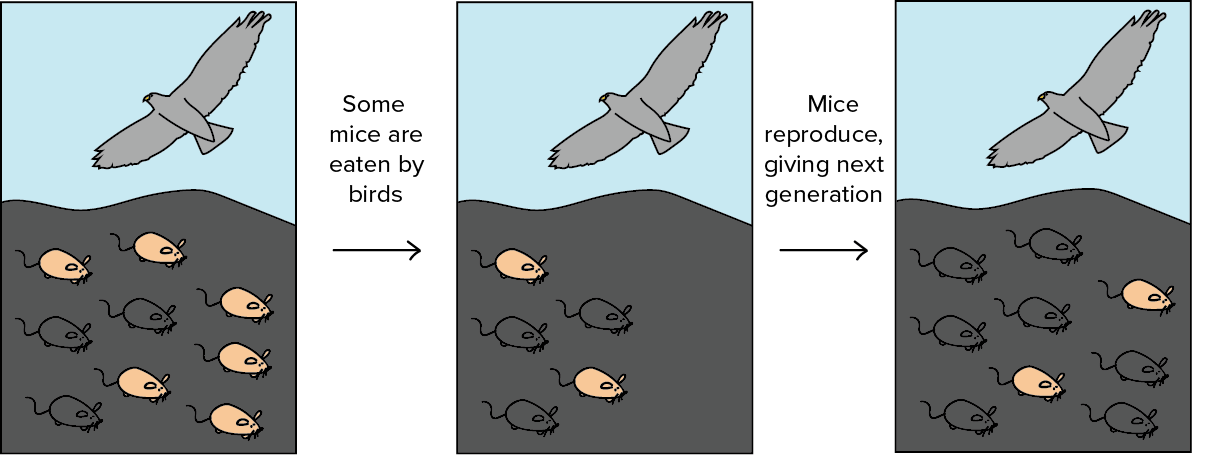
Why did dark-colored rock pocket mice first appear in a population of light-colored rock pocket mice?
They have a mutation in MC1R gene that affects their fur color.
They migrated due to climate change in their original environment.
They migrated due to shortage of food supply in their original environment.
A volcano erupted and turned some mice dark.

The change in the second codon of DNA sequence from GAA to GAG does not affect the amino acid sequence. This is an example of ........................................
Nonsense mutation
Missense mutation
Silent Mutation
Frameshift Mutation

What is a mutation?
a random change in the DNA
a random change in the amino acid chain
an error that occurs when the mRNA is made
A selective pressure is something
in the DNA that mutates and causes a change in the phenotype.
in the environment that changes the ability of an organism to survive.
in the environment that changes an organisms DNA.
in the DNA that makes an organism better able to survive.
Why did dark-colored rock pocket mice FIRST appear in a population of light-colored rock pocket mice?
They have a genetic mutation that affects their fur color.
There is dark lava rock in the are where they live.
Individuals change color to blend in with the environment.
Predators eat the light-colored mice.
Which of the following mutations is most likely to cause a frameshift?
substitution
silent mutation
insertion

Is it possible for two people that are homozygous with Albinism to have a child without the trait? Identify the correct statement.
Yes, since Albinism skips a generation.
No, both parents will pass on the recessive trait to ALL their offspring.
Maybe, as long as they never all never go in the sun.
None are correct

In which organelle does cellular respiration take place?
chloroplast
mitochondrion
nucleus
endoplasmic reticulum
Which of these word formulas for cellular respiration is correct?
Glucose + Water --> Carbon dioxide + Oxygen + Energy
Carbon dioxide + Water + Energy --> Glucose + Oxygen
Energy + Water + Oxygen --> Glucose + Carbon dioxide
Glucose + Oxygen --> Carbon dioxide + Water + Energy
Which of the following represents the correct cycling of gases?


Cellular Respiration is an aerobic process which means it requires Oxygen.
True
False
What is the point of a feedback loop?
To provide the body with more energy.
To provide the body with more food.
To make sure the conditions in the body are always changing.
To make sure the conditions in the body remain stable.
Homeostasis is described as when the body is
balanced
functioning below capacity
functioning above capacity
metabolising

Which genes in this picture are linked?
A and C
B and C
A and B
none of them
An investigation is carried out to determine the effect of exercise on the rate at which a person can squeeze a clothespin.
The experimental results could be made more valid by
increasing the number of students
using safety precautions
using a plastic clothespin
making a bar graph of the data
An investigation is carried out to determine the effect of exercise on the rate at which a person can squeeze a clothespin.
The dependent variable for this experiment is the
time the student was squeezing the clothespin
number of times the student was able to squeeze the clothespin
strength of the student
length of the clothespin

Students were asked to design a lab that investigated the relationship between exercise and heart rate. Heart rate was determined by recording the pulse rate in beats per minute. The students hypothesized that increased exercise results in an increased heart rate. The class results for the experiment are shown in the graph.
Which statement is best supported by the graph?
Before exercising, the average pulse rate was 65; four minutes after exercising, the average pulse rate was 65.
After four minutes of exercising, the average pulse rate was 120; two minutes after exercising, the average pulse rate was 120.
While exercising, the highest average pulse rate was 150; before exercising, the average pulse rate was 65.
Two minutes before exercising, the average pulse rate was 80; after two minutes of exercise, the average pulse rate was 140
What is the function of the circulatory system?
Transport oxygen and nutrients
Remove extra water and wastes
Digest food and absorb nutrients
Collect, transfer and process information
A student lifted weights after school and found that his muscles started to burn. He couldn’t continue to lift the weights after prolonged exercising. This muscle fatigue is most likely due to
the heart beating too fast and tiring out
the lungs accumulating oxygen
lack of oxygen and build up of waste in the muscles
lack of carbon dioxide in the muscles
An investigation is carried out to determine the effect of exercise on the rate at which a person can squeeze a clothespin.
In this investigation, the independent variable is the
control
exercise
rate of squeezing
number of participants

Small particles are not able to pass through the cell membrane.
True
False

Identify the substance/molecule that will not diffuse.
Starch
Glucose
Iodine

Molecule A cannot diffuse. What is a possible reason why?
Molecule A is a macromolecule and it is too large to move.
Molecule A is a building block and it is too large to move.
Molecule A is a building block and it is too small to move.
Molecule A is a macromole and it is too small to move.

What is the starch indicator?
Iodine
Bromothymol Blue
Benedict's Solution
Glucose
What is one observation that could be made that would confirm that starch indicator (iodine) diffused into the cell.
The cell turned orange
The cell turned blue
The cell turned blue-black
The cell stayed milky white
Why did starch not diffuse out of the cell?
Too large
Too small
Not enough molecules
Too many molecules

The diagram represents a cell and its changes as a result of laboratory procedure "A". Describe procedure "A" and why it would cause the change shown.
(1) Water was added
(2) Water then entered the cell resulting the cytoplasm and cell membrane to push up against the the cell wall
(1) Water was added
(2) Water then left the cell resulting in the cytoplasm and cell membrane to shrink away from the cell wall.
(1) Salt was added
(2) Water then left the cell resulting in the cytoplasm and cell membrane to shrink away from the cell wall.
(1) Salt was added
(2) Water then entered the cell resulting the cytoplasm and cell membrane to push up against the the cell wall

