
 Worksheets
Summary Assessment
Total questions: 130
Worksheet time: 2hrs 22mins
Work causes a change in
Sweat
Energy
Calories
Force
Power is a _______ dependent quantity.
Outlet
Energy source
Time
Volume
Kinetic energy is associated with ---.
speed
position
direction
temperature
Where is the kinetic energy of pendulum at its highest?
at the top of the swing
at the bottom of the swing
at 1/4 of the swing
at 3/4 of the swing

Where does the pendulum have the least amount of potential energy?
A
B
C
D
E

Where is kinetic energy at its maximum?
a
b
c
d
A man of mass 50 kg jumps to a height of 1 m. His potential energy at the highest point is(g = 10 m/s2)
(a) 500 J
(b) 50 J
(c) 5 J
(d) 5000 J
A man of mass 50 kg jumps to a height of 1 m. His potential energy at the highest point is(g = 10 m/s2)
(a) 500 J
(b) 50 J
(c) 5 J
(d) 5000 J
what is defined as the product of the magnitudes of displacement and the
component of the force parallel to the displacement ?
work
energy
momentum
power
When an object is carried at a constant
velocity by a force,
no work is done on the
object.
the work done is maximum on the
object.
the work is done minimum on the
object.
the work done is 100 % on the
object.
Work is done when the force applied on the object causes it to move in the (a) of the force.

A man holds a stack of boxes. Is he doing any work?
Yes.
No.

A man pushes against the wall. Did he do any work?
Yes.
No.
An object that is moving has (a) energy.
Any object that is above the ground has (a) potential energy.
A strectched rubber band has (a) potential energy.
Batteries, food, fossil fuel all contain (a) potential energy.
Your mobile phone runs on (a) energy.
A flashlight produces (a) energy.
Between two objects of simlar dimensions and made from the same material, the object with the higher temperature has more (a) energy.
State the Principle of Conservation of Energy.
d=10 m
F=???
If 150 Joules of work is needed to move a box 10 meters, what force was used?
1500 N
15 N
1.5 N
150 N
W=5000 Joules
t=???
What is the equation for work?
W = mass x acceleration
W = force x distance
W = force / distance
W = speed / time
Which formula is this?
? = 21mv2
Potential Energy
Kinetic Energy
Mechanical Energy
Work
Which formula is this?
? = F.d
Potential Energy
Kinetic Energy
Mechanical Energy
Work
Which formula is this?
? = mgh +21mv2
Potential Energy
Kinetic Energy
Mechanical Energy
Work
__________ is the rate at which work is done
Power
Energy
Force
Time
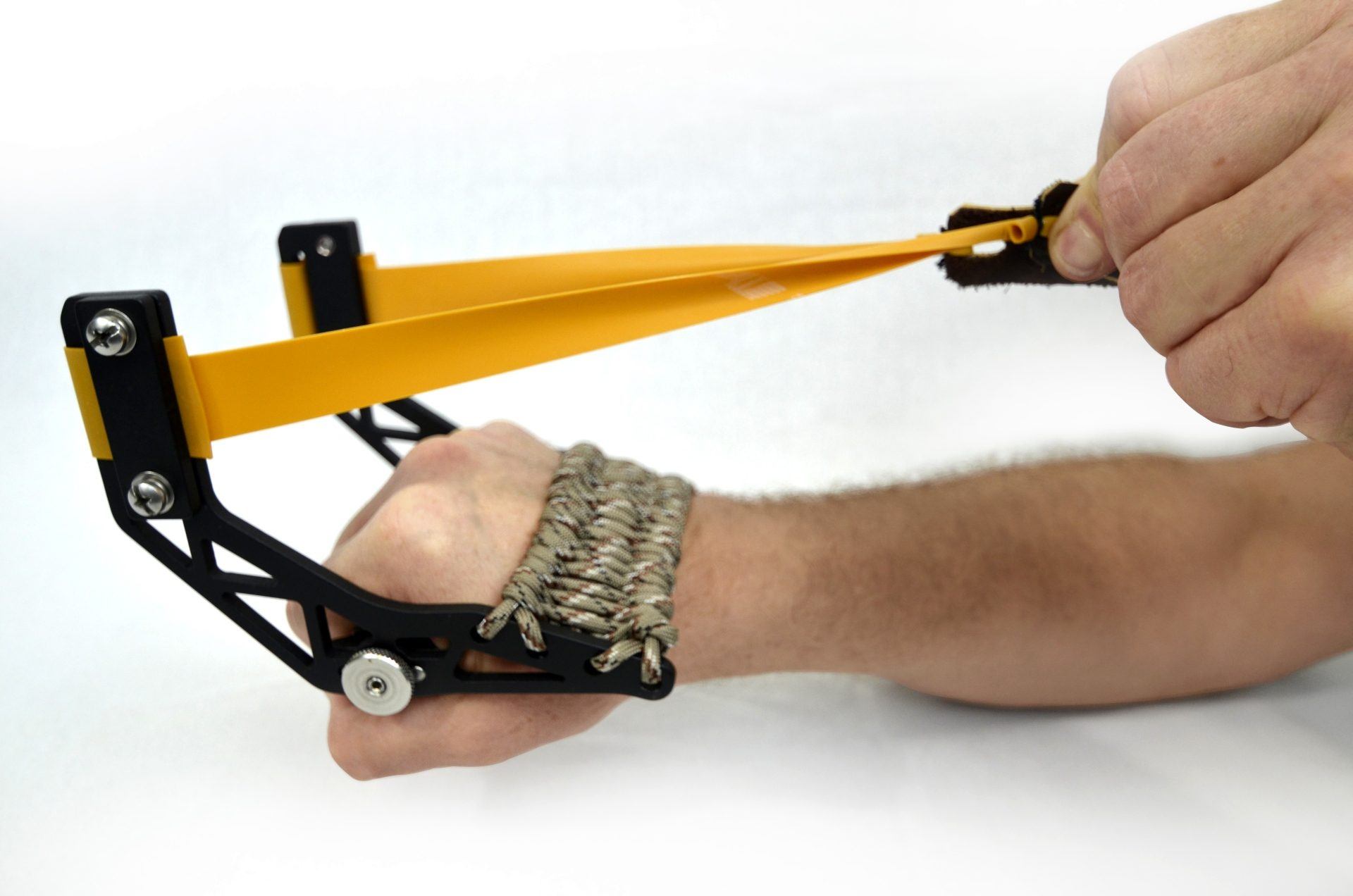
What type of energy is in this picture?
Kinetic Energy
Elastic Potential Energy
Chemical Potential Energy
No energy here

The SI Unit for Energy is
Joule
Newton
Calorie
Watt


What is an example of a force?
Energy
Power
Pressure
Weight
what would 14J be an example of?
work
distance
time
force
what would 1m be an example of?
work
power
time
distance
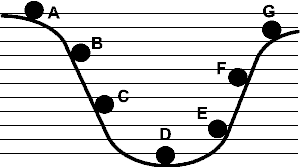
At which point does the ball has the greatest gravitational potential energy (GPE)?
A
G
D
C
G
A skateboarder exerts a force of 120 N and travels 300m. How much work is done?
36000 N
36000 J
2,5 N
2,5 J
What's the equation for work?
Work: Distance x mass
Work: Force x distance travelled
Work: Force x mass
Work: Force / distance travelled
The unit for work is (a)
Which of these energy's are renewable?
Solar energy
Wind energy
Nuclear energy
Geo-thermal energy
An object is moving along a straight path with 350 J of kinetic energy. A force acts on the object, in the direction it is moving, for a distance of 40 m. The kinetic energy of the object increases to 1050 J. What is the magnitude of the force?
(a)
Can energy be created?
No
Yes
What's the unit for power?
(a)
What are the two necessary conditions for work to be done?
Force and Velocity
Force and Displacement
Force and Time
What is the unit for work?
Joules
Newton
Watts
Which of the given pictures shows that work can not done?


In comparing of table tennis ball and tennis ball, which ball covered a longer distance once it was placed in a slope?
table tennis ball
tennis ball
same distance
What are the factors affect gravitational potential energy?
Mass and Velocity
Mass, Acceleration due to gravity, and Height
Mass, Acceleration due to gravity and Time
Which of the following illustration shows elastic potential energy?


Which of the following statements show kinetic energy?
The battery of a lit flashlight
A golf ball placed at the edge of the hole
A river flowing down a hill
When did an object have more kinetic energy?
When the time given on an object doubled
When the mass of an object doubled
When the mass of an object becomes half
What are the factors that can affect the power?
Work done and time
Work done and velocity
Work done and force
What will be the formula if we are finding the TIME using the formula of power?
Time = powerwork done
Time = work donepower
Time = work x power
A soccer player kicks a ball with 20 Newtons of force causing it to travel 100 meters. How much work is done on the ball?
200 J
80 J
5 J
2000 J
A worker climbs a ladder and does 8 J of work on a 2 N object. What is the distance they lift the object?
18 m
4 m
10 m
6 m
Where is the kinetic energy of pendulum at its highest?
at the top of the swing
at the bottom of the swing
at 1/4 of the swing
at 3/4 of the swing

At which point of this roller coaster is the energy 1/2 kinetic and 1/2 potential?
A
B
C
D
Two workers use 100 N of force to move a sofa 2 meters in 2 seconds. How much power is required?
100 watts
400 watts
104 watts
50 watts
The SI unit for power is...?
Watts
Joules
Newtons
Metres


Suppose a cart has a kinetic energy of 0.5 J. If you add enough mass to double the mass and make the cart go three times as fast, its kinetic energy is now ---.
6 J
3 J
18 J
9 J

Two equal mass marbles are at the top of a ramp. One marble falls to the ground off the back while the other rolls down the ramp. What is true about the marbles when they reach the ground?
The marble that rolled down the ramp is moving faster than the marble that fell.
The marble that fell down the back of the ramp is moving faster than the marble that rolled.
The marble that rolled down the ramp is not moving when it reaches the ground.
The two marbles are moving with the same speed.

A block starts at rest at point P at the top of a ramp which is height h above the ground. The block slides down one side and up the other, stopping at a point less than h above the ground.
The block did not go as high on the other side because gravity pulls down.
The block did not go as high on the other side because potential energy always has to decrease.
The block did not go as high on the other side because work from friction made the mechanical energy less.
The situation as described is impossible to happen.

If there is no friction on this track, at which point would the coaster have the most kinetic energy?
A
B
C
D
What effect do external forces like an applied force, friction force, or drag force have?
They have no effect on a system's mechanical energy.
They convert kinetic energy into potential energy.
They convert potential energy into kinetic energy.
They convert between mechanical energy and other forms of energy to change the total mechanical energy of the system.
How does conservation of energy explain why something that is falling should speed up?
It gains kinetic energy because it gains potential energy.
It loses kinetic energy because no work was done on it.
It gains kinetic energy because it loses potential energy.
It loses kinetic energy because the Earth gains potential energy.
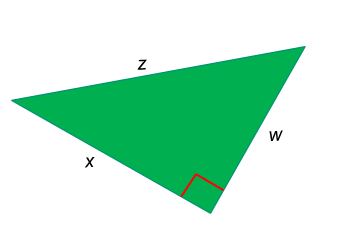
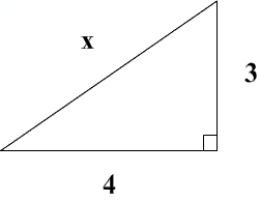

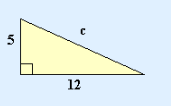

11
12
9.8
11.5

What is the length of the monitor diagonally in two decimal places ?
32.1
32.10
54.75
47.2
A 2.5m long ladder leans against the wall of a building. The base of the ladder is 1.5m away from the wall. What is the height of the wall?
2 cm
8 m
2 m
5 m


Find the missing side of this right angled triangle...
16.1cm
11.4cm
16.2cm
11.5cm

Find the value of the missing side...
16.1cm
13.8cm
13.7cm
16.2cm

Find the value of the missing side...
5.4cm
5.5cm
11cm
11.1cm
Which of the following is a right-angled
triangle?


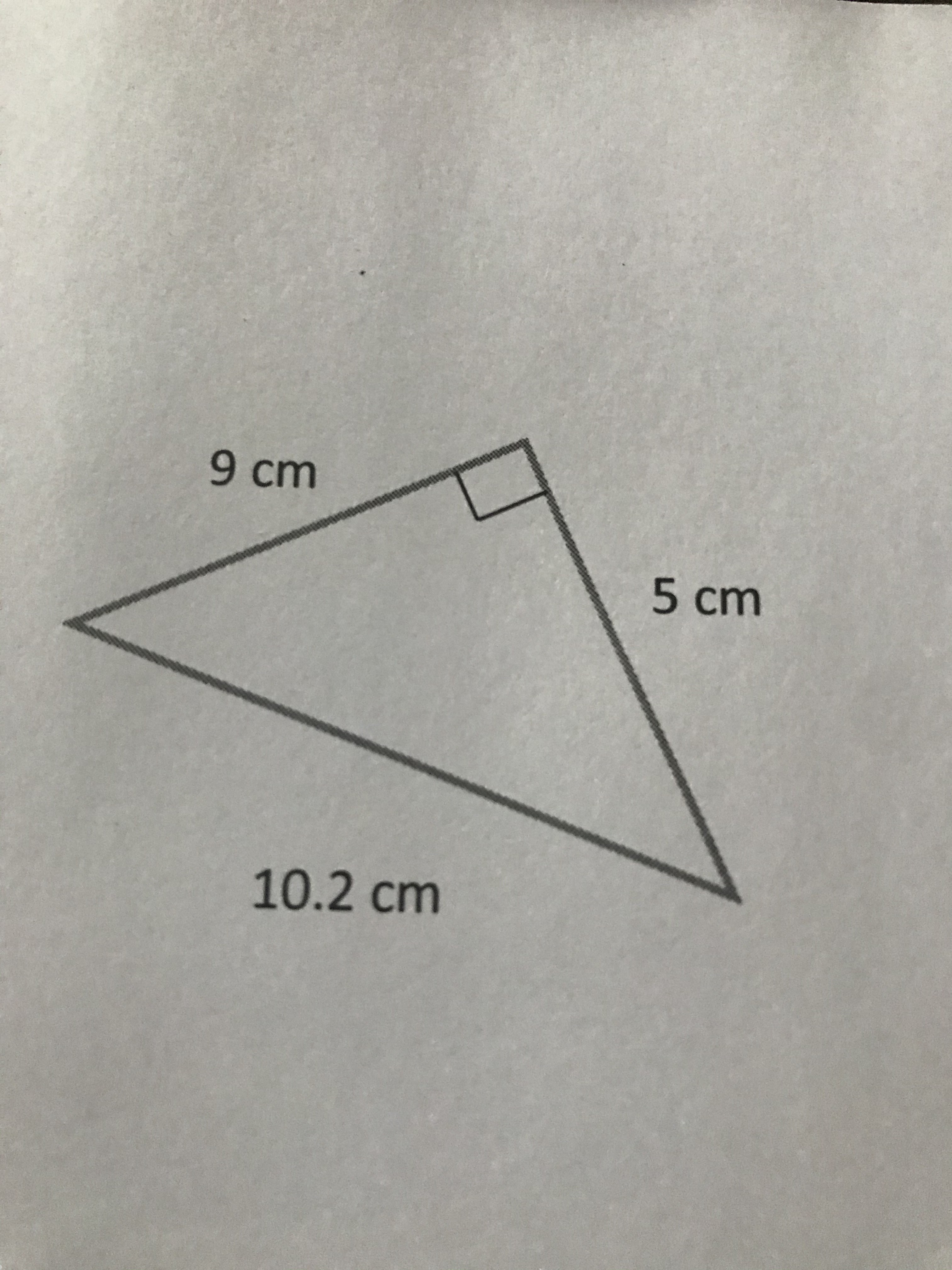
What's the hypotenuse?
9
10.2
5
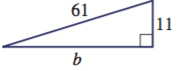
Calculate the length of b in this triangle.
31
36
60
62
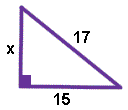
Determine the value of x.
35
20
8
12

Find the missing side of this right angled triangle...
4.1cm
2.4cm
2.5cm
4.2cm

121.5km
11km
26.5km
4.8km

Find the length of x. Round your answer to 1dp
12.4cm
11.6cm
3.9cm

Calculate the perimeter of the triangle
15.5cm
17cm
34.5cm
40cm

Find the length of x
7.9cm
4.8cm
4.3cm
3.8cm
What type of triangles can we apply the Pythagorean theorem to?
Equilateral
Isosceles
Equiangular
Right
The longest side of a triangle is called the _____.
hypotenuse
hippotenuss
henry
longsidenuse
A right triangle has 2 shorter sides of 3 cm and 4 cm. How long is the hypotenuse?
4 cm
5 cm
7 cm
25 cm
The Pythagorean Theorem is named after a Greek man called (a) who lived about 570 to 495 BCE.

Find the missing side.
9
6.40
8.23
5.63

Find the missing side.
8.26
9.11
8.5
6.93

Find the missing side.
7.47
8.52
7.93
2.22

Is this triangle a right angled triangle?
YES
NO
There is not enough information to work it out.
Only on Tuesdays when the moon is full.

Is this a right triangle?
YES
NO
There is not enough information given.
If your Mum says it is.

My TV screen is 55 inches wide and 30 inches tall. What is its diagonal measurement, to the nearest inch?
61 inches
62 inches
63 inches
64 inches

