
 Worksheets
Rocks and Minerals Review
Total questions: 62
Worksheet time: 1hrs 2mins
Which mineral can be found in the rocks phyllite, sandstone, and granite?
quartz
pyroxene
gypsum
calcite
Which two minerals are commercial sources of iron?
galena and graphite
muscovite mica and biotite mica
garnet and flourite
hematite and magnetite
Which rock is composed of the mineral halite that formed when seawater evaporated?
limestone
rock salt
dolostone
rock gypsum
Which element, found in both biotite mica and muscovite mica, makes up the greatest percent by volume of Earth's crust?
silicon
oxygen
nirtogen
potassium
Which mineral is commonly used as an abrasive?
garnet
halite
sulfue
graphite
Which rock was organically formed and sometimes contains fossilized plant impressions?
rock gypsum
phyllite
breccoa
coal
Olivine and pyroxene are commonly found in igneous rocks that are
felsic, with low densityB
mafic, with high density
mafic, with low density
felsic, with high density
Granite bedrock formed when
sediments were buried
a volcano erupted quickly
magma cooled underground
limestone recrystallized
The igneous rock is mostly composed of potassium feldspar and quartz crystals that have an average grain size of 3 millimeters. The igneous rock is most likely
pegmatite
gabbro
granite
pumice
Which intrusive igneous rock could be composed of approximately 60% pyroxene, 25% plagioclase feldspar, 10% olivine, and 5% amphibole?
granite
rhyolite
gabbro
basalt
Which three minerals are most commonly found in the igneous rock granite?
plagioclase feldspar, pyroxene, and olivine
plagioclase feldspar, potassium feldspar, and quartz
amphibole, biotite mica, and gypsum
amphibole, calcite, and hematite
Which common rock is formed from the solidification of molten material?
rock gypsum
slate
rhyolite
coal
Which process is necessary for the formation of igneous rocks?
erosion
deposition
solidification
metamorphism
A fine-grained igneous rock composed mostly of plagioclase feldspar and hornblende and containing no quartz or pyroxene would be classified as
granite
andesite
peridotite
scoria
Which characteristic provides the best evidence that obsidian rock formed in an extrusive environment?
layers of rounded fragments
distorted bands of large mineral crystals
noncrystalline glassy texture
mineral cement between grains
Which relative concentration of elements is found in a mafic rock?
a high concentration of silicon and a low concentration of iron
a high concentration of iron and a low concentration of aluminum
a high concentration of aluminum and a low concentration of iron
a high concentration of aluminum and a low concentration of magnesium

Quartz and halite have different crystal shapes primarily because
Light reflects from crystal surfaces
Energy is released during crystallization
Of impurities that produce surface variations
The internal arrangement of atom
Scratching a mineral against a glass plate is a method used for determining the mineral's
color
hardness
luster
cleavage
Which mineral property is illustrated by the peeling of muscovite mica into thin, flat sheets?
streak
cleavage
luster
hardness

A—cleavage; B—hardness; C—streak
A—cleavage; B—streak; C—hardness
A—streak; B—cleavage; C—hardness
A—streak; B—hardness; C—cleavage

Which two processes formed this rock?
compaction and cementation
melting and solidification
heating and application of pressure
folding and faulting
The best evidence for determining the cooling rate of an igneous rock during its solidification is provided by
faults in the rock
composition
density
the crystal size of its minerals
Which rock is of felsic composition, low in density, light in color, and coarse grained?
gabbro
granite
rhyolite
basalt
Which land-derived sedimentary rock could have formed by the compaction and cementation of particles smaller than 0.0004 centimeter in diameter?
siltstone
sandstone
limestone
shale
Limestone, gypsum, and salt are rocks formed by the processes of
weathering and metamorphism
evaporation and precipitation
melting and solidification
erosion and deposition
Which type of sedimentary rock contains the greatest range of particle sizes?
sandstone
siltstone
conglomerate
shale
A fossil is not likely to be found in
limestone
sandstone
basalt
shale
Metamorphic rocks result from the
cooling and solidification of molten magma
Heat and pressure causing recrystallization of rocks
erosion of rocks
compression and cementation of soil particles
In which set are the rock drawings labeled with their correct rock types?


The sedimentary rock limestone will change into the metamorphic rock...
slate
quartzite
marble
metaconglomerate


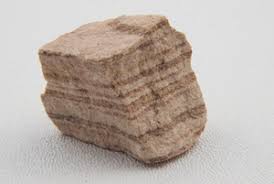
Which sedimentary rock has a fine-grained texture?
1
2
3
4
This is the only type of rock that can contains fossils.
sedimentary rocks
metamorphic rocks
extrusive igneous rocks
intrusive igneous rocks

The diagram below indicates physical changes that accompany the conversion of shale to gneiss. Which geologic process is occurring to cause this conversion?
sedimentary layering
intrusion of magma
metamorphism
weathering

The photograph below shows an igneous rock with mineral crystals ranging in size from 2 to 6 millimeters. The rock is composed of 58% plagioclase feldspar, 26% amphibole, and 16% biotite. What is the name of this rock?
diorite
gabbro
andesite
pumice
Which processes lead directly to the formation of igneous rock?
weathering and erosion
compaction and cementation
heat and pressure
melting and solidification
Particles of sediment collected from a lake bottom averaged 1.2 centimeters in diameter. If left on the lake bottom to become buried by more sediment and compressed into rock, these particles would form
sandstone
conglomerate
quartzite
granite
Which home-building material is made mostly from the mineral gypsum?
plastic pipes
window glass
drywall panels
iron nails

Which two rocks are composed primarily of quartz, feldspar, and clay minerals?
rock salt and conglomerate
rock salt and breccia
sandstone and shale
sandstone and limestone

The luster of this mineral could be determined by
using an electronic balance
using a graduated cylinder
observing how light reflects from the surface of the mineral
observing what happens when acid is placed on the mineral

The photograph below shows a broken piece of the mineral calcite. The calcite breaks in smooth, flat surfaces because calcite
is very dense
is very soft
contains certain impurities
has a regular arrangement of atoms

The diagram below represents a sample of mineral A. Mineral A is most likely
garnet
galena
olivine
halite
Which two properties are most useful in distinguishing between galena and halite?
cleavage and color
luster and color
hardness and streak
streak and cleavage
Most of the sediment that is compacted and later forms shale bedrock is
clay
silt
sand
pebbles


What type of rock is shown in the picture above?
intrusive igneous
detrital sedimentary
foliated metamorphic
nonfoliated metamorphic

The crystal shape and type of cleavage of these two minerals are determined mainly by the minerals’
color and type of luster
streak and hardness
composition and atomic arrangement
density and magnetism
Which rock is classified as an evaporite?
clastic shale
foliated phyllite
nonfoliated marble
crystalline rock salt
If a metamorphic rock bubbles when a drop of acid is placed on its surface, the rock is most likely
schist
slate
marble
quartzite
Which table correctly matches rock textures with a sedimentary rock that exhibits each texture?


What are the rock name and map symbol used to represent the sedimentary rock that has a grain size of 0.006 to 0.2 centimeters?


The photograph shows an igneous rock with mineral crystals ranging in size from 2 to 6 millimeters. The rock is composed of 58% plagioclase feldspar, 26% amphibole, and 16% biotite. What is the name of this rock?
diorite
gabbro
andesite
pumice

