Wayground logo

Free Printable Worksheets

Font size

S
M
L
XL
Worksheets

Chemical Bonding and Nomenclature Review

Total questions: 44

Worksheet time: 33mins

Name
Class
Date
1.

Why do atoms bond?

a)

They typically don't bond

b)

To add or take away energy levels

c)

To have a full valance shell.

d)

To have a full inner shell

2.

Ionic bonding is between a

a)

nonmetal and nonmetal

b)

metal and nonmetal

c)

metal and metal

d)

Depends on the situation

3.

Covalent bonding is between a

a)

nonmetal and nonmetal

b)

metal and nonmetal

c)

metal and metal

d)

It depends on the situation

4.

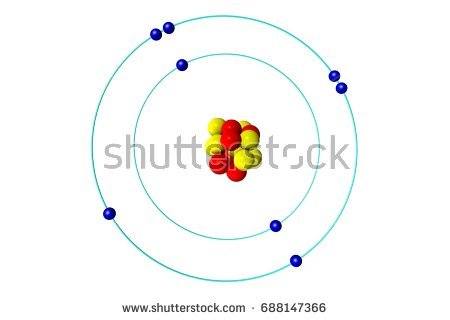
Which bond does this picture best represent?

a)

Metallic bond

b)

ionic bond

c)

covalent bond

d)

James Bond

5.

What do positive ions tend to do?

a)

lose electrons

b)

gain electrons

c)

lose protons

d)

gain protons

6.

What happens when magnesium loses 2 electrons?

a)

It stabilizes to a net charge of 0

b)

It turns into an atom

c)

It becomes negatively charged

d)

It becomes positively charged

7.

Predict the bond between Mg and Cl

a)

covalent

b)

ionic

c)

metallic

d)

none of the above

8.

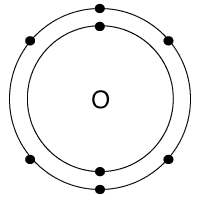
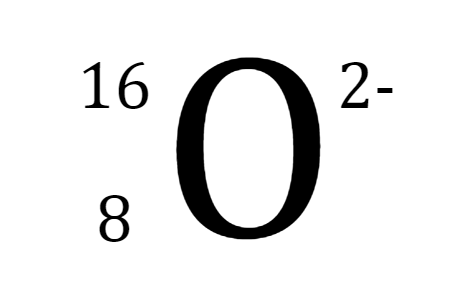
Which is the correct Lewis Structure for oxygen?

a)
b)
c)
d)
9.

What is the chemical formula for Lithium Nitride?

a)

Li3N

b)

LiN3

c)

NLi3

d)

N3Li

10.

What is the ionic formula for a bond between Calcium and Phosphorus?

a)

Ca2P3

b)

Ca3P2

c)

Ca2P5

d)

P5Ca2

11.

What category of element usually forms a positive ion?

a)

Metals

b)

Nonmetals

c)

metalloids

d)

Noble gases

12.

Which category of elements usually form negative ions?

a)

metals

b)

nonmetals

c)

metalloids

d)

noble gases

13.

CaCl2 is an example of what type of bond?

a)

Covalent

b)

Metallic

c)

Ionic

14.

When an atom loses an electron, it forms a(n)

a)

anion

b)

cation

c)

polyatomic ion

d)

neutral ion

15.

A chemical bond that forms when atoms share electrons is always a(n)

a)

polar bond

b)

ionic bond

c)

metallic bond

d)

covalent bond

16.

The compound with the formula SiCl4 is

a)

Silicon chloride

b)

Silicon chlorine

c)

Silicon(I) chloride

d)

Silicon tetrachloride

17.

AlPO4

a)

Aluminum Phosphorus Oxide

b)

Aluminum Phosphate

c)

Aluminum Phosphorus Tetraoxide

d)

Phosphorus Aluminumate

18.

When is an atom least likely to react?

a)

When the highest occupied energy level of an atom is filled with electrons.

b)

When the highest occupied energy level of an atom is filled with more than 8 electrons.

c)

When the valence electrons of an atom gain one (1) more electron.

d)

When the valence electrons of an atom gain two (2) more electron.

19.

When the highest occupied energy level is filled with electrons.

a)

stable electron configuration

b)

valence electrons

c)

polarity

d)

ionization

20.

electrons are shared between atoms

a)

metallic bond

b)

ionic bond

c)

covalent bond

d)

ionization bond

21.

What do the dots represent on a dot diagram?

a)

number of electrons

b)

valence electrons

c)

number of protons

d)

number of shared electrons

22.

In the Lewis Dot Structure, how many dots should Fluorine have?

a)

3

b)

5

c)

7

d)

8

23.

In the binary compound magnesium dichloride, the anion is _____ and the cation is _____.

a)

Magnesium, Chlorine

b)

Chlorine, Magnesium

c)

Magnesium, Chloride

d)

Chloride, Magnesium

24.
The bond between Na & F.   Ionic or covalent?
a)
Ionic
b)
Covalent
25.
Which of the following gives the correct chemical formula for the compound Dinitrogen Monoxide?
a)
NO
b)
N2O
c)
N2O2
d)
O2N2
26.
What is the correct chemical name for the ionic compound:  Na2O
a)
Sodium oxide
b)
Sodium (II) oxide
c)
Disodium monoxide
d)
Disodium oxide
27.
What type of atoms make a covalent bond?
a)
only Nonmetals
b)
Metal and a Nonmetal
c)
only Metals
d)
only Noble Gases
28.
What is the chemical formula when Al+3  and   PO4-3 bond?
a)
Al(PO3)4
b)
AlPO4
c)
Al(PO4)3
d)
Al3(PO4)3
29.
What is the name of MgF2?
a)
magnesium fluoride
b)
manganese phosphide
c)
magnesium(II) fluoride
d)
magnesium fluoride(II)
30.
What is the formula for the compound calcium oxide?
a)
Ca2O2
b)
Ca2O
c)
CaO
d)
CaO2
31.
How many valence electrons does hydrogen have?
a)
1
b)
2
c)
3
d)
4
32.
A(n) _________ is an ion with a positive (+) charge.
a)
anion
b)
cation
c)
ion
d)
solute
33.
When an atom loses an electron, it becomes a:
a)
positive ion
b)
negative ion
c)
neutral ion
d)
neutral atom
34.
In the chemical formula for an ionic compound, which item is written first?
a)
positive ion
b)
negative ion
c)
subscript
d)
the female
35.
Elements in Group 1 lose one electron to form ions with a _________________ charge.
a)
1+
b)
2+
c)
0
d)
1-
36.
Nitrogen will ____ electrons when forming an ionic bond.
a)
gain 1
b)
lose 1
c)
gain 3
d)
lose 3
37.
Which is the correct name for CaBr2?
a)
Calcium Bromine
b)
Bromine Calcium
c)
Calcium Bromide
d)
Carbon and Bromine
38.
What is the formula of Sodium oxide?
a)
Na2O
b)
NaO2
c)
Na2O2
d)
Na2O
39.
A charged atom is also called a(n) ______.
a)
ion
b)
isotope
c)
compound
d)
polyatomic compound
40.
All of the elements in the same group (column) have EQUAL #s of _______.
a)
Protons
b)
Neutrons
c)
Electrons
d)
Valence Electrons
41.
As4O10
a)
arsenic oxide
b)
quadarsenic decoxide
c)
tetraarsenic decoxide
d)
arsenic decoxide
42.
Phosphorous trichloride
a)
PCl3
b)
P3Cl
c)
P3Cl3
d)
PCL
43.
According to the octet rule, all atoms want to have ___ electrons in their outer shell
a)
1
b)
2
c)
6
d)
8
44.
How many electrons should Carbon have around its Lewis dot model?
a)
1
b)
3
c)
4
d)
5