
 Worksheets
2023 Year 7 I am a scientist test revision
Total questions: 101
Worksheet time: 1hrs 5mins
You should never ______ chemicals in the lab without your teachers permission.
taste
touch
smell
all of the above
Playing around disrupting other students in the laboratory is -
helpful.
allowed
dangerous.
the quickest way to do a job.
Whose responsibility is it to help clean up the lab and classroom?
1st period, the next morning
custodians.
each and every student.
only the teacher.
Which of the following items are considered safety equipment in our classroom?
Eyewash Station
Emergency Shower
Fire Extinguisher
All of the Above.
When should you read the lab instructions?
After starting the lab
When your teacher tells you to
Before starting the lab
It doesn't really matter. Instructions are silly!
Which of the following are examples of dressing appropriately in the lab?
Pulling long hair back
Leaving long hair down to get in the chemicals.
Wearing sandals
Wearing baggy long sleeves
Bob and Lizzy are working in the lab. They are goofing off and break a glass beaker. Which rule did they break?
Know the location of the safety equipment.
Do not eat or drink in the lab.
Read instructions.
No playing around!
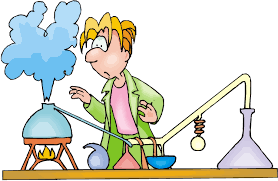
When is it OK to eat or drink during a lab?
Always
Never
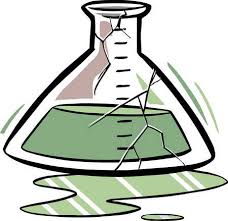
If you break glassware in the lab, you should...
Tell the teacher
Clean it up quickly before the teacher notices
Scream at the top of your lungs
Scoop it under the lab table


If your teacher instructs you to smell a chemical, you should do so carefully in a wafting motion.
True
False
If you do not understand a direction or part of a lab procedure, you should
skip it and go on to the next part.
ask the instructor before continuing to work
try different ideas until something works
figure it out as you do the lab
You should wear googles to -
to look cool
to block out sunlight
protect your eyes from chemicals
protect your ears from loud sounds
Approved goggles are worn in the laboratory -
to avoid eye strain
just to improve your vision
only if you don’t wear glasses
any time chemicals, heat or glassware are used
What do you do if a fire breaks out during a lab?
Run!
Tell the teacher
Just watch it burn
why do we use goggles/eye protection?
to stop our eyes from hurting
to help you see the board
to look cool
to protect your eyes from chemicals, heat, or broken glassware
after completing an experiment, all chemical waste should be
left at your lab station for the next class
disposed of according to your teacher's instructions
dumped in the sink
taken home

What is used to measure (but not precise), heat, and mix large amounts of liquids?
beaker
flask
test tube
graduated cylinder

What equipment allows you to see small objects?
beaker
compound light microscope
flask
test tube

What equipment allows you to measure liquid's volume and measures in milliliters?
test tube
beaker
flask
graduated cylinder

Which equipment holds, measures, and mixes liquids (not a precise measurement), and measures in milliliters?
flask
test tube
beaker
graduated cylinder

Which equipment holds liquids and allows reactions in a small space?
test tube
hot plate
dropper
beaker

Which equipment heats objects with an open flame?
hot plate
thermometer
bunsen burner
beaker

This is used to pour lab materials into an object with a small opening
scoop
funnel
bunsen burner
goggles

This is used to protect your eyes during an experiment
scoop
funnel
bunsen burner
goggles

This is used to hold test tubes
test tube holder
eye wash
eye dropper
lab apron

This is used to store and mix chemicals during an experiment
fire extinguisher
thermometer
beaker
tongs

This is used to find the amount of heat in an object (temperature)
fire extinguisher
thermometer
beaker
tongs


evaporating dish
watch glass
mortar and pestle
funnel

evaporation
watch glass
mortar and pestle
funnel

crucible tongs
beaker tongs
forceps
tweezers


Used for moving small amounts of solid from place to place.
spatula
beaker
tube
microscope

Used for moving small amounts of liquids from place to place.
pipet
crucible
micro pipet
all of these

Identify the item in the picture. This item is used in labs to separate tissues or to hold skin when dissecting.
forceps
fork
twizzers
none of these

What is the measurement?
36 ml
40 ml
38 ml
37 ml

What is the measurement
55 ml
56 ml
53 ml
54 ml

What is the measurement?
20 ml
15 ml
14 ml
19 ml
What is the curved area of liquid in a graduated cylinder called?
Miscus
Meniscus
Minced
Misses
How do I look at a graduated cylinder to get an accurate reading of the amount?
Look eye level to the liquid
Look from above the liquid
Look below the liquid
Look through the top of the cylinder
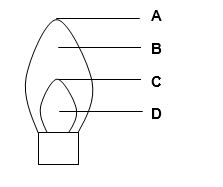
The gas should be turned on ____________ lighting the match.
Before
After
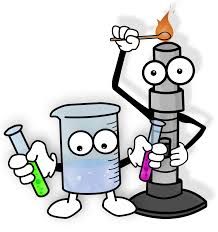
What do you call the part of the burner that "twists" ?
Base
Collar
Cylinder
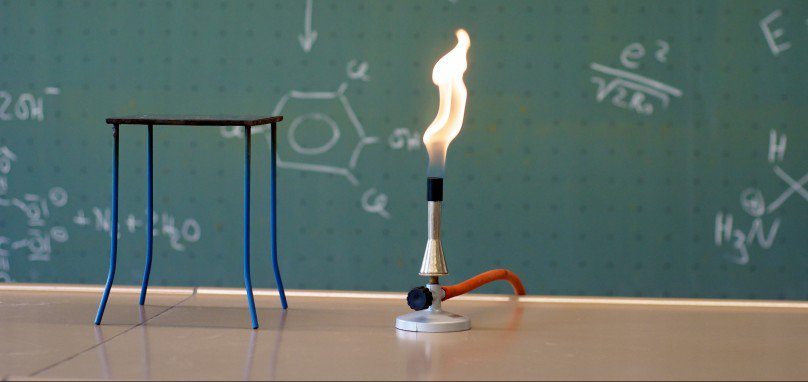
To produce the most heat, you should twist the collar until you see ______
A dark blue cone
An orange cone
A yellow cone
A light blue cone
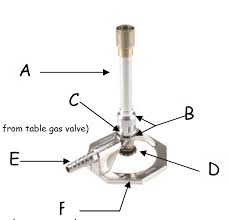
Name this part of the Bunsen Burner: A
Barrel
Collar
Air Hole
Base

When the air hole is closed, what color is the flame?
Blue/Yellow/Orange
Dark and Light Blue
During an experiment, a bunsen burner is placed on:
Gauze mat
The laboratory bench
A heatproof mat
Tripod
When you first light a Bunsen burner, the flame should be:
Yellow
Blue
Either
Non existent. You shouldn't be using a bunsen burner to light things in the lab
When you lift a bunsen burner, you hold it from the:
Barrel
Gas hose
Base
Collar
First steps to using a Bunsen burner:
Place on heat proof mat, connect gas hose to a gas tap and make sure the air hole is closed
Place on heat proof mat, connect gas hose to a gas tap and make sure the air hole is open
Place on heat proof mat, connect gas hose to a gas tap and light the bunsen burner
Place on the bench, connect gas hose to a gas tap and make sure the air hole is open
Choose the correct order of steps to light the Bunsen burner
Clear the space around the Bunsen burner. Make sure a heat proof mat is available for putting the Burner on and putting out matches. Next open the air hole. Light up the match then open the gas tap. Keep a little distance while you do so.
Clear the space around the Bunsen burner. Make sure a heat proof mat is available for putting the Burner on and putting out matches. Next close the air hole. Open the gas tap. Then light up the match. Keep a little distance while you do so. Then turn the collar to open the air hole.
Clear the space around the Bunsen burner. Make sure a heat proof mat is available for putting the Burner on and putting out matches. Next close the air hole. Light up the match then open the gas tap. Keep a little distance while you do so. Then turn the collar to open the air hole.

Name C
Chimney
Air Hole
Collar
Base

Name F
Collar
Chimney
Base
Air Hole

Water is the univeral ____.
solute
solvent
solution
solute + solvent =
solution
equation
You make a pitcher of lemonade by adding lemon juice, sugar, ice and water. Which of the following are the 2 solutes in the solution?
Lemon juice
Sugar
Water
Lemon seeds
When you open a bottle of sparking water, gas bubbles suddenly appear. These gas bubbles are dissolved in the water. Which is the solute in this solution?
water
gas bubbles

solvent
solution
solute

solvent
solute

solvent
solute
Solutes dissolve quicker in _________ water.
cold
warm
Solutes dissolve quicker if you stir them.
true
false

solvent
solute
If I dissolve carbon dioxide in water, what is the solvent?
Carbon Dioxide
There is no solvent
Oxygen
Water

solute
solvent
In a ______________, one substance is dissolved in another substance.
solution
suspension
colloid
Which one is not a colloid
Foam
Gel
Emulsion
Coffee
Which of the following appear to be clear (are not cloudy)?
Solution
Suspension
Colloid
A combination of two or more substances that can be physically separated is called a...
Mixture
Pure substance
Compound

Milk and gelatin are examples of __________________.
suspensions
colloids
solutions
Fruit Loops, pizza, and Skittles are examples of ____________________ mixtures.
heterogeneous
homogeneous
pure
Coffee, mouthwash, and vinegar are examples of __________________ mixtures.
heterogeneous
homogeneous
pure


Sugar water let's light pass through, and is a homogeneous mixture; it is a / an
solution
suspension
colloid

A snow globe is an example of a/an
solution
suspension
colloid
alloy
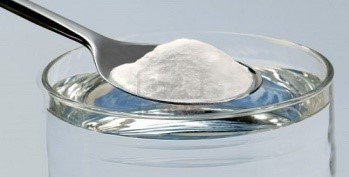
In this mixture, which of the following will be the solute?
The water in the glass
The glass that holds the final mixture
The solution containing both powder and water
The powder on the spoon
Tea and air are examples of ________________.
solutions
suspensions
colloids

Which one does NOT scatter light?
solution
colloid
suspension
A __________________ is a substance that has definite physical and chemical properties such as appearance, melting point, and reactivity.
mixture
pure substance
compound
element
A ______________ mixture is one that does not have a uniform composition.
heterogeneous
homogenous
pure substance

What is a mixture?
elements chemically combined
a combination of different substances
composed of one atom only
it is made of chemical

Which statement below does NOT describe a colloid?
A colloid is a type of heterogeneous mixture
A colloid is a type of solution.
The particles in a colloid do not settle like they do in a suspension.
The particles in a colloid do not dissolve – they are just too small to be seen.
How are suspensions and colloids different?
Suspensions settle out and colloids do not settle.
Colloids settle out and suspensions do not settle.
Suspensions dissolve and colloids do not.
Colloids dissolve and suspensions do not.

It is a type of mixture that has the SAME COMPOSITION in every part.
Homogenous
Heterogeneous

Salad is an example of a _____________.
homogeneous mixture
heterogeneous mixture

Chocolate milk is an example of a _________________.
homogeneous mixture
heterogeneous mixture
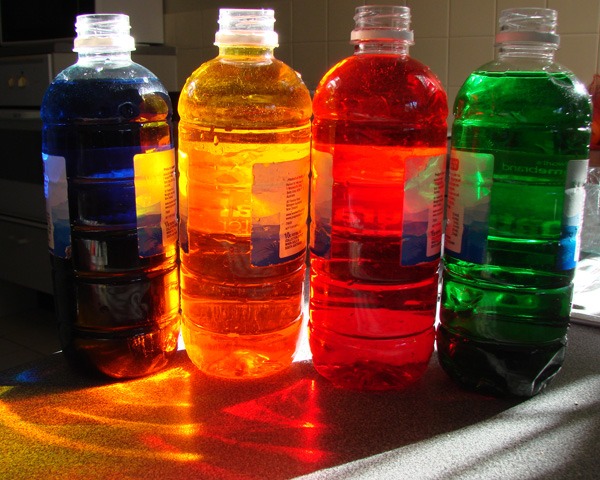
Colored water is an example of a ________.
homogeneous mixture
heterogeneous mixture

