
 Worksheets
Cambridge Science Unit 9 Stage 7
Total questions: 68
Worksheet time: 42mins
An electrical charge is a property of matter. There are two types of electrical charges, positive and negative.
True
False
Materials that allow charges to flow through them easily. For example, metal is a ____________.
insulator
conductor
discharge
static electricity
Materials that do not let charges flow through them easily. For example, wood is a __________.
conductor
discharge
insulator
electricity
The path along which electrical current flows.
insulator
voltage
conductor
circuit
The example of electrical conductor are …
iron, steel, silver, and copper
copper, rubber, gold, and iron
plastic, glass, paper, and rubber
paper, copper, plastic, and glass
An electrical insulator is a materials that does not allow … to pass through it.
fire
heat
water
electricity
An electron is
an elementary particle consisting of a charge of negative electricity
an elementary particle consisting of a charge of positive electricity
an elementary particle consisting of a charge of negative emotions
an elementary particle consisting of a charge of neutral electricity
Electricity is the flow of _____________?
The flow of electrons from atom to atom.
The flow of sunlight through a chord.
The flow of Neutrons.
The flow of Protons.
Ashley is classifying some objects as conductors or insulators. What is the difference between conductors and insulators?
A conductor allows electrical current to flow through it easily, while an insulator does not.
An insulator allows electrical current to move through it easily, while a conductor does not.
A conductor has a static charge, while an insulator does not.
An insulator is a metal, while a conductor is not a metal.
true
In order for electricity to flow you need_________?
wire
battery
closed circuit
light bulb

Objects with opposite charges _________________ if held next to each other.
repel
explode
attract
are neutral
Which group of materials make good electrical conductors?
Metals
Plastics
Fruits
Woods
Which of these materials is an electrical insulator?
Copper
Steel
Glass
Aluminium

What are the positively charged particles called?
Protons
Neutrons
What are the Neutral charged particles called?
Protons
Neutrons
What are the Negatively charged particles called?
Electrons
Neutrons
What happens if we put two of the opposite charge together?
They Repel
They Attract
What happens if we put two of the Same charge together?
They Repel
They Attract
What are the particles that carry the charge called?
Electrons
Protons
What is current measured in?
Volts
Amps
What does the battery push around the circuit?
Protons
Electrons
What does an Ammeter measure
current
voltage

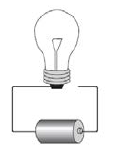

This is a...
Battery
Lines
Resistor
bulb

This is a/ an...
resistor
Ammeter
Voltmeter
Switch

This is a/ an...
Ampere
Switch
Bulb
Battery

This is a/ an...
Ammeter
Ampere
Accelerometer
Bulb
What is the function of a switch in a circuit?
to make the current hotter or colder
to turn on and off the flow of current
to show the pathway that current flows
to add more power to the circuit

An incomplete circuit is shown.
To complete the circuit, a wire should be placed from?
point D to point C
point B to point C
point A to point D
point B to point D

How many bulbs in this circuit ?
(a)

Identify the component symbol
Closed Switch
Open Switch
Battery cell
Bulb

Which letter shows the circuit symbol for a single battery cell ?
(a)

4 battery cells
open switch
1 battery cell
wire
2 battery cells

How many battery cells are shown in this symbol?
(a)

Wire
Battery
Buzzer
Fuse
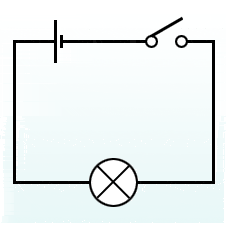
Tick all the things you can see in this circuit
open switch
1 battery cell
closed switch
a bulb
an ammeter

How many battery cells are shown in this symbol?
(a)

Which way around is this battery symbol ?


In this circuit, the lamp is labelled ...
A
B
C
P

How many battery cells can you see here?
(a)

What is this symbol?
Open Switch
4 cell battery
Bulb
2 cell battery
1 cell battery

Bulb ON
Bulb OFF

Bulb ON
Bulb OFF

Bulb ON
Bulb OFF

Bulb ON
Bulb OFF

Which way around is this symbol of a battery?


In this circuit, the wire is labelled ...
A
B
C
P

How many battery cells are shown in this symbol?
(a)

How many battery cells are shown in this symbol?
(a)
In this circuit, the battery cell is labelled ...
A
B
C
P

