
 Worksheets
MMM Vocabulary Quiz
Total questions: 68
Worksheet time: 52mins
Species from very different areas of the world evolve in a similar manner in order to survive
convergent evolution
parallel evolution
divergent evolution
Which of these best describes brachiation?
Swinging from branch to branch
Walking on four limbs
Climbing trees
Walking upright on two limbs
What is the meaning of “cathemeral”?
Becoming passive both in water and land.
Becoming passive both day and night.
Becoming active both in water and land.
Becoming active both day and night.

when two or more related species have similar evolutionary adaptations
macroevolution
microevolution
coevolution
parallel evolution
breeding together two plants that have desirable characteristics
hybridization
GMO
cloning
double cropping


Hermit crabs use the shells of dead snails for homes. What type of interaction is this?
mutualism
commensalism
parasitism
_____ is Breeding different species which leads to a mix of traits from both parent populations. Leads to genetic diveristy.
brachiation
hybridization
standardization
evolution

What type of relationship is this?
parasitism
mutualism
commensalism
competition

Predation is a relationship where one organism _____ eats another organism ______,
usually of a different species.
Type your answers with a comma separating the word that belongs in the first blank from the second. Ex: answer 1, answer 2
(a)
Primates are adapted primarliy for_________________ type motion.
terrestrial
sessile
fossorial
brachiation
A medium size predator that help regulate populations.
Decomposer
Primary consumer
Mesopredator
Apex predator

symbiotic relationship in which both organisms benefit
competition
mutualism
predation
commensalism
This type of interaction occurs when 2 organisms live closely together for survival.
Symbiosis
Competition
Predation
Cymbalosis
_______ occurs when two organisms are trying to acquire or get the same resources.
Symbiosis
Competition
Predation
Collaboration
_______ occurs when 1 organisms kills and eats another for food.
Symbiosis
Competition
Predation
Collaboration
_______ occurs when 1 organisms kills and eats another for food.
Symbiosis
Competition
Predation
Collaboration
A lion kills and eats a zebra. This is an example of
Symbiosis
Competition
Predation
Two male deer fight over a female. This is an example of
Symbiosis
competition
predation
The Gobi fish and shrimp live closely together. The nearly blind shrimp keeps a burrow for it and the Gobi fish to live. The Gobi warns the shrimp of predators. The shrimp lets the fish live in the burrow. This is an example of
mutualism
commensalism
parasitism
Tapeworms enter the body of their host. They live by taking nutrients from the host organism. This is an example of
mutualism
commensalism
parasitism
A type of symbiosis in which both species benefit is called...
mutualism
commensalism
parasitism
A type of symbiosis in which one species benefits and the other is not affected is...
mutualism
commensalism
parasitism
A type of symbiosis in which one species benefits and the other is harmed or killed...
mutualism
commensalism
parasitism

Predator population lags behind prey population because......
Increase in predators leads to decrease in prey
Increase in predators leads to increase in prey
Increase in predators leads to decrease in producers
Increase in producers leads to increase in prey
Predation is considered a (a) because the predator population is determined by the prey population and the prey population by the predator.
Natural disasters can be considered limiting factors.
true: density independent limiting factors
false; natural disasters are not limiting factors
true: density dependent limiting factors
false: because Mrs. Schaffer said
What is a limiting factor?
Factors that always increase a population
Factors that always decrease a population
Resources that are unlimited
Factors/resources that limit how many organisms can live in an area at the same time
If there was a wildfire in the forest that destroyed the plant life, what would happen to the herbivore population?
Herbivores would decrease due to a lack of food
Herbivores would increase due to an increase of food
Herbivores would not be affected
Herbivores would decrease due to an increase in predators
What is a population?
All the organisms living in an area
The living and non-living organisms in an area
A group of the same species living in an area
What is an ecosystem?
All the organisms living in an area
A group of the same species living together
All of the organisms living in an area and the non-living environment around them
Choose the 4 limiting factors.
Food
Water
Time
Space
Shelter
Which of the following would cause an increase in the omnivore population?
Increase in carnivores
Humans hunting
Increase in rain
Increase in competition
What is NOT an example of limiting factors?
Predation
Food Source
Space
Migration

True or False: A natural disaster is an example of a limiting factor.
True
False
What is the definition of a population?
All the animals living in an area.
All the people on Earth.
All the members of a species living in the same area.
All living things.
Factors that keep the number of organisms from growing too large
Biotic factors
Abiotic factors
Limiting Factors
Carrying Capacity
The number of organisms per unit area
Density
Volume
Mass
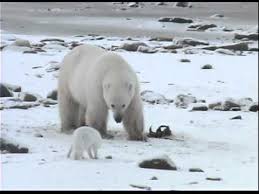
Two arctic fox are fighting with a polar bear for a sea lion carcass. One fox distracts the bear while the other eats. What type of limiting factor is the polar bear?
Predator-Prey Relationships
Competition
Herbivory Effect
Weather

A species that plays a critical role in the health, maintenance, growth, or definition of an ecosystem.
keystone
invasive
engineer
predator

A species that helps to manage prey populations, which in turn controls the ecosystem's producers (vegetation).
predator
keystone
engineer
mutualist
A species that plays a far more important in its community than its relative abundance might suggest.
Keystone Species
Pioneer Species
Indicator Species
Exotic Species
Competition among members of the same species.
intraspecific competition
interspecific competition
Competition between members of different species.
intraspecific competition
interspecific competition

Name the relationship.
Intraspecific Competition
Territorial Imperitive
Cooperation
Social Hierarchy

Name the relationship.
Intraspecific Competition
Territorial Imperitive
Cooperation
Social Hierarchy

Name the relationship.
Intraspecific Competition
Territorial Imperitive
Cooperation
Social Hierarchy

Name the relationship.
Intraspecific Competition
Territorial Imperitive
Cooperation
Social Hierarchy

Name the relationship.
Intraspecific Competition
Territorial Imperitive
Cooperation
Social Hierarchy

Name the relationship.
Intraspecific Competition
Territorial Imperitive
Cooperation
Social Hierarchy
A group of the same organisms living together in the same place at the same time is:
An organism
A population
A community
A biome
What are groups of different populations living togther in the same place at the same time called?
An organism
A population
A community
A biosphere
What is it called when you have groups of different populations along with their abiotic factors?
An organism
A population
A community
An ecosystem
Biotic
Dead
Non-living
Alone
Living
Abiotic
Living
Alive
Non-living
Bacteria

What level of organization can be seen here?
Species
Population
Community
Ecosystem

