
 Worksheets
Dc Circuits TEST OUT
Total questions: 100
Worksheet time: 3hrs 30mins
How do you calculate resistance?
Divide voltage by current
Divide charge by current
Multiply current by voltage
Multiply voltage and current
What is the resistance if the voltage is 10V and the current is 2A?
20 Ω
5 Ω
12 Ω
8 Ω
What are the units for resistance?
Ohms (Ω)
Voltage (V)
Amps (A)
Charge (C)
A current of 5.0 A flows in a resistor for 25 s. How much charge has passed through the resistor in this time?
125 C
5.0 C
0.20 C
5.0 A

What is this symbol called?
A. Bulb
B. Resistor
C. Battery
D. Voltage

What is this symbol?
A. Ammeter
B. Resistor
C. Battery
D. Voltage
To calculate voltage, multiply _______ and _________
current, resistance
volts, current
volts, ohms
ohms, resistance
A thicker wire means ____________ in resistance.
a decrease
an increase
no change
Ohm's law


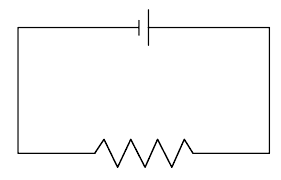
What is the total resistance in the circuit?
10 ohms
6 ohms
4 ohms
2.4 ohms
What is the total current through the battery?
0.75 A
1.5 A
3 A
0.33 A
What is the current through the 2 ohm resistor?
0.75 A
1.5 A
3 A
0.33 A

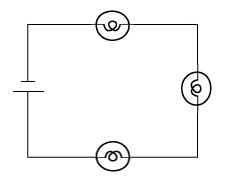
Originally bulbs a, b and c are identical. If lightbulb c is replaced with a bulb of lower resistance, how does the current in c compare to the current through a or b?
it is higher
it is lower
it is the same
it has no current flowing through it
What happens to light bulbs a, b and c if another light bulb "d" is added in parallel?
they get brighter
they get dimmer
they turn off
they remain the same

What happens to the intensity of the lightbulbs if another lightbulb "d" is added in series?
they all are brighter than before
they all are dimmer than before
they all turn off
they all are the same brightness as before
How much power is used by a calculator that operates on 8 volts and 0.1 amperes
0.0125 Watts
0.8 Watts
0.8 Joules / second
80 Watts
Resistivity of a wire depends on
length.
material
cross section area.
all of the above
Which one of the following graphs correctly represents Ohm’s law, where V is the voltage and I is the current?


What is the equivalent resistance in the diagram?
3Ω
5Ω
8Ω
11Ω
the formula to find current when the values of V and R are known is
I = V2R
I = V/R
I = R/V
I=VR



A current-carrying coil in a magnetic field experiences a turning effect.
How can the turning effect be increased?
increase the number of turns on the coil
reduce the size of the current
reverse the direction of the magnetic field
use thinner wire for the coil


(I X R)
Voltage divided by Resistance
(V / R)
Current
Power
Ohms
Watts
What is the formula for ohms law?
1+2=3
R X E = I
E =I x R
E= MC squared

Simple, Series, or Parallel?
Simple
Series Circuit
Parallel Circuit

If the potential difference is 12 volts and the resistance is 5 ohms, what is the current?
2.4 A
60 A
0.417 A
17 A

Solve for the total resistance of the circuit shown
50 V
1970 ohms
705 K ohms
20 Amps
What is the total circuit resistance of the following five resistors connected in series?
R1 = 27 ohms
R2 = 33 ohms
R3 = 51 ohms
R4 = 1.2 kohms
R5 = 240 ohms
Rt = __________ Ohms
353.2
1551
1.9 K

What is the current passing through this circuit?
0.5 A
0.05 A
0.005 A
0.0005
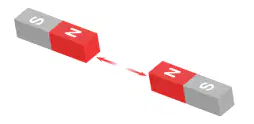
The magnets will attract each other.
The magnets will repel each other.
The Magnets will Create a Voltage
The magnets will start to spin and create a AC Wavform

Which contacts are used to power up the coil?
1 and 8
1 and 4
2 and 10
8 and 6

This control relay has _______ pins
9
8
10
11

How many contacts does Control Relay 1 have in this circuit?
1
2
3
4

How many NC contacts does this relay have?
1
2
3
4

Which rung is Control Relay 1's NC contacts on?
1
2
3
4

This is a picture of a ________________ switch
3 Pole Single Throw
2 Pole Double Throw
3 Pole Double Throw
2 Pole Single Throw

This is an example of cube relay with __________ terminals
Tab
Screw
Pin
Push

If I wanted to utilize one set of NO contacts on this relay which two contact numbers could I use?
1 and 4
8 and 6
1 and 7
8 and 5

How many NO contacts does CR1 have in this circuit?
1
2
3
4

This control Relay has 3 sets of NC contacts, the Pins for these contacts are
6,7, & 1,3, & 9, 11
5,6, & 1,4, & 8,11
1,2, & 3,4, & 5,6
1,4, & 8,11, & 6,7

Control Relay 1 is located on what Rung?
1
3
5
6

This is an example of a ___________ Switch
Double Pole Double Throw
Double Pole Single Throw
3 Pole Double Throw
Single Pole Double Throw
Protective relays can be designed to respond to ___________
Light intensity, impedance
Temperature, resistance, reactance
Voltage and current
All of these
A relay is used to
Break the fault current
Sense the fault
Sense the fault and direct to trip the circuit breaker
All of these
A relay is a
mechanical switch
electronic switch
electromechanical switch
all of the above
For a relay having SPDT contact, when the relay coil is energized the
NC will become NO
NC contact will close
NO will become NC
NO contact will close

Identify the symbol shown by the image?
Normally Closed Contact
Normally Open Contact
Relay Coil
Normally open pushbutton

Identify the symbol shown by the image?
Normally Closed Contact
Normally Open Contact
Relay Coil
Normally open pushbutton

This type of program is called ?
logic
ladder
code
circuit
Is an electrically operated switch. Current flowing through the coil creates a magnetic field, which attracts a lever and changes the switch contacts.
Normally open pushbutton
Normally closed pushbutton
Relay
Emergency switch

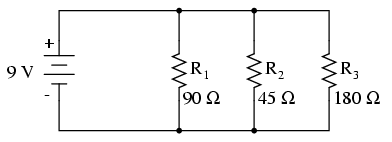
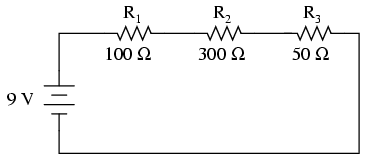

What is the total resistance (RT) across this circuit?
3 kΩ
10 kΩ
13 kΩ
18 kΩ

If the resistor R1 in the circuit of figure 1 were to open circuit, the circuit current would ?
a. remain unchanged.
b. decrease.
c. increase.
d. become zero.
If the resistor R3 in the circuit of figure 1 were to short circuit, the circuit current would:
?
a. remain unchanged.
b. decrease.
c. increase.
d. become zero.

If the resistance of the resistor R1 in the circuit of figure 1 was to be increased, the equivalent resistance of the circuit would ?
a. increase.
b. decrease to zero.
c. decrease to a lower value.
d. increase to a much higher value.

If an extra resistor was added in parallel with resistors R2 and R3 in the circuit of figure 1, the equivalent circuit resistance would ?
a. increase.
b. decrease to zero.
c. decrease to a lower value.
d. increase to a much higher value.

Solve for total current that is flowing through the circuit shown
2 A
154 mA
154 A
77 mA
What is the voltage drop over the 2 ohm resistor?
6 V
3 V
2 V
1 V
In the circuit of figure 1, the supply current is equal to the ?
a. value of branch currents.
b. product of the branch currents.
c. sum of the currents in each resistor.
d. sum of the branch currents

What does the electronic schematic symbol shown represent?
an AC current source
a DC current source
an ammeter
a voltmeter
What is the total current through the battery?
0.75 A
1.5 A
3 A
0.33 A
If resistor R1 in the circuit of figure 1 was short circuited, the circuit power dissipation would ?
a. remain unchanged.
b. decrease.
c. increase.
d. become zero.

The power dissipation of any circuit ?
a. equal to the sum of the power dissipation of each resistor.
b. equal to the product of the power dissipation of each resistor.
c. equal to the supply voltage squared times the circuit equivalent resistance.
d. depends on the circuit arrangement.
When three 10Ω resistors are connected in parallel,
the voltage drop across each is ?
a. one third of the supply voltage
b. supply voltage divided by 10 .
c. equal to the supply voltage
d. supply voltage divided by 30.
If one resistor in a parallel circuit of three resistors becomes short circuited,
the circuit current will ?
a. remain constant
b. decrease to zero
c. decrease by the value of current in the shorted branch
d. increase to a large value

What does the electronic schematic symbol shown represent?
Battery
Inductor
Resistor
Capacitor
If one resistor in the parallel section of a series-parallel circuit goes open circuit, the circuit power dissipation will ?
a. remain constant.
b. decrease.
. c. increase.
d. decrease to zero.

What does the electronic schematic symbol shown represent?
light bulb
cell
battery
resistor


Solve for the current flowing through R2.
10.3 ma
28.3 ma
16.4 ma
8.3 ma

