
 Worksheets
PS Unit 7 & 8 Review
Total questions: 130
Worksheet time: 5hrs 40mins
List the three types of radioactive decay from least harmful to most harmful that we discussed in class:
(a)
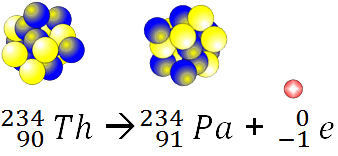
A radioactive substance decays with a half-life of 12,000 years. If the substance is stored for 36,000 years, then what fraction of it remains?
1/2
1/8
1/24
1/64
An isotope of cesium (cesium-137) has a half-life of 30 years. If 1.0 mg of cesium-137 disintegrates over a period of 90 years, how many mg of cesium-137 would remain?
0.5 mg
0.25 mg
0.125 mg
0.0625 mg
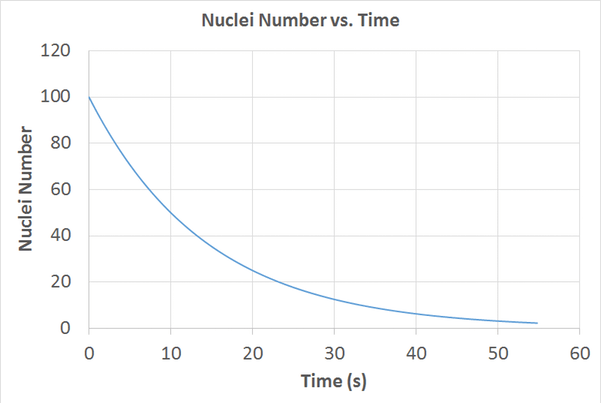
What is the Half life of this isotope?
5 seconds
10 seconds
15 seconds
20 seconds
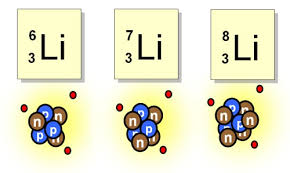
Solve this equation for beta decay.
614C = ___ + -10e
410Be
714N
210He
613C
614C = ___ + -10e
85209At = ___ + 24He
146C --> 0-1e + ________
85209At = ___ + 24He

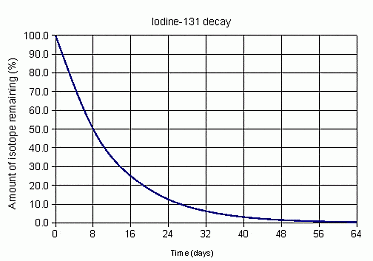
The % of the parent isotope remaining after 1 Half Life.
50%
25%
12.5%
6.25%
The % of the parent isotope remaining after 2 Half Lives.
50%
25%
12.5%
6.25%

alpha radiation

beta radiatio

electron

gamma radiation
Gamma rays _________.
have no mass and no charge
have mass but no charge
have no mass but have charge
have mass and charge
List the three types of nuclear radiation in increasing order of penetrating power.
gamma, beta, alpha
are positively charged.
consist of two protons and four neutrons.
can penetrate any thickness of matter
All of the above
Which type of nuclear reaction have people been able to effectively harness for power?
fission
fusion
Which type of nuclear reaction produces larger amounts of energy?
fission
fusion
Which part of the atom is affected by a nuclear reaction?
the electrons in its energy levels
the protons and neutrons at its center
What is the highest-energy type of radioactive decay?
alpha particles
beta particles
positrons
gamma radiation
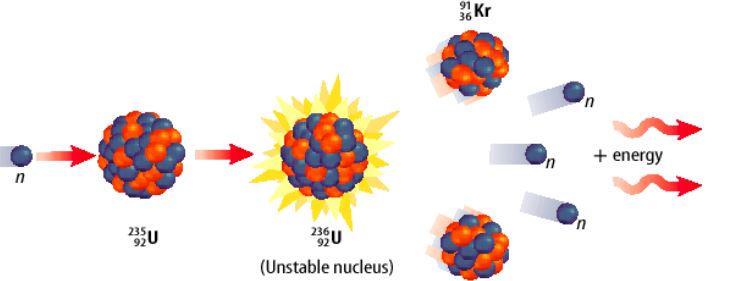
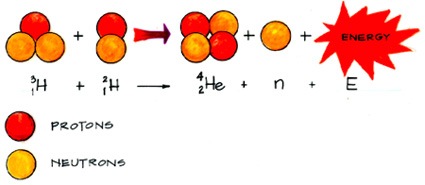

What type of radioactive decay is this example?
Alpha
Negative Beta
Positive Beta
Gamma
22087Fr —› 42He + ____
22089Ac
22490Th
21685At
21688Ra
146C —› 0-1e + ____
126C
147N
148O
145B


Green object is moving at a faster constant speed than Red
Red object is moving at a faster constant speed than Green
Green object is moving at a slower constant speed than Red
Red object is moving 2 times faster than Green


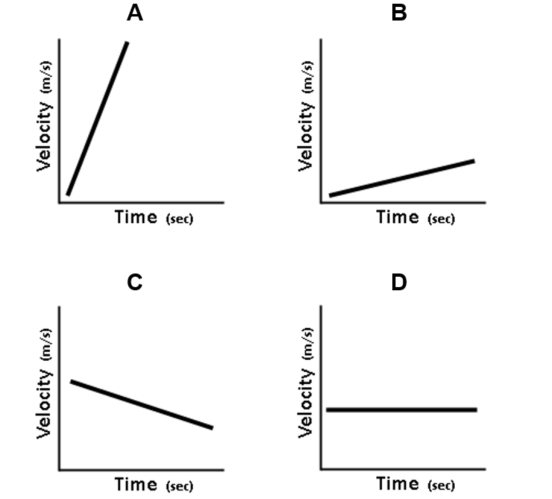
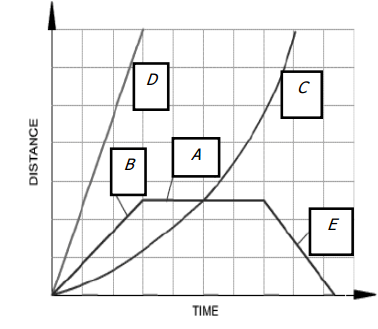
Which graph represents slowing down?
A
B
C
D


Mrs. Bearden drives 50 miles. What does Mrs. Bearden need to figure out her speed?
The type of car she drives
Her heart rate as she drives
The time she has driven
The direction she was going
Gabriel sprinted down the hallway for a science project. He ran a total of 40 meters in 20 seconds. What was his average speed?
2 meters per second
20 meters per second
40 meters per second
10 meters for second

Sophia was trying to explaining to Tyler how to find the speed. What equation should she use to calculate speed?
speed = time/distance
speed = distance X time
speed = voleicty X time
speed = distance/time
Which of these objects is NOT accelerating?
A plane slowing down to land
A rocket taking off into space
A hiker moving at the same speed for hours
A rollerblader heading downhill
Billy runs 400 meters to Andy's house, turns around, and runs 400 meters back home. What is Billy's distance?
0 meters
400 meters
800 meters
1600 meters
Billy runs 400 meters to Andy's house, turns around, and runs 400 meters back home. What is Billy's displacement?
0 meters
400 meters
800 meters
1600 meters
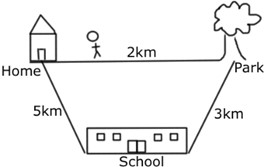
Jerry walked from home to school, then from the school to the park. What is his total displacement?
2 km
5 km
8 km
10 km
Jerry walked from home to school, then from the school to the park. What is his total distance?
2 km
5 km
8 km
10 km

From the figure, what is the displacement?
20 meters
25 meters
15 meters
25 meters NE
The change in an objects position from the final position to initial position.
displacement
distance
motion
reference point

Two people walk across a parking lot. Their paths are shown in the image. Who traveled with a larger displacement?
Person A
Person B
They both had the same displacement.


Which of the following is correct?
Initial Position = -5 m
Final Position = -5 m
Distance = 22 m
Displacement = 0 m
Initial Position = -5 m
Final Position = -5 m
Distance = 0 m
Displacement = 22 m
Initial Position = -5 m
Final Position = 6 m
Distance = 22 m
Displacement = 0 m
Initial Position = -5 m
Final Position = 6 m
Distance = 0 m
Displacement = 22 m

Which of the following is correct?
Initial Position = -2 m
Final Position = 0 m
Distance = 14 m
Displacement = 2 m
Initial Position = 0 m
Final Position = -2 m
Distance = 14 m
Displacement = -2 m
Initial Position = -2 m
Final Position = 0 m
Distance = -2 m
Displacement = -2 m
Initial Position = -2 m
Final Position = 0 m
Distance = 14 m
Displacement = 14 m
None are correct.
David walks 3 km north, and then turns east and walks 4 km. What is the displacement?
1 km
3 km
4 km
5 km

What distance did the creature travel?
23 m
9 m
-9 m
-23 m
What is the creature's final displacement?
23 m
9 m
-9 m
-23 m

What was the displacement of object C?

What was the displacement of object B?

Which is the length of the path an object has traveled?
displacement
distance
motion
reference point


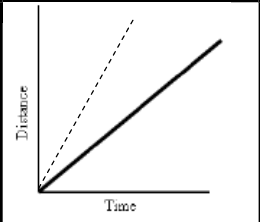
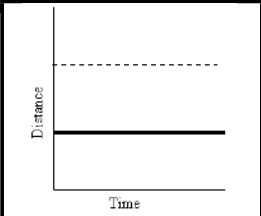
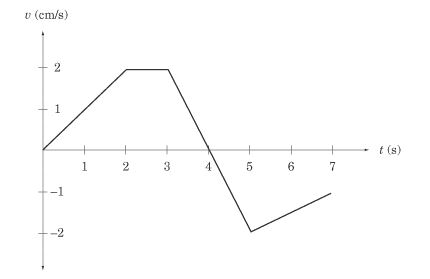
What is happening between 2 and 3 seconds?
The object is not moving.
The object is not accelerating.
The object is slowing down.
The object is speeding up.
What is happening between 2 and 3 seconds?
The object is not moving.
The object is not accelerating.
The object is slowing down.
The object is speeding up.


What is the formula for speed?
speed = distance x time
speed=distance / time
speed = time / distance
speed = distance + time


1
2
3
All of the above
Which law best describes inertia
1
2
3
All of the above

1
2
3
All of the above

1
2
3
All of the above

1
2
3
All of the above

1
2
3
All of the above

1
2
3
All of the above

1
2
3
All of the above
Object at rest stays at rest
1
2
3
All of the above
F=MxA
1
2
3
All of the above
Acceleration is due to a force put on an object mass
1
2
3
All of the above
Action / reaction
1
2
3
All of the above
Equal and opposite
1
2
3
All of the above
. Force exerted between the surfaces of two objects.
Friction
Inertia
Forces
Gravity
Object tendency to resist change
Friction
Inertia
Forcé
Gravity

