
 Worksheets
Biochem 501 unit 3
Total questions: 126
Worksheet time: 1hrs 3mins
The combustion (burning) of paper to form CO2 + H2O releases heat (it is an exothermic reaction) because:
The free energy change (ΔG) for this reaction is positive
The products (CO2 +H2O) have more stable chemical bonds than the reactants.
The entropy of the products (CO2 + H2O) is less than that of the reactants.
The carbon atom of CO2 is more reduced than most of the carbon atoms in paper.
For the reaction: A + B ↔ C + D,
Keq (for the left to right direction) = 2x10^2 (i.e., Keq = 200).
Which of the following is true? (Note that ΔG°' is the free energy change as the reaction proceeds from standard conditions to equilibrium.)
There is more A + B than C + D at equilibrium, and ΔG°' is positive
There is more C + D than A + B at equilibrium, and ΔG°' is positive
There is more A + B than C + D at equilibrium, and ΔG°' is negative
There is more C + D than A + B at equilibrium, and ΔG°' is negative
The reaction F ↔ G has a free energy change (ΔG°') of – 6 kJ/mol understandard conditions (i.e., standard conditions are starting conditions of1M of F and G, and the ΔG°' is by convention for the F → G direction)
What are the relative amounts of F & G when the reaction F ↔ G reaches equilibrium?
10F to 1G
1F to 1G
1F to 10G
1F to 100G
6F to 1G
What relative amounts of F & G at the START of the reaction would result in a free energy change (ΔG') of + 6 kJ/mol as the reaction proceeds to equilibrium? (I am asking which starting conditions would give a ΔG' of+ 6 kJ/mol and, as noted above, ΔG' is by convention for the F → G direction.)
1F to 100G
1F to 10G
1F to 1G
10F to 1G
6G to 1F
The reaction A → B has a standard free energy change (DG°') of +11 kJ/mol.In the cell, the formation of B is coupled to the conversion of C → D.
To obtain a net gain in the amount of B from the coupled reaction under standardconditions, the ΔG°' for C → D must be:
Between –1 and –11 kJ/mol
Between +1 and +11 kJ/mol
Greater than +11 kJ/mol (for example +20 kJ/mol)
Less than –11 kJ/mol (for example -20 kJ/mol)
Which of the following is true about the preparatory steps of glycolysis? (The preparatorysteps are the conversion of glucose to glyceraldehyde–3–phosphate.)
NAD+ is reduced to NADH
A phosphate group (Pi) from fructose-6-phosphate is transferred to ADP to form ATP
ATP is consumed (i.e., converted to ADP)
Pyruvate is converted to lactate
For which of the following compounds is the donation of a phosphate to ADP to form ATP(a substrate-level phosphorylation) an unfavorable reaction at standard conditions?
phosphoenolpyruvate
1,3-biphosphoglycerate
glucose 6-phosphate
substrate level phosphorylation is not favorable from any of the compounds listed
Consider the short pathway with the following standard free energy changes (ΔG°' s) foreach step:
–7.5 +7.5 –0.2 –23.
A ↔ Β ↔ C ↔ D → E
If the conversion of D → E is blocked by an enzyme inhibitor, which compound in the pathway will accumulate to the highest levels?
A
B
C
D
E
Yeast cells can grow anaerobically (without oxygen) by fermenting glucose to ethanol and can also completely oxidize glucose to CO2 and H20 during aerobic growth.
When yeast are grown anaerobically the amount of glucose consumed per amount of growth is much higher than during aerobic growth. This is because:
during anaerobic growth much of the glucose is used to make starch
glycolysis is blocked in aerobic conditions
glucose is used inefficiently in the presence of oxygen
the yield of ATP per glucose is much higher in aerobic than in anaerobic conditions
During the fermentation of glucose to ethanol in yeast, pyruvate is converted to ethanol because:
additional energy can be produced by the oxidation of the NADH that is formed during ethanol production
NAD+ must be replenished for glycolysis to continue
it is necessary to reduce pyruvate before it can be converted to CO2 and H2O in the citric acid cycle (also known as the TCA cycle)
ethanol is more oxidized than pyruvate
Enzymes accelerate reactions by:
Lowering the activation energy required for the reaction
Changing Keq to favor the formation of products
Preventing the reverse reaction so that the net forward reaction is greater than that for the uncatalyzed reaction
All of the above
How many steps of the citric acid cycle produce CO2?
0
1
2
3
4
How many steps of the citric acid cycle are oxidation reactions?
0
1
2
3
4
The standard free energy change (ΔG°') for the following reaction is negative (~ – 30 kJ/mol).
malate + 1/2 O2 → oxaloacetate + H2O
However, the reaction by which malate is converted to oxaloacetate in the citric acid cycle has a positive standard free energy change (ΔG°') of ~ + 30 kJ/mol.The reason for the positive standard free energy change in the citric acid cycle reaction is:
The conversion of malate to oxaloacetate is coupled to ATP breakdown
The conversion of malate to oxaloacetate is coupled to ATP synthesis
The conversion of malate to oxaloacetate is necessary for the citric acid cycle to proceed
The conversion of malate to oxaloacetate is coupled to the reduction of NAD+
Which one of the following enzymatic activities would be decreased by thiamine deficiency?
Fumarase
Isocitrate dehydrogenase
Malate dehydrogenase
Succinate dehydrogenase
Pyruvate dehydrogenase complex
How many cycles of β-oxidation are required to completely convert an 18 carbon fatty acid into acetyl-CoA?
1
7
8
10
18
Which of the following could be converted into the most molecules of acetyl-CoA?
1 mole of a 6 carbon fatty acid
1 mole of the 6 carbon sugar glucose
1 mole of the 6 carbon sugar fructose 1,6-biphosphate
2 moles of the 3 carbon compound pyruvate
All of the choices have the same number of carbons and would therefore be converted into the same number of acetyl-CoA's.
Pyruvate dehydrogenase is a large multi-subunit complex that is composed of 3 types of subunits that carry out different steps of the overall reaction. a-ketoglutarate dehydrogenase is also a large multi-subunit complex that is composed of 3 types of subunits. The E1 and E2 subunits of both enzymes are very similar and obviously evolutionarily related, and the E3 subunits are identical. How is it possible that these enzyme complexes could have identical E3 subunits?
The E3 subunits do not participate in catalysis; their role is simply to hold the E1 and E2 subunits together.
The E3 subunits do not interact with pyruvate or α-ketoglutarate, and the reactions that the E3 subunits catalyze have identical substrates and products in both complexes.
The E3 subunits play only a regulatory role.
Pyruvate and a-ketoglutarate are sufficiently similar that the same subunit can use both compounds as substrate.
Almost all of your energy is derived from:
The conversion of C–O and C=O bonds into H2O and CO2
The conversion of C–H and C–C bonds into H2O and CO2
Glycolysis
The Urea Cycle
The conversion of CO2 into H2O
Which of the following reactions could be catalyzed by an aminotransferase?
N2 + 3H2 → 2NH3
ornithine + carbamoyl phosphate → citrulline
glutamate + oxaloacetate → α-ketoglutarate + aspartate
arginosuccinate → fumarate + arginine
The conversion of arginine to ornithine is a step in the synthesis of:
urea
glutamic acid
carnitine
lactate
The regulation of the enzyme citrate synthase is a control point for the citric acid cycle.Which of the following is true (and metabolically logical) regarding the regulation of citrate synthase?
ATP and NADH promote enzyme activity
ATP and NADH inhibit enzyme activity
ATP and NAD+ promote enzyme activity
NADH and ADP inhibit enzyme activity
When the compound on the left is converted to the compound on the right, which type of chemical change has occurred?
Fe+3 → Fe+2
oxidation
reduction
isomerization
decarboxylation
hydrolysis

When the compound on the left is converted to the compound on the right, which type of chemical change has occurred?
oxidation
reduction
isomerization
decarboxylation
hydrolysis
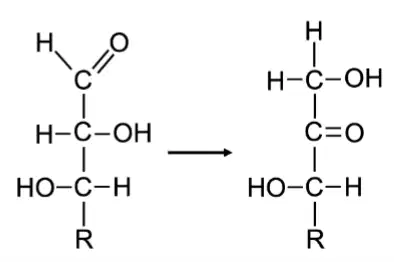
When the compound on the left is converted to the compound on the right, which type of chemical change has occurred?
oxidation
reduction
isomerization
decarboxylation
hydrolysis
Electrons transferred to the electron transport chain from FADH2 (these electrons come from the oxidation of succinate or fatty acids) make fewer ATPs than electrons that are transferred to Complex I from NADH. Why?
FADH2 enters the electron transport chain at complex II, which does not pump protons
FADH2 is made during the TCA cycle
Electrons from FADH2 bypass complex IV
B + C
A + C
Consider the following half reactions and their Eo' values (standard conditions).
X + 2e- + 2H+ → XH2 Eo ' = – 0.6 V
Y + 2e- + 2H+ → YH2 Eo ' = – 0.1 V
If 1 mole of X, Y, XH2 and YH2 are mixed in solution the net reaction that could occur is: (Of course all 4 species will change if a reaction occurs, but only 2 of the 4 are listed in each answer. Think about the direction e- will flow based on Eo ' values.)
The level of X will decrease and the level of Y will increase
The level of XH 2 will decrease and the level of Y will increase
The level of X will increase and the level of Y will decrease
The level of XH 2 will increase and the level of YH 2 will decrease
Many years ago, dinitrophenol (DNP) was used as a diet pill to help individuals lose weight.
DNP is an uncoupler that dissipates the proton gradient across membranes (such as the mitochondrial inner membrane). DNP is no longer used as a diet pill because several people died while taking the DNP to lose weight.
Why is DNP effective as a diet pill and why is it dangerous?
DNP decreases the rate of NADH oxidation and can decrease ATP production.
DNP increases the rate of electron transport and can increase ATP production.
DNP increases the rate of NADH oxidation and can decrease ATP production.
DNP ensures that the only path for proton flow from the outside to the inside of the inner mitochondrial membrane is through ATP synthase.
Which of the following is FALSE regarding ubiquinone? (Ubiquinone is an electron carrier of the mitochondrial electron transport chain; its reduced form is called Ubiquinol.)
Ubiquinone is soluble in membranes
Ubiquinol donates electrons to Complex IV
Ubiquinone accepts electrons from Complex I
Ubiquinone accepts electrons from Complex II
In the light reactions of photosynthesis, light energy is used to:
Dissociate water into O2, protons and high energy electrons
dissipate a proton gradient
oxidize NADPH
convert acetyl-CoA into glucose
The evolution of the ability of organisms to obtain energy from the oxidation of carbon bonds required the presence of oxygen (O2) in the atmosphere.
True
False
RNA molecules were likely to have been the first enzymes in the earliest forms of life (i.e., RNA enzymes were present before protein enzymes).
True
False
The standard free energy change (∆G°) for the reaction A -> B is -12 kJ/mol.At equilibrium, what is the ratio of B to A?
1 to 1
10 to 1
100 to 1
1000 to 1
1 to 1000
If the standard free energy change (∆G°) of C -> D is large and positive, which of the following could result in the conversion of C to D in a cell?
Couple the reaction to ADP phosphorylation
Couple the reaction to ATP hydrolysis
Very low levels of C relative to D in the cell
Very high levels of D relative to C in the cell
For the reaction F -> G, the standard free energy change, △G°, is -6 kJ/mol. If 1 mole of F and 10 moles of G (which are not standard conditions) are mixed in a reaction vessel, which of the following could occur?
No net reaction will occur
The net reaction could proceed towards the formation of F
The net reaction could proceed towards the formation of G
The direction of the net reaction cannot be determined from the information given
When one molecule of glucose proceeds through glycolysis to form two molecules of pyruvate, which of the following is true?
1 molecule of NADH is produced, and there is a NET gain of 1 ATP
2 molecules of FADH2 are produced, and there is a NET gain of 2 ATP
2 molecules of NADH are produced, and there is a NET gain of 2 ATP
2 molecules of FADH2 are produced, and there is a NET gain of 4 ATP
There are three irreversible, regulated steps in glycolysis. Which of the following do ALL of the reactions at these irreversible, regulated steps have in common?
ATP as a product
Large negative △G° values
ATP as a reactant
Large positive △G° values
Phosphofructokinase is an enzyme of glycolysis. What type of reaction does the phosphofructokinase catalyze?
Cleavage of a 6-carbon sugar into two 3-carbon sugars
Phosphorylation
Hydrolysis
Oxidation-reduction
Isomerization
When bacteria ferment milk into yogurt under anaerobic conditions, pyruvate is converted to lactate because:
the conversion of pyruvate to lactate provides additional reducing power (NADH) which will then be used for ATP production
this enables NAD+ to be replenished so that glycolysis can continue
lactate is necessary to give yogurt its sour flavor
it is necessary to reduce pyruvate to lactate before it can be completely oxidized to CO2 and H2O in the citric acid cycle
Which of the following would produce the LEAST energy if completely oxidized in a cell (or a chemistry lab) to CO2 + H2O?
1 mole of glucose
2 moles of pyruvate
2 moles of ethanol
2 moles of lactate
This question is from PeerWise with edits by R. Amasino.
The Pyruvate Dehydrogenase Complex contains 3 types of subunits (E1, E2, and E3) each of which plays a unique role in the overall reaction. What type of reaction does each subunit catalyze and what molecule plays a key role in the reaction at that subunit?
E1: oxidation, thiamine (as TPP); E2: electron transfer, lipoic acid; E3: decarboxylation, FAD
E1: decarboxylation, thiamine (as TPP); E2: oxidation, lipoic acid; E3: electron transfer, FAD
E1: decarboxylation, lipoic acid; E2: oxidation, thiamine (as TPP); E3: electron transfer, FAD
E1: electron transfer, FAD; E2: oxidation, lipoic acid; E3: decarboxylation, thiamine (as TPP)
In the citric acid cycle, how many steps involve enzymes that catalyze dehydrogenase reactions?
(Note: there is no need to have memorized the names of the citric acid cycle enzymes to answer this question, just consider how many energy-yielding chemical bonds enter the cycle or how many reduced co-factors are formed.)
1
2
3
4
8
Which of the following is NOT accomplished by the citric acid cycle?
formation of intermediates such as a-ketoglutarate that can be used for amino acid synthesis
generation of NADH and FADH2
oxidation of NADH to regenerate citric acid
substrate level phosphorylation of GDP to GTP
This question is from PeerWise with edits by R. Amasino.
Although the conversion of malate + NAD+ to oxaloacetate + NADH has a large positive free energy change starting from standard conditions, this reaction is favorable when the citric acid cycle is operating because:
This reaction occurs at very high temperatures in the mitochondria
This reaction is catalyzed by an enzyme that only permits the reaction to proceed in the direction in which oxaloacetate is formed
The reaction is coupled with the breakdown of ATP
The concentration of oxaloacetate is extremely low relative to malate
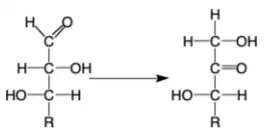
When the compound on the left is converted to the compound on the right, which type of chemical change has occured?
oxidation
reduction
isomerization
decarboxylation
hydration
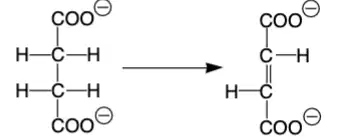
When the compound on the left is converted to the compound on the right, which type of chemical change has occured?
oxidation
reduction
isomerization
decarboxylation
hydration

When the compound on the left is converted to the compound on the right, which type of chemical change has occured?
oxidation
reduction
isomerization
decarboxylation
hydration
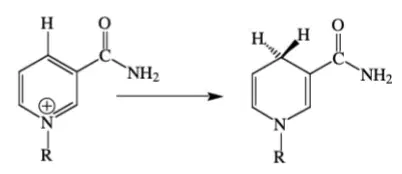
When the compound on the left is converted to the compound on the right, which type of chemical change has occured?
oxidation
reduction
isomerization
decarboxylation
hydration
Carnitine is:
an intermediate of the citric acid cycle
an intermediate of the urea cycle
necessary for the oxidation of glucose
essential for transport of fatty acids across the mitochondrial membrane
Citrate synthase and isocitrate dehydrogenase are regulated enzymes of the citric acid cycle. It would make "metabolic sense" for these enzymes to be inhibited by:
AMP and/or NADH
ATP and/or NADH
ATP and/or NAD+
AMP and/or NAD+
In the conversion of an 8-carbon saturated fatty acid to CO2 via the -oxidation pathway AND the citric cycle:
How many molecules of acetyl-CoA would be formed from the fatty acid?
8
6
4
2
0
In the conversion of an 8-carbon saturated fatty acid to CO2 via the -oxidation pathway AND the citric cycle:
How many molecules of NAD+ would be reduced to NADH?
2
4
12
15
30
This question is from PeerWise with edits by R. Amasino.
Which of the following is NOT involved in the use of amino acids for energy production or the elimination of the amino groups (-NH2) as urea by the liver?
Amino acids undergo transamination reactions to form glutamate and a corresponding keto acid that can be metabolized for energy production
Alanine carries ammonia from skeletal muscle to the liver
Glutamate combines with ammonia to form glutamine, and glutamine travels to the liver through the bloodstream
Glutamine combines with ammonia to form glutamate, and glutamate travels to the liver through the bloodstream
Urea synthesis in mammals takes place primarily [in] the:
liver
kidney
brain
skeletal muscle
DNP (dinitrophenol) is an uncoupler that dissipates the proton gradient across membranes (as we discussed, DNP had been used as a diet pill in the 1930’s, but is now banned in the U.S.). If an individual ingested a substantial but sub-lethal amount of DNP, what would be the effect on the following (assume that the individual maintains normal blood glucose levels and thus has an adequate supply of energy):
The rate of NADH oxidation will
increase
decrease
remain constant
DNP (dinitrophenol) is an uncoupler that dissipates the proton gradient across membranes (as we discussed, DNP had been used as a diet pill in the 1930’s, but is now banned in the U.S.). If an individual ingested a substantial but sub-lethal amount of DNP, what would be the effect on the following (assume that the individual maintains normal blood glucose levels and thus has an adequate supply of energy):
The rate at which the citric acid cycle is operating will
increase
decrease
remain the same
Which of the following is NOT required for electrons to flow from NADH to O2 in mitochondrial electron transport?
Complex I
Complex II
Ubiquinol
Complex III
Complex IV
Pyruvate + 2H+ + 2e- -> lactate E°' = -0.2 V
NAD+ + 2H+ + 2e- -> NADH + H+ E°' = -0.3 V If pyruvate, lactate, NAD+ and NADH were mixed under standard conditions, which of the following net changes could occur?
Pyruvate would be converted to lactate
Lactate would be converted to pyruvate
NAD+ would be converted to NADH
Cannot determine from the information given
If pyruvate, lactate, NAD+ and NADH were mixed under standard conditions, what would be free energy (△G) change if the system were to reach equilibrium?
-15 kJ/mol
-20 kJ/mol
-25 kJ/mol
-30 kJ/mol
-40 kJ/mol
Which of the following processes generates the most reactive oxygen species and may contribute to aging?
Lactate fermentation
Glycolysis
The urea cycle
Mitochondrial electron transport
Which of the following regarding the enzyme ATP synthase is NOT CORRECT?
ATP synthase can catalyze the hydrolysis of ATP
ATP synthase can catalyze the synthesis of ATP
ATP synthase can transport protons in the absence of ATP synthesis or hydrolysis
Release of ATP from ATP synthase requires the energy of a proton gradient
The following equation for photosynthesis is balanced (and appears in many textbooks). Why is the equation biochemically NOT CORRECT?
6CO2 + 6H2O -> 6O2 + C6H12O6 (hexose)
CO2 is not the source of the C's in hexose sugars
H2O is not the source of the H's in hexose sugars
O2 results from the splitting of H2O, and 6H2O cannot form 6O2
It is not possible to split H2O and form O2 under the relatively mild conditions of temperature and pressure in cells
Which of the following occurs in the Calvin cycle (the cycle in which CO2 is converted into sugar - a process known as CO2 fixation)?
NADPH and ATP are used to reduce C-O bonds
Triose sugars are oxidized to CO2 to yield energy for electron transport
Acetyl-CoA provides the reducing power to convert CO2 into triose sugars
The enzyme ribulose-1,5-bisphosphate carboxylase (Rubisco) oxidizes CO2 to provide energy for sugar production.
The methanogens may have contributed to keeping the earth from freezing a few billion years ago by converting H2 and CO2 (abundant components of the earth's early atmosphere) to CH4 (methane).
True
False
The final electron acceptor of the electron transport chains of all organisms that currently exist on earth is O2.
True
False
This question is from PeerWise with edits by R. Amasino.
For a reaction with a Keq of 10, starting at STANDARD conditions which of the following is correct:
The favored reaction is the formation of reactants
The rate of the reaction will increase
The favored reaction is the formation of products
ΔG° (the standard free energy change) is positive
For the reaction A -> B, the standard free energy change (ΔG°) = +12.0 kJ/mol
At equilibrium, what is the ratio of B to A?
1.0
0.1
0.01
0.001
For the reaction A -> B, the standard free energy change (ΔG°) = +12.0 kJ/mol
What is the actual ΔG if the starting ratio of A to B is not standard conditions but rather 1A:10B?
-12.0
+12.0
-18.0
+18.0
For the reaction A -> B, the standard free energy change (ΔG°) = +12.0 kJ/mol
If the conversion of A -> B is coupled to the breakdown of ATP (the coupled reaction is
A + ATP -> B + ADP + Pi) and the standard free energy change (ΔG°) for ATP breakdown is -30.0 kJ/mol, what is the overall standard free energy change ΔG° for the coupled reaction?
-18 kJ/mol
+18 kJ/mol
-42 kJ/mol
+42 kJ/mol
During glycolysis, triose phosphate isomerase catalyzes the net conversion of dihydroxyacetone phosphate to glyceraldehyde-3-phosphate. The standard free energy (ΔG°) for this reaction is positive (+7.9 kJ/mol) During glycolysis, why is the net reaction the formation of glyceraldehyde-3-phosphate?
The product is more stable than the reactant
The reaction is coupled to ATP hydrolysis
The subsequent steps of glycolysis keep the cellular concentration of the product glyceraldehyde-3-phosphate low relative to the levels of dihydroxyacetone phosphate
High levels of ADP stimulate triose phosphate isomerase activity
Which of the following statements about the reaction of glycolysis catalyzed by phosphofructokinase is NOT CORRECT?
Phosphofructokinase phosphorylates a substrate
ATP is a substrate of phosphofructokinase
ADP inhibits phosphofructokinase activity
The conversion of fructose-6-phosphate to fructose 1,6-bisphosphate by phosphofructokinase is a regulated step in glycolysis
Phosphofructokinase is a relatively large enzyme
For the hypothetical metabolic pathway,
A -> B -> C -> D -> E,
with the standard free energy changes for each step listed below, which step would you predict would be most highly regulated?
A -> B ΔG° = +0.5
B -> C ΔG° = -0.4
C -> D ΔG° = -19.6
D -> E ΔG° = -0.2
The conversion of pyruvate to lactate, a type of fermentation, permits glycolysis to continue in anaerobic conditions because it regenerates:
NAD+
NADH
FAD
FADH2
ATP

We discussed ethanol as a fuel derived from glucose by fermentation. Recall one molecule of glucose is converted into two molecules of ethanol.
Two ethanol molecules have a higher energy DENSITY (more energy per gram) than one glucose because:
Glucose has more C-C and C-H bonds than 2 ethanols
Glucose has fewer C-C and C-H bonds than 2 ethanols
Glucose has a higher percentage of oxidized bonds (such as C-OH) than ethanol
Glucose has a lower percentage of oxidized bonds (such as C-OH) than ethanol
In the citric acid cycle, some of the energy of resulting from oxidation of the C-C and C-H bonds of acetate (acetyl-CoA) is preserved in:
CO2
pyruvate
NADH and FADH2
oxaloacetate
Which of the following is/are CORRECT for both the pyruvate dehydrogenase complex and the alpha-ketoglutarate dehydrogenase complex?
Both enzymes catalyze the oxidation of a substrate
Both enzymes are stimulated by high levels of ATP
Some of the energy of substrate oxidation is preserved in a thiolester bond to coenzyme A
A and C are true
B and C are true
In a eukaryotic cell, which of the following processes does NOT occur in mitochondria?
the citric acid cycle
reduction of O2 to H2O
fatty acid oxidation
glycolysis
How many molecules of CO2 are produced in one turn of the citric acid cycle?
0
1
2
3
4
Which of the following enzymes of the citric acid cycle does NOT catalyze the oxidation of a citric acid cycle intermediate?
succinate dehydrogenase
isocitrate dehydrogenase
a-ketoglutarate dehydrogenase
citric synthase
malate dehydrogenase
Complete beta oxidation of a 14:0 fatty acid (i.e., a 14-carbon saturated fatty acid) results in:
14 Acetyl-CoA, 14 NADH, 14 FADH2
7 Acetyl-CoA, 14 NADH, 7 FADH2
7 Acetyl-CoA, 7 NADH, 7 FADH2
7 Acetyl-CoA, 6 NADH, 6 FADH2
Why do humans make urea?
To eliminate excess ammonia which is toxic
TO use as a precursor for amino acid biosynthesis
To use as a storage form of nitrogen
To generate ATP
In the series of reactions that result in formation of urea from ammonia (NH4+) and aspartate, the energy of ATP is used to:
Create high energy intermediate from bicarbonate (the aqueous form of CO2) so that adding ammonia to bicarbonate is a favorable reaction
Drive the transport of CO2 into liver cells
Drive the cleavage of urea from the end of the arginine molecule
Drive the formation of aspartate from a-ketoglutarate
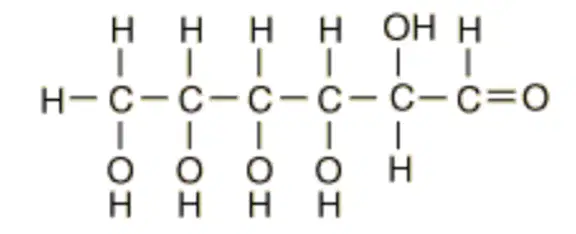
If you fully oxidized the following molecule, how many of its chemical bonds would be used to provide energy to you?
8
9
10
12
14
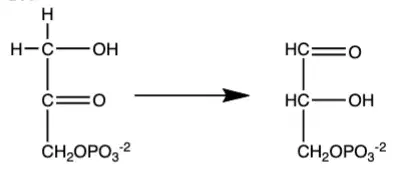
When the compound on your left is converted to the compound on the right, what type of chemical change has occured?
oxidation
reduction
isomerization
decarboxylation
hydration

When the compound on the left is converted to the compound on the right, what type of chemical change has occured?
oxidation
reduction
isomerization
decarboxylation
hydration
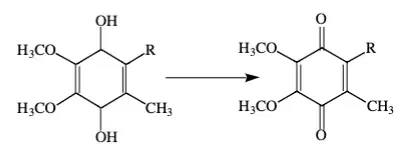
When the compound on the left is converted to the compound on the right, what type of chemical change has occured?
oxidation
reduction
isomerization
decarboxylation
hydration
When the compound on the left is converted to the compound on the right, what type of chemical change has occured?
oxidation
reduction
isomerization
decarboxylation
hydration
The regulation of the enzyme citrate synthase is a control point for the citric acid cycle. Which of the following is true (and metabolically logical) regarding the regulation of citrate synthase?
ATP and NADH promote enzyme activity
ATP and NADH inhibit enzyme activity
ATP and NAD+ promote enzyme activity
NADH and ADP inhibit enzyme activity
The standard reduction potentials (E°) for the following half reactions are:
Oxaloacetate + 2H+ + 2e- --> malate E° = -0.16 V
NAD+ + 2H+ + 2e- --> NADH + H+ E° = -0.32 V
If malate, oxaloacetate, NAD+, and NADH were mixed at 1 M concentrations in the presence of malate dehydrogenase, which of the following net reactions would occur?
both oxaloacetate and malate would be oxidized; both NAD+ and NADH would be reduced
oxaloacetate would be reduces, NADH would be oxidized
malate would be oxidized, NAD+ would be oxidized
malate would be oxidized, NADH would be unchanged because it is a cofactor, not a substrate
The standard reduction potentials (E°) for the following half reactions are:
Oxaloacetate + 2H+ + 2e- --> malate E° = -0.16 V
NAD+ + 2H+ + 2e- --> NADH + H+ E° = -0.32 V
Using the reduction potentials (E°) values given above, what is the △G° (the standard free energy change) for the following reaction? (By convention the △G° value is for the reaction as it proceeds from left to right.)
ozaloacetate + NADH + H+ --> malate + NAD+
0 kJ/mol
~ +8 kJ/mol
~ -8 kJ/mol
~ -32 kJ/mol
~ +32 kJ/mol
Complex I (of mitochondrial electron transport) obtains electrons from ___ and reduces ___ to ___.
NADH, ubiquinone (Q), ubiquinol (QH2)
NADH, ubiquinol (QH2), ubiquinone (Q)
Cytochrome c, ubiquinone (Q), ubiquinol (QH2)
ATP, NADH, NAD+
Coenzyme Q (also known as ubiquinone or ubiquinol depending upon its oxidation state and as "Q" in the Part 2 diagrams) is a molecule originally discovered at the University of Wisconsin. Which of the following statements is NOT CORRECT regarding Coenzyme Q?
Coenzyme Q is found in the inner mitochondrial membrane
Coenzyme Q is used to move electrons from Complex II to Complex III
Coenzyme Q is used to move electrons from Complex III to complex IV
In its fully reduced form, Coenzyme Q carries two electrons
After the addition of the uncoupler 2,4 dinitrophenol (DNP) to a suspension of mitochondria undergoing oxidative phosphorylation supported by the oxidation of NADH, all of the following would occur EXCEPT:
oxygen consumption decreases
oxidation of NADH continues
ATP production decreases
electron transfer through the electron transport chain continues
In the "light reactions" of photosynthesis, the energy of light is converted into chemical energy in the form of:
NADPH and ATP
ADP and Pi
CO2 and H2O
NADP+ and H2O
In photosynthesis, the source of the electrons that flow through the electron carriers in the chloroplast membrane is:
FADH2
glucose
H2O
NADH
In eukaryotic plant cells, some of the light energy that the chloroplast captures is transported out of chloroplast into the cytosol as chemical energy in the form of:
fatty acids
pyruvate
dihydroxyacetone phosphate
ribulose
The only sources of energy used by organisms currently living on earth are C-C/C-H bonds or light.
True
False
The first organisms that evolved on earth did NOT require oxygen as a final electron acceptor for their electron transport chains.
true
false
The free energy change (ΔG) for a reaction does NOT provide information about:
The direction in which the reaction will proceed
The rate of the reaction
How far the reaction is from equilibrium
The amount of energy that will be released as the reaction proceeds to equilibrium
The Keq for the reaction X -> Y is 10. Starting from standard conditions (1 M of X and Y), which of the following is correct?
The reaction would proceed from right to left; and ΔG° = +6 kJ/mol
The reaction would proceed from right to left; and ΔG° = +12 kJ/mol
The reaction would proceed from left to right; and ΔG° = -6 kJ/mol
The reaction would proceed from left to right; and ΔG° = -12 kJ/mol
For the reaction A -> B with starting concentrations of [A] at 1 M and [B] at 100 M (NOT standard conditions), the ACTUAL free energy change (ΔG) = +6 kJ/mol. What is the approximate Keq and the STANDARD free energy change ΔG° (i.e., the free energy change starting from standard conditions ([A] at 1 M and [B] at 1 M))?
Keq = 1000; ΔG° = +6 kJ/mol
Keq = 100; ΔG° = +12 kJ/mol
Keq = 10; ΔG° = -6 kJ/mol
Keq = 1; ΔG° = -6 kJ/mol
The STANDARD free energy change (ΔG°) for the reaction C -> D is +10 kJ/mol. If the conversion of C -> D was coupled to the hydrolysis of ATP, what is the standard free energy change (ΔG°) for the coupled reaction?
Use the standard free energy change (ΔG°) of ATP hydrolysis of -30 kJ/mol to answer this question.
-6 kJ/mol
-30 kJ/mol
+30 kJ/mol
-20 kJ/mol
Which of the following is CORRECT about the payoff steps of glycolysis (the conversion of glyceraldehyde-3-phosphate to pyruvate)?
NAD+ is reduced to NADH
A phosphate group from phosphoenolpyruvate (PEP) is transferred to ADP to form ATP
A phosphate group from 1,3-diphosphoglycerate is transferred to ADP to form ATP
One step involves an oxidation
All of the above are true
Certain types of glycolysis are irreversible in the cell because:
Certain enzymatic reactions are highly regulated
The activation energies for certain reactions in the pathway are very large
The standard free energy change (ΔG°) for certain reactions is positive
The concentrations of products and reactants required to permit the net reactions to occur in the reverse direction are not typically found in a living cell
Which of the following compounds has a larger negative ΔG° of phosphate group hydrolysis than ATP and thus can be used to make ATP?
Glucose-6-phosphate
Fructose-6-phosphate
ADP
Phosphoenolpyruvate
Yeast carry out fermentation of glucose to ethanol in anaerobic conditions. In this fermentation, what is the metabolic reason that pyruvate is converted into ethanol?
additional energy can be produced by the oxidation of the NADH that is formed during ethanol production
It is necessary to reduce pyruvate before it can be converted to CO2 and H2O in the citric acid cycle
NAD+ must be replenished for glycolysis to continue
Ethanol is more oxidized than pyruvate
Which of the following would produce the MOST energy if completely oxidized to CO2 + H2O? (Note structures are on the sheet we provide for you to use during the exam, but you could also answer this by knowing what occurs during glycolysis and fermentation.)
pyruvate
ethanol
acetate
carbon dioxide
How many moles of acetyl-CoA are formed when one mole of glucose (a 6-carbon sugar) proceeds through glycolysis and the pyruvate dehydrogenase complex?
1
2
3
4
6
What is the path through which electrons travel in the pyruvate dehydrogenase (PDH) complex reaction?
Pyruvate -> Lipoic Acid -> FADH2 -> NADH
Lipoic Acid -> Pyruvate -> FADH2 -> NADH
Pyruvate -> Lipoic Acid -> NADH -> FADH2
Pyruvate -> NADH -> Lipoic Acid -> FADH2
How many steps of the citric acid cycle are oxidation reactions?
0
1
2
3
4
How many molecules of CO2, NADH, and FADH2 are formed by one turn of the citric acid cycle?
1 CO2, 3 NADH, 1 FADH2
2 CO2, 2 NADH, 2 FADH2
2 CO2, 3 NADH, 1 FADH2
2 CO2, 1 NADH, 3 FADH2
3 CO2, 3 NADH, 1 FADH2
A NET increase means that after a process occurs there is an increase in the amount of a compound beyond the amount at the start of the process. Oxidizing teh acetate of acetyl-CoA in the citric acid cycle does NOT result in a net increase in:
NADH
CO2
malate
GTP
Which of the following about the complete B-oxidation of myristic acid, which is a 14-carbon saturated fatty acid (14:0) is CORRECT?
Myristic acid will undergo 7 rounds of B-oxidation
Complete B-oxidation will produce 6 acetyl-CoA molecules
1 molecule of glucose can produce more molecules of acetyl-CoA than 1 molecule of myristic acid
B-oxidation of myristic acid will produce 6 NADH and 6 FADH2 molecules
If a person was NOT able to make normal levels of carnitine, which of the following metabolic processes would be most affected?
Fatty Acid Oxidation
Glycolysis
Citric Acid Cycle
Electron Transport
Which compound is NOT involved in the production of urea via the urea cycle?
Aspartate
ATP
Carbamoyl phosphate
pyruvate
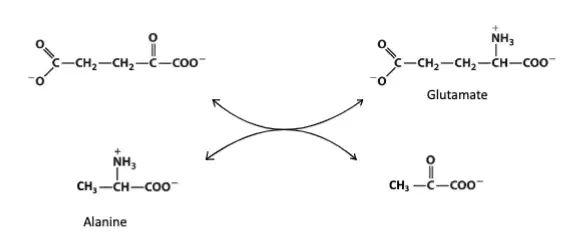
The reaction below is a ____ reaction, where the amino acid ____ is ____ to form ____.
transamination ; alanine ; oxidized ; glutamate
transamination ; alanine ; deaminated ; pyruvate
transamination ; glutamate ; oxidized ; pyruvate
oxidation ; alanine ; deaminated ; a-ketoglutarate

Which of the following compounds would release the LEAST energy if it were completely oxidized (i.e., converted to CO2 and H2O)?
pyruvate
acetaldehyde
ethanol
acetate
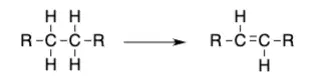
If the following reaction took place in a metabolic pathway, which type of enzyme would be likely to catalyze this reaction?
isomerase
kinase
dehydrogenase
protease
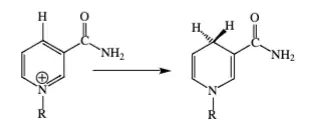
When the compound on the left is converted to the compound on the right, what type of chemical change has occured?
oxidation
reduction
isomerization
hydrolysis
The final electron acceptor of electron transport in your mitochondria is:
O2
NAD+
CO2
FAD+
H2O
ATP synthase requires the energy of the proton gradient to:
Bind Pi and ADP
Catalyze the formation of ATP from Pi and ADP
Release bound ATP from the active site of the enzyme
Transfer electrons to the mitochondrial electron transport chain
Which of the following is/are CORRECT regarding the presence of uncoupling proteins (UCPs) in the mitochondria of hibernating bears?
UCPs prevent the production of ATP while hibernating to ensure that the bear remains asleep
UCPs permit the bear to conserve fat reserves throughout the winter
UCPs permit more fat to be oxidized than is required to meet ATP needs to provide extra heat and water
all of the above
In the "light reactions" of photosynthesis, light energy is converted into chemical energy. Which of the following molecules contain chemical energy derived from the light reactions?
H2O and glyceraldehyde-3-phosphate
O2 and glyceraldehyde-3-phosphate
ADP and NADP+
ATP and NADPH
During the Calvin cycle (the "carbon fixation" reactions of photosynthesis), which of the following compounds becomes reduced when steps of glycolysis occur in the reverse direction of glycolysis? (Even if you do not remember which compound, only one answer should "make sense" based on what you know about the pathways in Part 2.)
3-phosphoglycerate
Coenzyme A
glucose
oxygen (O2)
Life evolved on earth BEFORE there was oxygen (O2) in the atmosphere
True
False
The electron transport chains of all organisms presently living on earth use oxygen (O2) as a final electron acceptor.
True
Flase

