Worksheets
CIRCULATORY TEST
Total questions: 45
Worksheet time: 23mins
Type of circulation that refers to blood flow from the heart to the lungs and back to the heart again?
Systemic circulation
Renal circulation
Portal circulation
Pulmonary circulation
Type of circulation that refers to the blood flowing through the entire body?
Systemic circulation
Renal circulation
Portal circulation
Pulmonary circulation
The contraction/emptying phase of the cardiac cycle?
Systole
Diastole
The relaxing/filling stage of the cardiac cycle?
Systole
Diastole
Coronary arteries...
supply the heart muscle cells with a supply of blood.
supply the brain cells with a supply of blood.
contain deoxygenated blood.
when clogged, cause a stroke.
The type of blood vessel that normally carries de-oxygenated blood back to the heart from body cells?
arteries
capillaries
veins
The type of blood vessel that normally carries oxygenated blood from the heart to the body cells?
arteries
capillaries
veins
The type of blood vessel where exchange of gases, nutrients, and wastes occurs?
arteries
capillaries
veins

An abnormal widening/ballooning of a portion of an artery.
aneurysm
embolism
thrombosis
atherosclerosis
A blood clot that travels through the circulatory system and eventually becomes lodged within a blood vessel?
aneurysm
embolism
thrombosis
atherosclerosis
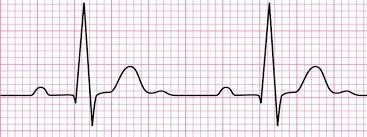
Type of device that measures the electrical currents created by the SA and AV nodes?
AED
MRI
ECG
CAT Scan

The main vein(s) that brings blood to the right atrium?
Aorta
Pulmonary veins
Superior and Inferior vena cava
Jugular vein

Instrument used to measure blood pressure?
AED
ECG
Sphygmomanometer
ultrasound

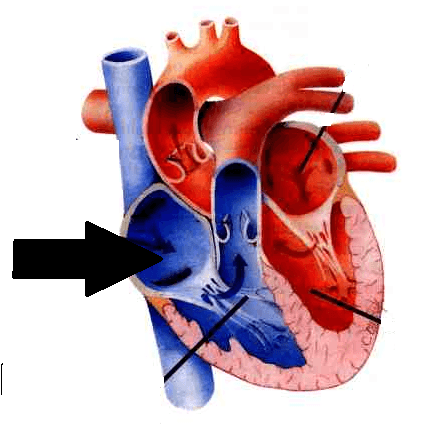
Name part N.
Right atrium
left atrium
right ventricle
left ventricle

Name part I.
pericardium
mediastinum
septum
unknownum

Name part A.
Pulmonary artery
Pulmonary vein
Superior vena cava
Aorta

Name part B.
Pulmonary arteries
Pulmonary veins
Superior Vena cava
Aorta

Name part M.
Tricuspid valve
Semilunar valve
Bicuspid valve
Mitral valve

What is blood pressure?
Pressure of the blood against the walls of the veins.
Pressure of the heart pushing the blood out.
Pressure of the heart receiving blood.
Pressure of the blood against the walls of the arteries.
· Type of cell that functions to carry oxygen to tissues:
Erythrocyte
Thrombocyte
Leukocyte
White Blood Cell
Type of cell that functions to stop bleeding:
Red blood cell
Platelet
Leukocyte
White Blood Cell
· Type of cell that defends the body against infectious disease:
Thrombocyte
Leukocyte
Erythrocyte
Red blood cell
Functions of Circulatory System:
Protect from infection
Transport O2 and wastes products
Hemostasis
Provides heat
All of these are correct.
What type of tissue is blood?
Epithelial
Connective
Muscle
Nervous
What is the yellowish liquid that carries nutrients and proteins through the body?
Red
White
Plasma
Platelets
Name the proteins on the surface of red blood cells.
Antibodies
Antigens
Plasma
Collagen

What blood type is this?
A+
B+
AB+
AB-

What is produced by your body in response to foreign antigens, such as the wrong type of blood?
agglutinates
clotting factors
phagocytes
antibodies

What is the reaction between antigens and antibodies that allow you to determine blood type?
clotting
agglutination
aggregation
antibody production
Which sample is B-


Which sample is O+


Which two of these does the septum separate?
(select 2)
Left Ventricle
Right Ventricle
Right Atrium
Left Atrium

Coronary Artery

Coronary Veins

sinoatrial Node
The tiny white cords that anchor the flaps of the bicuspid and tricuspid valves to the walls of the ventricles.
semilunar cords
chordae tendineae
atrioventricular cords
pulmonary flaps
The heart is made up of what kind of muscle?
smooth
cardiac
skeletal
voluntary
What is the medical term for the sound the heart makes while pumping blood?
tik tok
pitter patter
lub dub
squish squash
ping pong
Which artery carries DEOXYGENATED blood?
Renal
Femoral
Brachial
Carotid
Pulmonary
The carotid artery branches off of the ...
Pulmonary Vein
Pulmonary Artery
Vena Cava
Aorta
Jugular Vein
What is considered by doctors to be the "anatomical pacemaker" of the heart?
SA node
AV node
Purkinje Fibers
Bundle of His
Bundle branches
Receives oxygen-rich blood from the lungs
Right Ventricle
Left Ventricle
Right Atrium
Left Atrium
Pumps the oxygen-rich blood to all parts of the body
Right Ventricle
Left Ventricle
Right Atrium
Left Atrium
Receives blood from the body that is low in oxygen and high in carbon dioxide
Right Atrium
Right Ventricle
Left Atrium
Left Ventricle