
 Worksheets
Unit 7 review
Total questions: 75
Worksheet time: 1hrs 1mins
Which of the following is the correct order for least related to most related?
Domain
Kingdom
Phylum
Class
Order
Family
Genus
Species
Species
Kingdom
Phylum
Class
Order
Family
Genus
Domain
Species
Genus
Family
Order
Class
Phylum
Kingdom
Domain
Domain
Kingdom
Class
Phylum
Order
Genus
Family
Species
Which of the following sets of animals would be the most closely related?
Animals in the same order
Animals in the same genus
Animals in the same class
Animals in the same family
Which of the following sets of insects would be the most closely related?
Insects in the same class
Insects in the same family
Insects in the same order
Insects in the same species
Which of the following taxonomic groups would contain the most related set of animals?
Domain
Species
Family
Order
Which of the following groups of fungi would be the most closely related?
Fungi in the same phylum
Fungi in the same kingdom
Fungi in the same order
Fungi in the same class
The American lobster (Homarus americanus) is most closely related to which of the following organisms?
Cape lobster (Homarinus capensis)
Common lobster (Homarus gammarus)
Patagonian lobsterette (Thymops birsteini)
Scarlett clawed lobster (Nephropsis atlantica)
Who created the most commonly used system of taxonomy?
Niels Bohr
Watson and Crick
Charles Darwin
Carl Linnaeus
In the English language, dogs have many different names to describe them. For example, canine, puppy, dog, hound, etc. In science around the world we use a naming system called what to make it uniform across the world?
binomial nomenclature
polynomial nomenclature
taxonomy
none of the above
All living things are divided into three groups called 'domains'. They include, Domain Bacteria, Domain Archaea, and ____________.
Domain Animalia
Domain Eukarya
Domain Prokaryotic
Domain Protista
Which kingdoms belongs to the Eukaryotic domain?
Animal
Bacteria
Plants
Fungi
Protists
What would the scientific name of this organism be?
Kingdom: Animalia
Phylum: Chordata
Class: Reptilia
Order: Crocodila
Family: Alligatoridae
Genus: Alligator
species: mississippiensis
alligator Mississippiensis
Crocodila chordata
Alligator mississippiensis
Reptilia crocodila

Biologist group living things based on ____.
Habitat
Size
Colors
Shared Characteristics

Which two organisms are most closely related?
Two different species may have similar features because of
descent from a common ancestor.
fossil record
genetic drift
Individual organisms evolve, not populations.
True
False


Which is artificial selection?
Breeding dogs for specific traits.
Coyote species diverging from the wolves.
Individuals in a population that have a variation which gives them an advantage in their environment are more likely to
move to a different environment
die and not reproduce
survive and reproduce
change their characteristics to fit their environment
Darwin called the ability of an organism to survive
variation
overproduction
fittness
adaptation
According to Darwin's theory of natural selection, the individuals that tend to survive are those that have
variations best suited to their environment
the best luck
the ability to change their bodies to fit their environment
the biggest and strongest body
Natural selection causes evolution
True
False
Structures that are similar (different functions) and develop in different organisms.
Homologous Structures
Analogous Structures
Vestigial Structures
Identical Structures
Structures that loose function over time because they are no longer useful to an organism are called
Homologous Structures
Analogus Structures
Vestigal Structures
Useless Structures

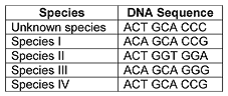
SELECT ALL THAT APPLY: Which of the following must be true in order for organisms to be considered the same species?
They must be able to mate
They must be able to produce viable offspring
They must have structural similaries
They must have the same bone structure


Members of a species can breed with other members of the same species.
True
False
behavioral isolation
temporal isolation
gametic isolation
geographic isolation
Genetic diversity is decreased through this process.
Gene Flow
Genetic Drift
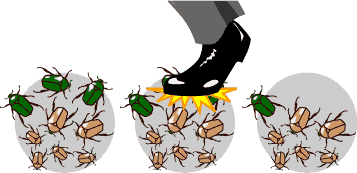
Someone steps on some bugs and randomly removes their alleles from the population. This is an example of
gene flow
genetic drift
speciation
allele frequency
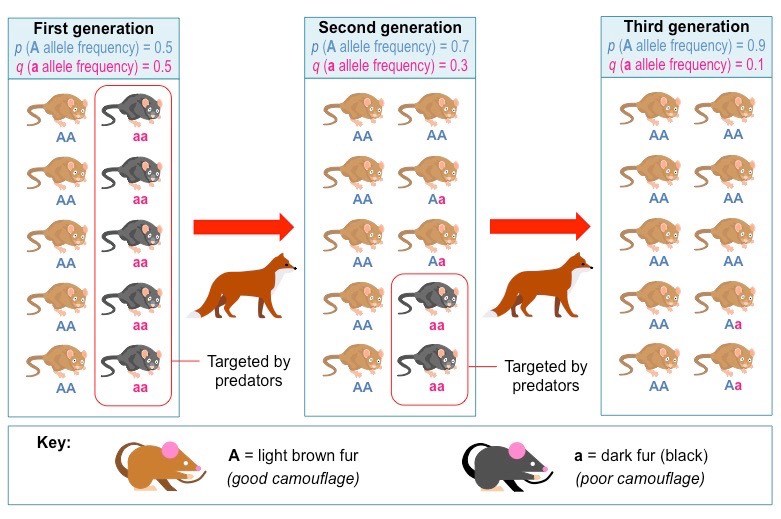
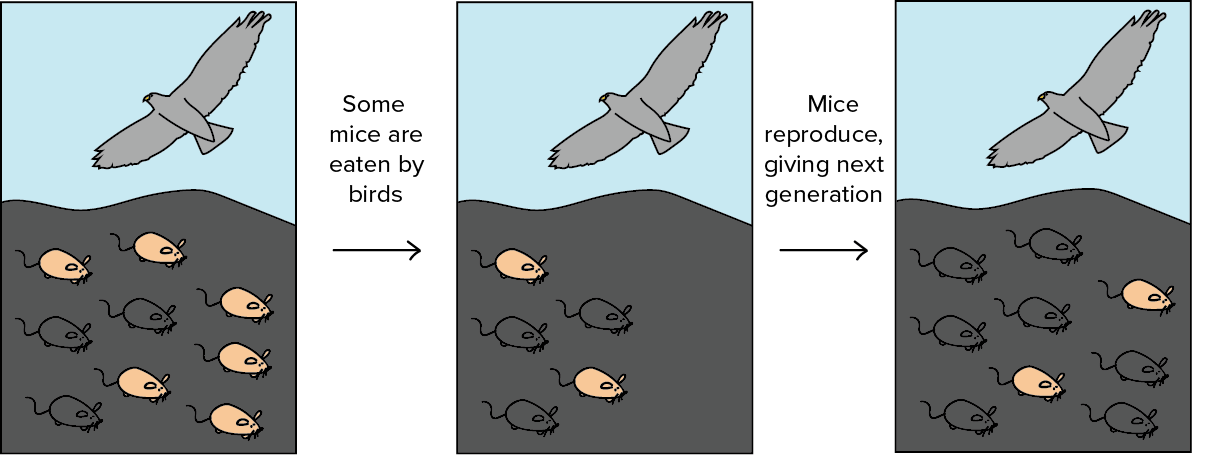
The allele frequencies of the mouse population in the picture are changing over time. Which is true?
The population is evolving.
The population is not evolving.
The population will go extinct.
The population's genetic variation is increasing.
The emergence of new rivers or streams is a type of ____________ isolation.
Temporal
Mechanical
Behavioral
Geographic
Speciation that caused by breeding occurring at different time of the day is called
behavioral isolation
temporal isolation
ecological isolation
habitat isolation

Stabilizing Selection
Directional Selection
Disruptive Selection
Of all the places he visited, the ___________________ Islands influenced Darwin’s ideas about evolution the most.
Galapagos
Hawaiian
Bora Bora
Aleutian
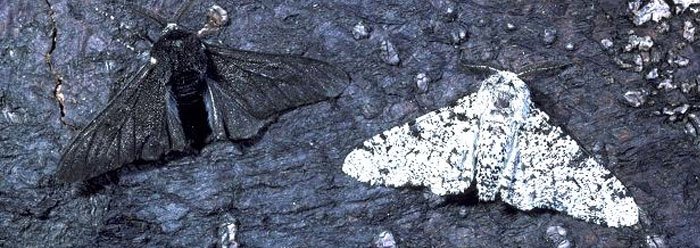

Stabilizing Selection
Directional Selection
Disruptive Selection

Directional Selection
Stabilizing Selection
Disruptive Selection

Stabilizing Selection
Directional Selection
Disruptive Selection

Directional Selection
Stabilizing Selection
Disruptive Selection

Directional Selection
Stabilizing Selection
Disruptive Selection

Directional Selection
Stabilizing Selection
Disruptive Selection

Directional Selection
Stabilizing Selection
Disruptive Selection


What type of natural selection is this?
Disruptive Selection
Directional Selection
Stabilizing Selection
Natural Selection

According to this image, which two domains of life are most related?
Bacteria & Archaea
Archaea & Eukarya
Eukarya & Bacteria
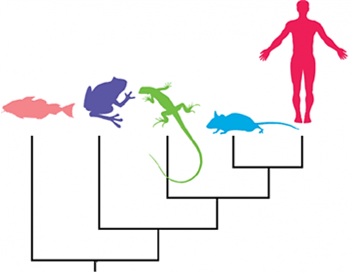
What is the human most closely related to?
Fish
mouse
Salamander
Human

According to this tree, which of these animal phyla are most closely related?
Arthropoda & Mollusca
Arthropoda & Chordata
Chordata & Mollusca
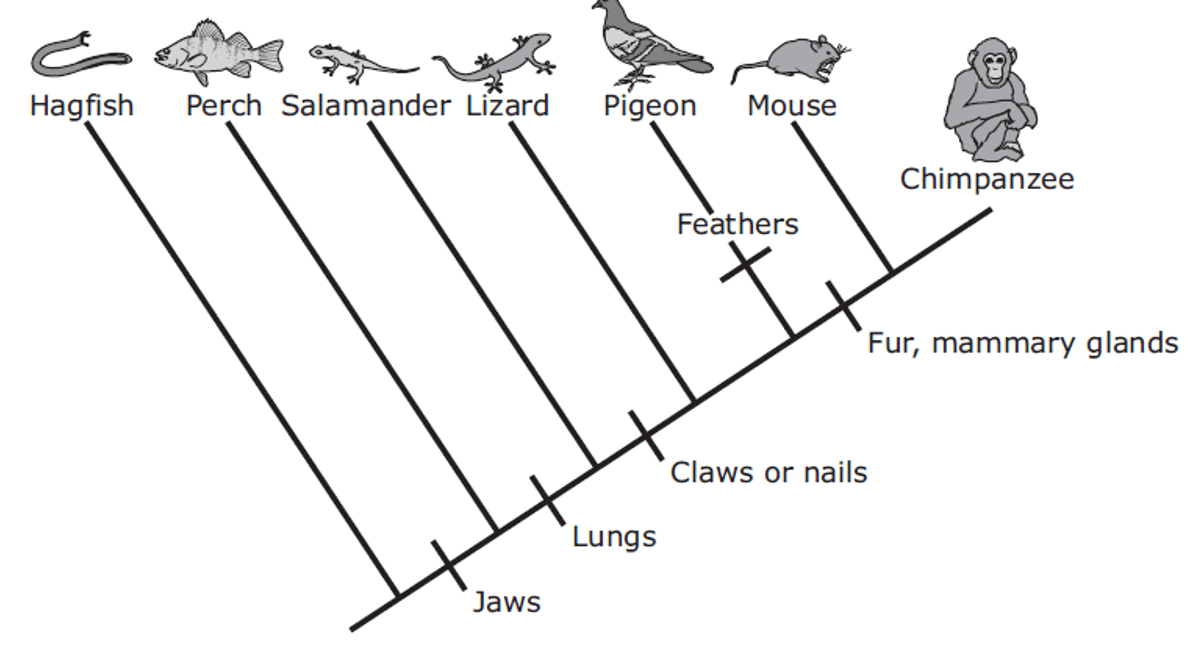

The diagram below represents possible genetic relationships between groups of organisms.
Which statement is a valid conclusion that can be drawn from the diagram?
Insects are more complex than mammals.
Earthworms and sea stars have a common ancestor.
Snails appeared on Earth before corals.
Sponges were the last new species to appear on Earth.

What do both the squirrel and lion have in common that the other animals do not?
They are both vertebrates
They both have lungs
They are both mammals
They both lose their canine teeth.

Which letter represents the most recent common ancestor of sponges and mushrooms?
A
B
C
D
E

According to the diagram, what is the common ancestor of ALL organisms on the phylogenetic tree?
B
C
D
E

Which trait(s) do conifers have?
vascular tissue only
vascular tissue and seeds
vascular tissue, seeds and flowers
seeds only

Which statement concerning the evolution of species A, B, C, D and E is supported by the diagram?
Species B and C can be found in today's environments.
Species A and D evolved from E.
Species A and C can still interbreed.
Species A, B, and E all evolved from a common ancestor and are all successful today.

