
 Worksheets
Question Bank for Grade 8 Science
Total questions: 159
Worksheet time: 2hrs 50mins
CH4(g) + __O2(g) → CO2(g) + 2H2O(g)
2Mg + O2 → 2MgO
What is a compound
sodium
sugar
nitrogen
air

Which is the best estimate of the melting point of Rubidium (Rb)?
25* C
40* C
75* C
184* C
Two different liquids are poured together in an open container. Bubbles begin to form. After the bubbling stops, it is determined that the total weight of the two liquids is less than before they were poured together. Which best describes this observation?
Some of the atoms during the reaction escaped into the air.
Some of the atoms during the reaction were destroyed.
Some of the atoms during the reaction became heavier.
Some of the atoms during the reaction changed to a different kind of atom.

This is a chemical reaction for the decomposition of carbonic acid into water and carbon dioxide.
How does this reaction support the Law of Conservation of Mass?
Several molecules of water are produced.
The mass of carbon atoms is reduced during the reaction.
The mass of the atoms in the reactant equals the mass of the atoms in the products.
The mass of hydrogen atoms is the only thing that remains the same before and after the reaction.
Which is classified as an element?
carbon dioxide
iron
vinegar
water
Which best describes the sequence o the elements in Period 5 of the periodic table?
highly reactive gases, relatively non reactive metals, metalloids, very nonreactive gases, nonreactive nonmetals
highly reactive metals, relatively nonreactive metals, metalloids, reactive nonmentals, reactive gases
nonreactive gases, metalloids, nonreactive metals, highly reactive metals, highly reactive gases
nonreactive gases, nonreactive metals, highly reactive metals, metalloids, reactive nonmetals, reactive gases
Which statement is true about a chemical reaction?
The physical states of the atoms in the reactants determine the products.
Some of the atoms in the reactants will be a part of the products.
The number of atoms in the reactants determines the products.
All of the atoms in the reactants will be a part of the products.
Chlorine has 7 valence electrons. With what group of elements will chlorine most readily bond?
group 1
group 2
group 16
group 18
Which is the best example of a chemical change?
butter melting
egg cooking
paper tearing
water evaporating
Which chemical equation best represents the Law of Conservation of Mass?
H + O → H2O
H2 + O2 → H2O
2H2 + O2 → 2H2O
H2 + O2 → 2H2O2
Which best represents a compound?


Which best compares a homogeneous mixture and a heterogeneous mixture?
Homogeneous mixtures are formed through physical changes, while heterogeneous mixtures are formed through chemical changes.
Homogeneous mixtures are composed of two different liquids, while heterogeneous mixtures are composed of a solid and a liquid.
The particles in a homogeneous mixture will separate if left undisturbed, while the particles in a heterogeneous mixture cannot be filtered out of the mixture.
A homogenous mixture is the same throughout, while a heterogeneous mixture is not uniform throughout.
Which is an example of a compound?
O2
2Cl
H2SO4
Hydrogen
Which pair of elements has the most similar properties?
Li and B
I and Ca
K and He
N and P
Why are the noble gases such as helium (He) and neon (Ne) grouped together in the periodic table?
They are nonreactive gases.
They are highly reactive metallic solids.
They are dangerous gases when combined with water.
They are liquid at room temperature and have high boiling points.
What category of elements is found between the metals and nonmetals on the periodic table?
synthetic
metalloids
radioactive
noble gases
Properties such as magnetism, luster (shine), and malleability have been used to group together which category of elements on the periodic table?
metals
nonmetals
metalloids
noble gases
What happens to water molecules during the boiling process?
They move faster and move farther apart as they absorb heat.
They move faster and remain close together as they absorb heat.
They move more slowly but move farther apart as they lose heat.
They move faster and move farther apart as they lose heat.
Which shows one example of a physical change and one example of a chemical change?
boiling water and melting wax
rusting iron and baking a cake
dissolving powder and shredding paper
freezing water and burning coal
Which is the best evidence that the creation of a precipitate is the result of a chemical reaction?
demonstrates gas production
demonstrates a temperature change
demonstrates a new substance has formed
None of the above provide evidence of a chemical change.
If a chemical reaction such as photosynthesis begins with 6 atoms of carbon (C), how many atoms of carbon (C) should be in the products?
12 atoms of carbon (C)
6 atoms of carbon (C)
3 atoms of carbon (C)
2 atoms of carbon (C)
How does a balanced chemical equation satisfy the Law of Conservation of Mass?
During a chemical reaction, the total amount of matter stays the same.
During a chemical reaction, matter is destroyed.
During a chemical reaction, one or more new substances are formed.
During a chemical reaction, the total number of atoms increases.
When wood is burned, it is changed into ash and carbon is released into the atmosphere as smoke. If 2 kg of wood were burned, how much ash would result?
exactly 2 kg because mass is conserved in this system
less than 2 kg because some of the mass is lost as gas
greater than 2 kg because carbon is added to the system
greater than 2 kg because carbon is added to the system
A compound containing potassium (K), chlorine (Cl), and oxygen (O) has the chemical formula KClO . Which best represents a balanced chemical reaction showing the breakdown of KClO into simpler substances?
2KClO3 → 2KCl
2KClO3 → Cl2 + 3O2
2KClO3 → 2K + 3O2
2KClO3 → 2KCl + 3O2
A researcher combines 37 grams of iron with 16 grams of oxygen. Based on the Law of Conservation of Mass, what will be the resulting mass of the product?
16 grams
21 grams
37 grams
53 grams
An element is identified by
its number of protons.
the atomic mass.
the type of charge.
its number of isotopes.
The chemical formula for baking soda is NaHCO3. How many different elements make up baking soda?
1
2
3
4
How are elements ordered in the modern periodic table?
by date of discovery
by decreasing atomic mass
by increasing atomic number
by alphabetical order of element symbols
What general category describes the majority of the elements in the periodic chart?
metals
liquids
nonmetals
gases
Because an element can not be broken down into a simpler substance, it is considered to be
a chemical impurity
a chemical substance
a pure substance
unbreakable
An example of a pure substance is
gold
salad
sweet tea
electron clouds
In an element
there are many different substances
the atoms are all the same
the atoms are all different
the electrons, protons and neutrons are located in the nucleus
Which of the following is NOT a compound?
aluminum (Al)
salt (NaCl)
water (H2O)
sugar (C6H12O6)
Atoms move quickly and randomly in which state of matter?
solid
liquid
gas
none of these
Which of the following is formed when two elements combine chemically?
a compound
a mixture
an atom
an electron
Sodium is an element found in table salt. It contains 11 protons and 12 neutrons. How many electrons are found in a neutral atom of sodium?
23
12
11
1
If a highly-reactive metal with one valence electron is discovered, in which group would the element best fit?
group 1
group 2
group 17
group 18
An engineer needs a hard, non-magnetic semiconductor. Which element would best fit this description?
aluminum (Al)
carbon (C)
silicon (Si)
silver (Ag)
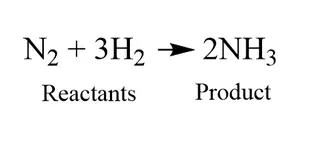
Subscript
Superscript
Coefficient
Charge
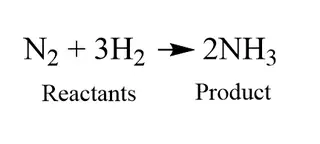
Subscript
Coefficient
Superscript
Charge
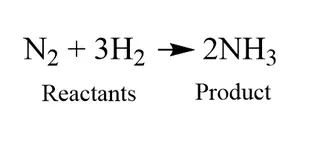
both sides have the same elements
Both sides have the same number of atoms
Same subscripts
Same coefficients

a total of 40g of products
a total of 10g of products
a total of 80 g of products
a total of 20g of products

4g
5g
9g
14g
True
False
Beans
Gas-X
2Mg + O2 ---> 2MgO

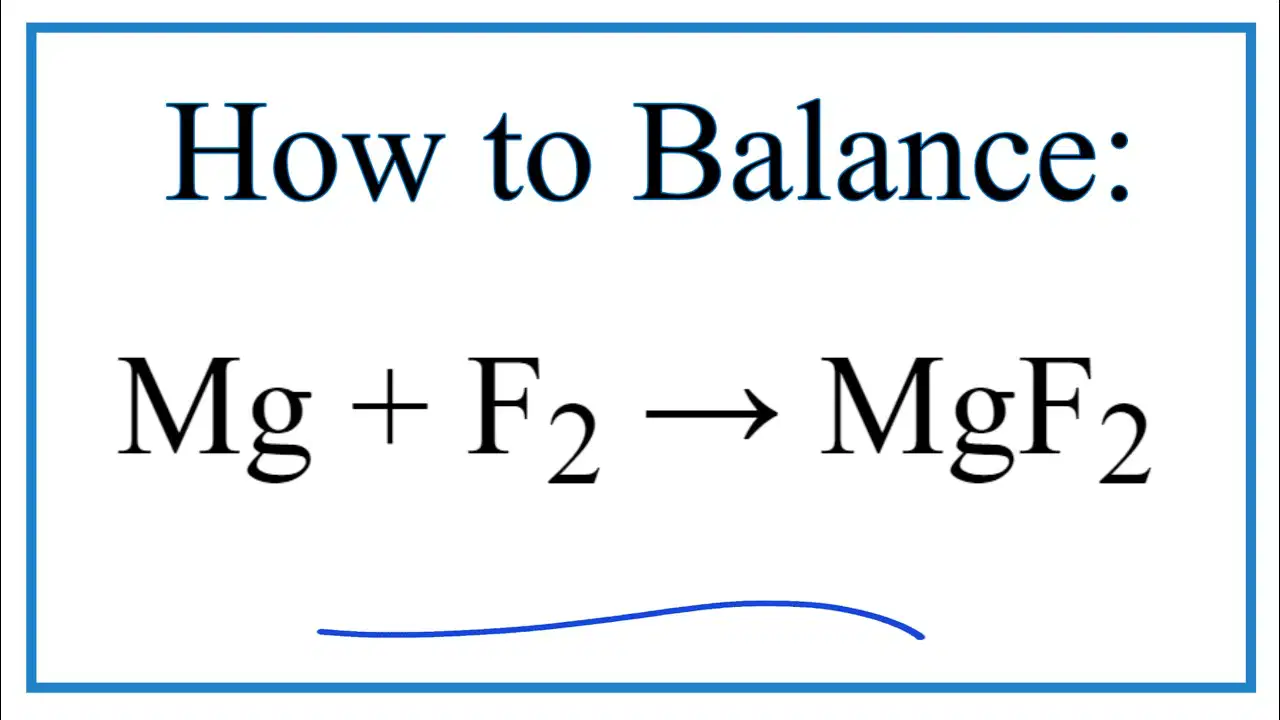
62
38
24
14
Atomic radius DECREASES when
when you go across a row from right to left
when you go down a group
when you go across a row from left to right
when you go across a group from left to right
What element is the most electronegative
chlorine
bromine
iodine
astatine

How many electron shells does the pictured atom have?
1
2
3
4

How many valence electrons does the pictured atom have?
20
3
2
4
Which one appears least on the periodic table?
Metals
Metalloids
Non-Metals
What is the group with the highest ionization level?
Halogens
Alkali Metals
Alkali-Earth Metaks
Transition Metals
The least reactive elements are found in which group?
Alkali Metals
Alkaline Earth Metals
Halogens
Noble Gases
"I am a brittle solid!" To which part of the Periodic Table do I belong?
metalloids
nonmetals
metals
transition metals
As the group number decreases, what else decreases?
atomic size
electronegativity
atomic symbol
electropositivity
As the period number increases, what else is increasing?
atomic size
electronegativity
ionization energy
valence electrons
Soup that has no visible chunks or differences is what type of mixture?
potable
homogeneous
heterogeneous
low turbidity
A compound is make up of how many different types of atoms?
1
2 or more
none
any amount
What makes each element different from any other kind of element?
the number of protons in the nucleus
the number of neutrons in the nucleus
the number of electrons around the nucleus
the size and shape of the element
Which part of the atom is positively charged?
electron cloud
orbitals
neutrons
nucleus

What element is it?
Lithium (Li) (3)
Hydrogen (H) (1)
Beryllium (Be) (4)
Carbon (C) (6)
An element has 2 energy levels and 2 valence electrons. What element is it?
Lithium (Li) (3)
Beryllium (Be) (4)
Helium (He) (2)
Magnesium (Mg) (12)
Which best describes elements found in a group of the periodic table?
the elements have similar chemical properties
the elements have the same atomic number
the elements have the same size atoms
the elements are naturally found in the same state
Which of the following is true about a mixture?
they cannot be separated
they can be separated
they can be separated
they form a chemical combination of two or more atoms
Which of the following is made from one or more elements?
gold
nitrogen gas
hydrogen
sugar
Which of the following is a heterogeneous mixture?
salt water
brass
coffee
oil and water

Element
Compound
Homogeneous Mixture
Heterogeneous Mixture
Sweet Tea, everything is mixed evenly and looks the same.
Heterogeneous Mixture
Homogeneous Mixture

Element
Compound
Homogeneous Mixture
Heterogeneous Mixture

Element
Compound
Homogeneous Mixture
Heterogeneous Mixture

Pick the best answer.
Homogeneous Mixture
Heterogeneous Mixture
Molecules
We live in Wilmington. We don't get snow.
2 or more different elements that are bonded together is called...
A. element
B. compound
C. mixture
D. solution
Jay combines water, sugar, and lemon juice to form lemonade. What type of substance was made?
Element
Molecule
Mixture
A drink
Homogenous
Heterogeneous
Molecules
Compounds


What is considered the simplest form of matter?
Compounds
Colloids
Solutions
Elements
Elements
Compounds
Mixtures
Protons


Mendeleev was the first person to arrange the elements into a table. How did he arrange the rows?
Which of the following will have similar properties?
O, S, Se
O, F, Ne
N, Ne, Na
H, K, P

Elements in the same group have : (2 correct answers)
Similar chemical properties
Similar names
Same number of outer (valence) electrons)
The same number of protons
Find an element with similar chemical properties to Barium (Ba).
Ca an Ra, because they are in the same group and have similar chemical properties.
Cs and La, b/c they are in the same period number.
Ca and Y, b/c they are 90 degree angle and have similiar properties.

The blue elements (left side) are called
The yellow elements (right side) are called

What do the periods (rows) represent?
an additional energy level
an additional proton
an additional group
an additional electron
Put the groups of the periodic table in order from group 1A to group 8A (18).
alkali metals
alkaline earth metals
halogens
noble gases
Match the following elements to the group they belong to.
sodium
alkali metal
calcium
alkaline earth metal
chlorine
halogen
argon
noble gas
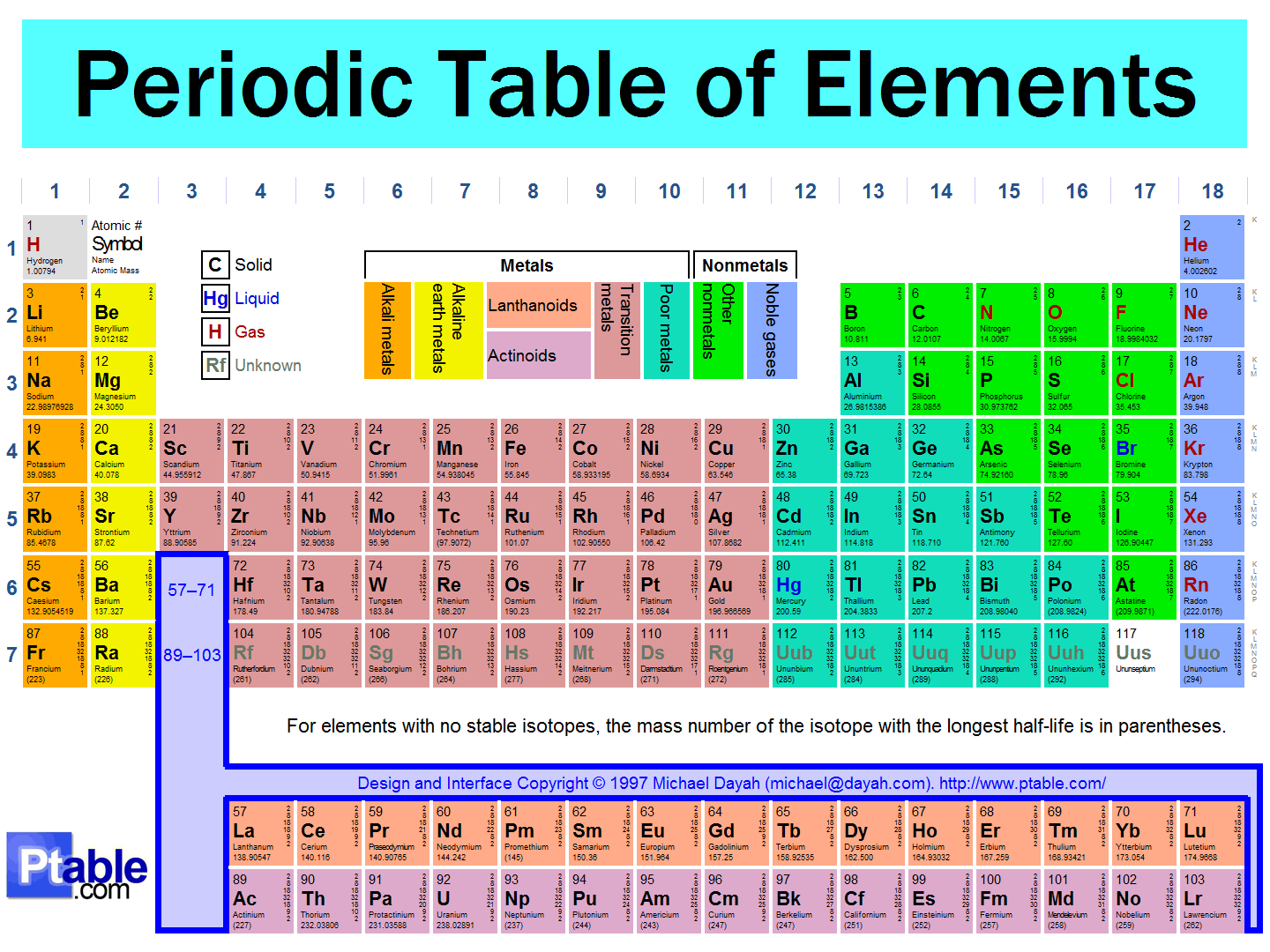
Elements on the Periodic Table of the Elements are classified into categories such as
rocks and minerals
molecules and atoms
metals and nonmetals
physical and chemical properties
Elements that have the same number of energy levels are said to be in the same ______.
group
period
family
classification
What do the horizontal rows on the periodic table tell us?
The number of orbitals
The number of valence electrons (the electrons on the outer most shell)
What does the number of proton tell us?
electrons
atomic number
atomic mass
neutrons
How do you calculate the number of neutrons? *
Mass = Atomic number - Neutrons
Mass - Atomic number = Neutrons
Atomic number = Neutrons

What is the atomic mass?
58.693
28
86.693
Ni

How many protons and electrons does nickel have?
28
58.69
86.693
Ni

How many orbitals does Nickel have?
3
4
5
10
Group 1 is called the...
Halogens
Noble Gases
Nonmetals
Alkali Metals
Group 17 is called...
Halogens
Noble Gases
Nonmetals
Alkali Metals
Group 18 is called
Halogens
Noble Gases
Nonmetals
Alkali Metals
The correct chemical symbol for sodium is...
Na
NA
S
So
Subatomic particles with a negative charge
Electrons
Neutrons
Protons
Quarks

The smallest particle of an element.
Element
Molecule
Atom

Proposed that electrons move around the nucleus in specific layers, or shells.
Bohr
Rutherford
Chadwick
Thomson
Which of the following is/are conclusions based on Rutherford’s gold foil experiment?
Atom is mostly empty space
The nucleus is positively charged
The atom has a small dense nucleus
All answers are correct

Who named the positive center of the atom the "nucleus?"
Democritus
Dalton
Thomson
Rutherford
Who discovered that atoms are mostly empty space?
Dalton
Thomson
Rutherford
Bohr
Who proposed that electrons move around the nucleus in circular orbits?
Dalton
Thomson
Rutherford
Bohr

