Wayground logo

Free Printable Worksheets

Font size

S
M
L
XL
Worksheets

Unit #6 Review - Minerals, Mining, Fossils, & Resources

Total questions: 75

Worksheet time: 2hrs 38mins

Name
Class
Date
1.
A rock which contains a useful mineral is call a/an
a)
gem
b)
quarry
c)
ore
d)
alloy
2.
A naturally occurring, inorganic solid with a crystal structure and a definite chemical composition is referring to
a)
density
b)
streak
c)
mineral
d)
non silicate mineral
3.

Brass is an alloy made of

a)

copper and zinc

b)

copper and tin

c)

copper and nickel

d)

copper and aluminum

4.

Bronze is an alloy made of

a)

aluminum and magnesium

b)

copper and tin

c)

lead and tin

d)

copper and nickel

5.

Steel can become stainless when alloyed with _____.

a)

chromium and nickel

b)

copper and zinc

c)

tin and lead

d)

iron aand carbon

6.

A company is likely to mine a site if the site

a)

is rich in minerals

b)

contains gold

c)

contains minerals that can be extracted economically

d)

does not contain gangue minerals

7.

Open pits called _______ are used to mine stone and gravel.

a)

overburdens

b)

cyanide heaps

c)

solar evaporation ponds

d)

quarries

8.

A technology that was developed in the 1850s and that used water cannons to remove gold from ancient riverbeds covered with soil is called

a)

solar evaporation

b)

hydraulic mining

c)

placer minng

d)

open-pit mining

9.

_____________ often form at bends in a river where the water flows more slowly and heavier materials are likely to settle out.

a)

Dredges

b)

Placer deposits

c)

Seams

d)

Fans

10.

Flux and slag occur in the process of

a)

smelting

b)

undersea mining

c)

placer mining

d)

hydraulic mining

11.

Which phrase best describes hydraulic mining performed int California goldfields in the 1850s?

a)

great success

b)

environmental disaster

c)

environmentally friendly

d)

clean process

12.

Which of the following mining methods would most likely be used to mine salt?

a)

room-and-pillar mining

b)

quarrying

c)

solar evaporation

d)

open-pit mining

13.
Reclamation is.....
a)
not required in the US.
b)
a process that causes significant environmental damage.
c)
returning the land back to its original condition after mining
d)
required for every country and every type of mine in the world.
14.
Air pollution, water pollution, and noise pollution are associated with ______.
a)
subsurface mining
b)
surface mining
15.
Which of the following activities at a mining site will cause the least amount of harm to wildlife?
a)
removing soil from an area that is to be surfaced mined
b)
replacing the soil, with the lowest layers going in first
c)
dredging
d)
removing vegetation from an area that is to be surface mined
16.
In the US, more coal is used for _________ than for any other use.
a)
making chemicals
b)
heating buildings
c)
making steel
d)
generating electricity 
17.
What is the term for minerals that have little to no economic value?
a)
ore
b)
native
c)
compound
d)
gangue
18.
Smelting is when the mineral being mined is 
a)
isolated
b)
heated or reacted with chemicals
c)
reclaimed
d)
left in tailings
19.

Mining that is done below ground is called...

a)

surface mining.

b)

subsurface mining.

20.

A natural resource that can only be replaced only through geological, physical, and chemical processes that take millions of years.

a)

Renewable Resource

b)

Nonrenewable Resource

21.

What substance is used for electricity

a)

iron

b)

aluminium

c)

wood

d)

coal

22.
Acid mine drainage causes
a)
air pollution
b)
water pollution 
c)
subsidence
d)
erosion
23.

Subsidence can result from the collapse of

a)

unattended quarries

b)

pillars in abandoned mines.

c)

rocks that once held minerals.

d)

placer deposits.

24.

What can contaminate a river as a result of dredging?

a)

potash

b)

seawater

c)

placer deposits

d)

muddy sediments

25.
The Clean Air Act, Safe Drinking Water Act, Comprehensive Response Compensation and Liability Act, and Endangered Species Act are:
a)
Brazilian laws that regulate mining.
b)
United States federal and state laws that regulate mining.
c)
International laws that regulate mining.
d)
All of the above
26.
Principle that states in a sequence of undisturbed rocks, the oldest rocks are on the bottom and the rocks become progressively younger toward the top 
a)

Law of Superposition 

b)

Uniformitarianism

c)

Half-Life

d)

Isotope Decay

27.
Method by which order of events or age of rocks is determined by examining the position of rocks in a layer 
a)
relative dating
b)
absolute dating
c)
radiometric dating
28.
Remains, imprints or traces of once-living organisms
a)
water
b)
superposition
c)
fossils 
29.
Correctly sequence the layers of rocks oldest to youngest 
a)
A,B,C,D
b)
D,C,B,A
30.
Correctly sequence the layers of rocks oldest to youngest 
a)
C,E,D,A,B
b)
C,E,D,A,B
c)
C,E, D,B,A
31.
Fossils of fish are found under land where cows now live. What does this tell you?
a)
the fish were dropped their by flying birds
b)
this land was once under the ocean
c)
farmers fed the fish to the cows
d)
fish used to live on land
32.
Which animal part would MOST LIKELY form a fossil?
a)
fur
b)
lung
c)
bone
d)
muscle
33.
In which kind of rock do we usually find a fossil?
a)
sedimentary  rock
b)
metamorphic rock
c)
igneous rock
34.

Which era was the longest, taking up 88% of geologic time?

a)

Precambrian

b)

Paleozoic

c)

Mesozoic

d)

Cenozoic

35.

Which Era occurred last (most recent)?

a)

Cenozoic

b)

Mesozoic

c)

Paleozoic

36.
Who created the theory of evolution?
a)
Charles Darwin
b)
Charles Derwin
c)
Charlie Darwin
d)
Chris Darwin
37.
What does evolution mean?
a)
To change something
b)
To change and adapt over time
c)
To lose some original features
d)
To improve ssomething over time
38.
What is natural selection?
a)
Your natural fate is decided from birth
b)
Nature actively chooses who surivives
c)
Those best suited to demands of environment surivie
d)
The weakest of a species surivie
39.
Humans, birds, whales, and lizards all have similar arm bones. What is the reason for this?
a)
The function of these bones is the same in all animals
b)
They live in similar environments
c)
They have a common ancestor
d)
All organisms resemble humans
40.
A fossil of an extinct dinosaur is found and the anatomy of the fossil shows similarities to that of a bird. What could this mean?
a)
This is purely by chance and isn't significant
b)
The extinct dinosaur and modern bird share a common ancestor
c)
All dinosaurs evolved into birds and that's why there aren't any dinosaurs alive today
d)
Dinosaurs choose to fly, and evolved into birds to escape predation and capture food
41.
a)
Homologous
b)
Vestigial
c)
Analogous
42.
a)
Homologous
b)
Vestigial
c)
Analogous
43.
The cleanest burning fossil fuel is ______.
a)
coal
b)
oil
c)
wind
d)
natural gas
44.
Fossil fuels are classified as nonrenewable because they.......
a)
require expensive equipment
b)
take millions of years to replace
c)
can be found all over 
d)
provide all the energy we use
45.
What are fossil fuels?
a)
Dinosaur bones
b)
Resources made from once living organisms 
c)
Combination of different rocks
d)
Gas Stations
46.
A liquid fossil fuel formed from the remains of animals, algae, and other organisms is
a)
petroleum.
b)
coal.
c)
natural gas.
d)
hydrocarbon.
47.

Which of these is not a fossil fuel?

a)

Coal

b)

Oil

c)

Electricity

d)

Natural Gas

48.

Why are fossils fuels so widely used?

a)

They are renewable so they won't run out.

b)

They pollution they produce is less compared to renewable energy sources.

c)

They are easy to obtain and process.

d)

They don't disrupt the environment when mined from the earth.

49.
How does natural gas form? 
a)
lower pressures and temperatures
b)
the hydrosphere layer
c)
deepest sediment where there are higher pressures and temperatures 
d)
In the atmosphere 
50.
Why is burning fossil fuels harmful? 
a)
then we won't have any fossil fuels if we burn them all
b)
They can get extremely hot
c)
Increases the amount of greenhouse gases in the air
d)
this would destroy fossils
51.
What is a greenhouse gas?
a)
a gas created from a plant
b)
gas that causes the atmosphere to get warmer
c)
a green colored gas
d)
a gas that kills you right away
52.
Which greenhouse gas is produced most by the automobile industry? 
a)
Hydrogen
b)
Sulfur
c)
Methane
d)
Carbon Dioxide
53.
The major petroleum producing countries of the world from the greatest amount produced to the least amount produced are
a)
Saudi Arabia, Canada, China
b)
Saudi Arabia, the United States, Mexico.
c)
the United States, Russia, Saudi Arabia.
d)
the United States, Canada, Saudi Arabia.
e)
Saudi Arabia, Russia, the United States.
54.

This fossil fuel is formed from the remains of small organisms that lived in the ocean AND is a thick, black liquid

a)

natural gas

b)

coal

c)

oil

d)

steam

55.

What are the 3 main fossil fuels?

a)

Coal, Oil, and nuclear fuel

b)

Coal, Oil, and Natural Gas

c)

Electricity, Gas, Petroleum

d)

Coal, Oil, Non-renewable Resources

56.
_____________ power is electricity produced by flowing water.
a)
Solar 
b)
Wind 
c)
Hydroelectric 
d)
water
57.

Renewable energy resources produce less_____________ than fossil fuels.

a)

pollution

b)

energy

c)

wind

d)

light

58.

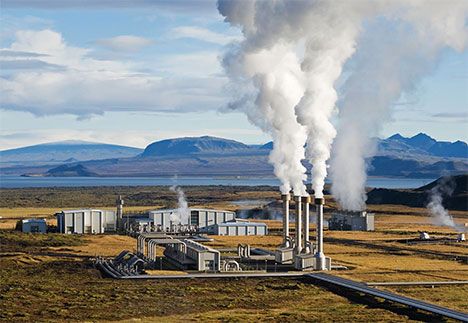
Heat transferred from beneath the surface of Earth and used to produce energy for human use is...

a)

Hydropower

b)

Wind Energy

c)

Geothermal Energy

d)

Solar Energy

59.
What do we call large areas of windmills?
a)
Wind farms
b)
Hurricanes
c)
Turbines
d)
Wind tunnels
60.

Which one of these is NOT a type of renewable energy?

a)

solar

b)

wind

c)

biomass

d)

nuclear

61.
Which is not an advantage of Wind energy?
a)
Land can be used for other purposes
b)
Can be quickly built; not too expensive
c)
Long operating life
d)
Danger to birds
62.
_____________ power is electricity produced by flowing water.
a)
Solar 
b)
Wind 
c)
Hydroelectric 
d)
water
63.

What is biomass energy?

a)

any organic matter that can be used by burning wood and other plant life.

b)

Radiant energy emitted by the sun.

c)

a combustible black or dark brown rock consisting mainly of carbonized plant matter, found mainly in underground deposits and widely used as fuel.

d)

made by tapping into steam or hot water reservoirs underground; the heat is used to drive an electrical generator.

64.
How do nuclear power-plants work?
a)
Fusion
b)
Half-life
c)
Fission
d)
Fusion or fission
65.
All of the following are problems of nuclear energy except ---
a)
storage of radioactive fuel
b)
air pollution
c)
security concerns
d)
natural disasters (tsunamis, earthquakes, etc.)
66.
What is an advantage  of nuclear energy?
a)
radioactive waste
b)
no air pollution
c)
we will never run out
d)
it is the safest way to make energy
67.
The energy resources are weather dependent are…
a)
Solar and wind
b)
Coal, OIl, Gas, Nuclear, Geothermal and HEP
c)
Coal, OIl, Gas and Nuclear
d)
Nuclear and Wind
68.

large windows on south side of building

a)

active solar heating

b)

passive solar heating

c)

electrical heating

d)

radiator heating

69.

use of solar collectors to absorb radiant energy

a)

active solar heating

b)

passive solar heating

c)

electrical heating

d)

radiator heating

70.

Dams are built for.......

a)

irrigation

b)

electricity generation

c)

water supply for domestic and industrial uses

d)

flood control

e)

All of these

71.

What do you call the area where water is stored behind a dam?

a)

reservoir

b)

generator

c)

refuge

d)

turbine

72.

What happens when water flows through a dam?

a)

The water evaporates.

b)

The water turns a turbine.

c)

The water is pumped back up.

d)

The water creates sparks making electricity.

73.

What are some concerns about building dams to create hydropower? Check all that apply.

a)

Dams change the environment.

b)

There are no concerns.

c)

Dams change fish swimming patterns.

d)

Dams store too much water.

74.

This is built across a river to stop and control water flow

a)

reservoir

b)

lake

c)

bridge

d)

dam

75.
To help our environment, you should


a)
recycle, remember, and reduce.
b)
reduce, reuse, and recycle.
c)
reduce, repair, and recycle. 
d)
  reuse, replace, and recycle.