
 Worksheets
Grade 8 Science Review
Total questions: 61
Worksheet time: 35mins

Cars, trucks, and buses apply tons of force to bridges each day. Bridge engineers take a lot of physics classes to get their degree. Why would an engineer need to know physics to build a bridge?
The engineer needs to know how to build a bridge that will balance the added force from vehicles traveling on it.
The engineer needs to know how to build a bridge that will unbalance the added force from vehicles traveling on it.
The engineer needs to know how to build a bridge without opposing forces so the bridge will not move.
The engineer needs to know how to build a bridge without friction force so the bridge will not move.

A student performs two investigations of force and acceleration. In the first investigation, she pushes objects with different masses using the same amount of force. In the second investigation, the student pushes objects with the same masses using different amounts of force. The result of both investigations are shown.
Which claim and argument can the student make using her data?
Claim: With a constant force, the acceleration of the objects is proportional to the mass of the objects.
Evidence: The acceleration of the objects increases as the masses of the objects increase.
Claim: With a constant force, the acceleration of the objects is proportional to the mass of the objects.
Evidence: The acceleration of the objects decreases as the masses of the objects decrease.
Claim: With a constant mass, the amount of force applied to the objects is proportional to their acceleration.
Evidence: As the force on the objects increases, the acceleration of the objects increases.
Claim: With a constant mass, the amount of force applied to the objects is proportional to their acceleration.
Evidence: As the force on the objects increases, the acceleration of the objects decreases.
Students raced each other in the gym while the teacher recorded each student's speed. Jeremy ran 14 miles per hour, Isaiah ran 10 miles per hour, Jonah ran 13 miles per hour, and Alexis ran 16 miles per hour. Which of the bar graphs should the teacher use to compare the students' speeds?


Katrina pushes off a flat sidewalk on her new skateboard.
What causes her to move?
The force of her push overcomes the forces of gravity and friction.
The force of gravity overcomes the forces of her push and friction.
The force of friction overcomes the normal force of the skateboard and the force of gravity.
The normal force of the skateboard overcomes the force of her push and the force of gravity.
The picture shows two teams playing tug-of-war.
If the force of each team is balanced by the other, then
both teams will fall to the ground.
both teams will move to the right.
both teams will move to the left.
both teams will remain in place.
Which graph best represents the motion of an object that was initially at rest and is accelerating uniformly?


The driver of a car completes a trip. The graph displays data about the car's motion during the trip.
Which of the following statements about the car's motion is true?
The total time for the car trip was 50 minutes.
The car returned to where it had started the trip at the end of the trip.
The car did not slow down during the trip.
The car did not travel at a constant speed during the entire trip.

The table below shows the weights of three blocks made of the same material, and the portion of the surface areas of the blocks that are in contact with a level table top.
Which block requires the smallest amount of force to keep it moving slowly?
Block 1, because it has the smallest weight
Block 2, because its weight and surface area are the same
Block 3, because it has the smallest surface area in contact with the table
All three blocks require the same amount of force.
Jose sets up an investigation to determine the effect of force on mass. First, he rolls a 100-gram ball down a ramp and hits the back of a parked 50-gram car. He measures the distance the car moved. Next, he rolls the 100-gram ball down the same ramp and hits the back of a parked 100-gram car. He measures the distance the car moved. Which of the following is most likely to be the result of Jose's experiment?
The 100-gram car moved farther than the 50-gram car.
The 50-gram car moved farther than the 100-gram car.
Both cars moved the same distance.
Neither car moved any distance.

The picture shows a tractor trailer.
Which answer choice best explains why tractor trailers take more time to speed up and slow down than regular cars?
Tractor trailers have less mass and require less force to move.
Tractor trailers have more mass and require more force to move.
Tractor trailers have less mass and require more force to move
Tractor trailers have more mass and require less force to move.

The picture shows a girl jumping up and down as she is jumping rope.
Which forces are the girl working against?
lift and inertia
gravity and friction
friction and buoyancy
buoyancy and gravity
What kinds of objects are good conductors of static electricity?
plastic
rubber
Your body
All of the answers

A student is investigating acceleration using objects with different masses. She claims that mass affects the acceleration of objects when the force remains constant. The student creates a graph to represent the findings of her investigation.
Which argument BEST supports the student's claim?
As mass decreases, the acceleration of an object decreases because less force is required.
As mass increases, the acceleration of an object increases because less force is required.
As mass increases, the acceleration of an object decreases because more force is required.
As mass decreases, the acceleration of an object increases because more force is required.
Read the expression in the box below.
"What goes up, must come down"
What law is this expression referring to?
the law of gravity
the law of superposition
the law of frictional force
the law of conservation of matter

The graph below represents the motion of a cart.
Which of the following can be inferred from the graph?
The cart is speeding up at an increasing rate.
The cart is moving at a constant speed.
The cart is slowing down at a constant rate.
The cart is moving with increasing speed.
Shelly wants to find the speed that her dog can run. What should Shelly do?
measure the time the dog runs
measure the distance the dog runs
measure the size of the dog and the distance it runs
measure the time it takes for the dog to run a certain distance
Katia plans an experiment that measures the temperature of different colors of paper placed in sunlight. Her hypothesis is that if black, blue, yellow, red, and white sheets of paper are exposed to sunlight, then the black sheet of paper will increase the most in temperature. Katia will place a sheet of each color of paper in the same location for the same amount of time. What are the independent and dependent variables?
I: Color of paper
D: Temperature
I: Temperature
D: Color of paper
I: Amount of sunlight
D: Temperature
I: Amount of time
D: Temperature

Copper turns green when exposed to the environment.
Physical
Chemical

Select the
types of Energy
Mechanical
Electrical
Light
Thermal
Sound
Electrical
Thermal
light
Sound
Mechanical
Mechanical
Electrical
Light
Thermal
Energy is the ability to do work.
True
False
Follow the path.
Which image demonstrates a flow of electrical current ?

Open Circuit

Closed Circuit

A Circuit is the pathway through which electricity flows.
True
False

Insulator

power source

conductor

load

Switch

The energy being used is __________ and it is producing _______ energy.
Electrical energy to sound energy.
Electrical energy to mechanical energy.
Sound energy to electrical energy.
Sound energy to light energy.

The energy being used is __________ and it is producing _______ energy.
Electrical energy to sound energy.
Electrical energy to mechanical energy.
Electrical energy to Light energy.
Electrical energy to light and thermal energy.
How many poles does a magnet have?
3
5
4
2
What are the poles of a magnet called?
East and South
South and North
North
I don't know
What will happen if you put two North Poles TOGETHER?
Attract
Repel
I don't Know
Neither
What happens if you put a north and south pole together?
attract
repel
Neither
Conductors ________ electrons to flow through
Allow
Do not allow
Electro magnets are tempoary magnets.
True
False
Examples of Insolators are......
plastic and rubber
Iron, Steel, and Copper
Examples of Conductors are.......
Plastic and Rubber
Iron, Steel, Copper
What are the poles of a magnet called?
East and South
South and North
North
I don't know
compass
magnetic field
True or False: All metal is magnetic
True
False
True or False: Steel is another magnetic material.
True
False
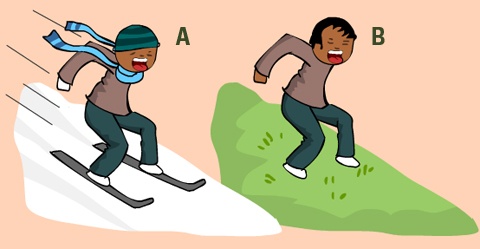
A push or pull that can move an object is a:
gear
lever
force
machine
What is static electricity?
The build up of magnets on a pole.
The build up of rain on the ground.
The build up of negative charges on an object.
The build up of sand in a castle.


The forces balance each other.
true
false
An object at rest stays at rest unless acted upon by
Force
Unbalanced Force
Opposite reaction
Inertia
Change in distance and direction over time
Speed
Inertia
Acceleration
Velocity
Which produces more opposite force on a car, hitting another car that is also going 100 mph or hitting a wall going 100 mph?
They are equal
Two Cars colliding
One car hitting a solid wall
Cars will not have opposite forces
What factor affects both electricity and magnetic forces
Distance
Polarity
Turns in a generator
Alternating or direct current
Tendency of an object to maintain motion
Speed
Inertia
Acceleration
Velocity
Change in velocity over time
Speed
Inertia
Acceleration
Velocity
The attraction of objects towards each other due to mass
Gravity
Electromagnets
Geomagnets
Magnetisim
Electricity
Electrical attraction and repulsion
Gravity
Electromagnets
Geomagnets
Magnetisim
Electricity
Naturally occurring magnets
Gravity
Electromagnets
Geomagnets
Magnetisim
Electricity
Flow of electrons through a circuit
Gravity
Electromagnets
Geomagnets
Magnetisim
Electricity
Magnet created using electrical current
Gravity
Electromagnets
Geomagnets
Magnetisim
Electricity

