
 Worksheets
Energy Transformations, Potential vs Kinetic Energy, & Forces
Total questions: 100
Worksheet time: 1hrs 22mins


These forces are...
Balanced
Unbalanced

These forces are...
Balanced
Unbalanced

What is true about this image?
It shows unbalance forces.
It shows balanced forces.
The people on the right are winning.
The people on the left are winning.
potential energy.


Potential energy is
energy due to position.
energy due to motion.
Kinetic energy is
energy due to position.
energy of motion.

Which ball has the greater potential energy and why?
The blue ball has more PE because it is closer to the ground.
The blue ball has more PE because it has more mass.
The green ball has more PE because it's height is greater.
The green ball has more PE because it has less mass.

Which pie chart represents the energy balance of the rollercoaster in this diagram?
Choice A
Choice B
Choice C
Choice D

Which pendulum position has maximum KE?
1
2
3
4

Which pendulum position has 50% PE and 50% KE?
1
2
3
4

Why does Object C have greater potential energy than both Objects A and B?
It has the same height as Object B and the same mass as Object A.
It is more massive than Object B and has a higher position than Object A.

This diagram and formula illustrates
kinetic energy
potential energy
mechanical energy
none of the above

Which of the three springs represents increased potential energy?
The compressed spring only because potential energy is only gained when an object is squeezed.
The stretched spring only because potential energy is only gained when an object is stretched out.
The compressed and stretched spring both have elastic potential energy gained from being squeezed or stretched.
none of the springs possesses potential energy
A skier is poised at the top of a steep slope.
Potential
Kinetic
A concrete dam holds back a large reservoir of water.
Potential
Kinetic
An archer has pulled back the string of his bow, ready to release the arrow at the distant target.
Potential
Kinetic
A women swings her golf club down toward the golf ball sitting on the tee.
Potential
Kinetic
A flowerpot is falling from a windowsill.
Potential
Kinetic
A man swings an axe toward a log.
Potential
Kinetic
A roller coaster has reached the top of the highest crest.
Potential
Kinetic
A marble rolls across the table.
Potential
Kinetic
A fast-moving stream runs toward the mill.
Potential
Kinetic

A lamp that plugs into a wall socket draws energy, which flows through a thin wire in the bulb, causing it to heat up until it glows. What energy transformations are taking place?
Chemical → light → electrical
Mechanical → sound → light
Thermal → solar → electrical
Electrical → thermal → light
An electric pencil sharpener uses electricity to make its motor spin. The pencil sharpener also makes noise and heats up. Which observation of the pencil sharpener demonstrates the law of conservation of energy?
The amount of electrical energy used equals the total amount of mechanical, sound, and thermal energy produced.
The amount of energy used by the electric pencil sharpener is greater than an electric lamp.
The electric pencil sharpener only uses energy when it is being used to sharpen a pencil.
The electric pencil sharpener is easier to use than the older version that was cranked by hand.

Turning the handle makes a current that causes the light bulb to glow. What are the energy transformations that happen in this hand generator?
Thermal → solar → light
Mechanical → electrical → light
Electrical → mechanical → light
Solar → light → electrical
When energy enters a system and then comes out of the system later, the law of conservation of energy states that–
some of the energy that entered the system will remain in the system.
the energy will always create a change in the properties of the parts of the system.
the form of energy that comes out of the system must be the same form that entered.
the amount of energy coming out of the system must equal the energy that entered the system.
In which of the following scenarios would this energy transformation be observed?
chemical → light → heat
Plucking a guitar string
Lighting a match
Turning on a fan
Starting a car
Which of the following is a form of potential energy?
sound energy
chemical energy
mechanical energy
thermal (heat) energy
The law of conservation of energy states ___.
electrical energy can be transformed into other forms
energy can be created and destroyed
energy is never created nor destroyed
what goes up must come down
There are ___ forms of kinetic energy.
3
5
4
2
There are ___ forms of potential energy.
3
5
4
2
During energy transformations, energy is never ___.
released as heat
used to increase an object's potential energy
created or destroyed
completely transformed
A baseball is hit into the air with a bat. When does baseball have the greatest gravitational potential energy?
when it hits the ground
when it reaches its highest point
when it leaves the bat
when the mechanical and kinetic energies of the baseball are equal
___ is energy stored by things that stretch or compress.
Gravitational potential
Elastic kinetic energy
Chemical kinetic energy
Elastic potential energy
Calculate the gravitational potential energy of the object.
GPE = mgh
mass: 50
gravity: 10
height: 6
5320J
300J
66J
3000J

What type of energy is stored in a battery?
electrical
thermal
radiant
chemical
Which energy transformation occurs in a toaster?
electrical → thermal
chemical → thermal
nuclear → electrical
thermal → electrical
A battery converts what type of energy to another?
electrical → thermal
chemical → electrical
kinetic → nuclear
light → heat
Energy transformations occur when ___.
a chemical reaction takes place
energy changes from one form to another
energy is created through conduction
two forces slide together that are touching
Which items would have this energy transformation: chemical → mechanical
a candle burning
eating a big breakfast before a race
a ball bouncing
using a hairdryer
Which of the following is not a source of stored chemical energy that can be turned into a form of kinetic energy?
a battery in a toy car
food
the nucleus of an atom
fossil fuels
Energy caused by fusion or fission of atoms' nuclei
mechanical
nuclear
chemical
Heat energy
thermal
radiant
sound
Wind
mechanical energy
thermal energy
nuclear energy
radiant energy
Bow and arrow
radiant energy
thermal energy
chemical energy
mechanical energy
Fire
thermal energy
mechanical energy
nuclear energy
sound energy
Microwave
sound energy
radiant energy
chemical energy
mechanical energy
Talking
thermal energy
radiant energy
sound energy
mechanical energy
Lightning
electrical energy
nuclear energy
sound energy
chemical energy
Electrical → Mechanical → Sound
Which device were the students most likely observing?

Which of following are types of kinetic energy? Check all that apply.
sound energy
light energy
thermal energy
mechanical energy
potential
Vibrations produce _______ energy.
chemical
sound
potential
light


The picture showing the energy conversion
Chemical → heat
is:


The picture showing the energy conversion
Chemical → light & heat
is:

The faster an object moves, the ________ kinetic energy it has.
more
less
Gravitational potential energy depends on the ________ and ________ of the object.
Position (height) and mass
Friction and movement
Mass and Movement
Height and Friction
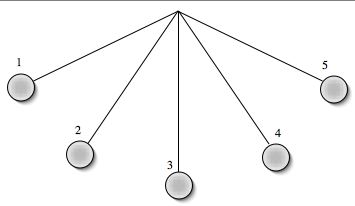
When a pendulum swings, at which point is kinetic energy greatest?
1
2
3
4
When you stretch a rubber band, you are storing __________ energy.
kinetic
potential

What position has the least amount of potential energy?
W
X
Y
Z
In order to INCREASE the potential energy of an object, you need to:
put the object lower to the ground
raise the object higher

Which skier will have more kinetic energy at the bottom of the ramp?
The blue skier.
The yellow skier.
They will have the same amount of kinetic energy.
It is impossible to tell from the information given.

A tennis ball is thrown into the air. At which position will its PE and KE be the same?
Position A
Position B
Position C
The PE and KE will be the same at each position.

Friction stops moving objects by transforming kinetic energy into ________.
potential energy
thermal energy
chemical energy
elastic energy
Which law is this?


