
 Worksheets
Aircraft Propeller Construction Gen Caseserano
Total questions: 55
Worksheet time: 37mins
has a shank, butt, hub, tip, trailing edge, leading edge, face and a back.
Wood Propellers
Propeller Blades
Dowty Composite Propeller
Metal Propeller
The cambered side of a blade is called ____.
the black blade
the blade black
the blade back
the back blade
The flat side of the blade is called ____.
The Blade Flat
The Blade Face
The Blade Side
The Blade Facade
The ____ is that part of the propeller blade farthest from the hub, generally defined as the last 6 inches of the blade.
blade butt
blade back
blade face
blade tip
what is called the blade base or root, seen in the end of the blade, which fits in the propeller hub.
(a)
are used from maintenance personnel for damage assessment, blade angle checks, etc.
(a)
this has been used since the Wright Flyer's first flight in 1903 and are still popular on many amateur-built aero planes.
metal propeller
steel propeller
wood propeller
aluminum
its light weight, rigidity, economy of production, simplicity of construction, and ease of replacement, is well suited for such small aircraft.
steel propeller
aluminum propeller
wood propeller
composite propeller
are forged from high-strength aluminum alloy, and after being ground to their finished dimensions and pitch, are anodized to protect them from corrosion.
steel propeller
wood propeller
aluminun propeller
metal propeller
these are types of propellers except:
Feathering Propellers
Fixed Pitch Propellers
Ground adjustable Propellers
Controllable pitch Propellers
are the most widely used types of propeller in aviation.
Wood Propeller
Metal Propellers
Aluminum Alloy Propellers
Dowty Composite Propellers
this propeller provide better engine cooling by carrying the aero foil sections closer to the hub and directing more air over the engine.
(a)
Aluminum propellers are made from
(a)
these are found primarily on transport aircraft.
Steel Propellers
Aluminum Alloy Propellers
Wood Propellers
Metal Propellers
what type of propeller are normally of hollow construction, which help to reduce weight.
(a)
what type of propeller are forged and machined to the desired contours and the proper twist is achieved by twisting the blades.
metal propellers
aluminum propeller
steel propeller
used in propeller manufacturing consist of two constituents: the fibers and the matrix.
aluminum propeller
steel propeller
metal propeller
composite propeller blades
what are the constituents of a composite propeller blades?
(a)
what is the most generally used for glass, graphite, and aramid (Kevlar)
(a)
The strength and stiffness of the blades are determined by the
material, matrix, diameter, environment
diameter, resin, material, epoxy
material, diameter, and orientation of the fibers
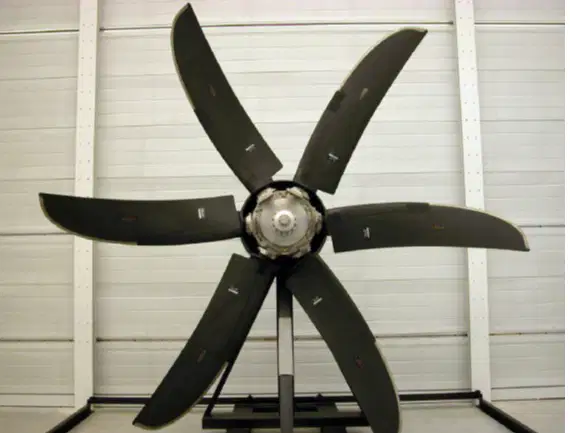
what type of propeller is this?
(a)
has the blade pitch, or blade angle, built into the propeller.
Metal propeller
Steel Propeller
Fixed pitch propellers
Aluminum alloy propeller
this type of propeller is one piece and is constructed of laminated wood or aluminum alloy.
Fixed pitch propellers
Aluminum alloy propellers
Steel propellers
these are designed for best efficiency at one rotational and forward speed, usually cruise speed.
(a)
what kind of propeller is inefficient at take-off and landing speeds.
Fixed pitch propellers
Dowty composite propellers
Metal Propeller
what operates as a fixed-pitch propeller?
dowty composite propeller
aluminum alloy propeller
ground adjustable propeller
metal propellers
what propeller is used on aircraft of low power, speed, range, or altitude.
(a)
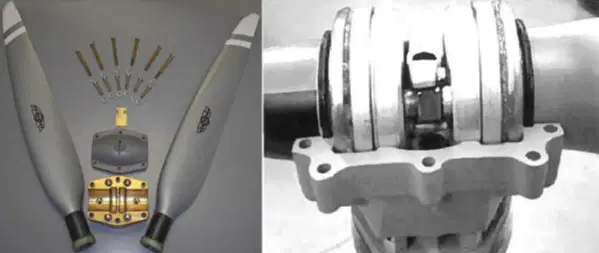
what kind of propeller is this?
(a)
this propeller permits a change of blade pitch or angle, while propeller is rotating.
fixed pitch propeller
controllable pitch propeller
ground adjustable propeller
types of controllable pitch propeller
variable pitch propeller and constant speed propeller
variant pitch propeller and consistent speed propeller
variation propeller and cognitive propeller
what type of controllable pitch propeller controls the pitch angle by the operator?
(a)
what type of controllable pitch propeller controls system adjust pitch, without attention by the pilot or operator?
(a)
The first popular controllable-pitch propellers were hydraulically actuated by engine lubricating oil supplied through a hollow crankshaft.
Variable Pitch Propellers
Constant Speed Propellers
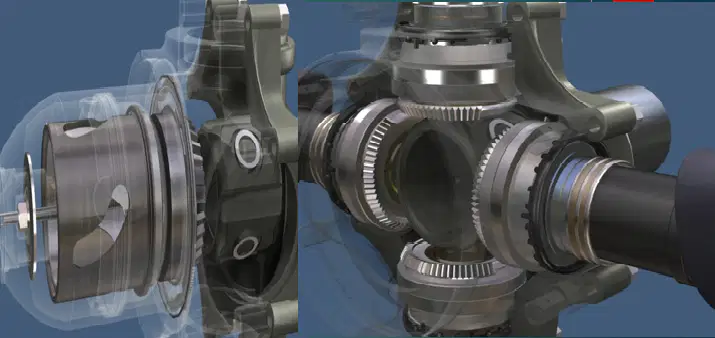
what type of controllable pitch propeller is this?
(a)
what kind of propeller is a system in which the propeller blade angle is varied by the action of a governor to maintain a constant speed.
constant speed propeller
variable pitch propeller
steel propeller
fixed pitch propeller
The pitch changing devices for constant speed propellers include _____, _____, and devices in which centrifugal forces act on flyweights and combinations of these methods
electric motors
hydraulic cylinders
matrix
fibers
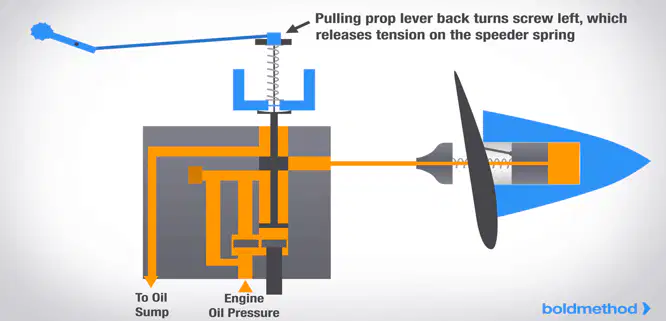
Underspeed
Pull Lever Back, Prop Takes 'Bigger Bite' Of Air
Overspeed
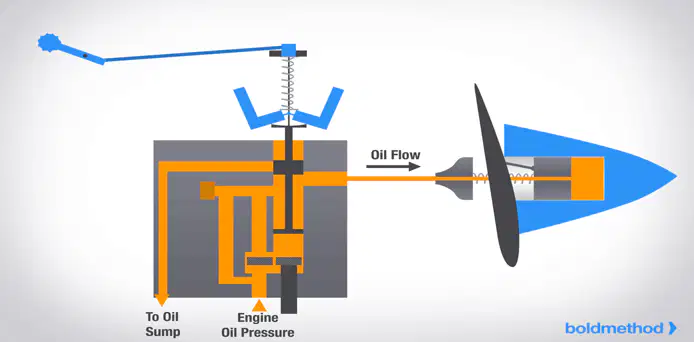
Underspeed
Overspeed
Pull Lever Back, Prop Takes 'Bigger Bite' of Air
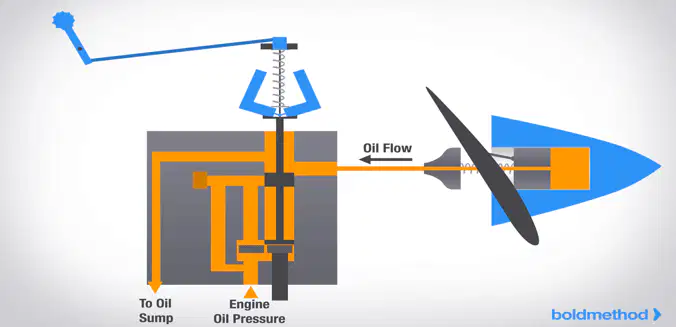
Overspeed
Pull Lever Back, Prop takes' 'Bigger Bite' of Air
Underspeed
THE BLADE PITCH OR BLADE ANGLE , BUILT INTO THE PROPELLER
GROUND ADJUSTABLE PROPELLER
FIXED PITCH PROPELLER
CONTROLLABLE PITCH PROPELLER
THE PITCH OR BLADE ANGLE CAN BE CHANGED ONLY WHEN THE PROPELLER IS NOT TURNING
FIXED PITCH PROPELLER
CONTROLLABLE PITCH PROPELLER
GROUND ADJUSTABLE PROPELLER
PROPELLER PERMITS A CHANGE OF BLADE PITCH , OR ANGLE WHILE THE PROPELLER IS ROTATING
CONTROLLABLE PITCH PROPELLER
GROUND ADJUSTABLE PROPELLER
FIXED PITCH PROPELLER
Before installing a propeller, the propeller shaft and threads should not be checked for damage.
True
False
Boss and hub flange faces should be checked for cleanliness, to ensure that maximum friction will be obtained.
True
False
When assembling the hub to the shaft, it is usually recommended that an anti-seize compound should be applied to the threads, and engine oil to the shaft. Where cones are fitted, these should be clean and dry.
True
False
The angular position of the propeller on the hub is not important, unless the engine is likely to be started by hand swinging
TRUE
FALSE
The attachment bolts should be tightened evenly, and in any sequence, to the specified torque.
TRUE
FALSE
when the propeller is rotated the blades should track within 1/4 inch of each other, but a wider tolerance may be permitted on repaired propellers, provided that no vibration is evident during engine runs.
FALSE
TRUE
After engine runs to check the reference RPM, the propeller attachment bolts and the hub retaining nut should be checked for tightness, and re-locked.
TRUE
FALSE
It is recommended that the bolts should also be checked after each of the first few flights.
TRUE
FALSE
in Fixed Pitch Metal Propellers Installation, these are used to locate the propeller on the spacer or propeller shaft flange, and these should be a tight press fit in the holes.
(a)
The dowels, spacer and flange should be inspected before assembly to ensure that they are undamaged, and the propeller and spacer should be assembled together before installation on the engine.
True
False
The propeller attachment bolts should be checked for tightness after the engine run.
True
False
The engine should not be ground run after installing the propeller, to check for vibration and determine the engine speed obtained at full throttle.
True
False
If the engine is likely to be hand-swung, the propeller should be fitted to the engine in a convenient position. The attachment bolts should be tightened evenly, and in proper sequence, to the specified torque.
True
False

