
 Worksheets
APES exam Units 4 - 6
Total questions: 143
Worksheet time: 4hrs 10mins
A home is built with clear glass panels that allow sunlight to pass through. This is an example of
Active solar
Passive solar
Parabolic collector
Photovoltaic Cells
What is given off as the major waste product in a hydrogen fueled car?
H2
O2
H2O2
H2O
The following disadvantages are for which energy source?
· Unpopular, generates protests
· Plants are $$$ to build because of legal challenges
· Potential for catastrophic meltdowns and accidents
· Possible terrorist targets
Petroleum
Coal
Natural Gas
Nuclear Energy
A wheel that changes the force of a moving gas or a liquid into energy
Fossil Fuels
Turbine
Petroleum
Oil Reserves
Fuel cells that use a chemical reaction to generate electricity are using
hydrogen gas
methane gas
water
oil
If a tractor trailer truck is 20% efficient, what happened to the other 80%
energy is destroyed
energy is lost as heat
the 80% is still in the gas tank
energy is converted into matter
What is an example of cogeneration?
Which renewable energy does not require spinning a turbine?
hydroelectric
wind
tidal
photovoltaic cells
This fossil fuel is formed from the remains of small organisms that lived in the ocean AND is a thick, black liquid
natural gas
coal
oil
steam
Which of the following is not a biofuel or a biomass?
wood
ethanol from corn
dung
methane
Which resource consists mostly of CH4 (methane)?
Fossil Fuels are
pieces of rock that have been compacted many times
rock that contains 50% plant and animal remains
metamorphic rock
fuels that form from the remains of plant and other organisms that were buried and altered over million of years
The following disadvantages are for which energy source?
· Mining alters landscapes and endangers humans
· Plants are slow to reach full operating capacity
· Large contributor to acid rain
Petroleum
Coal
Natural Gas
Nuclear Energy
The ADVANTAGES of Fossil Fuels include: (Choose ALL that apply)
low cost
produce a lot of energy
cause air pollution
high cost
When lighter atomic nuclei combine to form a heavier element
Nuclear Energy
Nuclear Fission
Nuclear Fusion
Radioactive
When the Nuclei of atoms split and release energy
Nuclear Energy
Nuclear Fission
Nuclear Fusion
Radioactive
The energy within the nucleus of an atom
Nuclear Energy
Nuclear Fission
Nuclear Fusion
Radioactive
The following advantages are for which energy source?
· Cogeneration power plants can have efficiencies up to 60%
· Efficient for cooking, heating, etc.
· Fewer impurities than coal or oil
Petroleum
Coal
Natural Gas
Nuclear Energy
The following advantages are for which energy source?
· Energy-dense and abundant—will last up to 200 years
· No refining needed
· Easy, safe to transport
· Economic backbone of many small towns
Petroleum
Coal
Natural Gas
Nuclear Energy
The following advantages are for which energy source?
· Ideal for mobile combustion engines
· Quick ignition/ turn-off capability
· Cleaner-burning than coal
Petroleum
Coal
Natural Gas
Nuclear Energy
The following disadvantages are for which energy source?
· Risk of leaks/explosions
· 25x more effective as a greenhouse (warming) gas than CO2
· Low availability because pipelines are needed
Petroleum
Coal
Natural Gas
Nuclear Energy
The following disadvantages are for which energy source?
· Significant refining required
· Potential for spills on wildlife habitats
· Significant dust and emissions during construction of rigs and refineries
· Human rights/ environmental justice issues in developing countries that export
Will decrease in availability greatly within 40 years
Petroleum
Coal
Natural Gas
Nuclear Energy
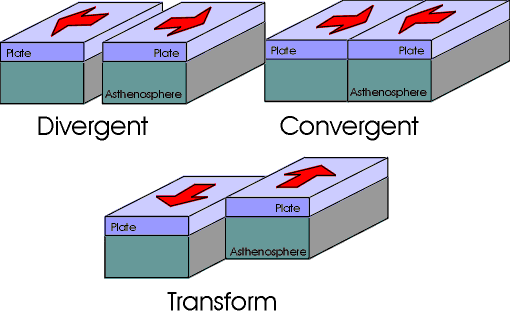
The type of plate boundary where two plates come together is a .....
Convergent Boundary
Divergent Boundary
Transform Boundary
Plate Boundary

What type of event will occur at this boundary?
Earthquake
Volcano Eruption
Tornado
Mountain Building
A divergent boundary occurs when plates ....
Pull apart
Come together
Slide past each other
subducting
Mountains are created when....
Two continental plates collide
Two oceanic plates pull apart
An Oceanic plate subducts under a Continental Plate
Two continental plates pull apart

The process by which the ocean floor sinks beneath a deep-ocean trench and back into the mantle is known as _______
convection.
continental drift.
subduction.
conduction.
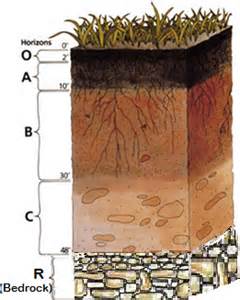
Which of the following is NOT one of the three components used to determine soil texture?

_______ is the best type of soil to use with plants.
clay
silt
sandy clay

The rate at which water flows through the soil is called soil percolation or ______.
Groundwater
Permeability
Soil Pores
Porosity


The movement of the tectonic plates is caused by
the rotation of the Earth.
convection currents in the sathenosphere
the gravity of the iron-nickel core.
the Moho discontinuity.
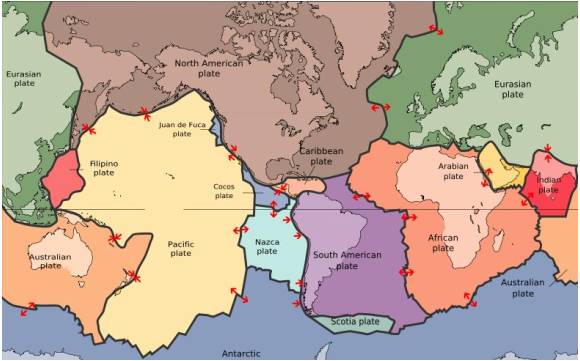
The map in the picture shows tectonic plate boundaries. This map would be useful in predicting the location of future
droughts
hurricanes
earthquakes
tornadoes


I. variation in the angle of sunlight that reaches Earth
II. variation in the amount of surface area over which the Sun's rays are distributed
III. variation in the amount of sunlight reflected from clouds

Sea surface temperature changes great than .5oC for greater than 5 months across the centeral ropical Pacific Ocean are known as
This phenomenon occurs when a coastal mountain range blocks the passage of precipitation to the leeward side of the mountains.
thermal inversion
Coriolis effect
rain shadow effect
urban heat island effect
ENSO

Which soil has 40% sand, 30% silt, and 30% clay?
Loam
Clay Loam
Sandy Clay Loam
Sandy Clay
Larger pore spaces generally create soils with
high permeability.
low permeability.
Soils that hold water well typically have a lot of
clay.
sand.
silt.
loam.
When two plates collide, what geologic formations can occur?
Volcanos
Mountain Ranges
Trenches
All of These
When two plates move parallel to each other, but in opposite directions, what can occur when the energy is released after built up tension?
Landslides
Volcanoes
Avalanches
Earthquakes
Islands in the middle of a tectonic plate are usually associated with what phenomena?
subduction zones
hot spots
divergent boundaries
transform faults
The primary cause of Earth's seasons is the
constant tilt of Earth's rotational axis with respect to the plane of its orbit around the Sun
changing distance of Earth from the Sun at different times of the year
periodic wobbling of Earth on its axis of rotation
changing relative positions of Earth, its Moon, and the Sun
The Sun’s radiation provides the energy for all of the following EXCEPT
plant growth
ocean currents
hurricanes
plate tectonics
The SECOND most common gas in our atmosphere is ____.
N
O
Ne
Ar
In which atmospheric layer do all the pressure, wind and precipitation changes occur?
Troposphere
Mesosphere
Thermosphere
Stratosphere
Which of the following does NOT exert a major influence on Earth's overall climate?
The distribution of land masses and oceans, in combination with Earth's topography.
The daily rotation of Earth on its axis, along with its annual revolution around the sun.
The annual amount of solar radiation that reaches Earth's surface.
All of these can exert a major influence.

What layer of the atmosphere absorbs harmful ultraviolet radiation?
Troposphere
Stratosphere
Mesosphere
Thermosphere
The Coriolis Effect is a result of the Earth's ____.
rotation
gravity
curvature
temperature
Which of the following changes in eastern Pacific Ocean food webs is typically associated with La Niña events?
Decreased populations of squid
Decreased populations of anchovies
Increased phytoplankton concentrations
Increased famine among sea lions and seals

The graph shows the altitude and temperature for different layers of Earth’s atmosphere. Based on the diagram, which of the following identifies a characteristic of the atmosphere between the stratopause and the tropopause?
Cloud formation occurs in the stratosphere.
The warmest air is found in the mesosphere.
The ozone layer is in the stratosphere.
The troposphere is the closest layer to the sun.

Which of the following correctly characterizes one of Earth’s atmospheric layers?
Layer A is the stratosphere, where meteors are found.
Layer B is the troposphere, where weather occurs.
Layer C is the stratosphere, where the ozone layer is found.
Layer D is the thermosphere, where auroras are found.

The diagram is an illustration of global atmospheric circulation. Which of the following is the source of energy driving the circulation pattern labeled C in the diagram?
The Coriolis effect
Solar radiation
Earth's magnetic field
The spinning core of Earth

The diagram is an illustration of global atmospheric circulation. Which of the following causes the air to rise high into the atmosphere in the areas labeled A, B, and C on the diagram?
El Niño circulation patterns
The rotation of Earth shifting the direction of the air upward
Warm, moist air that is less dense than the surrounding air
Rain shadows over mountain ridges

In the desert regions of the southwestern United States, daily high and low temperatures will frequently fluctuate by 40°F (33°C) or more. Which statement below best explains the large variation in temperature?
There are no bordering oceans or large bodies of water to provide a stabilizing humidity to the air.
The nearby Rocky Mountain range provides a rain shadow effect in the evenings to the west.
The flat, light-colored sand formations typical in deserts reflect light from the Sun during the day, but not at night.
Desert plants have long tap roots that pull water from deep in the soil, cooling the desert at night.

The axis of Earth in relation to the Sun is tilted at a 23.5 degree slant, as illustrated in the diagram. If the diagram illustrates Earth’s relative position on December 21 of a given year, which of the following statements would be correct?
The Tropic of Cancer has a shorter day and higher solar radiation intensity because there is an inverse relationship between length of day and radiation intensity.
The Tropic of Capricorn has a shorter day and higher solar radiation intensity because there is a direct relationship between length of day and radiation intensity.
The equator has twelve hours of daylight and the greatest solar radiation intensity because there is no direct relationship between day length and radiation intensity.
The Tropic of Cancer has a shorter day and lower solar radiation intensity because there is a direct relationship between day length and radiation intensity.

At which of the following sites is an earthquake most likely to occur as two plates slide sideways past each other?
A
B
C
D
E

At which of the following sites would activity result in volcanoes, island arcs, and mountains?
A
B
C
D
E

At which of the following sites does seafloor spreading result in rifts and possible volcanoes?
A
B
C
D
E

Which of the following best explains why City B regularly receives less precipitation than City A?
As air rises up the side of the mountain near City B, the temperature and the relative humidity increase, causing increased precipitation on the other side of the mountain over City A.
Air that is forced upward on the side of the mountain near City B leads to the formation of stratospheric clouds.
The urban heat island from City B causes a warmer climate that leads to reduced cloud formation.
The rain shadow effect causes City B to be drier because the mountain blocks precipitation from reaching the city.
Which of the following would be an environmental impact of high density animal farming?
bad smells
livestock can escape
water pollution due to runoff
improvement of feeding efficiency
Because global fisheries have dramatically seen a reduction in fish numbers, this technique has been used recently to supplement that loss.
monocropping
IPM
contour farming
aquaculture
Which of the following is NOT a problem with suburban sprawl?
destruction of habitats
loss of wetlands
noise pollution
air and water pollution
When roots become saturated with water due to over-irrigation, it causes death in plant roots. This is called:
salinization
desertification
agroforestry
waterlogging
The systematic removal of rock or other substance for financial gain.
smelting
mining
urban farming
forestry
One of the advantages to using genetically modified organisms (GMOs) is
reduce the need for pesticides
they are not regulated by the government
the concern about safety to consume
they can cause food allergies
When irrigation water evaporates, salts are left behind on the soil surface and can cause plant death or lead to
soil salinization
desertification
waterlogging
monocropping
What is a natural part of a forest ecosystem and may be required for seed germination?
floods
tornadoes
fire
polar vortex
Use of this method of control requires concentrations to be increased often because pest develop resistance
GMOs
Pestsides
plant removal
control burning
The Green Revolution was
a dramatic increase in crop yields in developing countries
change to more sustainable agriculture
way of fighting soil erosion
power grab by the Green party in the 1980s
What is the problem with timber plantations?
low biodiversity
prone to forest fires
cause soil erosion
absorb excess CO2 from atmosphere
IPM is likely to use all of the following techniques EXCEPT
intercropping.
habitat creation for pest predators.
planting herbicide-resistant crops.
increased use of traditional pesticides.
Overgrazing of grasslands can lead to reduced range quality. Two of the major effects of overgrazing are
erosion and desertification
eutrophication and increased methane production
higher fire potential and increased productivity
higher primary productivity and ammonification
Which of the following is an example of a solution to the tragedy of the commons?
Improving literacy among urban populations
Raising tax rates for large corporations
Inventing stronger antibiotics
Passing a law to set limits for fishermen

Externality
The cost or benefit of a good or service that is not included in the purchase price of that good or service
Land that a community shares
The maximum number of plants that one can harvest
Resources managed by the government or an organization
Emphasis on use of pesticides, herbicides, and monoculture
green revolution
agricultural revolution
industrial revolution
subsistence agriculture
Which of the following is a positive outcome of tilling?
reduced soil drainage
increased soil erosion
increased aeration
decreased crop production
Which of the following type of tree harvesting is the most detrimental to the environment?
Strip Cutting
Selective Cutting
Clear Cutting
Partial Harvest
Minerals are
nonrenewable
renewable
pretty
scarce and expensive
Monocropping has a number of disadvantages. These include all of the following EXCEPT
Erosion due to exposure of large areas of soil during planting.
Nutrition and pesticide needs should be similar throughout a single crop.
Pests are likely to attack a monocrop due to the high concentration.
Loss of habitat for natural pest predators.
One way a local community might regulate a shared and limited resource and reduce the tragedy of the commons is to ....
eliminate ownership of the resources and make them available to all
divide the resources into parcels and assign them to individuals
offer subsides to users of the resources in the form of tax breaks
reduce the cost of access to the resources
Which of the following is NOT a cause of urban sprawl?
automobile and highway construction
mixed land use
living costs
urban blight
Urban sprawl has caused people in urban areas to drive and own twice as much land
True
False
What is the difference between aquaculture and fisheries?
Aquaculture raises ocean species, while fisheries raises freshwater species
Aquaculture requires feeding fish other fish, while fish in fisheries can eat soybean and corn
Aquaculture involves raising aquatic species, while fisheries are natural resources harvested without direct human input
Fisheries involves raising aquatic species for feeding to aquaculture species
Which of the following environmental effects would most likely result from the clear-cutting of boreal forests by industrial logging operations?
There will be an increase in atmospheric oxygen concentration, which will improve air quality.
There will be an increase in farming on the cleared areas of land, which will reduce incidences of flooding.
There will be an increase in atmospheric carbon dioxide concentration, which will contribute to climate change.
There will be a decrease in the temperature of soil and nearby bodies of water, which will increase biodiversity.
Which of the following would decrease with the manufacture, application, and use of synthetic fertilizers rather than organic fertilizers?
Recycling of organic matter
Groundwater pollution
Cultural eutrophication
Use of fossil fuels
Which of the following describes an unintended consequence that results from large-scale agricultural use of water from an aquifer?
The water table level rises too high, leading to excessive flooding.
Much of the water becomes too salty for human consumption because of saltwater intrusion.
Agricultural areas contribute to increased carbon dioxide in the atmosphere, leading to global climate change.
The rate of water use likely exceeds the rate of recharge, leading to lowering the water table.
Which of the following best describes the advantages and disadvantages of drip irrigation?
This method most efficiently delivers water directly to plant roots compared with other methods, and wastes less water, but it may be too costly for farmers in developing countries to use.
This method is suitable for a range of topographies and is easy to operate, but it requires a high initial investment in machinery.
This method delivers water to the field by pipes and water flows directly over the soil, but there is a large amount of runoff.
This method applies water directly to trenches dug in soil and is cost effective, but water is often lost to evaporation.
A sustainable society would emphasize…
maintaining the current rates of energy flow and resource use
using energy efficiently and reusing and recycling matter
recycling both matter and high-quality energy
converting the world’s high-quality energy resources to low-quality heat

Which of the following methods of meat production would provide the most likely explanation for the information represented in the graph above?
Individual transferable quotas
Concentrated animal feeding operations
Free-range grazing
Organic meat production
A cost-benefit analysis done to investigate a proposed mine site would likely take which of the following into account?
I. The medical costs of mine worker injuries II. The cost of environmental restoration of the site when it is shut down III.The value of the ore to be extracted from the mine
II only
I, II, and III
I and II only
I and III only

An insect population in an agricultural field is affected by monthly applications of a pesticide, as shown in the graph below. A likely cause of the overall increase in the insect population over time is...
a decrease in the moisture content of the soil
an increase in soil salinity
the survival of increasing numbers of resistant insects
an increase in the population of insect predators
Which of the following best describes an environmental advantage of urbanization?
Individuals living in cities usually have a lower transportation carbon footprint than individuals living in rural areas
Individuals living in cities usually have greater access to fresh, local agricultural products than individuals living in rural areas.
Individuals living in cities have more varied employment opportunities than individuals living in rural areas.
Individuals living in cities have greater access to health care than individuals living in rural areas.
Compared with people in developing countries, people in industrialized countries are more likely to eat…
Beef
Corn
Rice
Beans

Which of the following methods should the farmers choose to minimize the cost for efficient pest removal while still reaching their goal of reducing the amount of pollution in the river?
Planting genetically modified crops
Applying a single dose of pesticides
Introducing a natural predator to feed on the pests
Using physical traps
What causes an urban heat island?
large forested areas
pavement and concrete
climate change
mass transit
A tool that developers use to classify land areas for development and land use
smart growth
zoning
new urbanism
REDD
A sustainable solution to urban growth
suburban growth
stopping growth
building up
urban heat island
A mineral or group of minerals from which we extract metal.
metal
ore
magma
overburden
Ore leftovers after valuable minerals have been removed
tailings
smelting piles
extraction heap
gravel
Surface Mining and Control Reclamation Act
mandates that miners give half of what they find to the government
allows miners to place a stake on public land for $5 per acre
mandates reclamation
is meant to bankrupt mining companies
Why mine tailings can be dangerous
can cause miners to trip
can be full of sharp objects
can cause acid leaching into water bodies
are full of conflict minerals
The National Forest Management Act
prevents further building of roads in national forests
was repealed by the Clinton administration
requires national forests to have a management plan
allows mining in national forests
Has the most restrictive land use
national park
wilderness area
national forest
national monument
Lands managed by agencies of the government
National Parks
National Rivers
Public Lands
Restricted-use Lands
This agency manages fish, wildlife, and habitats.
US Forest Service
US Fish and Wildlife Service
National Oceanic and Atmospheric Administration
Bureau of Reclamation
This agency manages about 253 million acres of America's public lands as well as 700 million acres of subsurface mineral estate.
U.S. Department of Agriculture
Bureau of Land Management
National Park Service
US Department of the Interior

The Endangered Species Act was a law designed to:
Stop species from overpopulating
Help hunting increase
Protect species from extinction
None of the above
This agency is managed by the US Department of Agriculture and manages the 155 National forests and 20 National grasslands.
US Forest Service
US Fish and Wildlife Service
National Oceanic and Atmospheric Administration
Bureau of Reclamation
This agency manages all national parks, many monuments, and other conservation and historic properties.
U.S. Department of Agriculture
Bureau of Land Management
National Park Service
US Department of the Interior
What are considered "the commons"
Common house hold items like knifes, spoons, and forks.
A resource owned by no one and available for use by anyone at little or no charge
A field where college students can sit outside in between classes

Public lands are classified according to:_________________
Their color
their percentage of acid to soil
their use
Their temperature

Removes single trees or a relatively small number of trees from the larger forest
Tree specialization
Selective cutting
Forest consumption
Selective trees

