
 Worksheets
State review 2
Total questions: 57
Worksheet time: 1hrs 7mins
what is the energy that cant be used up but can be stored for later
potential
thermal
motion
sound
Energy in motion is ____________ energy.
Potential
Energy
Kinetic
Friction
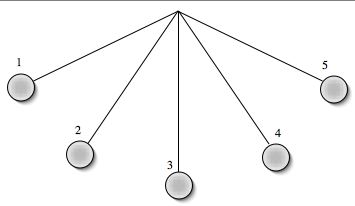
When a pendulum swings, at which point is kinetic energy greatest?
1
2
3
4
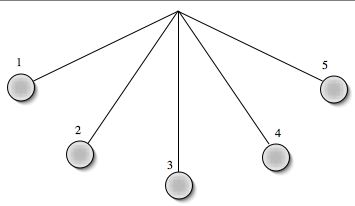
What is happening to the potential energy between position 1 to 3?
Decreasing
Increasing
Stays the same
What would have the greatest kinetic energy?
A car driving down a hill.
A person running down a hill.
A ball rolling down a hill.
leaves rolling down a hill
Which is an example of potential energy?
a roller coaster speeding down a hill
the pulled back string on an archers's bow
releasing the strings on a guitar
an electric current lighting a light bulb
This type of energy is also called "energy at rest"
Potential energy
Kinetic energy
Light energy
Electrical energy


What is a chemical change?
Forming a new substance
When two or more substances combine to make a greater one
When two or more substances combine to make a new chemical substance
Combing substances
Select the properties of a physical change!
Color
Shape
Size
Bubbles
Temperature
A rocket pushes burning gases DOWN which causes the rocket to launch UP. Which law is this?
Law 1
Law 2
Law 3
An object in motion stays in motion and an object at rest stays at rest UNLESS
acted on by a balanced force.
acted on by an unbalanced force.
It is much more difficult to move a dresser full of clothes than an empty dresser.
Law 1
Law 2
Law 3
A book sitting on the table does not move.
Law 1
Law 2
Law 3
A skateboarder pushes the ground BACKWARDS which causes the board to move FORWARD.
Law 1
Law 2
Law 3
If Mrs. Dircks dropped her Pepsi bottle, what is the force that pulls the bottle to the ground?
motion
friction
air resistance
gravity
Friction and air resistance are forces that:
can make an object slow down or stop
pulls an object toward the center of Earth
changes an object's position
can't be described


You are given a mystery object in science class. Your teacher asks you to determine if your object is more or less dense than water. You place the object in the water and it sinks. What statement would best describe this situation?
The mystery substance is denser than water.
Water is denser than the mystery substance.
They both have the same mass.
The mystery substance must be hollow.

Which statement is correct?
Corn syrup is denser than water.
Water is denser than corn syrup.
Water is less dense than oil.
Ability or power to conduct or transmit electricity
Magnetic
Electric Conductivity
Malleability
Hardness
Attract and repel forces between an object and a magnet
Malleability
Hardness
Magnetic
Electric Conductivity
The ability or tendency to float in water
Bouncy
Buoyancy
Thermal Conductivity
Matter is anything that has mass and takes up ______.
grams
space(volume)
milliliters
unit

What is the mass of the objects?
107 g
10 g
17g
710 g

What is the volume of the liquid in the graduated cylinder?
25 ml
15 ml
12 ml
10 ml
A candy bar melts is an example of ....
a liquid changing to a solid.
A solid changing to a gas.
A solid changing to liquid.
not here

Gas molecules spread out and have no definite shape as shown in picture C. Solid molecules are _______.
loosely packed as in picture B.
very far apart as in picture C.
can change shape as in picture B & C.
cannot change shape as in picture A.
To properly dispose of used resources so they can be reprocessed into new products:
Environment
Conservation
Resource
Recycle
A ball rolls down from the top of a grassy hill, reaches the bottom of the hill, continues to roll, and then starts to slow down and comes to a stop. What forces caused this ball's motion?
Frictional force caused the ball to roll down the hill, but air resistance caused the ball to slow down and stop.
Magnetic force caused the ball to roll down the hill, but gravity caused the ball to slow down and stop.
The force of the hill caused the ball to roll down it, but gravity caused the ball to slow down and stop.
Gravity caused the ball to roll down the hill, but frictional force caused the ball to slow down and stop.
When dropped from the same distance, which will fall to the floor faster?


A runner, jumping over a hurdle.
balanced force
unbalanced force
Balanced forces are...
forces that are equal in strength and acting in opposite directions on an object
forces that are not equal in strength and opposite in direction
forces that cause an object's motion to change
forces that are not equal in strength and opposite and cause an object's motion to change
Unbalanced forces are...
forces that are equal in strength and opposite in direction
forces that are not equal in strength and opposite in direction
forces that cause an object's motion to change
forces that are not equal in strength and act in opposite directions and cause an object's motion to change in position, direction, and/or speed
Sophia is picking up her potted cactus as she cleans her room. She is pulling the cactus up with a force of 20N. Earth's gravity is pulling the cactus down with a force of 15N. Assume all other forces on the cactus are balanced. Which statement describes the forces on the cactus?
The forces are balanced, so there is no net force on the cactus.
The forces are unbalanced, so there is a net force on the cactus.

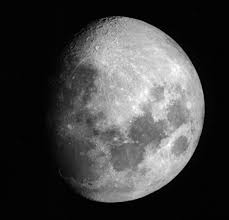


A teacher asks students to explain what they observe in the picture below. Four student explanations are shown in the box. Which of the students gave a correct explanation?
Student 1 only
Student 2 and 4 only
Student 2 only
Student 1 and 3 only
to spin on an axis
Revolve
Orbit
Rotate
Gravity
What causes the Earth to experience day and night?
Earth's revolution around the sun.
The moon revolving around the Earth.
Earth's rotation on its axis.
The sun moving from East to West.
What causes the Sun to appear to move across the sky?
Earth's rotation on its axis
Earth orbiting around the Sun
Earth orbiting around the moon
The sun rises in the East and sets in the West.

