
Font size
 Worksheets
IGCSE - P3+P4 revision
Total questions: 66
Worksheet time: 57mins
A liquid at room temperature is put on a metal surface which is also at room temperature. A student blows gently across the liquid and its temperature decreases. What causes the liquid to become cooler?
Bubbles of water vapour form in the liquid and go into the air.
The moving air reduces the kinetic energy of all the particles in the liquid.
Thermal energy flows from the liquid into the metal.
The more energetic particles in the liquid escape into the air.
The liquid level in a thermometer rises when the thermometer is placed in hot water. What causes this?
The liquid contracts.
The liquid evaporates.
The liquid expands.
The liquid freezes.
Which statements correctly describes a liquid that is boiling
no bubbles seen, takes place on the surface only
no bubbles seen, takes place throughout the liquid
bubbles seen, takes place on the surface only
bubbles seen, takes place throughout the liquid
Which statement about boiling and evaporation is correct?
Boiling requires a supply of thermal energy but evaporation does not.
Evaporation takes place at the surface of a liquid but boiling takes place throughout the
liquid.
When water boils in a kettle, its temperature decreases.
When water evaporates, its temperature increases.
Why are small gaps left between the metal rails of a railway track?
to allow for expansion of the rails on a hot day
to allow for contraction of the rails on a hot day
to allow for expansion of the rails on a cold day
to allow for contraction of the rails on a cold day

A metal rod is heated at end X. Why does end Y of the metal rod become hot?
Energy is transferred from end X of the rod to end Y by vibration of positive ions and by
movement of electrons.
Energy is transferred from end X of the rod to end Y by movement of positive ions only.
Energy is transferred from end X of the rod to end Y by vibration of positive ions only.
Energy is transferred from end X of the rod to end Y by movement of electrons only.

The air in a room is heated by a heater. The diagram shows the circulation of the air in the room. Which statement about the air that is heated is correct?
The air contracts and become less dense
The air contracts and becomes more dense
The air expands and becomes less dense
The air expands and becomes more dense

In a refrigerator, the cooling unit can be fitted either at the top or at the bottom. In an oven, the heater can be fitted either at the top or at the bottom. Which row shows the best position for the cooling unit and the best position for the heater?
A
B
C
D
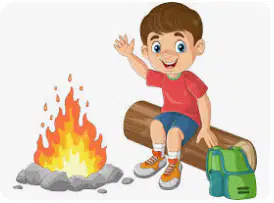
Tom sits near a campfire and he feels warm. How does heat transfer from the campfire to him?
By conduction only
By radiation only
By convection only
By conduction and radiation

Which row shows the surface that is the better absorber and the surface that is the better emitter of infra-red radiation?
A
B
C
D
One end of a copper rod is heated. What is one method by which thermal energy is transferred in the copper rod?
free electrons transfer energy from the cooler end to the hotter end
Molecules vibrate and free electrons transfer energy from the hotter end to the cooler end
molecules of copper move from the cooler end to the hotter end
molecules of copper move from the hotter end to the cooler end
Which one is a property of a liquid
Takes the shape of its container
Fixed volume
Can be compressed
Has a fixed shape
The particles in a solid can...
Move freely
Have no bonds
Vibrate
Melt
When a substance is heated what happens to the particles
They change state
They evaporate
They gain kinetic energy and vibrate more
They melt
Evaporation...
Happens to every molecule in a boiling liquid
Only happens to the particles at the surface
Will increase with a smaller surface area
Is the same as boiling
When a gas changes to a liquid it is called...
Evaporation
Condensation
Boiling
Melting
Heat transfer through a solid is called..
Conduction
Convection
Radiation
Melting
Which energy transfer does not require any particles?
Convection
Conduction
Radiation
None of the above
Which colour absorbs the most heat?
Black
White
Yellow
Silver
Which statement about evaporation is correct?
Evaporation causes the temperature of the remaining liquid to decrease
Evaporation does not occur from a cold liquid near its freezing point.
Evaporation does not occur from a dense liquid, such a mercury
Evaporation occurs from all parts of a liquid

The diagram shows four beakers A, B, C and D. The beakers contain different amounts of the same liquid at the same temperature. The beakers are left next to each other on a laboratory bench overnight. The diagrams are all drawn to the same scale.
From which beaker does the largest quantity of liquid evaporate?
A
B
C
D
A liquid turns into a gas. This occurs only at one particular temperature, and the change happens throughout (inside) the liquid.
What is this process called?
boiling
condensation
evaporation
fusion
One end of a rod of copper is placed in hot water. Thermal energy travels along the rod to make the other end warmer.
What is the behaviour of the copper at an atomic level that accounts for most of the transfer of thermal energy from one end to the other?
Atoms at the hot end gain kinetic energy and move towards the other end.
Atoms at the hot end expand, colliding with other atoms and transferring energy.
Free electrons at the hot end gain energy and move towards the other end, colliding with atoms along the rod.
Free electrons at the hot end gain energy from the hot water and move directly to the other end.
What is energy
The ability to do Work
The ability not to do Work
The destruction of a force
The creation of a force
Which two of these are included in the term 'fluids'?
solids
liquids
gases
metals
Which of these is not a change of state?
freezing
melting
cooling
evaporating
condensing
Which one of these words best describes the movement of gas molecules?
randomly
rusty
rainy
rapidly
Which of these best describes the atoms in a solid such as gold?
they move all over the place quickly
they move all over the place slowly
they vibrate about a fixed position
they do not move at all
Which of these best describes evaporation?
the escape of more-energetic molecules from the surface of a liquid
the escape of more-energetic molecules from the surface of a gas
the escape of less-energetic molecules from the surface of a liquid
the escape of less-energetic molecules from the surface of a gas
Which two of these are examples of convection currents?
the water cycle
a heater warming up air in the corner of a room
the lunar cycle
heat travelling along a solid metal bar
Which of these statements is false?
conduction happens in solids
convection happens in fluids
radiation can only happen in a vacuum
liquids and gases can be referred to as fluids
When steel increases its temperature,
the size of the molecules increases.
the mass of the molecules increases.
the molecules vibrate at higher speed.
the density of each molecules decreases.


A
B
C
D

A
B
C
D

A
B
C
D

A
B
C
D

A
B
C
D

A
B
C
D

A
B
C
D
Evaporation is a process that the substance ................... kinetic energy, and as the result, the temperature decreases.
gains
loses
keeps the same amount of
In evaporation, some particles which are more energetic vibrate fast enough to escape from the (a) and turn into water vapor (gas).
What happens when CONVECTION occurs?
Heat transfers through waves.
Heat transfers from objects that are touching.
A hot liquid or air that expands, becomes less dense, and rises or becomes more dense, and sinks.
Heat traveling from the sun
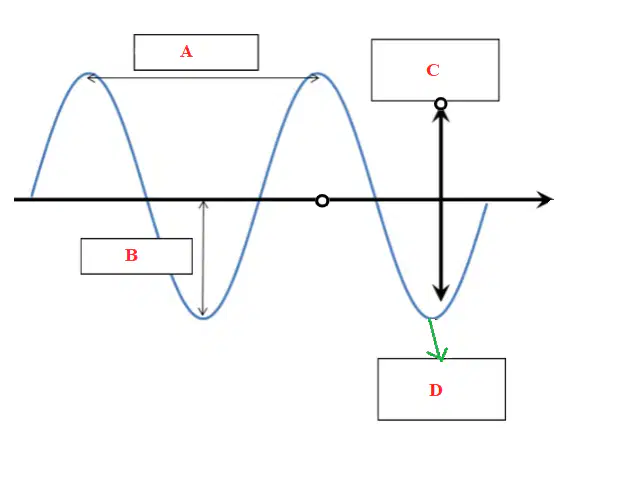
Which letter represents an Amplitude?
A
B
C
D
λ is the symbol of ..............
wave speed
frequency
wavelength
amplitude
The Wave equation which shows the relationship between wave speed, wavelength, and frequency is
v = f×λ
v = λf
v = fλ
f = v×λ
A sound wave traveling in the air has a frequency of 100 Hz. The speed of sound in the air is 340 m/s. What is the wavelength of this sound?
3.4 m
34 000 m
3.4 s
34 000 s
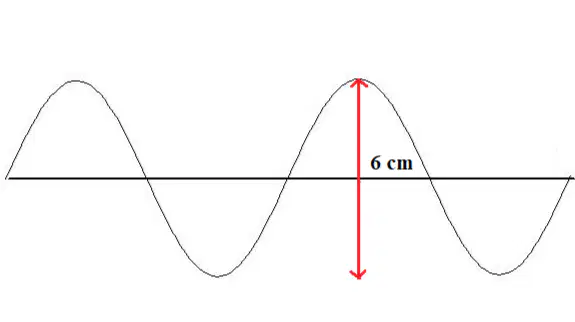
The verticle distance between a crest and a trough of a wave is 6 cm. What is the amplitude of this wave?
6 cm
4 cm
3 cm
2 cm
The relationship between the time period and frequency of a wave can be represented by which equation
f = T
f=T1
f=λT
f=Tλ
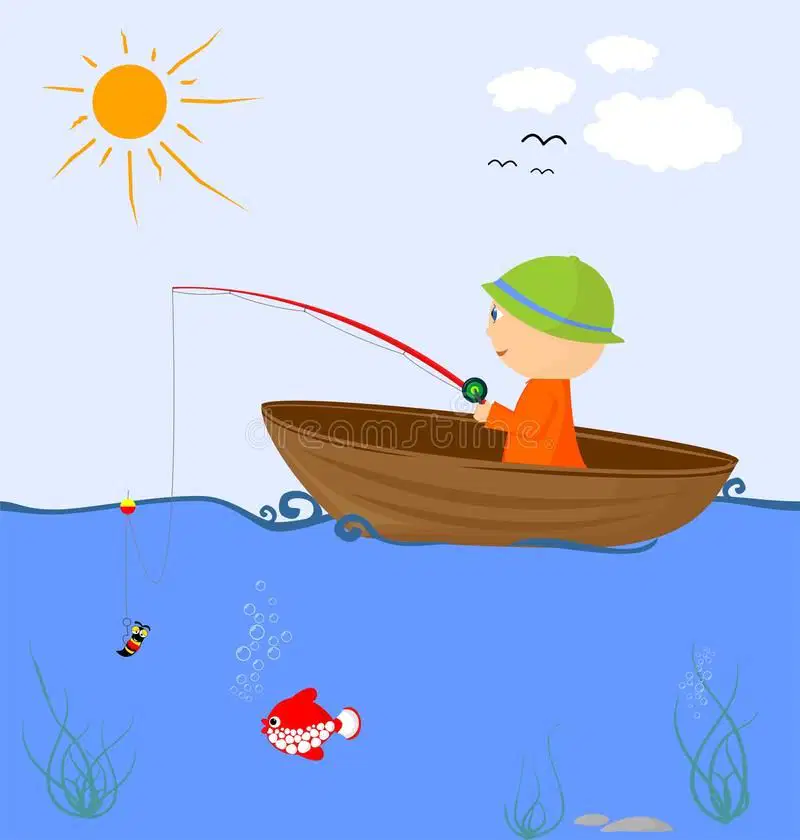
A fisherman on a boat sees 10 waves in 50 seconds. The frequency of this wave is ..................
5 Hz
0.5 s
2 s
0.2 Hz
Particles of the medium vibrate ......................... to the direction of the wave in LONGITUDINAL WAVES.
equal
perpendicular
parallel
inversed
Particles of the medium vibrate ......................... to the direction of the wave in TRANSVERSE WAVES.
equal
perpendicular
parallel
inversed
Frequency measures ...........................
the length between 2 crests
how many waves pass through a point in one second
time for a wave pass through a wave
amount of energy
A wave has a frequency of 14 Hz and a wavelength of 3 m. At what speed will this wave travel?
4.67 m/s
42 m/s
0.21 m/s
0.21 s
Frequency is the number of complete waves that pass a point in 1 second. If 100 waves pass a given point in 4 seconds, what is the wave's frequency?
0.04 Hz
400 Hz
25 Hz
0.25 Hz
The picture shows the reflection of light when the incident light ray is reflected. This effect occurs .............
when the light passes through a narrow gap.
when the light enters a different medium.
when the light hits a barrier.
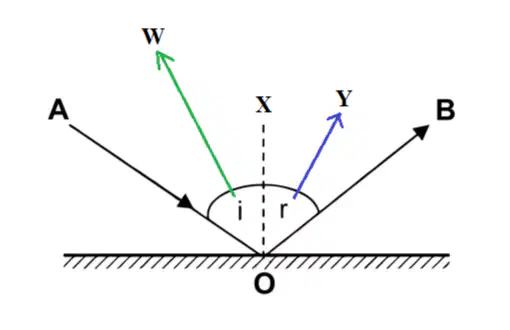
The diagram shows the reflection of a light ray. The normal is represented by the letter ...........
A
i
O
X
The diagram shows the reflection of a light ray. The reflected ray is represented by the letter ...........
B
i
O
X
The diagram shows the reflection of a light ray. The angle of incidence is represented by the letter ...........
B
i
W
X
The diagram shows the reflection of a light ray. The letter O represents ...........
the normal
the angle of reflection
the incident ray
the plane mirror

