wayground logo

Free Printable Worksheets

Font size

S
M
L
XL
Worksheets

Evolution Vocabulary

Total questions: 34

Worksheet time: 34mins

Name
Class
Date
1.

What term best describes the definition? Volcanos, violent storms with lightning, no life...

a)

1st living cell

b)

Organic Molecules form

c)

Primitive Earth

d)

Multicellular Organisms

2.

Which best describes the Endosymbiotic Theory?

a)

The first cells would have been simple.

b)

When biomolecules were discovered by Miller and Urey.

c)

Eukaryotic cells may have evolved from eukaryotic cells

d)

Eukaryotic cells may have evolved from prokaryotic cells

3.

What is a eukaryote?

a)

None of the above

b)

A cell with a nucleus

c)

A cell with no nucleus

d)

They make their own food

4.

(a)   is the theory that species change over time?
5.
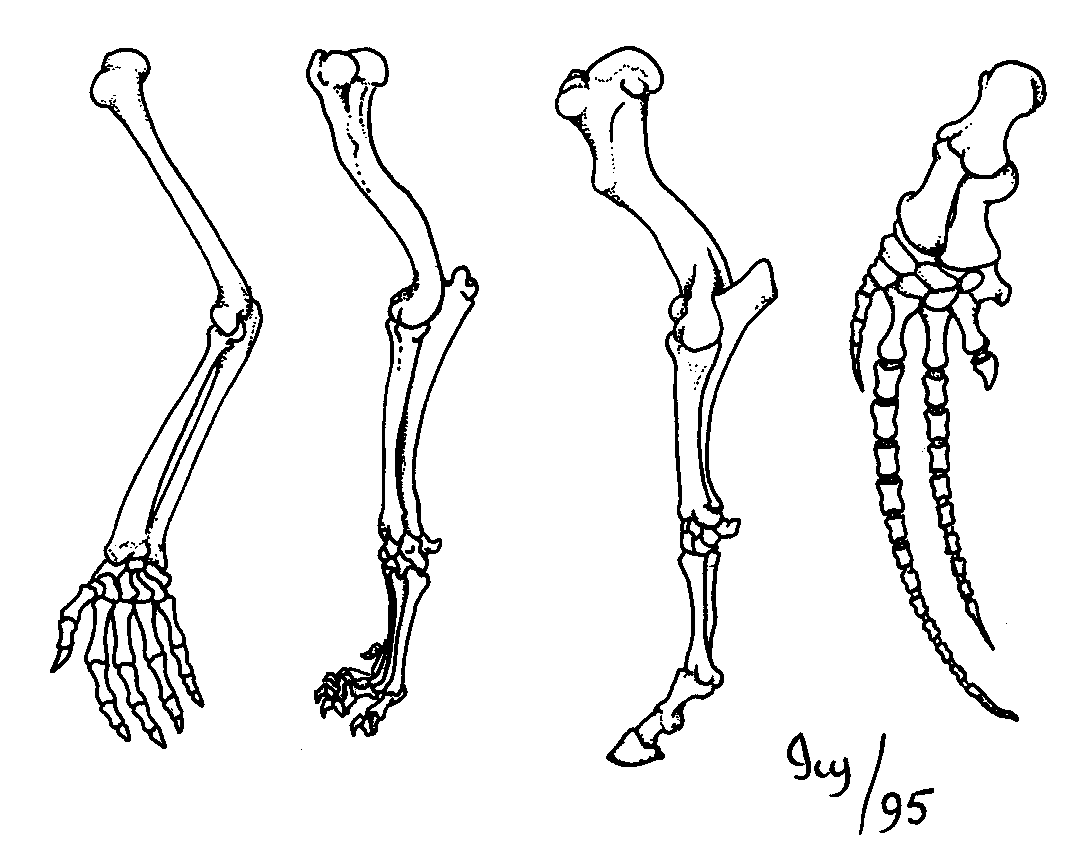
Structures with the same parts have different functions; suggests that organisms share a common ancestry
a)
vestigial structures
b)
homologous structures
c)
adaptive radiation
d)
fossil
6.
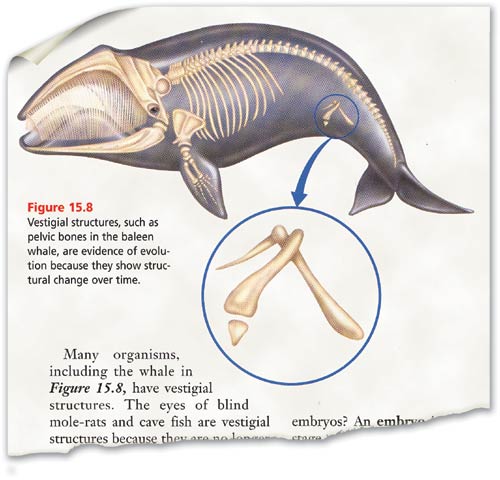
Which of the following is an example of a vestigial structure?
a)
the wings of a red-tailed hawk
b)
the hind limbs of a house cat
c)
the fins of sharks
d)
the tailbone of a human
7.
The diagram shows fossils in different rock layers. Which of these statements about the age of these fossils is most likely correct?
a)
Fossil A and C are the same age
b)
Fossil B is older than fossil C
c)
Fossils A is older than fossil B
d)
Fossil D is older than fossil C
8.
Why do embryologist study embryos?
a)
to see if they are related
b)
to understand adaptations
c)
to determine the age
d)
to learn what parents are vestigial
9.
What is embryology?
a)
the age of organisms
b)
the oldest stage of development
c)
the life span of an organism
d)
the earliest growth stage of development
10.
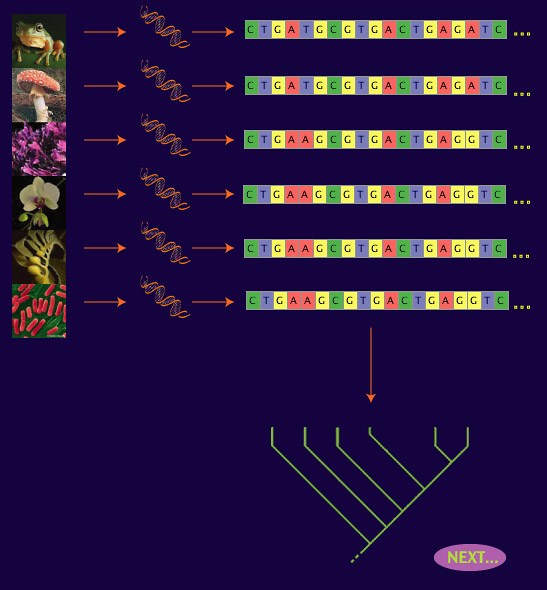
Two organisms that are closely related would have
a)
very similar DNA sequence
b)
exactly the same DNA sequences
c)
no proteins in common
d)
completely different DNA sequence
11.
Comparing human hemoglobin of chimpanzees, horses, kangaroos, and chickens, reveal that humans have the fewest amino acid differences with 
a)
Kangaroos
b)
Horses
c)
chickens
d)
chimpanzees
12.
Which layer is oldest?
a)
A
b)
W
c)
G
d)
Z
13.
These are natural differences within a species.
a)
Evolution
b)
Genetic variation
c)
Biological diversity
d)
Populations
14.
This is an inherited trait that helps an organism survive and reproduce in its environment.
a)
Evolution
b)
Population
c)
Environment
d)
Adaptation
15.
This is the trace or remains of an organism that lived long ago, most commonly preserved in sedimentary rock.
a)
Competiton
b)
Extinction
c)
Evidence
d)
Fossil
16.
Study of embryos of various organisms to show a common ancestor because of similarities in development
a)
natural selection
b)
embryology
c)
speciation
d)
evolution
17.
The ability of an organism to survive and reproduce in its specific environment 
a)
diversity.
b)
evolution
c)
adaptation
d)
 fitness
18.
The long and sharp beak of a woodpecker is an example of:
a)
Natural Selection
b)
Selective Breeding
19.

What do you call a characteristic that allows an organism to survive in an environment?

a)

variation

b)

adaptation

c)

selection

d)

overproduction

20.

Select ALL the parts of Natural Selection.

a)

overproduction

b)

evolution

c)

variation

d)

selection

e)

competition

21.

What do you call different structures with a similar function but NO common ancestor?

a)

Natural Selection

b)

Analogous Structure

c)

Vestigial Structure

d)

Homologous Structure

22.

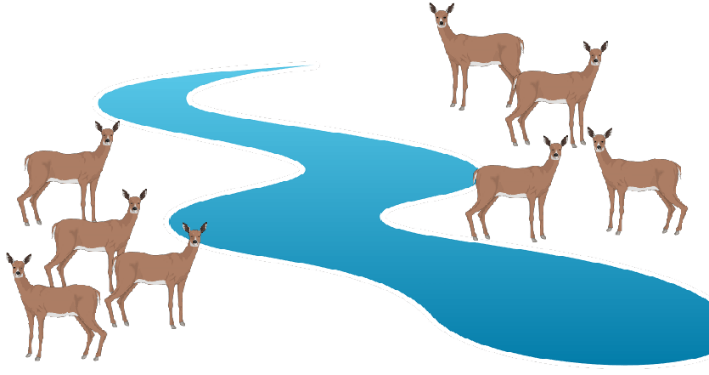
Two populations of the same species are separated by land barriers like rivers or mountains.

a)

geographical isolation

b)

temporal isolation

c)

adaptive ratiation

d)

behavioral isolaton

23.

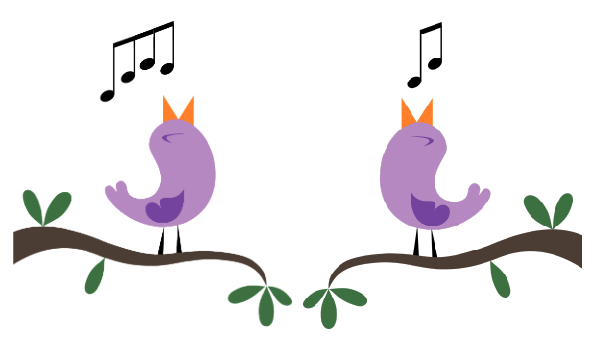
Two populations of the same species do not have the same mating rituals or signals.

a)

geographical isolation

b)

temporal isolation

c)

adaptive ratiation

d)

behavioral isolaton

24.

Organisms of the same species can no longer interbreed therefore creating two species.

a)

Gene Pool

b)

Genetic Drift

c)

Gene Frequency

d)

Speciation

25.
Some female peacocks prefer males with large, colorful tales while other female peacocks prefer males with no tail at all. Females are beginning to only mate with the type of males with the tail they prefer. What type of reproductive barrier is this?
a)
behavioral isolation
b)
hybrid sterility 
c)
temporal isolation
d)
mechanical isolation 
26.
The flowers of pink tulips open in the morning, while the flowers of lavender tulips open in the early afternoon. The bees that pollinate these tulips cannot carry pollen back & forth between the two types of tulips because of their flowers being closed at different times of day. What type of reproductive barrier is this?
a)
behavioral isolation
b)
hybrid sterility 
c)
temporal isolation
d)
mechanical isolation 
27.

When the Grand Canyon in Arizona formed, two populations of one squirrel species were separated by the giant canyon. This is an example of _____________.

a)

Temporal isolation

b)

Behavioral isolation

c)

Geographic isolation

28.
A pathogen is a disease-causing agent.
a)
true
b)
false
29.
Vaccines contain weakened or dead parts of antigens. 
a)
True
b)
False
30.

Immunity in which antibodies are given to a person rather than produced within the person's own body like with a baby and mother.

a)

Passive Immunity

b)

Active Immunity

c)

Vaccination

d)

Inflammatory response

31.

Immunity that occurs when a person's own immune system produces antibodies in response to the presence of a pathogen like with a vaccination.

a)

Passive Immunity

b)

Active Immunity

c)

Inflammatory Response

d)

Protective barrier like your skin

32.
Which term refers to the process by which individuals that are better suited to the environment survive and reproduce therefore passing down their genes to their offspring? 
a)
Evolution 
b)
Variation 
c)
Adaptation
d)
Natural Selection 
33.

__________ organisms consist of many cells. Humans are __________ organisms with trillions of cells specialized to do certain tasks.

a)

single celled

b)

multicellular

34.

_____________ is the idea that some individuals are better adapted to their environment than others. The better-adapted individuals are more likely to survive and reproduce than other members of the same species.

a)

evolution

b)

adaptation

c)

natural selection

d)

biology