
 Worksheets
Heart Structure
Total questions: 72
Worksheet time: 48mins
The largest artery in the body. Carries oxygenated blood from the left ventricle to the rest of the body.
aorta
apex
pulmonary artery
vena cava
The blood vessels that supply oxygen to the heart's tissues.
cornary artery
apex
pulmonary artery
vena cava
Chamber that receives oxygenated blood from the lungs.
left atrium
right atrium
left ventricle
right ventricle
Chamber that receives deoxygenated blood from the vena cava.
left atrium
right atrium
left ventricle
right ventricle
The chamber that receives deoxygenated blood from the right atrium and pumps it to the lungs.
left atrium
right atrium
left ventricle
right ventricle
The thickest chamber and is responsible for pumping oxygenated blood to tissues all over the body.
left atrium
right atrium
left ventricle
right ventricle
The blood vessels that carry oxygenated blood from the lungs to the left atrium.
pulmonary vein
pulmonary artery
aorta
vena cava
Separates the right atrium from the right ventricle.
tricuspid valve
bicuspid valve
aortic valve
mitral valve
The second largest vein in the human body. Returns blood to the right atrium from the upper half of the body.
superior vena cava
right ventricle
chordae tendinae
apex

What is this? (lower case)
(a)

interventricular septum
vena cava
pulmonary artery
apex
coronary artery
What is the purpose of a valve?
prevents backflow of blood
provides the heart tissue with oxygen
provides electrical stimulation
oxygenates the blood
The pumping of blood from the body to the lungs and back to the heart for the purpose of oxgenating the blood is called (a) circulation.
(a) circulation pumps oxygen-rich blood to the body and returns deoxygenated blood back to the heart.
In most of the body, the arteries carry oxygenated blood and the veins carry deoxygenated blood. Which of the following are exceptions
pulmonary artery
pulmonary vein
aorta
vena cava
renal artery


What is the function of structure labelled 5?
carry deoxygenated blood to the lungs
carry oxygenated blood to all parts of the body
carry deoxygenated blood from all parts of the body to the heart
carry oxygenated blood from the lungs
Which structure of the heart prevents the mixing of oxygen-riched blood and oxygen-poor blood?
Aorta
Atrium
Valve
Septum
The upper chambers of the heart are called______________.
atria
ventricles
septum
There are _____________chambers in the heart.
3
4
5
2
The ______________pump blood into the body.
left atrium
right atrium
left ventricles
right ventricle
What keeps blood from flowing backwards in the heart?
atrium
valves
artery
septum
The (a) divides the heart into left and right sides.
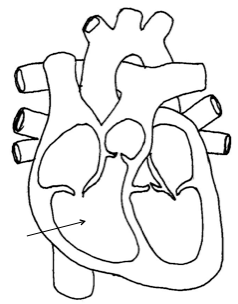
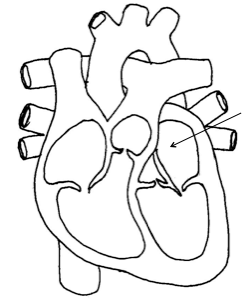
Upper chamber that collects oxygenated blood from the pulmonary veins and pumps it into the left ventricle
right atrium
right ventricle
left atrium
septum
Valve that prevents oxygenated blood from flowing backward from the left ventricle into the left atrium
tricuspid valve
bicuspid valve
semilunar valve
The upper chamber of the heart that receives deoxygenated blood from the body
right atrium
right ventricle
left atrium
septum
Most muscular chamber that pumps oxygenated blood to the entire body
right atrium
right ventricle
left atrium
left ventricle
Prevents blood from flowing backwards as it moves from the right atrium to the right ventricle
tricuspid valve
bicuspid valve
semilunar valve
septum
The right side of the heart contains...
Oxygenated Blood
De-oxygenated Blood
Both Oxygenated and De-oxygenated Blood
Water
How many valve(s) found in the heart?
1
2
3
4
Your heart is an involuntary muscle that is always working.
True
False
Which of the following is true about your heart?
Your heart may stop beating from time to time.
You have to think in order to keep your heart beating.
Your heart pushes blood through your body.
All of the above

Name X : (a) valve


Which number is the vena cava?
1
2
4
8
What does letter B represent?
aorta
vena cava
pulmonary vein
pulmonary artery
Which valve is letter X?
aortic (semi-lunar)
bicuspid
tricuspid
pulmonary (semi-lunar)
As the right ventricle contracts, the blood flows into the
Heart
Pulmonary artery
Atrium
Ventricle
The blood enters on the left side of the heart (from the lungs) through the ______________ and enters the left atrium. It then passes through the _____________to enter the left ventricle.
pulmonary artery, mitral valve
pulmonary vein, tricuspid valve
pulmonary artery, aortic valve
pulmonary vein, bicuspid valve
Blood flows in the following sequence in the heart: vena cava, right atrium, tricuspid valve, right ventricle, pulmonary semi-lunar valve, pulmonary artery, lungs, pulmonary vein, left atrium, bicuspid valve, left ventricle, aortic semi-lunar valve, aorta
True
False

Place the pathway of blood through the heart in the correct sequence.
L-K-H-B-G-E-C-F-A-I-E-D
I-J-D-C-F-A-H-B-G-E-K-L
A-B-J-C-D-E-F-K-L-G-H-I
I-J-E-D-C-F-A-B-G-H-K-L
The function of the valves is to...
Allow for the contraction of the heart.
Prevent back-flow.
Oxygenate the blood.
Supply the myocardium with oxygen.

