wayground logo

Free Printable Worksheets

NEW

Font size

S
M
L
XL
Worksheets

Evolution

Total questions: 70

Worksheet time: 6hrs 33mins
Name
Class
Date
1.
This scientist came up with the idea of natural selection.
a)
Jean Baptiste Lamarck
b)
Gregor Mendel
c)
Charles Darwin
d)
Thomas Malthus
2.
Inherited trait that helps an organism survive is a(n) __________.
a)
Fossil
b)
Adaptation
c)
Ancestor
d)
Natural selection
3.
Survival of the fittest or when favorable adaptations reproduce faster is called what?
a)
Evolution
b)
Adaptation
c)
Natural selection
d)
Fossilization
4.
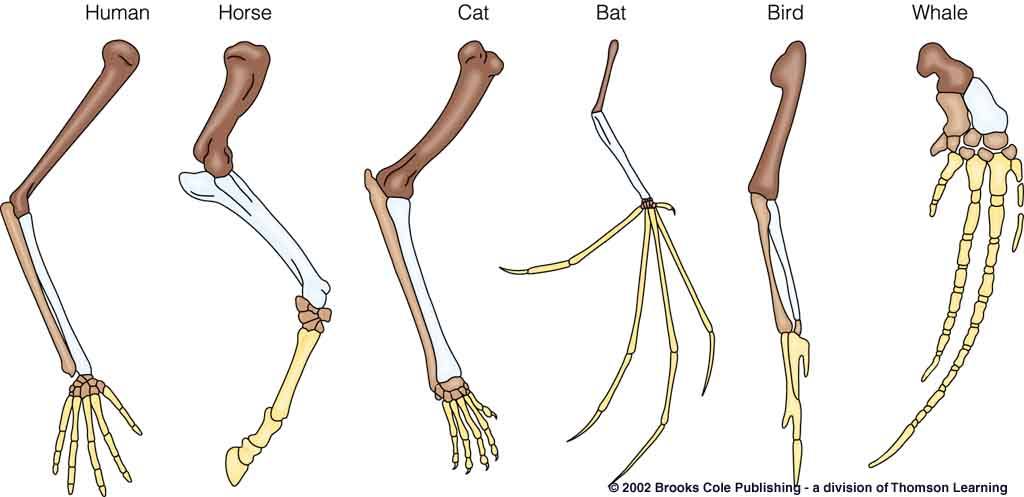
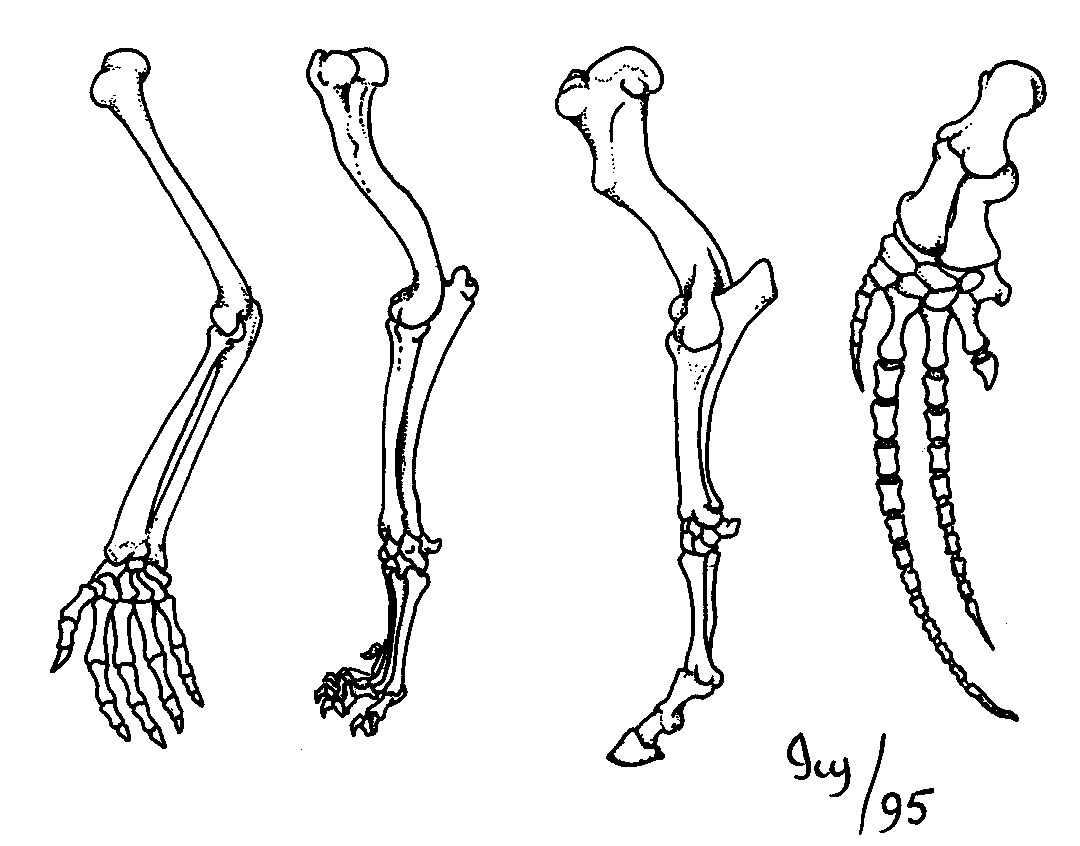
Structures with the same parts have different functions; suggests that organisms share a common ancestry
a)
vestigial structures
b)
homologous structures
c)
adaptive radiation
d)
fossil
5.
Which of the following is an example of a vestigial structure?
a)
the wings of a red-tailed hawk
b)
the hind limbs of a house cat
c)
the fins of sharks
d)
the tailbone of a human
6.
The diagram shows fossils in different rock layers. Which of these statements about the age of these fossils is most likely correct?
a)
Fossil A and C are the same age
b)
Fossil B is older than fossil C
c)
Fossils A is older than fossil B
d)
Fossil D is older than fossil C
7.

What do we call a change in a species over time?

a)

Adaptation

b)

Evolution

c)

Extinction

d)

Environmental influences

8.
Why do embryologist study embryos?
a)
to see if they are related
b)
to understand adaptations
c)
to determine the age
d)
to learn what parents are vestigial
9.
What is embryology?
a)
the age of organisms
b)
the oldest stage of development
c)
the life span of an organism
d)
the earliest growth stage of development
10.
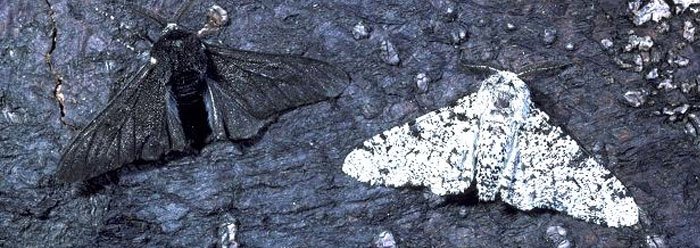
The environment around Manchester, England, changed during the Industrial Revolution.  How did this change affect peppered moths living in the area?
a)
Natural selection favored moths with dark wings because predators could not see them on the soot-colored trees.
b)
Natural selection favored moths with white wings that were easy for predators to see.
c)
Natural selection favored moths with white wings because predators could not see them on the soot-colored trees.
d)
Natural selection caused moths with white wings to become extinct.
11.
When an organism completely dies out, it is called.....
a)
Adaption
b)
Extinction
c)
Fossilization
d)
Mutation
12.
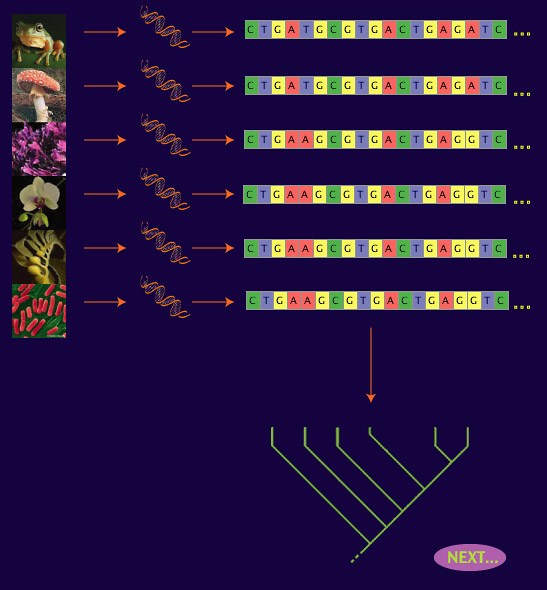
Two organisms that are closely related would have
a)
very similar DNA sequence
b)
exactly the same DNA sequences
c)
no proteins in common
d)
completely different DNA sequence
13.
Comparing human hemoglobin of chimpanzees, horses, kangaroos, and chickens, reveal that humans have the fewest amino acid differences with 
a)
Kangaroos
b)
Horses
c)
chickens
d)
chimpanzees
14.
All the individuals of a species that live in a particular area are called a
a)
variation
b)
population
c)
fossil
d)
group
15.
Which layer is oldest?
a)
A
b)
W
c)
G
d)
Z
16.
According to the law of superposition, which layer is the youngest?
a)
A
b)
B
c)
C
17.
The structures shown are_________
a)
homologous
b)
heterologous
c)
analogous
d)
vestigial
18.
Why are advantageous traits more likely to be passed onto offspring?
a)
Because they are more likely to survive and reproduce.
b)
Because they come from dominant alleles.
c)
Because they come from recessive alleles.
d)
Because the trait is an acquired phenotype.
19.
Natural selection is when ____________ decides who survives and who doesn't
a)
nature
b)
humans
c)
animals
d)
years
20.
The trees these moths used to live on were white, but have been covered in soot from coal factories. Which moth will be more successful in this environment?
a)
Dark moth
b)
Light moth
c)
Both will be equally successful
d)
Neither will be successful
21.
Change over time
a)
Natural Selection
b)
Selective Breeding
c)
Homeostasis
d)
Evolution
22.
Structures with the same parts have different functions; suggests that organisms share a common ancestry
a)
vestigial structures
b)
homologous structures
c)
adaptive radiation
d)
fossil
23.
Study of embryos of various organisms to show a common ancestor because of similarities in development
a)
natural selection
b)
embryology
c)
speciation
d)
evolution
24.
The diagram shows fossils in different rock layers. Which of these statements about the age of these fossils is most likely correct?
a)
Fossil A and C are the same age
b)
Fossil B is older than fossil C
c)
Fossils A is older than fossil B
d)
Fossil D is older than fossil C
25.
What type of structures are these?
a)
homologous
b)
vestigial 
c)
analogous
d)
fossil
26.
Which of these best represents a time period in which an organism could evolve?
a)
5 days
b)
100 years
c)
10,000 years
d)
2 decades
27.

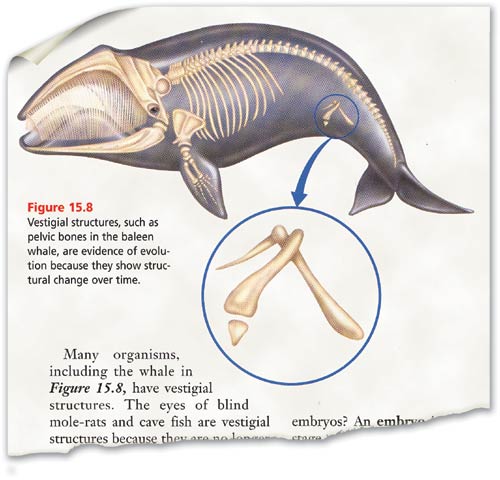
Whales are aquatic mammals that contain a pelvis (hip) bone. Even though it does not aid in its movement, the function must have been used by a common ancestor of the whale. Thus, the pelvis is referred to as a(n)

a)

vestigial structure

b)

analogous structure

c)

homologous structure

28.
Genetic differences between organisms of the same species
a)
Variation
b)
Adaptation
c)
Behavior
d)
Environment
29.

The theory of evolution states that

a)

species that are extinct have no biological relationship to living species

b)

different animal species always interbreed to form new and different species

c)

species change over time, sometimes developing into new species

d)

the environment of Earth is constant over time

30.

Evolution can occur at different rates; however, for evolution to occur, there must be

a)

variations within a species

b)

extinction of the species

c)

asexual reproduction

d)

no change in the genes of an organism

31.

In order for a species to evolve, it must be able to

a)

consume a large quantity of food

b)

reproduce successfully

c)

maintain a constant body temperature

d)

be domesticated

32.

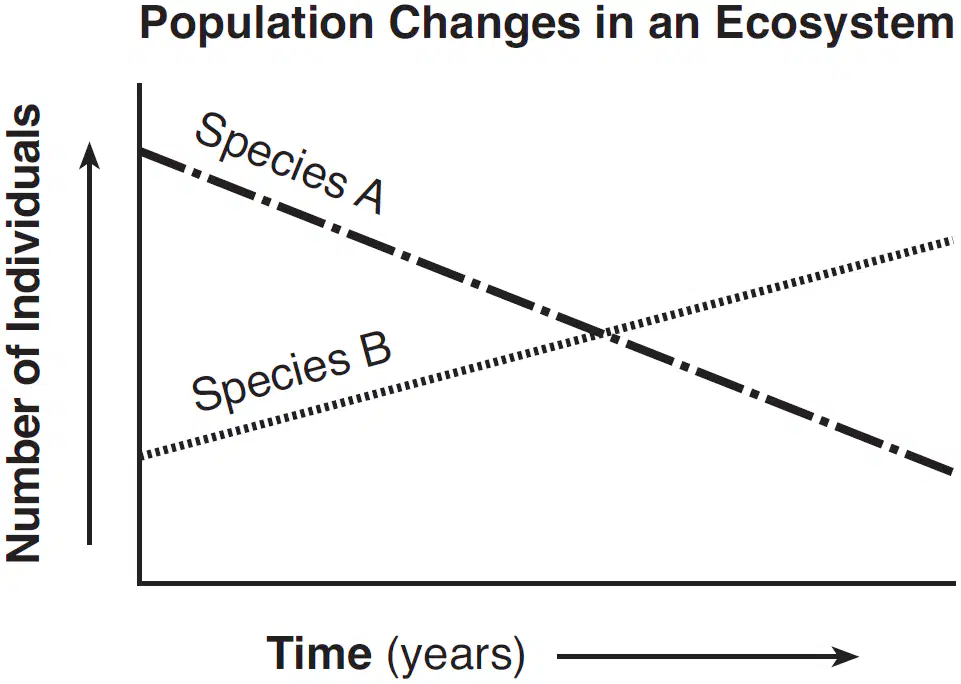
Which statement is a possible explanation for the changes shown?

a)

Species A is better adapted to this environment.

b)

Species A is the predator of Species B.

c)

Species B is better adapted to this environment.

d)

Species B is a parasite that has benefited species A.

33.

A variety of species of Galapagos finches evolved from one original species long ago through the process of

a)

asexual reproduction

b)

ecological succession

c)

natural selection

d)

selective breeding

34.

A population of animals is permanently split by a natural barrier into two separate populations in different environments. What will likely result after a long period of time?

a)

The evolution of the two populations will be identical.

b)

The production of variations will stop in the two populations.

c)

The two populations will evolve into separate species.

d)

Autotrophic nutrition will replace heterotrophic nutrition in the two populations.

35.

Geographic and reproductive isolation are most closely associated with

a)

speciation

b)

extinction

c)

overproduction

d)

competition

36.

The separation of a small group of individuals from the main population is known as

a)

chromosomal mutation

b)

fossil formation

c)

geographic isolation

d)

reduction division

37.

A large population of wildcats is broken up into several small groups as a result of geographic isolation. Over a long period of time, these groups will most likely become

a)

reproductively isolated

b)

identical in genotypes (the genes they have)

c)

identical in phenotypes (what they look like)

d)

artificially selected

38.

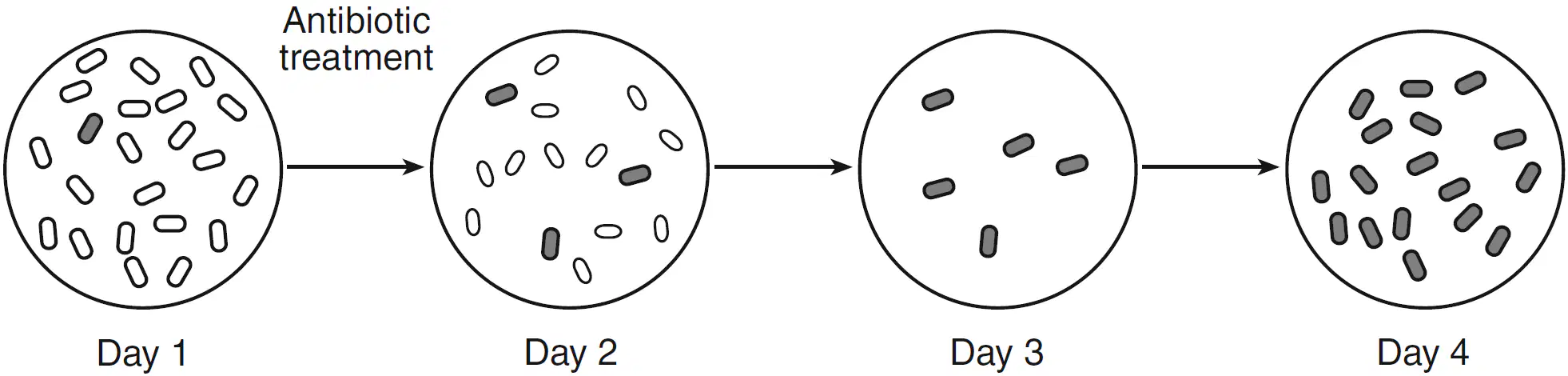
The diagram below represents some changes that took place in a bacterial population recently exposed to an antibiotic.

Which statement would best explain the presence of bacteria on day 4?

a)

A bacterial population cannot survive exposure to antibiotics.

b)

This bacterial population cannot survive exposure to this antibiotic.

c)

Some of the bacterial population was resistant to this antibiotic.

d)

Bacteria can change whenever it is necessary to survive antibiotic treatment.
39.

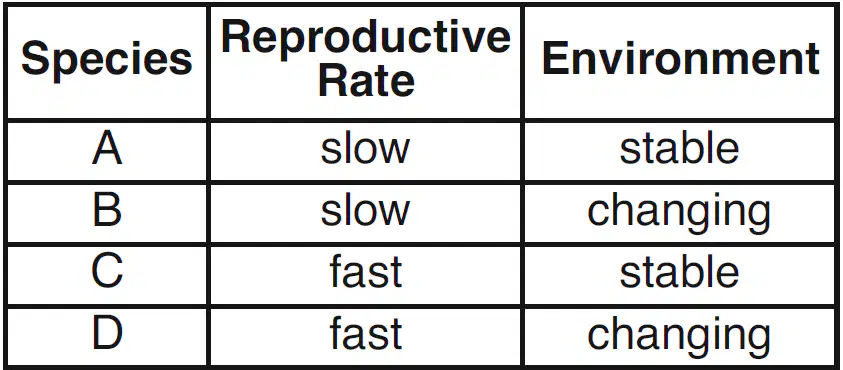
Which species in the chart below is most likely to have the fastest rate of evolution?

a)

A

b)

B

c)

C

d)

D

40.

The process of sexual reproduction is an important part of the process of evolution. One reason for this is that meiosis and fertilization directly produce many new

a)

antigens

b)

variations

c)

species

d)

pathogens

41.

Butterflies exposed to radiation leaking from a damaged nuclear power plant in Japan have been observed to have malformed legs, antennae, and wings. For future butterfly generations to have these similar structural abnormalities, gene mutations must be present in the affected butterflies'

a)

wing cells

b)

body cells

c)

antenna cells

d)

sex cells

42.

Finches on the Galapagos Islands express a variety of traits. Variability in the offspring of these finches is a result of

a)

mutation and cloning

b)

meiosis and mutation

c)

mitosis and asexual reproduction

d)

mitosis and genetic recombination

43.

A chemical was added to hand sanitizers and dish detergents to kill bacteria. Certain species of bacteria are no longer killed by this chemical. One likely reason for the decreased effectiveness of this chemical is that these bacteria have

a)

slower metabolic rates

b)

a mutation for resistance

c)

been selectively bred for survival

d)

an adaptation to a different niche

44.

Which activity would most likely increase the mutation rate in a culture of bacteria being grown in a laboratory experiment?

a)

adding more distilled water to the culture

b)

adding excess nutrients to the culture

c)

exposing the culture to a higher concentration of CO2

d)

exposing the culture to ultraviolet radiation

45.

Which statement is most closely related to the modern theory of evolution?

a)

Characteristics that are acquired during life are passed to offspring by sexual reproduction.

b)

Evolution is the result of mutations and recombination, only.

c)

Organisms best adapted to a changed environment are more likely to reproduce and pass their genes to offspring.

d)

Asexual reproduction increases the survival of species.

46.

Which two factors could lead to the evolution of a species over time?

a)

overproduction of offspring and no variation

b)

changes in the genes of body cells and extinction

c)

struggle for survival and fossilization

d)

changes in the genes of sex cells and survival of the fittest

47.

The concept being represented is

a)

overproduction

b)

natural selection

c)

homeostasis

d)

ecological succession

48.

Which concept is represented in the diagram?

a)

survival of the fittest

b)

dynamic equilibrium

c)

succession

d)

extinction

49.

Many scientists suggest that billions of years ago, life on Earth began with

a)

simple, single-celled organisms

b)

simple, multicellular organisms

c)

complex, single-celled organisms

d)

complex, multicellular organisms

50.
According to this evolutionary tree, which organism is most distantly related to the human?
a)
crayfish
b)
grasshopper
c)
perch
d)
frog
51.
According to this evolutionary tree, which organism is most distantly related to the human?
a)
crayfish
b)
grasshopper
c)
perch
d)
frog
52.
On this evolutionary tree, which organism is the closest relative of the human?
a)
Frog
b)
Hare
c)
Caiman
d)
Parrot
53.
Where is the T.rex and frog's common ancestor?
a)
Point A
b)
Point B
c)
Point C
d)
Point D
54.
Where is the alligator and T. rex's common ancestor?
a)
Point A
b)
Point B
c)
Point C
d)
Point D
55.
Where is the frog and alligator's common ancestor?
a)
Point A
b)
Point B
c)
Point C
d)
Point D
56.
Which two animals are most closely related?
a)
Swordfish and Frog
b)
Swordfish and Alligator
c)
Frog and Alligator
d)
T. rex and Alligator
57.
Where is the sponge and mouse's most common ancestor?
a)
Point E
b)
Point B
c)
Point C
d)
Point D
58.
Who shares a more distant common ancestor?
a)
Sponge and Mouse
b)
Mouse and Mushroom
c)
Tomato and Fern
59.
According to this evolutionary tree, birds are LEAST related to: 
a)
Amphibians
b)
Sharks
c)
Ray Finned Fish
d)
Crocodiles
60.
An inheritable characteristic that gives a survival advantage to the organism
a)
speciation
b)
adaption
c)
rapid speciation
d)
derived character
61.
 Which is a source of genetic variation?
a)
mutations
b)
artificial selection
c)
exponential growth
d)
genetic bottlenecking
62.
The diagram below represents a phylogenetic tree.What is most likely true about Organism Y?
a)
Organism Y is only related to Organism X.
b)
Organism Y is closely related to Organism X.
c)
Organism Y is a distant relative of Organism X.
d)
Organism Y and Organism X will mate with one another.
63.
Humans and bats having similar looking forelimbs is which type of evolutionary evidence?
a)
anatomical
b)
biochemical
c)
embryological
d)
geographical
64.
Structures that have the same function but different structures are...
a)
homologous structures
b)
analogous structures
c)
vestigial structures
d)
embryology 
65.
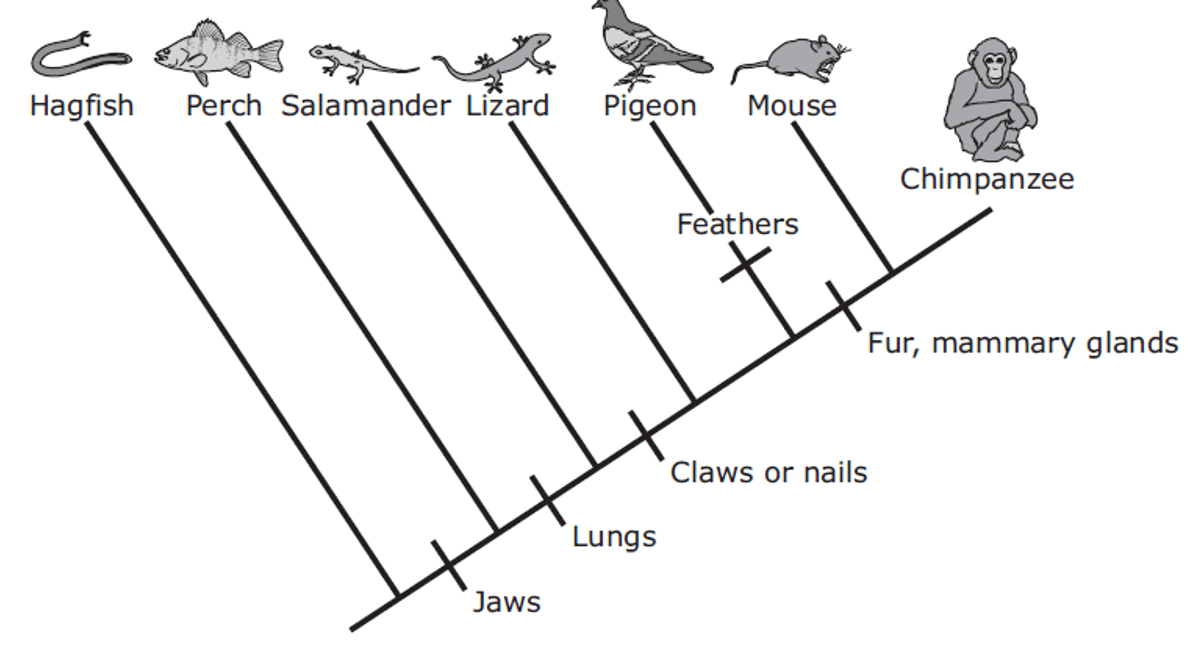
All the animals to the right of the hagfish would have the common characteristic of -
a)
Fur
b)
Claws or nails
c)
Lungs
d)
Jaws
66.
If species A and B have very similar genes and proteins, what is probably TRUE?
a)
species A and B share a relatively recent common ancestor
b)
species A evolved independently of species B for a long period
c)
species A is younger than species B
d)
species A is older than species B
67.
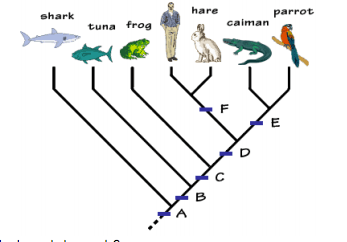
On the cladogram, which organism is the closest relative of the human?
a)
Frog
b)
Hare
c)
Caiman
d)
Parrot
68.
According to this cladogram, birds are LEAST related to -
a)
Amphibians
b)
Sharks
c)
Ray Finned Fish
d)
Crocodiles
69.
Theory of Evolution by natural selection: 
a)
populations will change over time to better fit their environment 
b)
genetic traits that aid evolution are not passed on to offspring
c)
variation does not exist between members of the same species
d)
no more offspring are born into a population that can survive 
70.
Scientists classify organisms to ____________.
a)
Count the organisms quicker
b)
Catch the organisms in the wild
c)
Train the organisms to behave
d)
See how organisms are alike and different from each other