
 Worksheets
Yr 8 KS 3 Physics revision
Total questions: 100
Worksheet time: 1hrs 9mins

When light passes at an angle to the normal from one medium into another in which its speed is higher
it is bent toward the normal.
it always lies along the normal.
it is unaffected.
it is bent away from the normal.
If all other variables are held constant, what happens to the angle of refraction if the angle of incidence increases?
the angle of refraction stays the same
the angle of refraction decreases
the angle of refraction increases
cannot be determined from the information provided

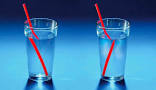
A student placed a pencil in a cup of water. The pencil appears broken because light
always travels in a straight line.
bends when it passes through water.
makes the water in the glass evaporate.
reflects the pencil on the water's surface.

Based on the image, as light passes from medium 1 to medium 2
light speeds up and bends towards the normal
light speeds up and bends away from the normal
light slows down and bends towards the normal
light slows down and bends away from the normal
During reflection off a smooth surface, the angle of incidence is
equivalent to the angle of reflection.
True
False
The normal is an imaginary line that is perpendicular to the mirror.
True
False
The incident ray, reflected ray and the normal all lie on the
same plane
True
False
An image in the mirror is laterally inverted as compared to the actual object.
True
False
The image formed is virtual.
True
False
The distance between the image and the mirror is the same as
the distance between the actual object and the mirror.
True
False
The image formed is smaller than the actual object
True
False

Light is reflected and refracted by water.
The diagram shows some paths a ray of light may take.
Which letter shows the reflected ray?
(a)
The law of reflection is about the angle of incidence (i) and the angle of reflection (r).
Write down the law of reflection.
What is the angle of incidence of a light ray reflected off a plane mirror at an angle of 35° to the normal?
35
70
90
(The angle that a reflected ray makes as measured from the normal to a reflective surface equals the angle that the incident ray makes as measured from the same normal.) This is a ...
law of reflection
specular reflection
diffuse reflection
Match the following definitions
Pinna
outer part of the ear; direct sound down the auditory canal
Eardrum
membrane that transmits sound vibrations from the outer ear to the middle ear
Cochlea
snail-tube in the inner ear; produce electrical signal
Ossicles
small bones in the inner ear, amplify the sound
Oval window
membrane connecting ossicles to cochlea, transfers the vibration to the liquid in the cochlea
Which of these are sounds that human can hear ?
1000 Hz
2000 Hz
25,000 Hz
100,000 Hz
Footsteps
What type of sound is used for medical imaging or to measure water depth ?
(a)
Pitch is how _____ and ______ sound is.
loud and soft
rough and bumpy
high and low
high and loud

A mouse's squeak has a ______ pitch.
low
squeaky
high
loud

Which wave has a higher frequency per second?
blue wave
red wave
If a sound wave has a high pitch, it has a ___.
high frequency
low frequency
The number of wavelengths that pass by a point each second is called ...
wavelength
pitch
frequency
Hertz is the unit for ...
loudness
amplitude
speed of a wave
frequency
The high pitch sound is


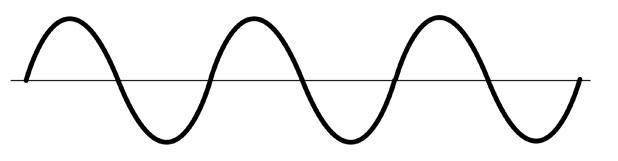
The loudest sound is


What do you call the distance between two crests of a wave?
Hit Points
hertz
Wavelength
Wave Duration
How is sound created?
Through light
Through pitch
Through vibrations
Through frequencies

The picture shows 4 sound waves on an oscilloscope. What can you say about A?
It is a very low pitched sound
It is a very high pitched sound
It is a very quiet sound
It is a very loud sound
The picture shows 4 sound waves on an oscilloscope. Which 2 have the smallest amplitude?
A
B
C
D
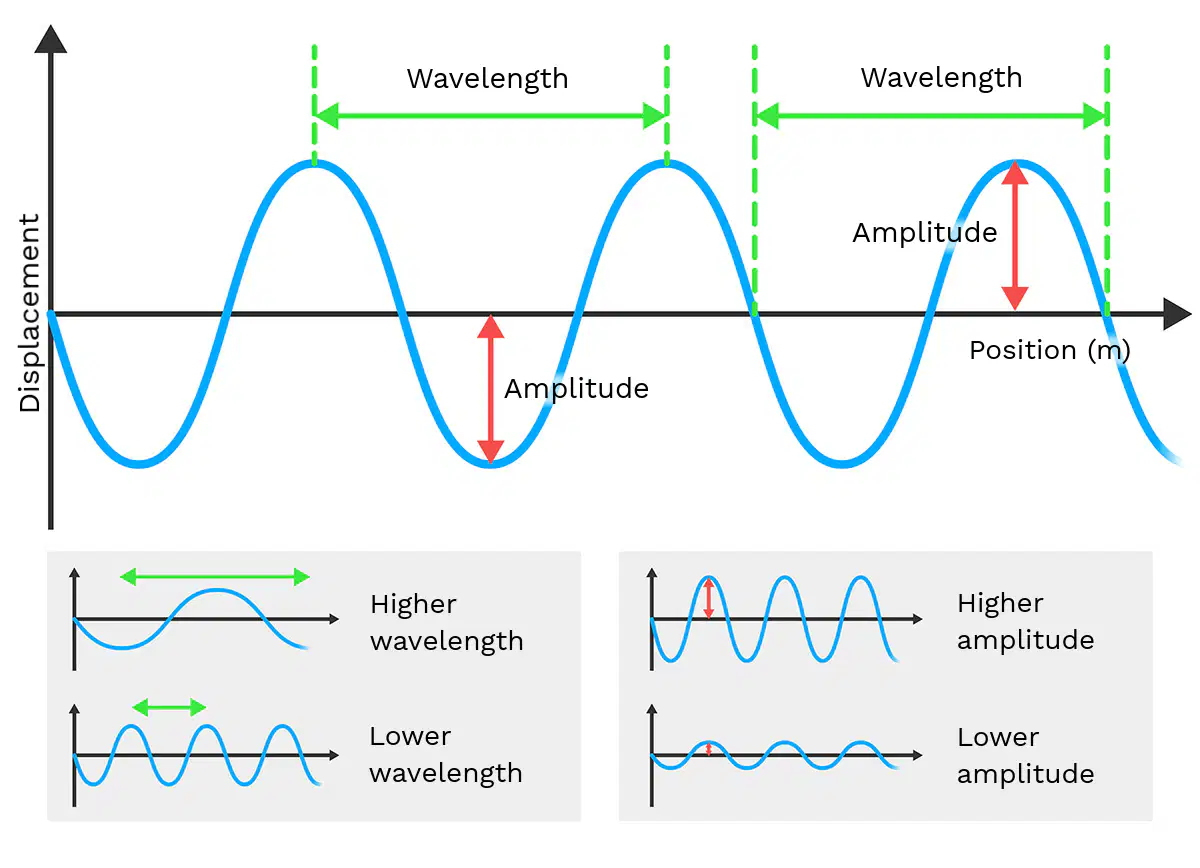
What is the height of a wave called?
Peak
Wavelength
Amplitude
Frequency
Sound will travel fastest through which of the following forms of matter?
Solid
Liquid
Gas
Jelly
Why can you not hear sounds in space?
Space is loud
Waves can't travel in space
There are no particles to vibrate

What type of wave is this?
Longitudinal
Transverse
This change of direction by a
mirror is called
Reflection of power
Reflection of shadow
Reflection of light
Reflection of virtual image
The image
formed by a plane mirror could not be
obtained on a screen is called _________
Erect image
Virtual image
Magnified image
Which are the primary colours in visible light?
Red, Green, Blue
Red, Orange, Yellow
What is the specialized cell in your retina called?
Retina Cells
Red Blood
Cones
Image Cells
Where does the cone send the signal to?
Eyes
Brain
The colour you see is the colour that is ………………..
Reflected
Absorbed
Which colour/s is absorbed when green grass is placed under a yellow light?
(Red + Green = Yellow)
Green
Red
Red is absorbed & the others are reflected
All colors are absorbed except for blue, which is reflected
All colors are reflected and none are absorbed
All colors are absorbed except for red, which is reflected
What happens in lateral inversion ?
The right side of the object will be on the right side of the image.
The left side of the object will be on the left side of the image.
The top of the object will be the bottom of the object.
The right side of the object will be on the left side of the image.
The breaking up of white light into its component .
Based on the statement given, name the process that takes place in the white light.
Dispersion
Reflection
Refraction
Scattering

Why is red light is at the top whileviolet at the bottom of the spectrum?
Violet light has the medium speed so it is refracted the least.
Violet light has the highest speed so it is refracted the least
Red light has the slowest speed so it is refracted the least
Red light has the highest speed so it is refracted the least.
A transparent object that bends light into rainbow colors.
prism
mirror
convex lens
concave lens
The substance in the sky which is involved in the formation of rainbow
Air particle
Dust
Raindrop
soot
Which of the following is NOT a source of light?
eyes
lit candle
sun
firefly
Light is able to pass through __________________ materials
transparent
shiny
dull
opaque
Light is unable to pass through ________________ objects
opaque
coloured
blunt
dark
Select all that are TRUE about Absorption & Transmission.
Absorption occurs when light transfers into a substance as heat
Absorption occurs when light passes through a substance
Transmission occurs when light passes through a substance
Transmission occurs when light transfers into a substance as heat
Reorder the following from most to least Transmission.


red+green+blue
cream white
semi white
dull white
white
blue+red=
dull red
indigo
magenta
blood-red


Which images are opaque?
A & C
A,C,E, & F
D, E, & F
A & E
What color is produced when mixing cyan, yellow, and magenta inks (pigments).
White
Black
Blue
Green

In this graph, a bus is:
moving
standing still (stationary)
speeding up (accelerating)
slowing down (decelerating)

The speed of a bus in this graph is:
fast
slow
zero
the speed of light

This line shows that:
the bus is at a bus stop
the bus is gradually slowing down (decelerating)
the bus moves in a steady speed
the bus is gradually speeding up (accelerating)

In this graph,
the bus is gradually speeding up (accelerating).
the line is curved.
the bus is gradually slowing down (decelerating).
none of the above.
Choose the correct relationship between speed, time and distance
speed = distancetime
time=distancespeed
distance=timespeed
time=speeddistance
Usain Bolt ran the 100 m sprint in 9.63 s in August 2012. How do we work out his average speed over the race?
av. speed=100×9.63
av. speed=9.63100
av. speed = 9.63×100
av. speed=1009.63
What was Usain Bolt's average speed over the race?
100 m sprint in 9.63 s
10.4 m/s
0.96 km/hr
10.4 km/hr
0.96 m/s

This is a distance-time graph of Usain Bolt's sprint.
Choose the best description of his speed over the race.
He maintained a speed of 10.4 m/s throughout the race
He accelerated, then decelerated.
He started at a steady speed and slowed as he got tired.
He sped up, then maintained a steady speed.

How far had he ran before reaching his maximum speed?
10 m
30 m
70 m
90 m

Valentina is going for a bike ride.
The distance-time graph describes her full journey.
How long was she stationary for?
5 minutes
7.5 minutes
10 minutes
15 minutes

What was the total distance travelled during her journey?
0 km
25 km
50 km
75 km
Why would 2 magnets repel each other
They have opposite poles
They have like poles
The other magnet has less iron
None of the above
What causes Magnetism
Protons bouncing around
Friction
Moving electrons
None of the above
which of the following is a non - magnetic substance ?
Iron
nickel
cobalt
copper
the region around a magnet where its magnetic force can be experienced is called its
magnetic axis
magnetic equator
magnetic field
magnetic poles
permanent magnets can be demagnetized by
hammering
heating
rough handling
all of these
Magnetite is also called as
Lodestone
Pyrrhotite
Coulumbite
Ferrite
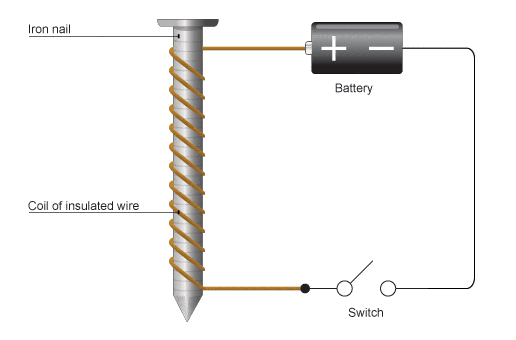

Magnets on refrigerator cannot be turned off. Which type of magnets they belong?
electromagnets
battery
permanent magnets
copper wire
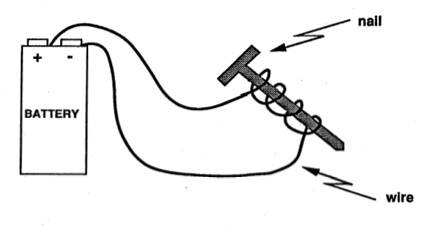
What are the components of the electromagnets?
battery, wire and bulb
battery , copper wire and plastic bottle
battery, copper wire and iron nail
battery, wire and aluminum
Energy due to motion
kinetic (KE)
gravitational (GE)
elastic (EE)
thermal (TE)
The S.I unit of speed is
meter per second
kilometer per second
both

What are the units for acceleration?
m/s2
m
sec
s/m
Match the following graphs to the right description.

Speeding up

No acceleration (constant speed)

Slowing down

What is the acceleration in the first ten seconds?
(15m/s - 0m/s) / 10s =
4 m/s2
1.5 m/s2
10 m/s2
0 m/s2
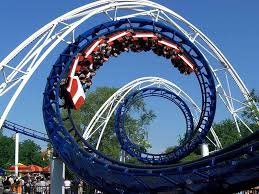
A box at rest starts sliding down an inclined plane for 3 seconds, until it reaches a velocity of 27 m/s. What is the boxes acceleration?
30 m/s
24 m/s2
9 m/s2
81 km/hr
A running horse increases his speed from 15 m/s to 42 m/s at an acceleration of 9 m/s2. How long did this take the horse?
5 s
4 s
6 s
3 s

Using the graph, which person finished the race first?
Biker
Runner
Walker
All of these finished at the same time.

Alan travels 100 km in 5hrs. Find his speed in km/h
5km/hr
10km/hr
50km/hr
20km/hr

A worm traveled 50 centimeters in 5 minutes. What is the average speed of the snail?
10 cm/m
25 cm/m
250 cm/m
1 cm/m

What is the speed of an object that travels 60 meters in 4 seconds?
240 m/s
15 m/s
0.067 m/s
15 mph

Xavier runs during gym class. He runs 100 meters in 10 seconds. What is his speed in meters per second?
15 m/s
10 m/s
5 m/s
12 m/s

