
 Worksheets
APLT5.2 Quizizz Review
Total questions: 95
Worksheet time: 1hrs 16mins
The simplest unit of a protein is
nucleic acid
amino acid
RNA
monosaccharide
The two types of nucleic acids are
RNA & Proteins
DNA & Proteins
RNA & DNA
Proteins & Nucleotides
The DNA nucleotide is made up of (you may choose more than 1 answer.)
Phosphate
Amino Acid
Sugar
Nitrogenous Base
Where does protein synthesis occur
Nucleolus
Golgi Apparatus
Cytoplasm
Ribosome
The simplest unit of DNA is the
nucleotide
amino acid
RNA polymerase
DNA polymerase
The rungs of the DNA ladder are made up of
sugars
phosphates
nitrogenous bases
amino acids
The sides of a DNA ladder are made up of
sugar
phosphates
bases
amino acids
What base pairs with Adenine
Cytosine
Guanine
Thymine
What base pairs with Guanine
Adenine
Cytosine
Thymine
What is the process where DNA makes a copy of itself?
Replication
Transcription
Translation
Protein synthesis
What is the first step of DNA replication?
mRNA makes a copy of DNA.
DNA untwists and unzips.
New hydrogen bonds form between bases.
Free nucleotides match up to their complimentary bases.
What is the 2nd step of DNA replication?
mRNA makes a copy of DNA.
DNA unzips and untwists.
New hydrogen bonds form between complimentary bases.
Free nucleotides match up with their complimentary bases.
What is the final step of DNA replication.
mRNA makes a copy of DNA.
DNA unzips and untwists.
New hydrogen bonds form between complimentary bases.
Free nucleotides match up with complementary bases.
DNA is a double stranded molecule that is twisted is called
histone
triple helix
double helix
complimentary
What are the five nucleotides of DNA/RNA?
Adenine, Guanine, Thymine, Cytosine, Uracil
Adenosine, Phosphate, Deoxyribose, Ribose, Sugar
Phosphate, Fatty-acid tail, Glycerol, Sugar, Protein transporters
Carbohydrates, Lipids, Fats, Protein, Nucleic acids
Which of the following represents the main structural differences between DNA and RNA? [choose all that apply, multiple answers correct]
RNA is single stranded, DNA is double stranded
RNA uses the sugar ribose, DNA uses the sugar deoxyribose
RNA uses the nucleotide uracil, DNA uses the nucleotide thymine
RNA is used for energy storage, DNA is used for immediate energy use
Which of the following represents a strand of DNA? [Hint: which one is different]
A-G-C-T-A-A-T-C
A-G-C-U-A-A-U-C
U-G-G-U-A-A-U-C
C-C-C-U-A-A-U-G
Which of the following represents a strand of RNA? [Hint: which one is different]
A-G-C-U-A-A-U-C
T-T-T-A-G-C-C-C
A-T-A-T-G-G-G-C
C-C-A-T-A-G-T-A
If I am making a molecule of DNA with 9 Adenines, how many Thymines would I need to include?
9 Thymines
18 Thymines
Not enough information provided
You don't need to add any because DNA does not contain Thymine
If I'm making a molecule of DNA with 3 adenines, 3 thymines, 2 guanines and 2 cytosines, how many sugar groups would I need to include?
5 sugar groups
10 sugar groups
15 sugar groups
20 sugar groups
If I'm making a molecule of RNA with 12 sugar groups, how many phosphate groups do I need to include?
6 phosphate groups
12 phosphate groups
18 phosphate groups
24 phosphate groups
Which represents the correct sequential flow of information during protein synthesis?
DNA→Protein→RNA
RNA→DNA→Protein
DNA→RNA→Protein
RNA→Protein→DNA
During protein synthesis, an RNA
strand is transcribed from one strand of DNA.
GCG TTA CCT
What is the complementary RNA strand
to the DNA strand shown?
CGC UUT CCT
CGC AAU GGA
GCG UUA CCU
CGC AAT GGA

What is the correct order of DNA replication?
3, 2, 1, 4
2, 1, 4, 3
2, 3, 1, 4
3, 4, 1, 2

This diagram shows which cellular process?
replication
transcription
translation
mutation

Which of the following changes would be expected if a CAU UUG sequences of bases mutated to CAC UUG?
the amino acid sequence would be shorter than expected
the identity of one amino acid would change
the identity of all the amino acid would change
the amino acid sequence would remain unchanged

There are 3 types of RNA. What are they? (Select all that apply)
tRNA
rRNA
mRNA
xRNA
What combines together to make a protein?
Amino Acid
RNA
Ribosome
DNA
What is the order for Protein Synthesis?
Transcription -> Translation -> Protein
Translation - > Transcription -> Protein
Protein -> Transcription -> Translation
Translation -> Protein -> Transcription
Carries the amino acid used to make a protein
mRNA
rRNA
tRNA

What type of RNA is shown in this image?
rRNA
mRNA
tRNA
What do we call the shape a DNA molecule takes?
double-stranded
double helix
sugar-phosphate backbone
pentagon


Name this structure
double helix
nucleotide
twisted ladder
hydrogen bond
Mutations are
changes in DNA
changes in RNA
changes in amino acids
changes in tRNA
What is the name of the sugar molecule found in DNA?
ribose
deoxyribose
glucose
sucrose
What type of bond holds together the two strands of the DNA double helix?
covalent
ionic
hydrogen
metallic
What type of bond holds the monomers together in each strand of DNA?
ionic
covalent
peptide
hydrogen
How do the two strands of a DNA molecule compare to each other?
identical
opposite
the same
complementary

The process of DNA copying itself is
conservative - one original and one new DNA molecule
semi-conservative - 2 DNA molecules with one new and one original strand
dispersive - 2 DNA molecules with each strand consisting of alternating segments of new and original DNA parts
partial - one complete DNA molecule and one partial DNA molecule
If one strand of DNA has the following base sequence, what will the other strand's base sequence be? AATGGC
AATGGC
TTACCG
UUACCG
GGCAAT
If a DNA molecule has 30% Guanine bases, how many Cytosine bases will it have?
30%
25%
20%
10%
What does the term antiparallel refer to?
the two strands are connected upside down
the the DNA is made of two strands
DNA twists
DNA copies itself from bottom up to the top of the strand
When DNA replicates what is separated?
the backbone
the base pairs
the sequence of bases
the sugar- phosphate bond
If a DNA sequence is CATCAT, what are the matching base pairs?
ACGTAC
MEOW
GTAGTA
GCCTAT

Your sequence of nitrogen bases is different than your sibling.
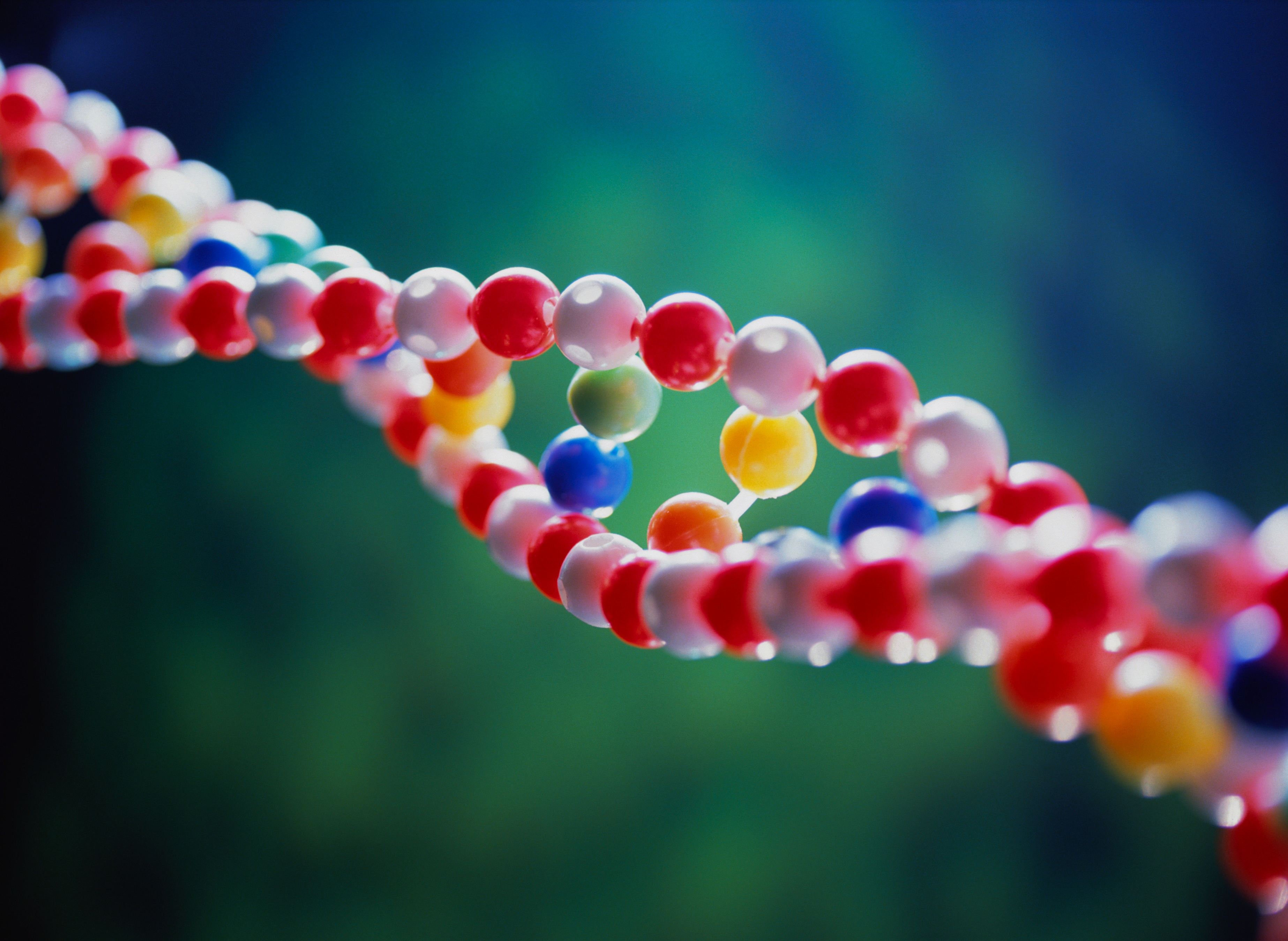

What is a section of DNA that codes for a specific protein called?
RNA
replication
gene
protein

Replicate the following strand of DNA by selecting the complementary base pairs:
AATCATGGA
AATCATGGA
TTAGTACCT
UUAGUACCU
GGATAUCUA
What is the central dogma of genetics?
DNA is based on a code.
Genes on DNA are transcribed into RNA which is then translated into proteins
Traits determine the DNA that a person has
Proteins are what determine traits.
The fragments on the lagging strand that are made up of repeating segments of DNA and RNA Primers
okazaki fragments
Primase
Polymerase
unused DNA
Which of the following best describes the arrangement of the sides of the DNA molecule
Bonding
Alternating
Anitparallel
Parallel
DNA polymerase moves in the _________ to ____________ direction
3' to 5'
easiest
5" to 3"
9 to 5
Enzyme that connects the DNA to the backbone (glues)
Ligase
Polymerase
Helicase
Primase
Proteins that DNA winds itself around to for Chromosomes
Histone
Double Helix
Chromatin
Chromatin
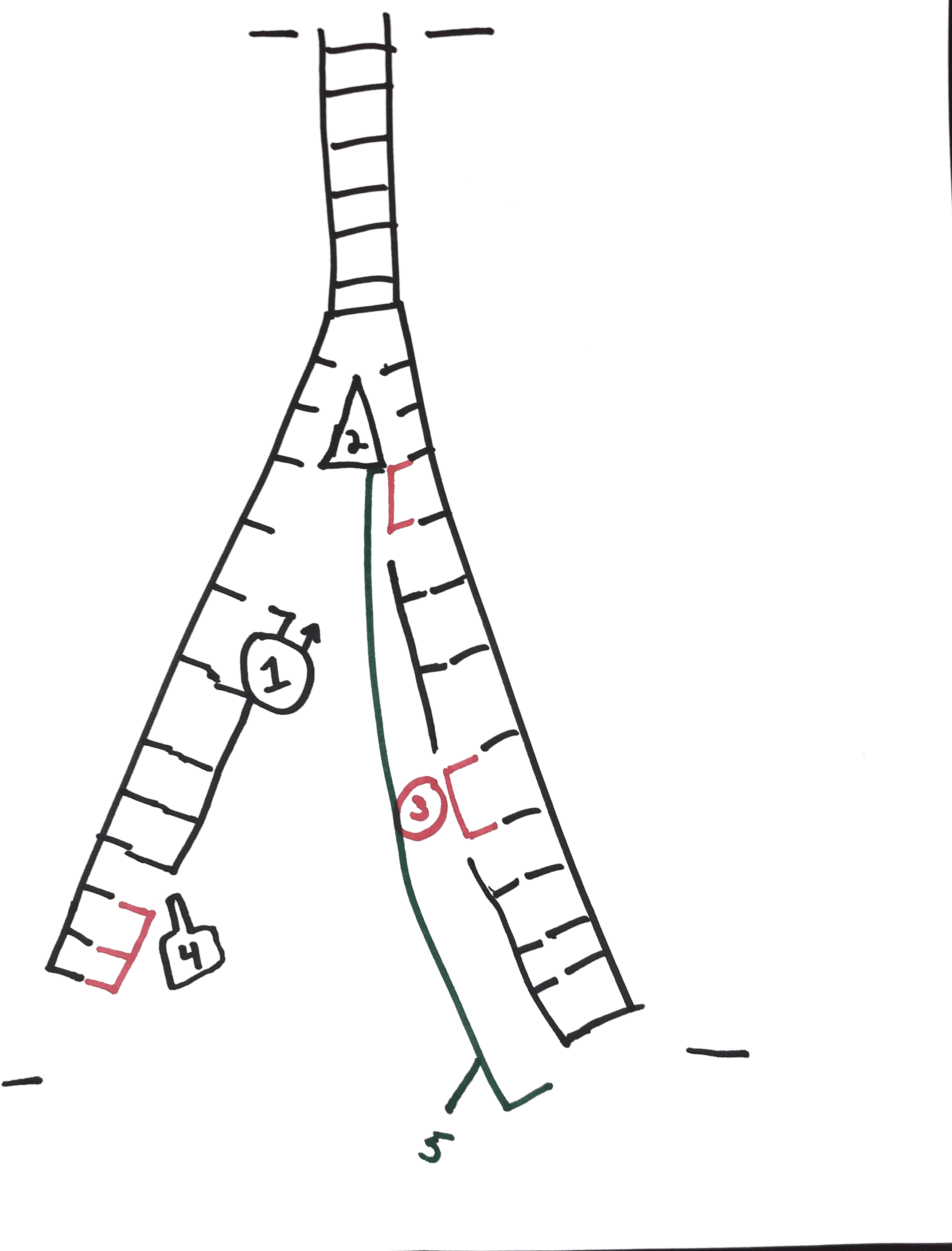
Number 1 in the picture above
Replication
DNA Polymerase
Primase
Ligase
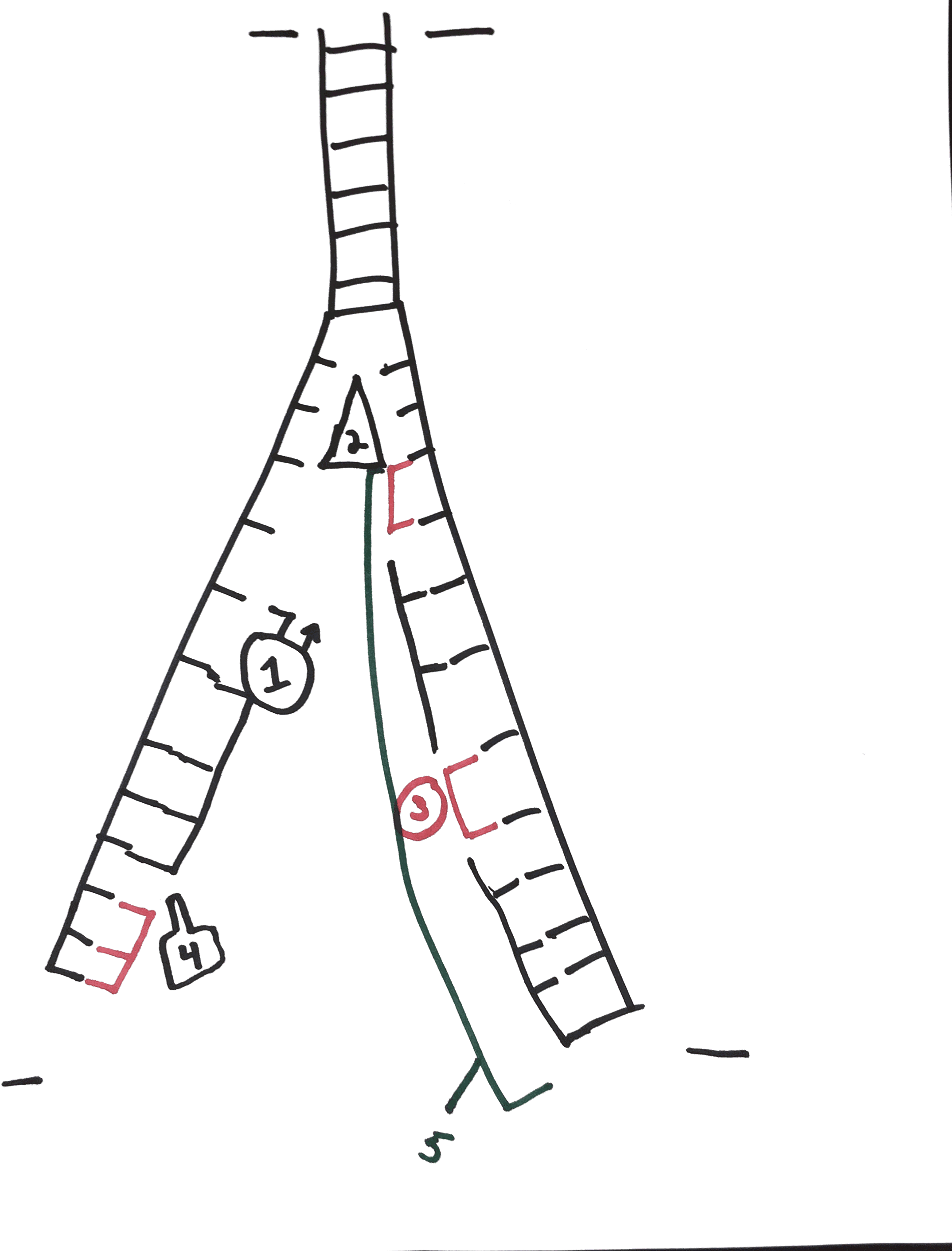
#4 in the picture
Polymerase
Primase
Helicase
Ligase
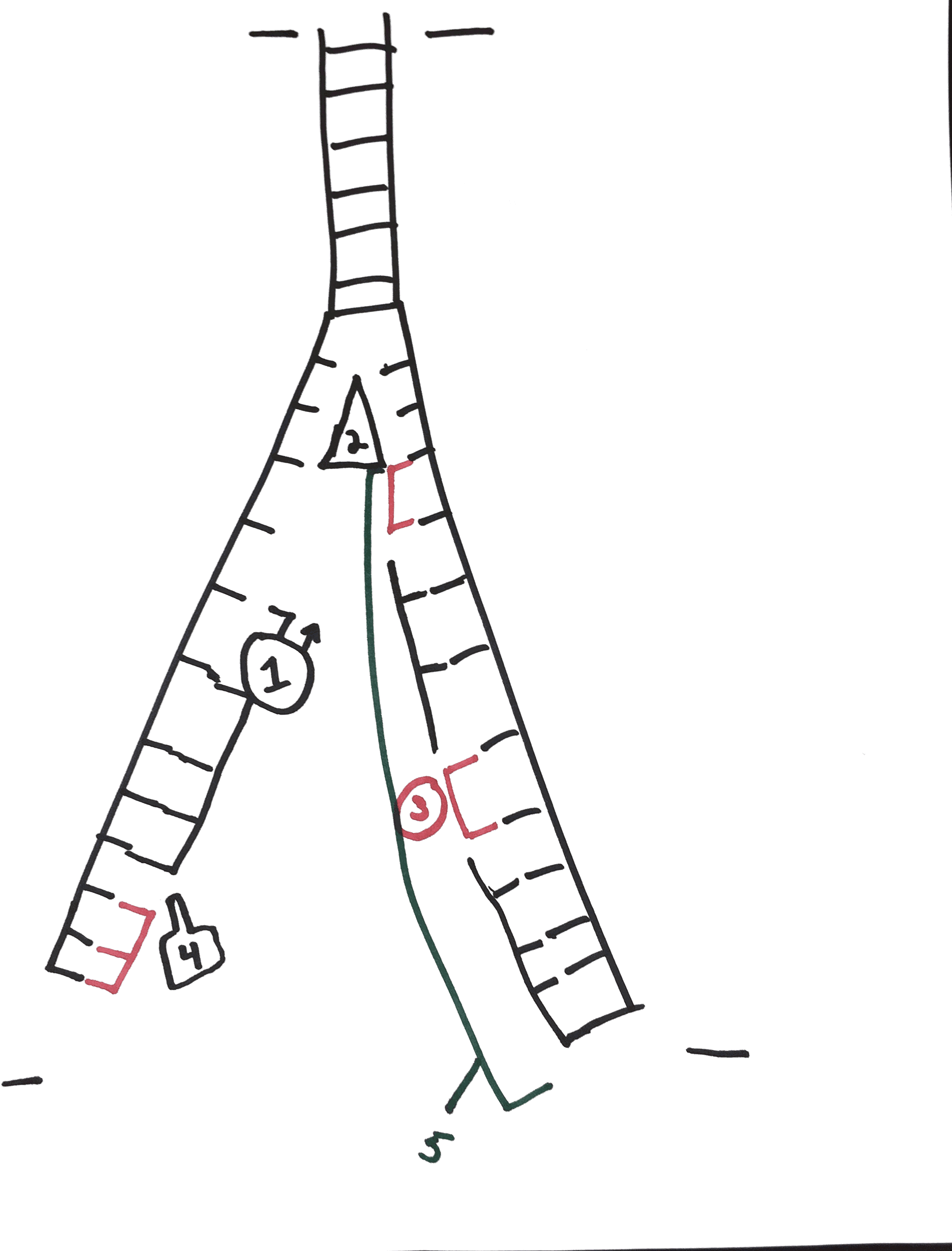
#1 in the picture above (builder)
Helicase
Primase
Polymerase
Ligase
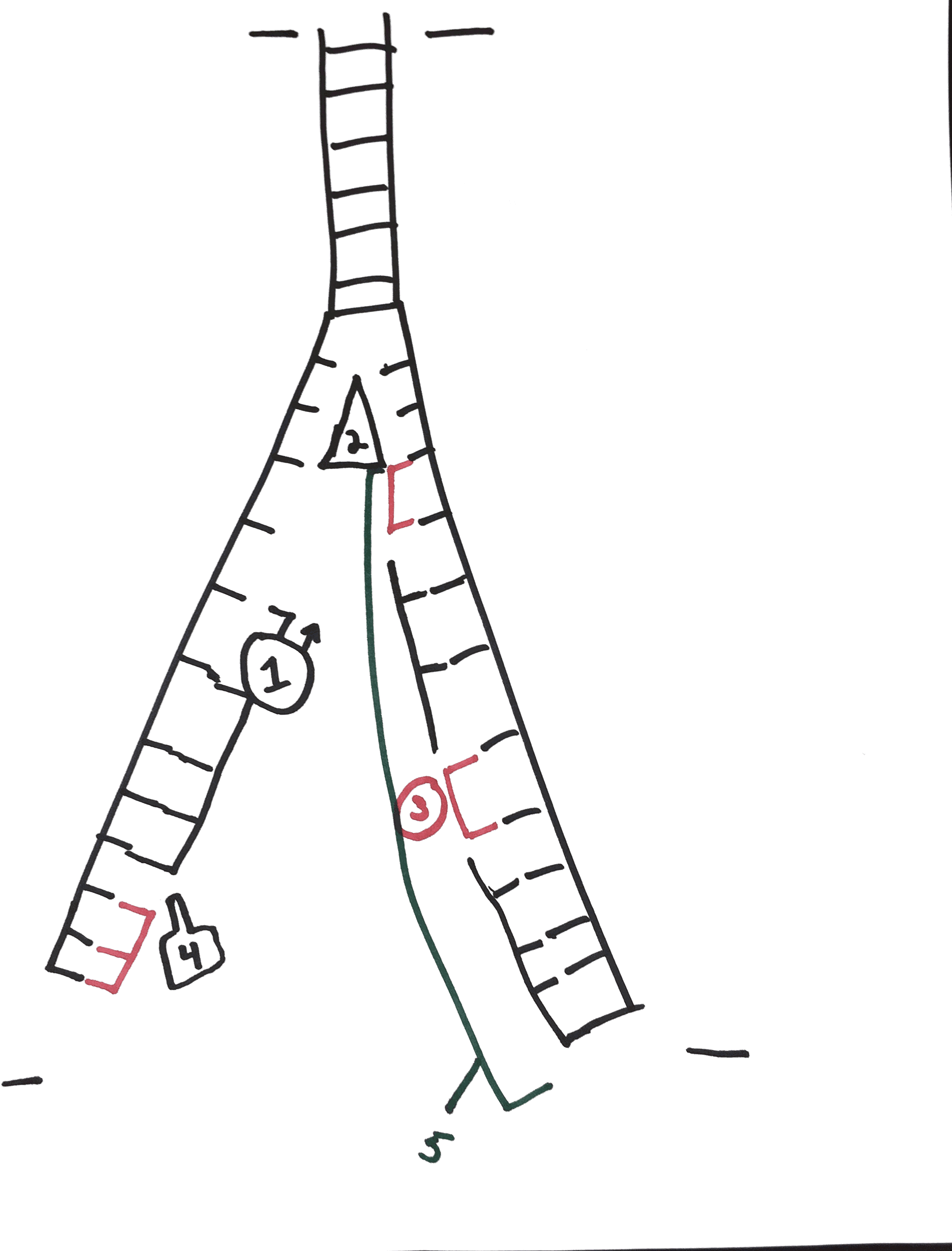
#3 setting Primers
Ligase
Helicase
Polymerase
Primase
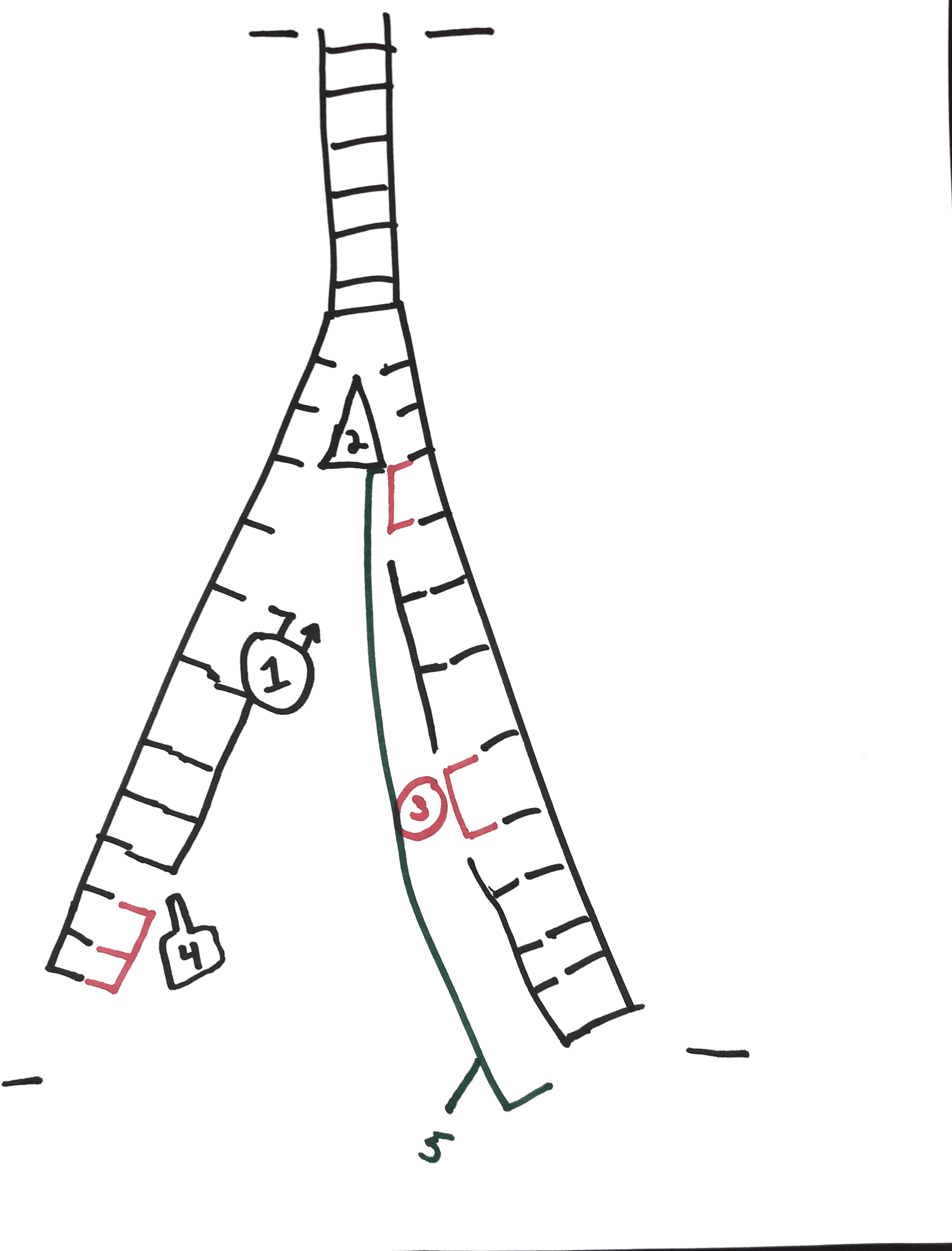
#5
Leading strand
Lagging Strand
Replication fork
Helicase
#5
Leading strand
Okazaki Fragments
Replication fork
Helicase
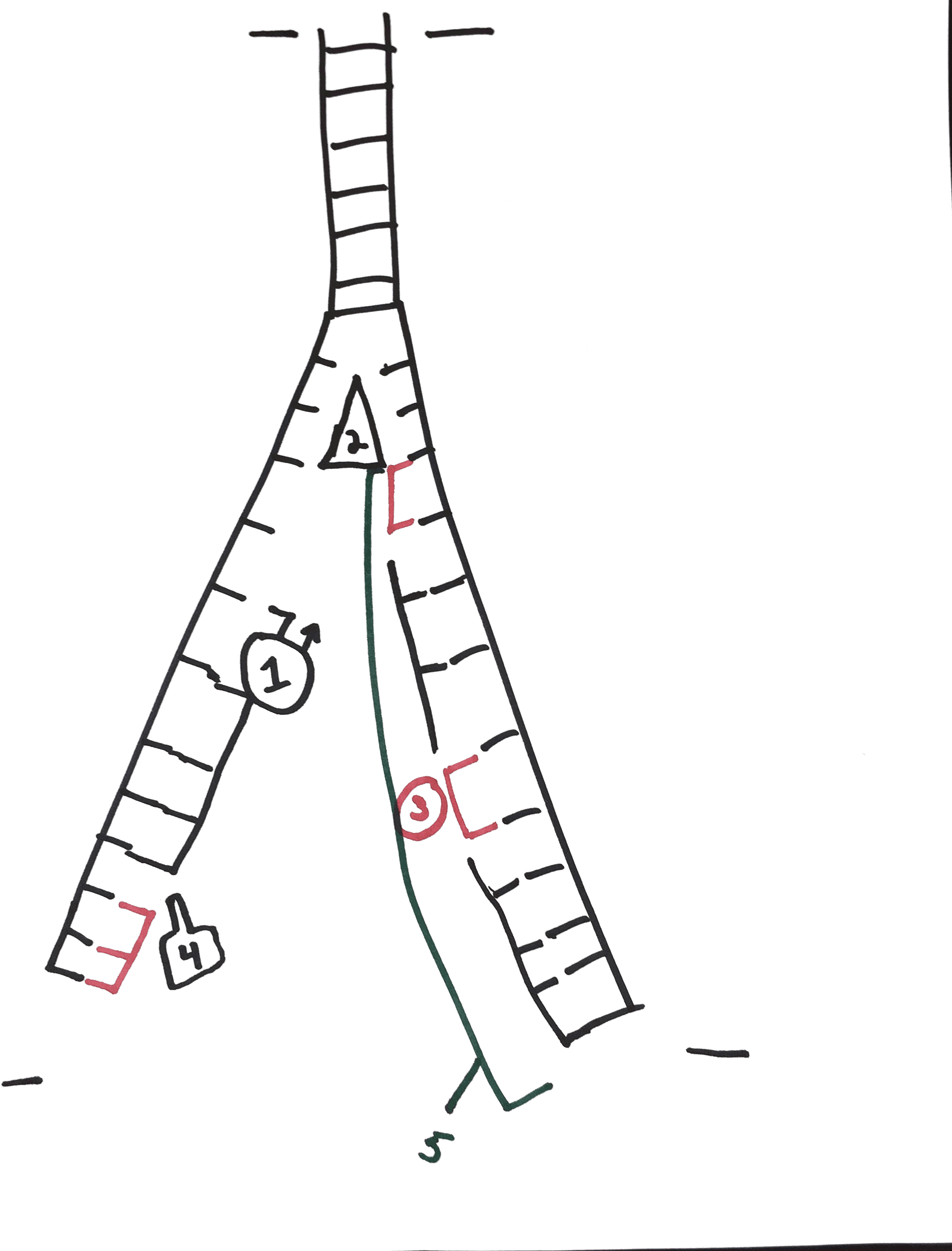
Right Hand Side
Lagging strand
Leading Strand
How many amino acids are found on one tRNA?
20
4
1
3

the codon is on the (a)
the anti-codon is the (b)
The mRNA reads CCA: what amino acid will the tRNA be carrying?

The mRNA reads UAG, what will the tRNA carry?



