
 Worksheets
Plate Motion Study Check
Total questions: 70
Worksheet time: 48mins


What does the theory of Continental Drift explain?
Ocean currents move continents around the planet
Convection works deep within the asthenosphere
Mid-ocean ridges force tectonic plates to move
Continents were once together and slowly drifted to where they are today
Where are the youngest rocks on Earth found?
Along mid-ocean ridges
Along transform boundaries
On the edges of the continents
Near ocean trenches
Who was the scientist who proposed the theory of continental drift?
Alfred Powell
Harry Hess
Alfred Wegener
Ernest Rutherford
How far do tectonic plates move each year?
Meters per year
Centimeters per year
Kilometers per year
Feet per year
Where does seafloor spreading take place?
Convergent boundaries
The continentals shelves
Transform boundary
Mid-ocean ridges
What is the driving force behind the movement of the tectonic plates?
Gravity
Convection
Wave motion
Seismic activity
What is the process of convection?
The process of hot material rising and cooler material sinking in circular patterns
The process of hot rock solidifying and forming new crust
The process of explaining what goes up must come down
Strong ocean currents moving tremendous amounts of material
Volcanoes are created along
Divergent and Convergent boundaries
Transform and Convergent boundaries
Divergent and Transform boundaries
The boundary between Illionois and Wisconsin
Earthquakes can happen along
All boundaries
Divergent and transform boundaries
Convergent and divergent boundaries
Transform and Convergent boundaries
How do the plates move along a divergent boundary?
They move towards one another
They move away from one another
They move past one another
One move up the other moves down
How do the plates move along convergent boundaries?
They move towards one another
They move away from one another
They move past one another
One moves up and one moves down
What does the theory of Continental Drift state?
The continents were once joined in a super continent and have moved over time
The Earth is broken into lithospheric plates that move due to convection currents
Continents are stationary and do not move
None of the above
Which pieces of evidence did Wegener use to prove Continental drift?
The shape of the continents
Similar fossils found on separate continents
Plant fossils found in odd places
All of the above
Which layer is the thinnest?
Crust
Mantle
Outer corr
Inner core
The thickest layer of the Earth
Crust
Outer core
Mantle
Inner core
A student uses clay to construct a model of Earth. Which layer of the model should be the thinnest layer?
the layer representing the mantle
the layer representing the outer core
the layer representing the inner core
the layer representing the crust

What type of plate boundary is this?
Transform
Convergent
Divergent

What type of plate boundary is this?
Transform
Convergent
Divergent

What is happening in the picture?
layers of the Earth are changing positions
the inner and outer core are solid
convection currents are causing the tectonic plates to move
the mantle is growing
What type of evidence was helpful in proving the Continental Drift theory?
hidden treasures
dinosaur fossils
fossil evidence, continental fit, glacial evidence and landform and rock layers
tropical forests
When did the Earth's continents stopped breaking apart and coming together?
In 1960
It stopped in 1950 then continued to move after 1952
Between 1912 and 1930
It has not stopped, it is continually breaking apart and coming together.
What were the names of the two continents that started drifting apart?
Europe and South America
The Netherlands and Greenland
Laurasia and Gondwanaland
Africa and Australia
Which feature did the Mesosaurus have?
Webbed feet
Lungs
Nostrils on top of their head
All of the above
True or false: The Mesosaurus could swim long distances.
False
True
It depends on the type of Mesosaurus
Not enough information
Which locations did they find the Mesosaurus fossils?
South America and Africa
Africa and Europe
United States and Canada
Japan and Australia
Where did they find the Mesosaurus fossils?
soft rock
sand
hard, solid rock
under the ocean
How do rock samples collected from the sea floor provide evidence of tectonic plate movement?
Older rocks are found near the deep-ocean trenches.
Older rocks are near the center of mid-ocean ridges.
Younger rocks are near the deep-ocean trenches.
Younger rocks are mixed with older rocks at mid-ocean ridges.

Ancient fossils have been placed on the map indicating where they were found.
The strongest evidence exists for which two continents to have been connected when Pangaea was present?
South America and Africa
North America and Africa
Africa and Australia
South America and Australia

Use the information to answer the question.
Which explanation best accounts for the fossil evidence?
The continents were once connected by a large land bridge.
The reptile species evolved on the two different continents at the same time.
The continents were once joined together within a larger landmass.
The reptile species floated across the Atlantic Ocean on logs.


In sea-floor spreading, new crust is added at a
mid-ocean ridge
magnetic stripe

Which theory describes the motion of and force driving Earth's plates?
first law of motion
third law of motion
continental drift
plate tectonics
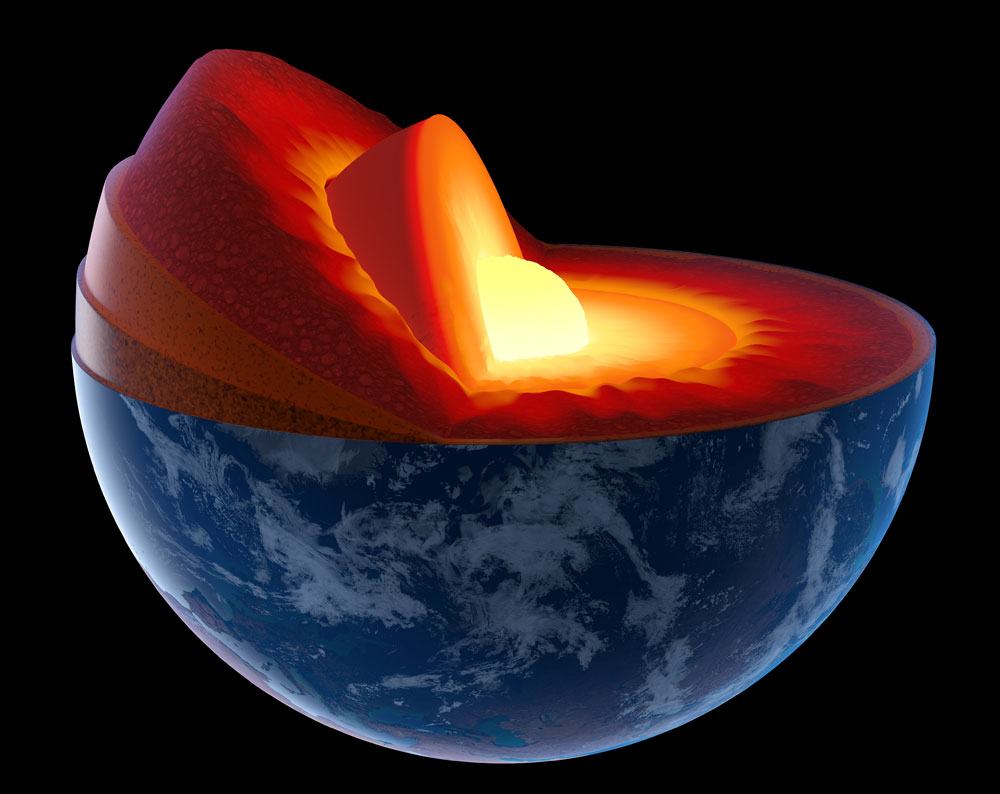
Cross Section
A diagram that shows what the inside of something looks like.
A diagonal portion of a larger object.
When two line are drawn over each other at a 900 angle.
A piece of a pizza.
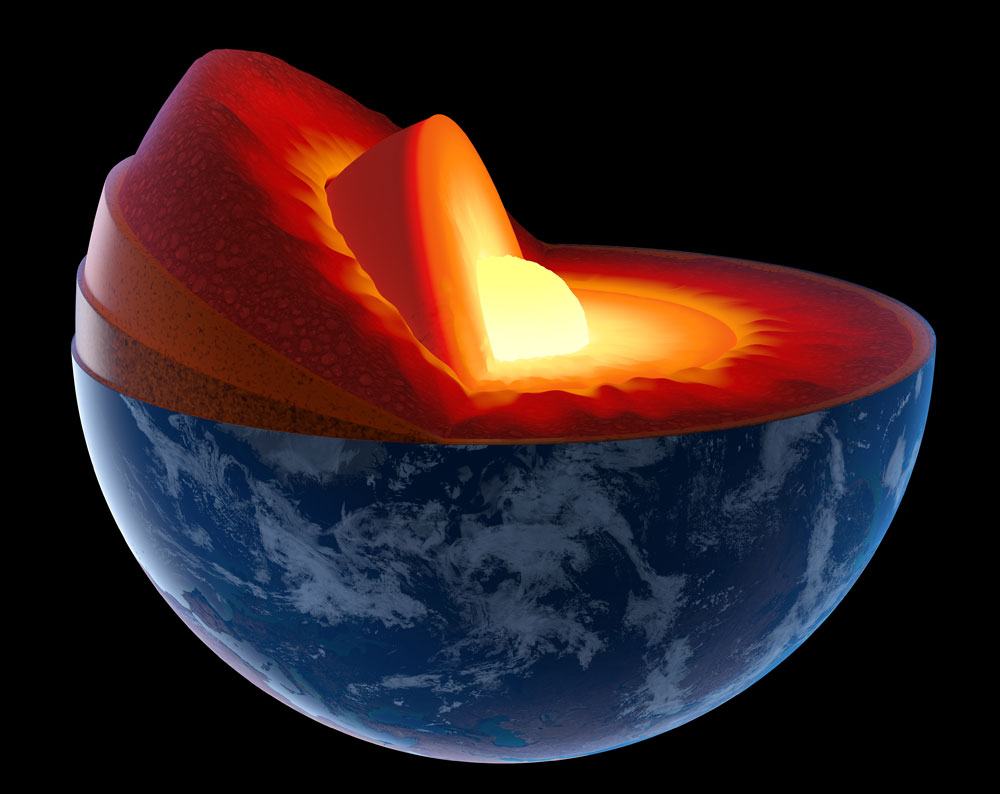
Outer Layer
Crust
Mantle
Outer Core
Inner Core
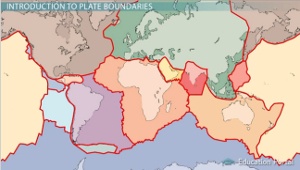
Plate Boundary
The place where two plates meet; most volcanoes and earthquakes occur here.
The location where the food falls onto the table.
Where one country ends and another begins.
The edge of your patella.
Tectonic Plate
One of the very large sections of hard rock that make up Earth's outer layer.
A new song release from "P-late."
An object that is used for serving food on.
Round, smooth portions of the Mantle.
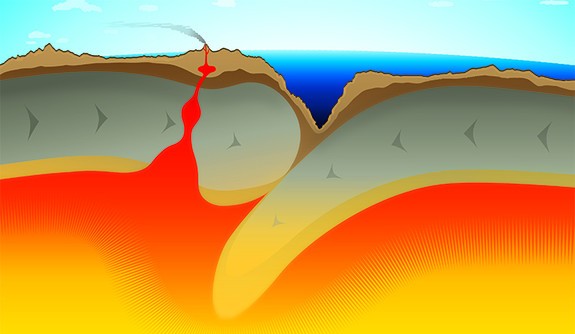
Convergent?
Divergent?
Transform?
Classic
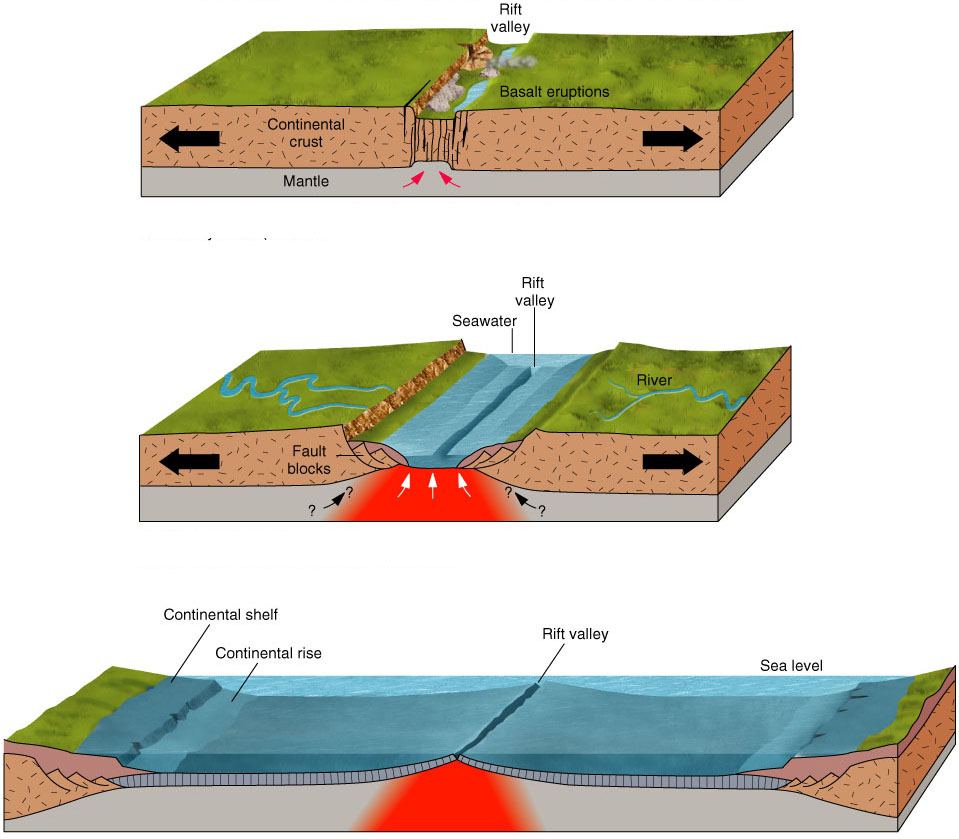
Divergent?
Convergent?
Transform?
Classic?
Mid-Ocean Ridge?
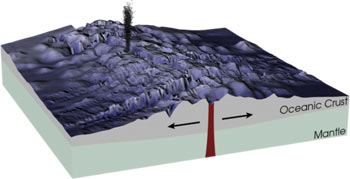
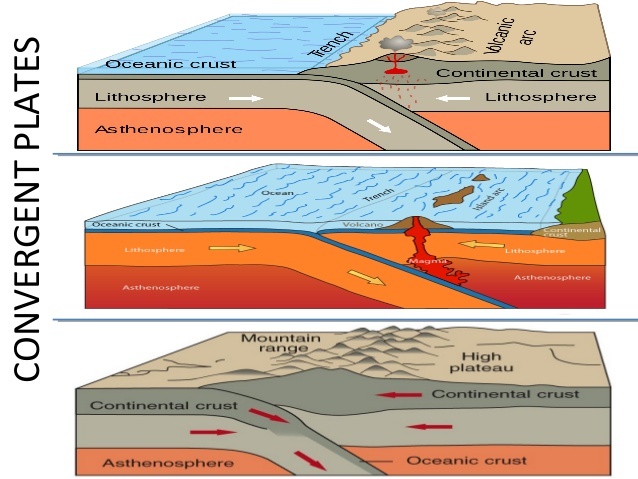
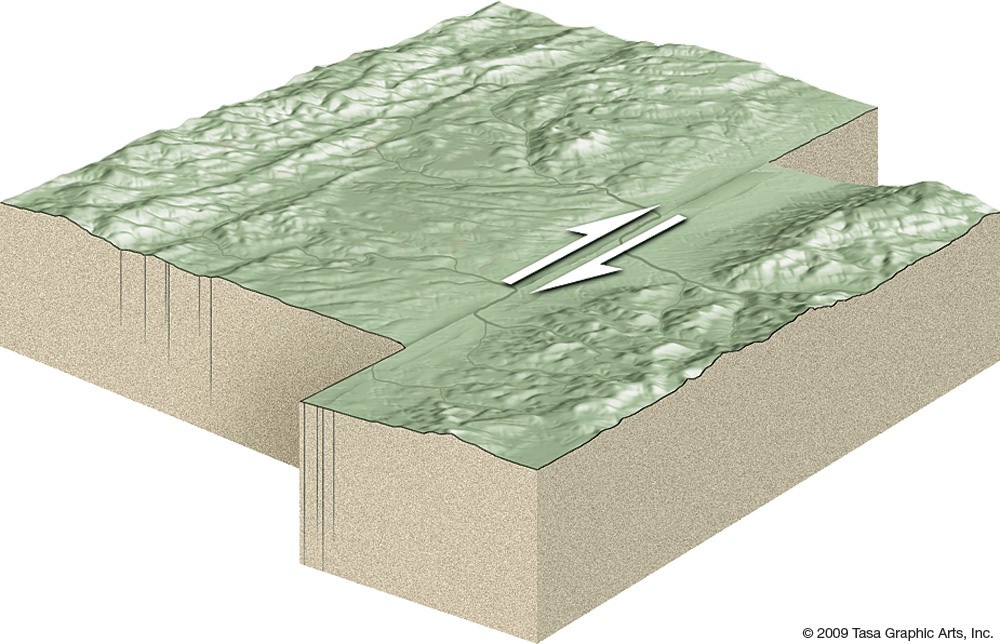
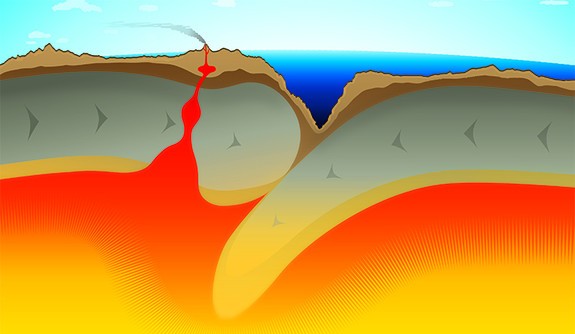
At which boundary do you find a trench?
Transform
Divergent
Convergent
Strike-Slip
Which statement best describes Earth's outer layer?
Earth's outer layer is made up of a soft solid material.
Earth's outer layer is made up of hard, solid rock.
Earth's outer layer is a combination of hard, solid rock and a soft, solid material.
Earth's outer layer is made up of hard, solid rock or water; it depends on where you go.

Which statement best describes what Earth's outer layer is like underneath the soil and water in the image?
Underneath both the soil and the ocean, Earth’s outer layer is made of sand and water.
Underneath both the soil and the ocean, Earth’s outer layer is made of hard, solid rock.
Underneath the soil, Earth’s outer layer is made of hard, solid rock. Underneath the ocean, Earth’s outer layer is made of sand.
Underneath both the soil and the ocean, Earth's outer layer is made of water.

The team is drilling underground at sites 1 and 2. Where will the team find hard, solid rock?
They will find hard, solid rock below site 1. At site 2, they will find water and sand.
They will find hard, solid rock below site 2. At site 1, they will find plants and soil.
They will find hard, solid rock below both sites.
They will find hard solid rock at neither of these sites; they will find water below both of them.
Earth's plates are a __________ solid material. Earth's mantle is a ________ solid material.
Soft; hard
Hard; soft
Soft; soft
Hard; hard

Which diagram shows what happens at a convergent plate boundary?
A
B
A and B
None of the above
"Diverge" means...
To move in different directions
To move towards each other
To slip past something
To stop
"Converge" means...
To drift apart
To move towards each other
To slip by each other
To stop

The plate boundary shown in the image is a ______ boundary because...
Convergent; the plates are moving away from each other.
Convergent; the plates are moving towards each other.
Divergent; the plates are moving towards each other.
Divergent; the plates are moving away from each other.

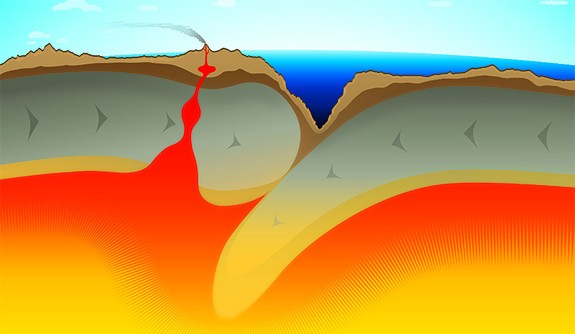
The plate boundary shown is ______________ . This means that _____ .
Divergent; one plate will be pushed into the mantle and the other will experience uplift.
Divergent; the plates will separate, and magma from the mantle will create new rock on the edges of the plates over time.
Convergent; the plates will collide, and one plate will subduct into the mantle.
Convergent; the plates will separate and water will fill the gap between them over time.

At this boundary, what will happen to locations A and B over time?
A and B move away from each other over time.
A and B will stay in the same area over time.
A and B will move towards each other over time.

At this boundary, what will happen to locations A and B over time?
A and B move away from each other over time.
A and B will stay in the same area over time.
A and B will move towards each other over time.
_________________ correlation is when one set of data increases and the other set of data decreases.
Positive
Negative
No
_________________ correlation is when one set of data decreases and the other set of data ALSO decreases.
Positive
Negative
No
_________________ correlation is when there is NO relationship between two sets of data.
Positive
Negative
No
Describe the correlation: "The number of pages you have read in a book and the number of pages remaining."
Positive
Negative
None
Describe the correlation: "The day of the month and the wind speed."
Positive
Negative
None
Describe the correlation: "The age of a car and its selling price."
Positive
Negative
None
Describe the correlation: "The outside temperature and the number of people in attendance at the beach."
Positive
Negative
None
Describe the correlation: "The length of your hair and the number of days since your last haircut."
Positive
Negative
None

What type of correlation is shown in this graph?
Strong Positive
Weak Positive
Strong Negative
Weak Negative
No Correlation

What type of correlation is shown in this graph?
Strong Positive
Weak Positive
Strong Negative
Weak Negative
No Correlation

