
 Worksheets
Biology Final Exam Review 2023
Total questions: 163
Worksheet time: 3hrs 59mins

The primary component of the plasma membrane is the group of lipids called
prostaglandins
cholesterol
phospholipids
carbohydrate
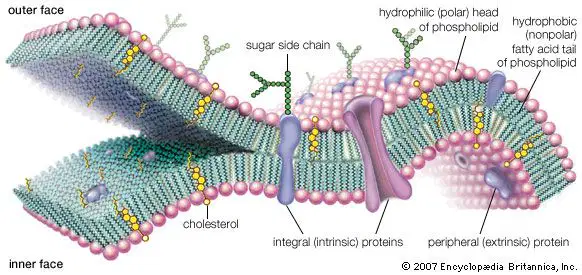
"Water loving"....the outside (purple) part of the plasma membrane has this trait.
Hydroloric
Hydroelectric
Hydrophilic
Hydrophobic
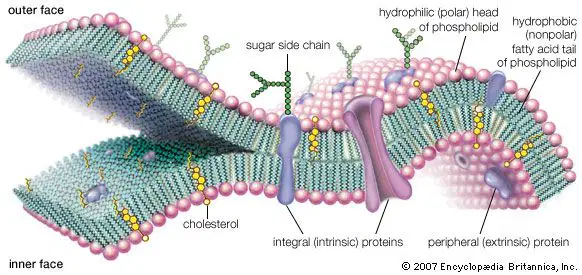
"water fearing".....the inside (blue) part of the plasma membrane has this trait.
Hydroloric
Hydroelectric
Hydrophilic
Hydrophobic
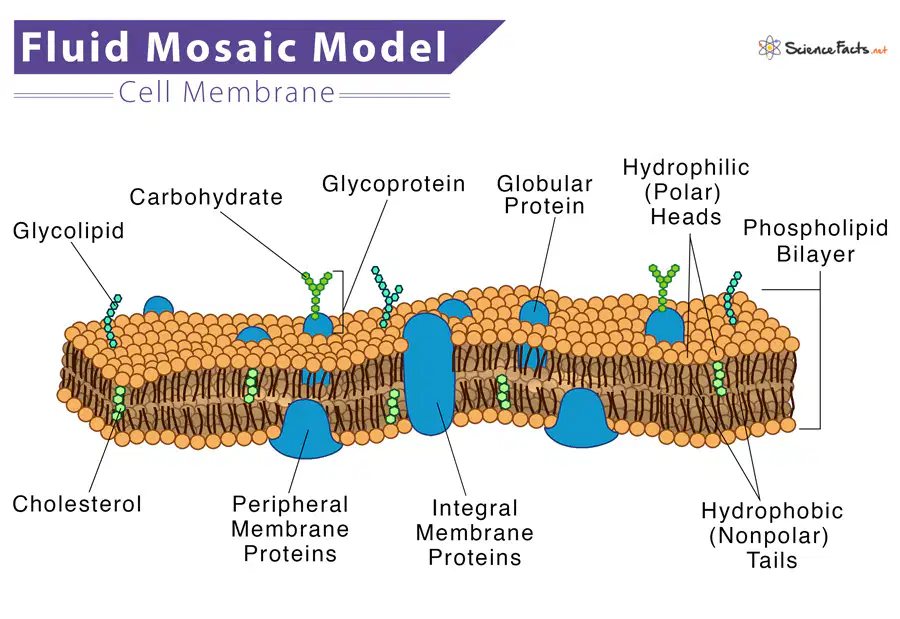
What do we call our current model of the cell membrane?
the fluid mosaic model
the major mobility model
the crazy cell model
the cell theroy model
Controls the passage of materials inside and outside of the cell
Plasma/Cell Membrane
Cytoplasm
Cell Wall
Endoplasmic reticulum
Which term describes the relatively constant internal physical conditions of an organism?
permeability
homeostasis
specialization
unicellularity
Which of the following molecules pass easily through the cell membrane, requiring little extra help or energy? Select all that apply.
glucose
oxygen
carbon dioxide
sodium
The ability to allow only certain molecules into or out of the cell.
permeability
impermability
unpermeability
semipermeablity
Passive Transport
Does require cell energy
Does NOT require cell energy

when molecules move from a low concentration to a high concentration
when molecules move from a high concentration to a low concentration.
no movement
molecules move everywhere


Which characteristic of a cell membrane allows it to control materials entering and leaving a cell?
A cell membrane is surrounded by fluid.
A cell membrane is semi-permeable.
A cell membrane holds organelles in place.
A cell membrane is found in plant and animal cells.


What might happen if a cell did not have any ATP/energy?
It would not have enough energy to do active transport
It's cell membrane would break
The transport proteins would not be needed.


Movement of SOLUTE through the cell membrane from high to low concentration is called.....
diffusion
active transport
facilitated diffusion
osmosis

Which of the following is not found in DNA?
Thymine
Guanine
Uracil
Cytosine


Which of the following nitrogenous bases are NOT found in RNA?
Uracil
Thymine
Guanine
Adenine
Cytosine
The genotype for a yellow plant is...
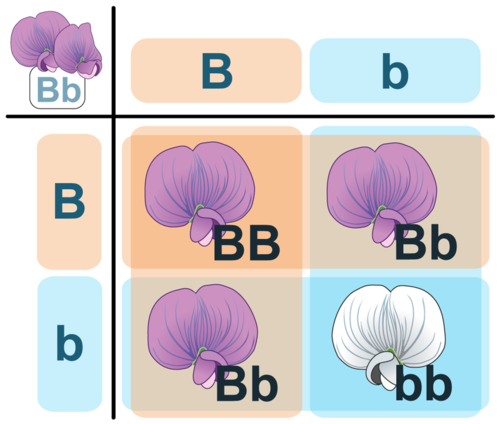
The B stands for bud.


What is the image above:
Chromosome
Chromotid
Centromere
Centriole
A chromosome is packaged
DNA
Protein
Carbohydrates
Lipids
In which phase does a cell spend most of its life?
Interphase
Prophase
Metaphase
Anaphase
Telophase
The splitting of the cytoplasm and cell membranes is called?
Interphase
Telophase
Centromere
Cytokinesis
How many cells are formed at the end of Meiosis II?
2
3
4
8
Which of the following are CORRECT observations about the differences between MITOSIS and MEIOSIS? (Check all that apply.)
Mitosis produces cells that identical to the parent cell.
Meiosis produces cells that have half the number of chromosomes as the parent cell.
All cells go through INTERPHASE as part of the cell cycle, whether it goes to mitosis or meiosis next.
In both types of cell division, the chromosomes are only duplicated once.
Only in Mitosis, do you see chromosomes pair up to form a tetrad.
The products of MEIOSIS have _______ number of chromosomes.
haploid
diploid


What are the two steps of protein synthesis (in order)?
Translation and Replication
Transcription and Translation
Replication and Transcription
Replication and Mitosis
Which types of RNA are involved in transcription? (Choose all that apply)
mRNA
tRNA
rRNA
pRNA
Which types of RNA are involved in translation? (Choose all that apply.)
mRNA
tRNA
rRNA
pRNA
Where, in the cell, does translation occur?
Cytoplasm
Nucleus
Golgi Apparatus
Mitochondria
Where, in the cell, does transcription occur?
Cytoplasm
Nucleus
Ribosome
Rough ER
Which type of RNA functions by carrying the information from DNA to the ribosome?
Messenger RNA
Transfer RNA
Ribosomal RNA
Endoplasmic Reticulum
Which type of RNA functions by delivering a specific amino acid to the ribosome?
Messenger RNA
Transfer RNA
Ribosomal RNA
Endoplasmic Reticulum
What is the central dogma of biology?
The flow of ATP to energize living tissue.
The flow of genetic information from DNA to messenger RNA to making a protein.
The process of DNA replication for mitosis.
The entirety of life on Earth.
What is the function of DNA replication?
A protein is made
DNA makes a copy of itself
Food is broken down
A cell splits into two daughter cells

Phenotype
Different forms of a gene
The way an organism looks
Factors that determine traits

Heterozygous
When two alleles for a trait are different.
Different forms of a gene.
Factors that determine traits

Monohybrid Cross
The allele combination of an organism.
Different forms of a gene.
This cross is used when studying one trait.

Law of Segregation
Genes for different traits are inherited independently of each other
Every organism has two alleles which seperate when gametes are produced.
The way an organism looks and behaves.

Allele
The way an organism looks and behaves
Different forms of a gene
Alleles for a trait are the same

Law of Independent Assortment
The way an organism looks and behaves
Genes for different traits are inherited independently of each other
Alleles for a trait are the same

Genes
Factors that determine traits
The allele combination of an organism
Different forms of a gene

Genotype
Different forms of a gene
Alleles for a trait are the same
The allele combination of an organism
An organism is a hybrid genotype (Tt) but is appears tall instead of short.
Law of Dominance
Law of Segregation
Law of Independent Assortment
Which of Mendel's laws states that alleles are separated during meiosis?
Law of Dominance
Law of Segregation
Law of Independent Assortment
If a dominant allele is present, the trait will always appear in the organism.
Law of Segregation
Law of Dominance
Law of Independent Assortment

What do we call a change in a species over time?
Adaptation
Evolution
Extinction
Environmental influences
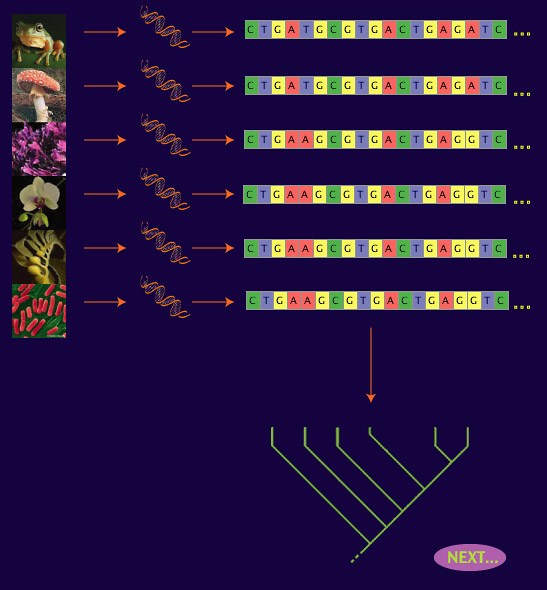



SELECT ALL THAT APPLY: Which of the following must be true in order for organisms to be considered the same species?
They must be able to mate
They must be able to produce viable offspring
They must have structural similaries
They must have the same bone structure


Members of a species can breed with other members of the same species.
True
False


Objective #13
On a pedigree how do we know if they have the trait?
Not shaded
Shaded



