
 Worksheets
14 Regents: Acids, Bases and Salts
Total questions: 69
Worksheet time: 55mins
Acid is?
A substance that reacts with metals and has a PH below 7.
Often used in drain cleaner.
Something that can only be found in a lab
A bitter tasting substance
A base is
A substance that feels slippery, has a PH higher than 7, and is often used in drain cleaner.
Has a PH of below 7 and can react with some metals
Is only found in a lab
Something water can never be
A substance with a pH of lower than 7 is a
Acid
Redox
Base
Salt
When you neutralize acid with a base you create
a Salt and water
You can not neutralize acid with a base
You create carbon dioxide
A moderate sized explosion
A substance with a ph of higher that 7.5 is a?
Home dog doggity
Base
Acid
Salt
Do acids and bases conduct electricity?
Only acids conduct electricity
Only bases conduct electricity
Bases and acids conduct electricity
Neither conduct electricity
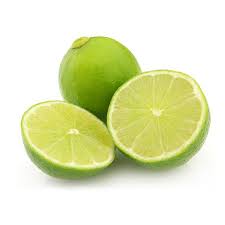
Which of these taste sour?
acids
bases
salts
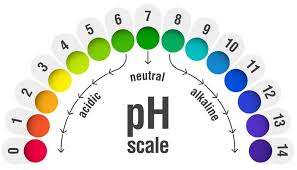
The pH scale is used to determine the strength of
acids and bases
chemical bonds
electrical charges
particles in a solution
Complete the definition below:
Acids are....
hydrogen donors.
hydrogen acceptors.
proton donors.
proton acceptors.
Which indicator is colourless in acid and pink in alkali?
Litmus
Phenolphthalein
Universal Indicator
Methyl Orange
What is made when a proton reacts with a hydroxide ion?
Water
An acid
An alkali
A salt
In a sample of solution, when methyl orange is added as an indicator, the solution turns yellow in colour , then resulting solution could be
HCl
Salt
NaOH
water
What range of values on the pH scale represent solutions with a higher ratio of hydronium (H3O+) ions?
0-14
below 7
7
above 7
An aqueous solution turns red litmus blue. The excess addition of which of the following would reverse the color change
baking powder
lime
ammonium hydroxide solution
HCL
Which of the following is not a base?
NaOH
KOH
NH4OH
C2H5OH
Which of the following are present in an aqueous solution of HCl
H3O+ +CL-
H30+ +OH-
CL+ +OH-
UNIONISED HCL
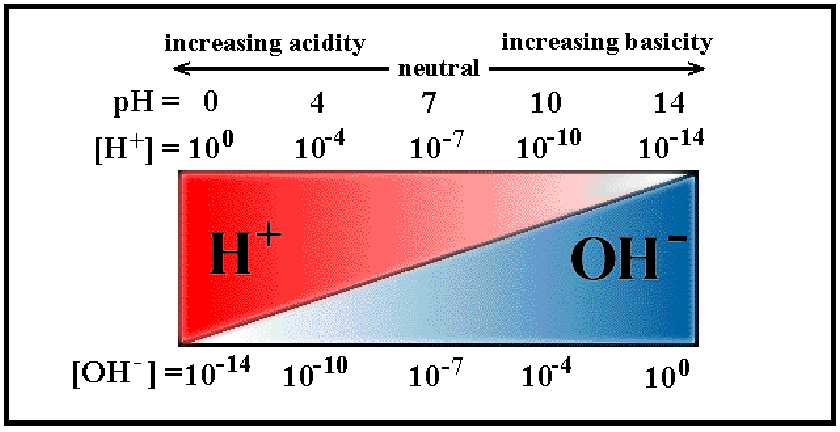
True or false: a neutral solution has equal amounts of H+ and OH-.
True
False

HCl is found in household products, including some toilet bowl cleaners. Is HCl an acid or a base?
Acid
Base
Neither (Neutral)
If a solution has an [H+] of 1 x 10-11, what is the pH? (Hint, you need to use the equation for -log (H+) to solve this.)
11
4
3
8
What is the equation for calculating pH?
pH = [H+]
pH = log [H+]
pH = -log[OH-]
pH = -log [H+]
A solution of Ca(OH)2 is 1.0 x 10⁻⁵ M. What is the hydronium ion concentration?
1.0 x 10⁻⁵ M
1.0 x 10⁻⁹ M
5.0 x 10⁻¹⁰ M
2.0 x 10⁻⁵ M
What is the hydronium ion concentration of 4.0 M H2SO4?
4.0 M
8.0 M
1.0 x 10⁻⁴ M
2.5 x 10⁻¹⁵ M
A solution has 1.0 x 10⁻⁸ M hydronium ions. Another solution has 1.0 x 10⁻³ M hydronium ions. Which solution has a larger number of hydronium ions? Hint this solution is an acid.
1.0 x 10⁻³ M hydronium ion solution
1.0 x 10⁻⁸ M hydronium ion solution
Neither solution is an acid
A Bronsted Lowry acid:
donates H+ to another substance
accepts H+ from another substance
produces H+
produces OH-
A Bronsted Lowry base:
donates H+ to another substance
accepts H+ from another substance
produces H+
produces OH-
In the equation below, what is the Bronsted Lowry acid (donates H+)?
HCl + NH3 → Cl- + NH4+
HCl
NH3
Cl-
NH4+
In the equation below, what is the Bronsted Lowry base (accepts H+)?
HCl + NH3 → Cl- + NH4+
HCl
NH3
Cl-
NH4+
Which product in the following equation is a conjugate base?
H2O + HCl → H3O+ + Cl-
Water
Hydrogen chloride
Hydronium
Chloride
What is the Bronsted Lowry base in the following equation?
PO4-3 + HNO3 → NO3- + HPO4-2
PO43-
HNO3
NO3-
HPO42-
What is the conjugate acid in the following equation?
PO4-3 + HNO3 → NO3- + HPO4-2
PO43-
HNO3
NO3-
HPO42-
For a solution, pH + pOH =
7
14
1.0 x 10⁻¹⁴
-log (1.0 x 10 -14)
If the pH of a solution is 4.0, what is the pOH?
4.0
10.0
1.0 x 10 -4
cannot be determined from the information
If the [H3O+] of a solution is 1 x 10⁻³ M, the pH is
11
-3
3
1
If the pH of a solution is 8 the [H3O+] is
1.0 x 10⁶ M
8.0 x 101 M
1.0 x 10⁸ M
1.0 x 10⁻⁸ M
Ammonia has a pOH of 2. Ammonia is a(n) __________.
acid
base
neutral
metal
Find the pH of a solution with [OH-] = 1 x 10⁻⁴.
4
10
9
11
What is the [OH-] if the [H+] is 1.0 x 10⁻³M?
1.0 x 10⁻³ M
1.0 x 10⁻¹⁴ M
6.02 x 10⁻²³ M
1.0 x 10⁻¹¹ M
If a solution has a very high pH, the hydroxide concentration is _______.
very high
very low
zero
If a solution has a very high hydrogen ion concentration, the hydroxide concentration is _______.
very high
very low
zero
Zn(OH)2 + HNO3 ---> H2O + Zn(NO3)2
Complete the following reaction:
HCl + Mg(OH)2 -->
MgCl2 + H2O
Mg +H2O
MgCl2 + H2
MgCl2 + H2O + CO2
What is the molarity of a 30 mL HCl which is neutralized by 48 mL of 0.1 M NaOH?
HCl + NaOH --> H2O + NaCl
0.16 M
6.25 M
0.063 M
.016M
HCl + KOH --> H2O + KCl
If a student uses 25.0 mL of a 0.5M solution of KOH, what is the molarity of the acid if 15.0mL of acid neutralized?
.08M

What is the missing product in the following neutralization reaction?
HCl + NaOH → H2O + ______
HNa
ClOH
NaCl
CO2
C6H12O6 is what kind of compound?
electrolyte
nonelectrolyte
acid
base
According to Bronsted-Lowry, what is the definition of an BASE?
a substance that donates a hydrogen (H+) ion
a substance that donates a hydroxide (OH-) ion
a substance that accepts a hydrogen (H+) ion
a substance that accepts a hydroxide (OH-) ion
What is being donated/accepted between conjugate acid-base pairs?
a hydrogen (H+) ion
a hydroxide (OH-) ion
water
a neutron

What are the conjugate bases in the following reaction?
HCO3- & Cl-
HCl & H2CO3
H2CO3 & Cl-
Cl- & HCl

What are the conjugate acids in the following equation?
NO3- & PO43-
HNO3 & HPO42-
NO3- & PO43-
HPO42- & NO3-
Which of the following is an Arrhenius Acid?
LiOH
CO32-
OH-
H3PO4
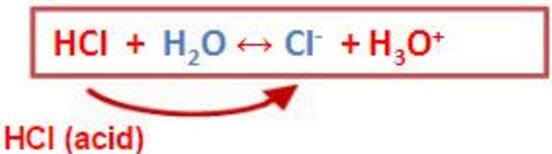
Which of the following will conduct electricity? Select all that apply
Acidic solutions
Basic solutions
Ionic solutions
Neutral covalent solutions
An arrhenius acid
produces hydroxide ions in a solution
produces a hydrogen atom in a solution
produces hydrogen ions in a solution
is a proton acceptor
An arrhenius base
produces hydroxide ions in a solution
is a proton donor
produces hydrogen ions in a solution
is a proton acceptor
A bronsted lowry acid
produces hydroxide ions in a solution
is a proton donor
produces hydrogen ions in a solution
is a proton acceptor
Water can act as both an acid and a base according to the bronsted lowry model. This means water is
neutral
conjugate
ionic
amphoteric
Acid-base conjugate pairs differ by a single
Electron
Proton
Neutron
Oxygen
Could C2H3O2- act as a base when placed in water?
Yes, because it can accept a H+
Yes, because it can donate a H+
No, because it cannot donate a H+
No, because it cannot accept a H+

