

wayground logo

Free Printable Worksheets

Font size

S
M
L
XL
Worksheets

Physical Science Fina;

Total questions: 71

Worksheet time: 50mins

Name
Class
Date
1.
What Unit do we measure Force in? 
a)
Newtons
b)
Joules
c)
Force
d)
Don't know
2.
Which of Newton's laws is illustrated when a magician pulls a tablecloth out from under the dishes without disturbing them?
a)
first
b)
second
c)
third 
d)
fourth
3.
True of False?
An object's inertia is effected by its mass.
a)
False
b)
True
4.
Newton's third law states that any action will have a(n) _______ and ______ reaction
a)
Equal and similar
b)
Equal and opposite
c)
Equal and different
d)
Greater and opposite
5.

Newton's second law states that

a)

An object at rest tends to stay at rest, and an object in motion tends to stay in motion, with the same direction and speed.

b)

For every action, there is an equal and opposite reaction.

c)

Force equals mass times acceleration
6.

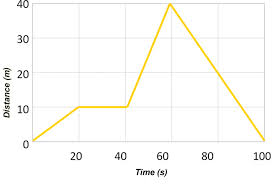
Newton's first law states that

a)

An object at rest tends to stay at rest, and an object in motion tends to stay in motion, with the same direction and speed.

b)

For every action, there is an equal and opposite reaction.

c)

Force equals mass times acceleration
7.
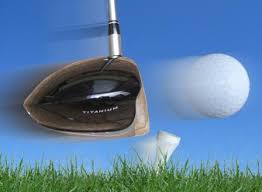
The picture of the position vs. time graph shows an object that is...
a)
accelerating/speeding up
b)
moving at a constant speed 
c)
not moving 
d)
accelerating/slowing down. 
8.
Which section of the graph shows decreasing velocity?
a)
CD
b)
DE
c)
EF
d)
GH
9.
How long did it take this object to travel back to its reference/starting point?
a)
20 s
b)
30 s
c)
60 s
d)
100 s
10.
A golf ball accelerates off a tee at 15m/s2, changing its velocity from 0m/s to 50 m/s down the fairway. How long did it take the golf ball to accelerate?
a)
750 seconds
b)
35 seconds
c)
0.3 seconds
d)
3.3 seconds
11.

A horse follows a dangling carrot for 20 m, if it took her 50 seconds to reach it, what was her average velocity?

a)

1,000 m/s

b)

2.5 m/s

c)

0.4 m/s

d)

20 m/s

12.
During which interval is the object slowing down?
a)
A to B
b)
D to E
c)
E to F
d)
G to H
13.
What does this graph represent?
a)
Constant speed
b)
Acceleration
c)
Not moving
14.
Simple machines make work easier by increasing what?
a)
The distance over which work is done 
b)
The force needed to do work 
c)
The time required to do work
d)
The acceleration of a massive object 
15.
You do 90 joules of work in 30 seconds. How much power have you generated?
a)
30 watts
b)
3 watts
c)
120 watts
d)
270 watts
16.
The unit of power is the...
a)
work
b)
watt
17.
Potential energy is __________ energy. 
a)
motion 
b)
moving
c)
slow
d)
stored
18.
Kinetic energy is __________________ energy. 
a)
potential 
b)
stored
c)
moving
d)
waiting to be released 
19.

Which point has the most potential energy?

a)

G

b)

F

c)

B

d)

A

20.

At which point of the roller coaster is potential energy the greatest?

a)

W

b)

X

c)

Y

d)

Z

21.
At which point is kinetic energy greatest? 
a)
W
b)
X
c)
Y
d)
Z
22.

The continuous flow of electrons is ______

a)

Current

b)

Static electricity

c)

Voltage

d)

Resistance

23.

If the top bulb goes out,

a)

All the bulbs go out

b)

The other bulbs get dimmer

c)

There is no effect on the other bulbs

d)

The other bulbs get brighter

24.

Devices in a parallel circuit receive

a)

equal current but different voltage

b)

equal voltage but different current

c)

equal voltage and equal current

d)

different voltage and different current

25.

Which of the following has the greatest resistance?

a)

long, thin wires

b)

Short, thick wires

c)

long, thick wires

d)

short, thin wires

26.

The contact of a charged object to a neutral object

a)

Conduction

b)

Induction

c)

Friction

d)

Grounding

27.

Like Charges

a)

attract

b)

repel

28.

Unlike charges

a)

attract

b)

repel

29.

An element has 15 protons. What is that element?

(a)  

30.

Which subatomic particle has NO charge?

(a)  

31.

What coefficients will balance the following equation?

a)

1, 1, 2, 1, 1

b)

1, 2, 2, 2, 1

c)

1, 2, 2, 1, 1

d)

1, 2, 1, 2, 2

32.
A particle that moves around the nucleus is a(n)...
a)
Proton
b)
Neutron
c)
Electron
d)
Quark
33.
True or False? Neutrons have a negative charge
a)
True
b)
False
34.
Particles in an atom that are neutral and have no charge are 
a)
negatrons 
b)
electrons 
c)
neutrons 
d)
protons 
35.
the central region of an atom where its neutrons and protons are is its 
a)
nucleus 
b)
electron cloud
c)
core 
d)
center 
36.
The positive particles of an atom are 
a)
electrons 
b)
positrons 
c)
neutrons 
d)
protons 
37.
Which is the smallest?
a)
electron
b)
proton
c)
atom
d)
neutron 
38.
Which of the following has all of the subatomic particles that make up an atom?
a)
Protons, Nucleus, Electrons
b)
Neutrons, Nucleus, Protons
c)
Electrons, Quarks, Protons
d)
Electrons, Protons, Neutrons
39.
An atom has an atomic number of 15 and a mass number of 31. How many protons are there in the atom?
a)
15
b)
31
c)
16
d)
47
40.
An atom has an atomic number of 30 and a mass number of 65. How many neutrons are in the atom?
a)
30
b)
65
c)
35
d)
95
41.
An atom has 5 protons and 7 neutrons. What is the atomic number of the atom?
a)
5
b)
7
c)
2
d)
12
42.
What is the Atomic Number?
a)
7
b)
6.941
c)
3
d)
6
43.
How many Protons+Neutrons are in one atom of Lithium?
a)
6.941
b)
7
c)
3
d)
6
44.
How many Protons+Neutrons are in one atom of Lithium?
a)
6.941
b)
7
c)
3
d)
6
45.
How many Neutrons are in one atom of Lithium?
a)
6.941
b)
7
c)
3
d)
4
46.
How many Protons are in one atom of Lithium?
a)
3
b)
6
c)
7
d)
6.941
47.
How many Electrons are in one atom of Lithium?
a)
3
b)
6
c)
7
d)
6.941
48.
All atoms of the same element have the same
a)
atomic mass
b)
mass number
c)
number of neutrons
d)
atomic number
49.
The atomic number of an atom is _____________________.
a)
 The mass of the atom
b)
The number of protons added to the number of neutrons 
c)
The number of protons 
d)
Negatively charged 
50.
The atomic mass of an element is equal to:
a)
# of protons
b)
# of neutrons
c)
# of electrons
d)
Total # of protons and neutrons.
51.
What do these isotopes of carbon all have in common?
a)
neutrons & mass number
b)
atomic number and neutrons
c)
atomic number and electrons
d)
protons, atomic number, and mass number
52.
What quantities vary between isotopes of an element?
a)
protons, electrons, and atomic mass
b)
protons, electrons, and atomic number
c)
neutrons and electrons
d)
neutrons and mass number
53.
How are electrons arranged in an atom?
a)
In groups of five
b)
In energy levels
c)
By color
d)
By shape
54.
This term describes what is produced in a chemical reaction.
a)
compounds
b)
chemicals
c)
reactants
d)
products
55.
What type of bond forms between a metal and a nonmetal?
a)
covalent
b)
metallic
c)
ionic
d)
reaction
56.
What type of bond is shown in the picture?
a)
synthetic
b)
metallic
c)
ionic
d)
covalent
57.
Each row in the periodic table is called a 
a)
group
b)
period
c)
cluster
d)
unit
58.
Each column in the periodic table is called a 
a)
period
b)
group/family
c)
cluster
d)
unit
59.
Which group/family of the periodic table is composed of inert (not reactive) gases? They are the ones boxed in in red in the picture.
a)
alkali metals
b)
alkaline earth metals
c)
halogens
d)
noble gases
60.
What does the 1.00794 stand for?
a)
Hydrogen
b)
atomic number
c)
atomic mass
d)
atomic explosion
61.
The blue elements are called 
a)
metals
b)
nonmetals
c)
metalloids
d)
noble gases
62.
The atoms along the staircase are called 
a)
metals
b)
nonmetals
c)
metalloids
d)
noble gases
63.
If a material can easily be drawn into the shape of a wire, it is
a)
Ductile
b)
Magnetic
c)
Malleable
d)
Reactive
64.
The number of valence electrons an atom wants to have to be stable
a)
1
b)
4
c)
5
d)
8
65.
Type of reaction in which two or more substances combine to form another substance
a)
synthesis
b)
decomposition
c)
single-replacement
d)
double-replacement
66.
Chemical reaction which takes in or absorbs heat energy
a)
endothermic
b)
covalent
c)
exothermic
d)
ionized
67.
Type of reaction that occurs when one substance breaks down into two or more substances
a)
synthesis
b)
decomposition
c)
single-replacement
d)
double-replacement
68.
Which of the following is NOT one of the 4 states of matter?
a)
solid
b)
gel
c)
plasma
d)
gas
69.
A compost pile in the backyard for the garden is an example of a:
a)
Heterogeneous Mixture
b)
Homogeneous Mixture
c)
Pure Substance
d)
Compound
70.
What would you use to separate iron filings and sand?
a)
Magnet
b)
Filter paper
c)
Dropper
d)
Funnel
71.
Which of the following is true about a homogeneous mixture?
a)
It is always dissolved in water
b)
It is a pure substance
c)
It is uniform throughout
d)
You can see the differences in components if you look closely
