
 Worksheets
Genetics Review
Total questions: 98
Worksheet time: 1hrs 15mins

Organisms pass on traits to their (a)

DNA contains what information? (Choose 4)
Controls growth
Tells what kind of job you'll have later in life
Eye color
Hair color
Height
Where do we get our genes from? (a)
Which pictures show a cell? (Choose 3)


What is the title given to scientists that study genes? (a)
Who was the father of genetics? (a)

Which offspring below most likely came from these parents?


The study of how traits are passed on from parents to offspring (a)
There are three tenets of the Cell Theory. Which of the following is NOT a tenet?
Cells are the basic structure and function of life.
All living things are made of one or more cells.
The cell is the basic unit of matter.
All cells come from preexisting cells.

This organelle is in all eukaryotic cells. It is the control center of the cell because it holds the DNA.
Mitochondria
Nucleus
Chloroplasts
Ribosomes
What is the main function of the cell membrane?
Digestion
Storage
Protective Barrier
Packaging Proteins
How are eukaryotes different from prokaryotes?
Plants are eukaryotes, animals are prokaryotes
Eukaryotes have a CELL WALL, prokaryotes do NOT
Eukaryotes have a NUCLEUS, prokaryotes do NOT
Prokaryotes have a NUCLEUS, eukaryotes do NOT
Choose the procaryotic cell.


Choose the eukaryotic cells (Choose 3)


It is true, not all cells have a true nucleus, but all cells must have some sort of
DNA
Cytoplasm
Osmosis
Call Wall
Your normal body cells contain 46 (23 pairs) total chromosomes. How many chromosomes do they have after mitosis is complete?
23
46
92
only half
Pick the correct function for mitosis
growth & repair
sexual reproduction
genetic diversity
variation of the species
Type of cells for mitosis
sperm cells
egg cells
gametes
body cells
Type of cells that meiosis produces
sperm and egg cells
zygotes
skin and bone cells
blood cells and muscle cells
The main advantage of meiosis and sexual reproduction is the creation of _____________ offspring.
fewer
more
diverse
cloned
Which process creates 4 daughter cells?
Meiosis
Mitosis
Both
Neither
Which process creates 2 identical daughter cells?
Meiosis
Mitosis
Both
Neither
What process helps a cut on your hand to repair itself over time?
Meiosis
Budding
Mitosis
Vegetative Propagation
Meiosis creates daughter cells with how many chromosomes?
46
12
92
23
Mitosis creates daughter cells with how many chromosomes?
46
12
92
23
Half the _________ in the offspring come from each parent.
genes
molecules
particules
substances
Mitosis creates what type of cells?
Haploid Cells
Diploid Cells
Meiosis creates what type of cells?
Haploid Cells
Diploid Cells
Which type of reproduction requires 2 parent cells combining to create a new cell (offspring)?
sexual
asexual
both
Which of the following is an advantage to sexual reproduction?
Rapid reproduction of a large amount of offspring
More genetic mutations occur
genetic variation
offspring are identical to parents

Hydras use a type of asexual reproduction in which they grow genetically identical offspring on the side of their body. This is an example of what type of asexual reproduction?
vegetative propogation
cloning
binary fision
budding
Which type of reproduction only requires one parent?
sexual
asexual
both
Which of the following is NOT a type of ASEXUAL reproduction?
Budding
Regeneration
Vegetative Propagation
Cloning
A flower being pollinated

Hydras use budding to reproduce. What type of reproduction does a hydra use?
Sexual
Asexual
Both
Occurs when an animal's offspring grows from a piece of its parent.
binary fission
budding
regeneration
vegetative propagation
Which of the following is NOT an advantage to asexual reproduction?
Rapid reproduction of large amounts of offspring
Organisms do not have to find a mate
Genetic variation
Which of the following are TWO disadvantages to sexual reproduction? (choose 2)
Requires more time and energy
There is more genetic variation
There is a greater chance of genetic mutation
Cannot produce large amounts of offspring in a short amount of time.
Which is true about the offspring of asexual reproduction?
They have genetic information from two parents.
They are genetically diverse from their parents.
They are genetically identical to the parent.
They have different genetic information but look identical.
Cell division in prokaryotes, like bacteria, that forms two genetically identical cells.
vegetative propagation
budding
binary fission
regeneration
Sexual reproduction requires ______ parent(s) and asexual reproduction requires ______ parent(s).
one, one
two, two
two, one
one, two
Which statement describes why genetic variation is beneficial to populations of organisms?
individuals look different from one another
only one parent is needed to produce offspring
populations of the organism increase more rapidly
species can better survive environmental changes
TRUE or FALSE: There is only one type of asexual reproduction
True
False
Adenine bonds with ______________ in DNA.
ATG TGA CAG
In eukaryotes, which organelle is DNA found in?
cell membrane
vacuole
chloroplast
nucleus
What shape is DNA?
a circle
a triangle
a double helix

What is a gene?
A bundle (like a hot dog bun) that the DNA is packed into
something inside the nucleus
a section/piece of DNA
all of your DNA
Guanine bonds with ______________ in DNA.

What is the name of this structure found in our nucleus?
chromosome
gene
ribosome
DNA
A section of DNA that codes for traits is called what?
RNA
Gene
Ribosome
Uracil
What is the difference between RNA & DNA?
DNA is the instructions, RNA is the messenger that helps build proteins
RNA is the instructions, DNA is the messenger that helps build proteins
DNA Is found in plants and animals, RNA is found in bacteria
What is the correct pairing for DNA & RNA?
T-A, A-T, C-G
T-A, A-U, G-C
T-U, A-T, G-C
A-T, C-U, G-C
This type of allele is more likely to be prominent in offspring
Dominant phenotype
Dominant allele
Recessive allele
Recessive genotype
This type of allele is less likely to be prominent (to show up) in offspring
Dominant genotype
Recessive allele
Dominant allele
Recessive phenotype


(E= 3 eyes, e= 1 eye)
Which represents the genotype of a homozygous condition? (Choose 2)
BB
Bb
bb

The Corpse Flower mimics the smell of dead bodies. What primary benefit does this have?
Deters predators
Attracts flies which help to pollinate the flower
It's not picked by humans so it can grow
Attracts scavengers that eat and spread its seeds

How does the Trumpet Honeysuckle's shape help it reproduce?
Hummingbirds are able to use their narrow beaks to drink the nectar and help pollinate other plants
The narrow shape protects its pollen from being knocked off
Bees climb into the flowers and are able to spread pollen when it falls off of them

How does the leaf-tailed gecko's appearance lead to successful reproduction?
Potential mates find his look appealing and reproduce with him
The gecko blends in with his environment and is able to stay safe from predators, thereby living long enough to reproduce
There are so many offspring produced that even if some don't stay alive, there are enough to maintain the population
Potential mates are tricked into mating because of the gecko's camouflage

If this beetle's habitat were to change to a mostly brown landscape due to wildfire, how would his chances of reproduction be affected?
They would go down because he would be more visible and vulnerable to predators
They would go up because potential mates would be able to see him better.
They would go down because he would not be able to find food as easily
They would go up because he wouldn't have as much competition for food
Multiple factors influence the reproductive success of an animal. Select all that apply.
genetics
learned behaviors
availability of food
protection from predators

What factors influence an animal's growth?
genetic factors only
environmental factors only
no factors
both genetic AND environmental

The Articum lappa plant produces prickly burrs that grow on the ends of the stems. These burrs can easily catch on the fur of animals. This plant structure most likely benefits the plant in which of the following ways?
Increases the plant's water absorption
attracts animals to come near the plant
keeps the plant warmer
helps the plant transport its seeds
Which of the following plant adaptations allows plants to use animals to transport their seed to new locations?
Long vines
Strong stems
Sweet fruit
Large leaves
What is natural selection?
inherited characteristic that increases chances of survival
organisms with traits well suited to their environment survive and reproduce at a greater rate
a growing population causes a scarcity of resources
differences in the DNA sequence

When the Grand Canyon in Arizona formed, two populations of one squirrel species were separated by the giant canyon. This is an example of _____________ speciation.
Allopatric
Sympatric
Simple
Divergent
A speciation in which new species evolve from a single ancestral species while inhabiting the SAME geographic region.
Sympatric speciation
Allopatric speciation
Complex speciation
Divergent speciation
Structures or behaviors that help an organism survive in its surroundings
adaptations
inherited traits
learned behaviors
structural behaviors
Change in a kind of organism over time; process by which modern organisms have descended from ancient organisms.
Extinction
Genetic variation
Natural Resources
Evolution
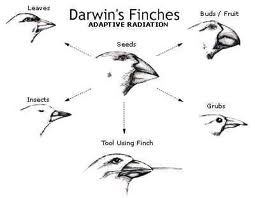
Process by which individuals that are better suited to their environment survive and reproduce most successfully; also called survival of the fittest.
Extinction
Speciation
Natural Selection
Artificial Selection

Humans have changed over time, including having variations in eye color. What is this an example of?
Sympatric Speciation
Macroevolution
Microevolution
Allopatric Speciation

There are over 1,000 species of sharks. What is this an example of?
Microevolution
Allopatric Speciation
Macroevolution
Sympatric Speciation
The process of choosing parent organisms for desired characteristics is called
natural selection
Artificial selection
random selection
genetic manipulation
Artificial selection has been a big factor in the evolution of:
Dogs
Panda bears
Snakes
Jellyfish
Which statement is true comparing natural selection and artificial selection?
In natural selection, traits benefit humans and in artificial selection, the traits benefit the species
In natural selection, traits benefit the species and in artificial selection, the traits benefit humans
In natural and artificial selection, the process takes hundreds of years to occur
In natural and artificial selection, nature determines what traits will be passed down to offspring.
What is an example of artificial selection?
Letting dogs choose their own mate
Letting plants pollinate on their own
Crossing a labrador and a poodle to create a labradoodle
The following is a similarity between artificial selection and natural selection
Takes hundreds of years
Humans determine traits
Nature determines traits
Offspring are produced
Artificial selection is also known as
natural selection
selective hearing
genetic manipulation
selective breeding

