
 Worksheets
Year 9 Biology Prep
Total questions: 86
Worksheet time: 2hrs 38mins

Which organelles are found in a plant cell ONLY?
Nucleus
Chloroplast
Cell Wall
Permanent Vacuole
Cytoplasm

Which organelles are common to plant and animal cells?
cytoplasm
chloroplast
cell membrane
nucleus
ribosomes

Which organelles are common to both animal AND plant cells?
Permanent vacuole
Cytoplasm
Mitochondria
Cell membrane
Cell Wall
The (a) contains the DNA and genes. It controls the cell.
The (a) is a watery jelly. Most of the cells activities happen here.
The (a) controls what enters and leaves the cell
Respiration happens inside the (a) .
Protein synthesis happens on the (a) .
(a) convert sunlight (light energy) into chemical energy (food) that plants can use. This process is called photosynthesis.
The _____ ______ supports the cell. It is made of cellulose.
(a)
The ___________ __________ is a large storage space, filled with cell sap.
(a)
What is a Prokaryote?
A small simple cell containing no nucleus.
A complex cell containing a nucleus.
What is a Eukaryote?
A simple cell with no nucleus.
A complex cell with a nucleus.
What is a nucleus?
The god of the cell
Controls activity of the cell - contains genetic material.
Where aerobic respiration takes place.
Controls the movement of the cell and chemical reactions.
What is the Cytoplasm?
Cell sap that gives the cell structure.
Where photosynthesis occurs.
Gel-like substance where most chemical reactions happen.
Where proteins are produced.
What features do animal cells contain? (select all that apply)
Nucleus
Ribosomes
Cytoplasm
Cell Membrane
Mitochondria
In addition to features found in animal cells, what elements are only found in plant cells?
Cell Wall
Vacuole
Plasmids
Chloroplasts
Mibosomes
What is the job of Ribosomes?
Where energy is produced.
Where energy is released.
Where proteins are made.
Where enzymes are stored.
What happens in the Mitochondria?
Aerobic respiration takes place.
Anaerobic respiration takes place.
Genetic material is stored.
Chemical reactions take place.
Which of these are found in bacteria cells?
Cytoplasm
Cell Membrane
Vacuole
Cell Wall
Plasmids
What is the equation to figure out magnification?
Magnification = Strength of lens/ image size
Magnification = image size/ real size
Magnification = image size x real size
Magnification = real size/ image size
Select all that apply towards the PHLOEM
Transports food for immediate use.
Made up of dead cells.
Translocation occurs.
Transport goes in one direction only.
Select all that apply towards the XYLEM
Made up of dead cells.
Carry water and mineral ions from the roots to the stem and leaves.
Water can freely evaporate through the waxy walls of the xylem.
Transport goes in one direction.
Define diffusion.
(a)
Define Osmosis.
(a)
read the page about stem cells in the book. page 19. i cba to make tweanty questions on them xoxoo
ok
ok
ok
ok
Why are diffusion and osmosis important to cells?
It allows them to take in materials/substances without using energy.
It allows them to reproduce.
It allows them to absorb sunlight.
It allows cells to use all energy.

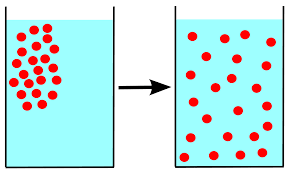
Passive transport requires ________________
concentration gradients
no energy
motion
energy
If a gummy bear is placed in salt water, the mass of the gummy bear will decrease because water will move out of the gummy bear. What process does this represent?
osmosis
fermentation
respiration
diffusion


In passive transport, substances move across the cell membrane ________ the concentration gradient
AGAINST
ALONG
WITH
BETWEEN

Which organelle is this?
cytoplasm
cell wall
chloroplast
cell membrane

Which organelle is this?
cell wall
cell membrane
vacuole
cytoplasm

Which organelle is this?
cytoplasm
vacuole
chloroplast
nucleus

Which organelle is this?
cytoplasm
cell wall
chloroplast
cell membrane

Which organelle is this?
cytoplasm
vacuole
chloroplast
nucleus

Which organelle is this?
cytoplasm
vacuole
chloroplast
nucleus
Which structures are present in animal and plant cells?
vacuole, nucleus, cell membrane
nucleus, cell wall, cytoplasm
nucleus, cell membrane, cytoplasm
cell membrane, chloroplast, cell wall
Which structures are present only in plant cells?
cell membrane, nucleus, cytoplasm
cell wall, cell membrane, vacuole
nucleus, chloroplast, cytoplasm
chloroplast, cell wall, vacuole
What is the function of the chloroplast?
Controls the cell
Stores water and mineral ions
Makes glucose by photosynthesis
Controls what enters and leaves the cell
What is the function of the cell membrane?
Supports the cell
Controls the cell
Controls what enters and leaves the cell
Metabolic reactions occur here
What is the function of the cell wall?
Supports the cell
Stores water and mineral ions
Controls the cell
Controls what enters and leaves the cell
What is the function of the cytoplasm?
Stores water and mineral ions
Metabolic reactions occur here
Controls what enters and leaves the cell
Supports the cell
What is the function of the sap vacuole?
Supports the cell
Controls what enters and leaves the cell
Controls the cell
Stores water and mineral ions
What is the function of the nucleus?
Supports the cell
Controls the cell
Controls what enters and leaves the cell
Metabolic reactions occur here
The best microscope to use when observing how cells are arranged in a leaf is the______.
Scanning electron microscope
. Light Microscope
transmission electron microscope
polarizing microscope

The part of the microscope where you put the specimen
Number 16
Number 15
number 18
Number 20
When you change the objective from low power to high power, the specimen will appear to ______.
.decrease in size
remain the same size
increase in size
diminish in size
George wanted to have compute the magnification of the ant he is viewing in the microscope in the laboratory. He can do it by taking the______.
sum of objective and eyepiece magnification
magnification of the eyepiece
magnification of the objective
product of the objective and eyepiece magnification

Check the illustration below, what is the approximate magnification of the image in the right compared to the image on the left?
10X
2X
0.5X
0.2X
Your groupmate asks you to move a microscope near the window for the natural light, how do you carry it?
by the body tube and the eyepiece
one hand on the arm and the other under the base
with one hand
with one hand on the base and the other on the eyepiece.
The part of the microscope which keeps the slide from slipping
Base
Arm
Diaphragm
Stage clips
What is the total magnification of the specimen if use the following:
Eyepiece 20 X Objective 3X
23 X
15x
6X
60X

What type of microscope is used in this image of a fly ?
magnifying glass
portable microscope
scanning electron microscope
reflection electron microscopy
Use the _______ focuses the image under low power.
revolving nosepiece
coarse adjustment knob
fine adjustment knob
D. arm/neck

Label the part of the microscope. What is part D?
body
foot
objective lens
turret

Label the part of the microscope. What is part F?
stage
stage clips
body
focus knob
The greater the ___________________, the smaller the field you are actually viewing.
detail
objective
magnification
body
The microscopes we used in class had three ________________ which allows different amounts of magnification.
detail
magnification
objectives
body

= 1 mm?


To calculate actual size we use.....
image size ÷ magnification
image size x magnification
magnification ÷ image size


Josie measured the scale bar image to be 80 mm. What is the magnification of this electron micrograph?
160X
0.00625 X
0.16X
25,000X

The picture shows a piece of technology that has helped scientists.
Which of the following best explains how this piece of technology has helped scientists?
It has helped scientists to see other planets.
It has helped scientists to see other moons.
It has helped scientists see very large objects.
It has helped scientists see very small objects.
Which of these pictures most likely shows a plant magnified under a microscope?


To calculate magnification of an electron micrograph we use......
magnification = image size x actual size
magnification = image size ÷ actual size
magnification = actual size ÷ field of view
magnification = ocular lens x objective lens

If a scale bar measures 32 mm and it states it's length is 100 μm, what is the magnification?
320 x
3,200 x
0.32 x
32,000 x

