
Font size
 Worksheets
Biomechanics Quiz
Total questions: 27
Worksheet time: 14mins
The Stages of Learning: Which of these is NOT one of the 3 stages of learning?
Associative stage
Physical stage
Cognitive stage
Autonomous stage
What is the beginner stage of learning?
Associative stage
Cognitive stage
Autonomous stage
True or false - The Associative stage is the practice stage and where you refine the accuracy of performing the skill?
True
False
True of false..Autonomous is the expert stage of learning?
True
False
The Autonomous Stage is where the athletes skill level is:
Starting to develop
Advanced and elite
At the very end of development
Uncoordinated
Feedback on performance is important in which stage:
Cognitive
Autonomous
Associative
All stages
What is the definition of Force Summation?
Your mass and momentum producing maximum force
Being balanced and stable when you move
The combination of forces produced by different parts of the human body
Equal and opposite reactions
True or false - you use the larger muscles first to generate more force
True
False
Large body parts closest to the ground should move
First
Second or Third
Last
If you're not first you're last
True or false - The smaller muscles in the upper body and extremities (hands and feet) are used at the end of the movement for execution and coordination
True
False
By using as many body parts as possible, a person
Generates more momentum
Looks better
Has the right technique
Can reach the hoop easier
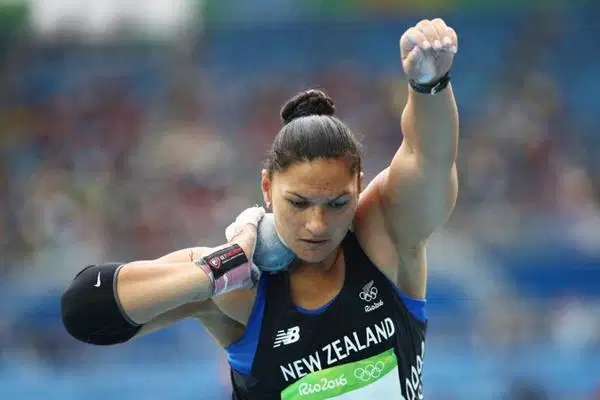
Which of these uses the most force summation?
Shotput
Dart Throw
Free Throw
Underarm Volleyball Serve
Which of these uses the least force summation?
Shotput
Dart Throw
Free Throw
Underarm Volleyball Serve
Which of these needs to be the least accurate?
Shotput
Dart Throw
Free Throw
Underarm Volleyball Serve
Which of these needs to be the most accurate?
Shotput
Dart Throw
Free Throw
Underarm Volleyball Serve
Define Balance & Stability
An objects ability to maintain a stable position
The area around the contact points with the ground. The larger it is, the greater stability a person has.
Base of support contributing factors
The point at which all parts of an object are equally balanced
Define Line of Gravity
An objects ability to maintain a stable position
The area around the contact points with the ground. The larger it is, the greater stability a person has.
The vertical line that passes through the centre of gravity to the ground.
The point at which all parts of an object are equally balanced
Define Centre of Gravity
An objects ability to maintain a stable position
The area around the contact points with the ground. The larger it is, the greater stability a person has.
Base of support contributing factors
The point at which all parts of an object are equally balanced
Define Base of Support
An objects ability to maintain a stable position
The area around the contact points with the ground. The larger it is, the greater stability a person has.
Base of support contributing factors
The point at which all parts of an object are equally balanced
How does a person become more stable in relation to my COG (centre of gravity)?
The higher the COG the more stable you are
If the COG is in the centre of the BOS you are stable
The lower the COG, the more stable you are
Who is the most stable sports player ?


Who is the least stable sports player ?
What is projectile motion?
A projectile is anything thrown
A projectile is any object that once projected or dropped, continues in motion by its on inertia (remaining unchanged).
Projectile motion is the force applied to a something thrown
What are the three main parts of projectile motion?
Angle of release, Height of release, Speed of release
Height of release, Weight of release, Speed of release
Speed of release, Force of release, Angle of release
What is the optimal angle of release?
90 degrees
50 degrees
45 degrees
0 degrees
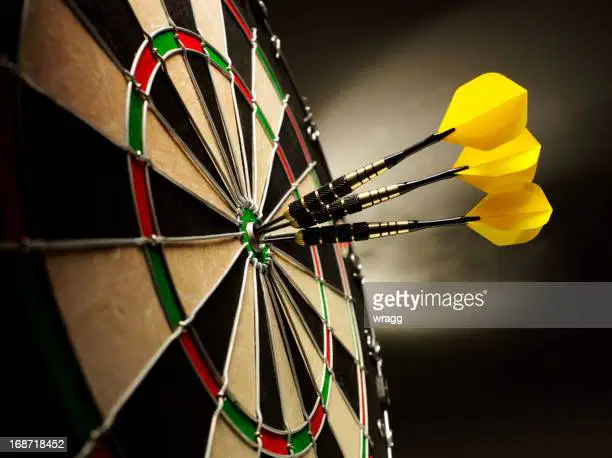
Name a sport that incorporates projectile motion?
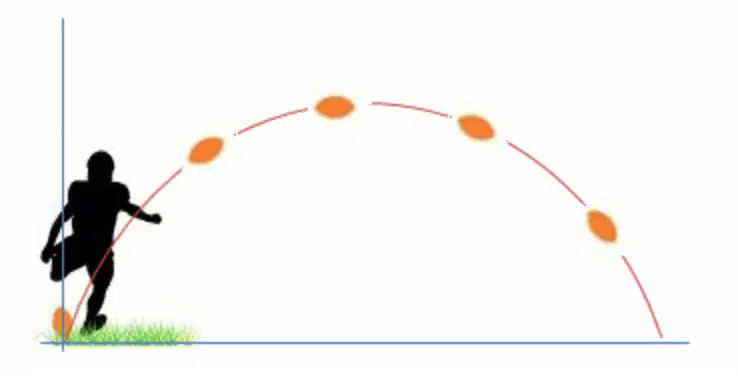
Is this an example of projectile motion?
Yes
No

