wayground logo

Free Printable Worksheets

NEW

Font size

S
M
L
XL
Worksheets

Life Science Final Review

Total questions: 70

Worksheet time: 16hrs 18mins

Name
Class
Date
1.
Every living organism is made up of one or more cells
a)
True
b)
False
2.
A cell is...
a)
the basic unit of structure and function in living organism
b)
an organism
c)
a basic part of everything that we see
d)
found only in animals, not plants
3.
Which of the following are NOT found in animal cells
a)
chloroplasts and cytoplasm
b)
chloroplasts and cell wall
c)
cell wall and cell membrane
d)
mitochondria and nucleus
4.

Which of the following converts food into energy for the cell?

a)

vacuole

b)

mitochondria

c)

cytoplasm

d)

cell membrane

5.

Which organelle takes in "sun showers" and helps plants with the process or photosynthesis?

a)

Vacuole

b)

Mitochondria

c)

Cytoplasm

d)

Chloroplast

6.

A Tree

a)

alive

b)

not alive

7.

Animals cells and plant cells are exactly the same.

a)

True

b)

False

8.

A chicken egg is a cell.

a)

True

b)

False

9.

What is NOT a part of cell theory:

a)

all cells come from existing cells

b)

all cells have a nucleus

c)

all living things are made of cells

d)

cells are basic unit of structure and function in living things

10.
Robert Hooke, Anton van Leeuwenhoek, Theodor Schwann, Rudolf Virchow, and Matthias Schliden were all responsible for what theory?
a)
The Theory of Gravity
b)
The Theory of Relativity
c)
The Cell Theory
d)
The Theory of Continental Drift
11.
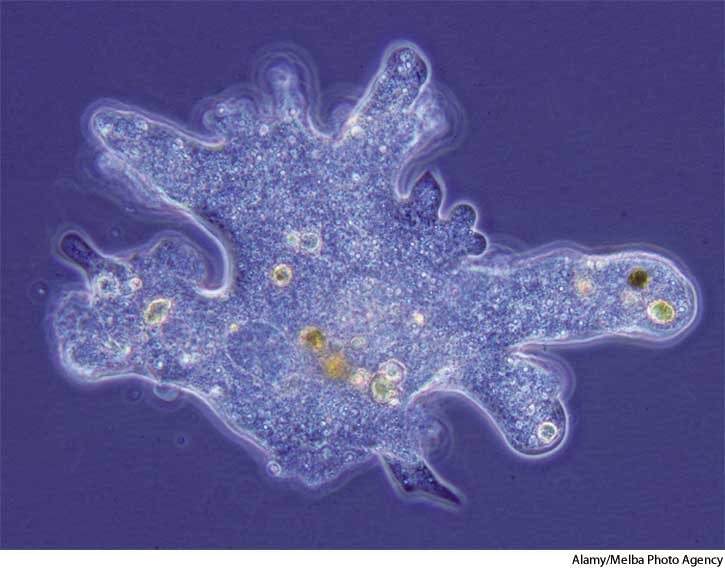
An Amoeba is a unicellular, animal-like protist that lives in ponds and streams. According to cell theory, where did this cell come from?
a)
another pre-existing amoeba cell.
b)
energy from sun that allowed the protist to reproduce.
c)
a multicellular organism.
d)
the nonliving environment.
12.
What tool do you use to view the cells?
a)
metric ruler
b)
centrifuge
c)
microscope
d)
telescope
13.
Which of the following is NOT a cell theory.
a)
All non-living things are made of cells
b)
All cells come from pre-existing cells
c)
Cells are the basic unit of structure and function of all living things
14.
All living things are made up of...
a)
cells
b)
cell tissues
c)
organ
d)
organ systems
15.
Rocks are not living because
a)
they never move
b)
they aren't needed for humans
c)
they are not made of cells
d)
they don't break down
16.
An organism made of one cell is called
a)
unicellular organism
b)
multicellular organism
17.

________ is the scientist who saw small chambers when looking at cork, and named them “cells”.

a)

Newton

b)

Hooke

c)

Carson

d)

Manning

18.
Which is true of prokaryotic and eukaryotic cells?
a)
Prokaryotic cells are larger than eukaryotic cells.
b)
Eukaryotic cells do not have nuclei, and prokaryotic cells do have nuclei.
c)
Prokaryotic cells lack membrane-bound organelles, and eukaryotic cells contain membrane-bound organelles.
d)
Eukaryotic cells are simpler than prokaryotic cells.
19.

Which does only eukaryotic cells contain?

a)

nucleus

b)

DNA

c)

cell membrane

d)

ribosomes

20.

Prokaryotic cells do not have…….

a)

membrane bound organelles

b)

cell membrane

c)

DNA or RNA

d)

life

21.

Which cell type tends to be smaller?

a)

Prokaryote

b)

Eukaryote

c)

there is not a size difference

22.

Bacteria is an example of a(n)

a)

prokaryotic cell.

b)

eukaryotic cell.

23.
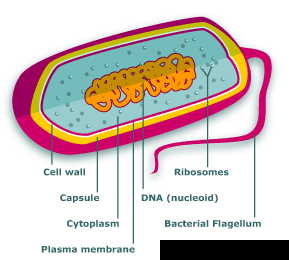
Which type of cell?
a)
Prokaryote
b)
Eukaryote
24.
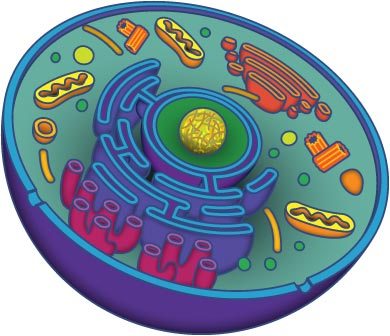
Which type of cell?
a)
Prokaryote
b)
Eukaryote
25.
What are tiny organelles that convert glucose into ATP?
a)
Ribosomes
b)
Vesicles
c)
Cytoskeleton
d)
Mitochondria
26.
A rigid layer that lies outside the cell's  membrane is...
a)
Cytoskeleton
b)
Cilia
c)
Cell Wall
d)
Flagella
27.

Which of the following is a eukaryotic cell(s)?

a)

Bacteria

b)

Plant

c)

Plant and animal

d)

Animal

28.

What organelle is #1

a)

Nucleus

b)

Ribosome

c)

Chloroplast

d)

Cell Wall

29.

The chloroplast in plant cells are responsible for ______________.

a)

Cell respiration

b)

Metabolism

c)

Photosynthesis

d)

Carbon synthesis

30.
What is the purpose of photosynthesis?
a)
make glucose
b)
make ATP
c)
make light
d)
release carbon dioxide
31.
What is the pigment in chloroplasts that performs photosynthesis?
a)
Chlorosynthesis
b)
Chlorophyll
c)
ADP
d)
Electron Transport
32.
Which of the following is the correct equation for PHOTOSYNTHESIS?
a)
CO+ light + H2O --> O+ Sugar
b)
CO+ sugar + H2O --> O+ light
c)
O2 + light + H2O --> CO+ Sugar
d)
CO+ O2 + H2O --> Light+ Sugar
33.
What are the products of photosynthesis?
a)
Carbon dioxide and water
b)
Carbon dioxide and oxygen
c)
Glucose and oxygen
d)
Glucose and water
34.
Cellular respiration occurs in both plants and animals.
a)
true
b)
false
35.
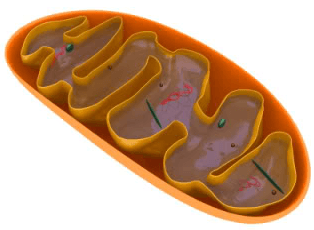
The powerhouse of the cell is the...
a)
Mitochondrion
b)
Golgi body
c)
Nucleus
d)
Ribosomes
36.
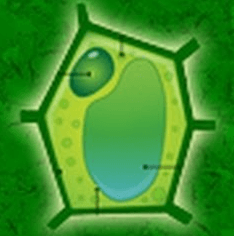
The image is an example of ..... 
a)
Animal Cell
b)
Plant Cell 
37.
The tiny cell structures inside the cell are called 
a)
Particles 
b)
Organelles 
38.

Oxygen (O2) is a reactant material of which process?

a)

Photosynthesis

b)

Cellular Respiration

39.
What are the two reactants of cellular respiration?
a)
C6H12O6 & 6CO2
b)
6 CO2 & 6H2O
c)
C6H12O& 6O2
d)
6CO2 & 6O2
40.

A structure made up of different types of tissue and performs a specific job.

a)

cells

b)

tissue

c)

organ

d)

organ system

41.
A group of similar cells that perform the same function.
a)
tissue
b)
organelle
c)
mass
d)
tendon
42.
A group of organs that work together to perform a major function is an organ
a)
system
b)
column
c)
bank
d)
stack
43.
Tissues that can carry messages.
a)
nervous
b)
epithelial
c)
auditory
d)
complex
44.
Tissues that can contract.
a)
muscle
b)
connective
c)
epidermal
d)
cardiac
45.
This system helps rids the body of wastes.
a)
excretory
b)
circulatory
c)
digestive
d)
endocrine
46.
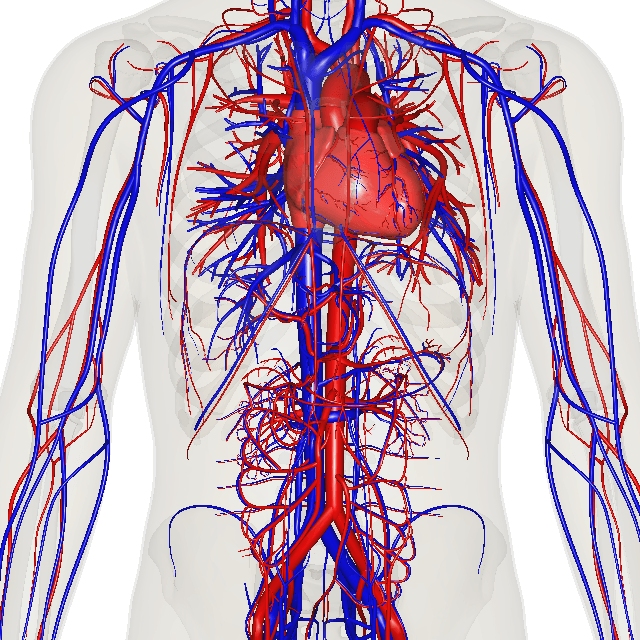
This system allows things to move within the body.
a)
circulatory
b)
integumentary
c)
vascular
d)
muscular
47.
What is the correct order of organization
a)
tissues-cells-organs-organ systems-organism
b)
cell-tissue-organs-organ systems-organism
c)
organism-cells-tissues-organ systems-organism
d)
tissues-cells-organs-organ sytems-organism
48.
When many organ systems work together it can form...
a)
organ
b)
cells
c)
organ system
d)
organism 
49.
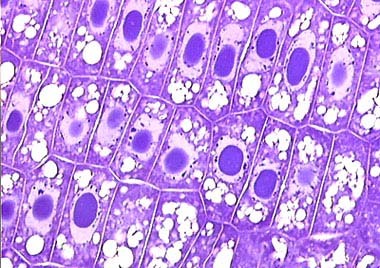
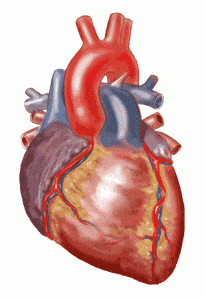
This is a example of ........
a)
cell
b)
tissue
c)
organ 
d)
organ system
50.
This is a example of ........
a)
cell
b)
organ system
c)
organ
d)
tissue
51.
This is a example of ........
a)
organ
b)
organ system
c)
tissue
d)
cell
52.
When many organ systems work together it can form...
a)
a cell
b)
an organ
c)
an organ system
d)
an organism
53.
You can find total magnification by which of the following methods?
a)
ocular PLUS objective
b)
ocular TIMES objective
c)
ocular MINUS objective
d)
ocular DIVIDED BY objective
54.
Find the total magnification: 
Eyepiece = 10X 
Objective lens = 55X
 
a)
10x
b)
55x
c)
65x
d)
550x
55.
What is number 17?
a)
body tube
b)
arm/neck
c)
stage
d)
base
56.
You should always carry the microscope by the
a)
arm and base
b)
arm and body tube
c)
arm only
d)
the objectives
57.
The__________ sharpens the image under high magnification.
a)
the diaphragm
b)
fine adjustment knob
c)
coarse adjustment knob
d)
the ocular
58.
Never use this when on high power.
a)
Fine adjustment
b)
Diaphragm
c)
Course adjustment
d)
Stage clips
59.

What is the function of the nervous system?

a)

Whenever we get in front of crowds, it causes our bodies to shake.

b)

It coordinates the body's response to changes in its environment.

c)

It is responsible for the blood flow throughout your body.

d)

It helps us take in oxygen and expel carbon dioxide.

60.

What is the function of this system?

a)

The protection of vital organs from injury

b)

The production of hormones that regulate growth and metabolism.

c)

The chemical breakdown of food into smaller pieces

d)

The transport of nutrients, water, and oxygen to body cells.

61.

What is the function of this system?

a)

The protection of vital organs from injury

b)

The production of hormones that regulate growth and metabolism.

c)

The chemical breakdown of food into smaller pieces

d)

The transport of nutrients, water, and oxygen to body cells.

62.

What is the function of this system?

a)

Control body processes

b)

Transport nutrients

c)

Remove waste

d)

Produce hormones

63.

What is the function of this system?

a)

Control body processes

b)

Transport nutrients

c)

Remove waste

d)

Produce hormones

64.

What is the function of this system?

a)

exchange gases with the air

b)

breakdown molecules and absorb nutrients.

c)

Provide support and movement for the body

d)

Produce and secretes hormones which regulate metabolism, growth, and development.

65.

What is the function of this system?

a)

exchange gases with the air

b)

breakdown molecules and absorb nutrients.

c)

Provide support and movement for the body

d)

Produce and secretes hormones which regulate metabolism, growth, and development.

66.

Which is not a reactant (left side) needed for producing food in a green plant.

a)

Carbon Dioxide

b)

Water

c)

Oxygen

d)

Sunlight

67.

The ____________ is the most photosynthetic part of a plant.

a)

Trunk

b)

Flower

c)

Stem

d)

Leaf

68.

What is the formula for GLUCOSE?

a)

C6H6O6

b)

C12H6O12

c)

C6H12O6

d)

C12H12O12

69.

Which of the following is the correct BALANCED Equation for Photosynthesis?

a)

Light + H2O + CO2 --> 6O2 + C6H12O6

b)

6O2 + C6H12O6 --> Light + 6H2O + 6CO2

c)

Light + 6O2 + C6H12O6 --> 6H2O + 6CO2

d)

Light + 6H2O + 6CO2 --> 6O2 + C6H12O6

70.
What is the correct equation for cellular respiration
a)
6O2+C6H12O6->6CO2+6H2O+ATP
b)
6CO2+6H2O->C6H12O6+O2
c)
6O2+C6H12O6->6CO2+6H2O
d)
6O2+C6H12O6->6CO2+ATP