
Font size
 Worksheets
10 th grade 5 module review
Total questions: 94
Worksheet time: 3hrs 14mins
The ovaries in the human female reproductive system produced ______________.
egg
ovules
sperm
pollen grain
What is the female reproductive organs that produce eggs?
Ovary
Testes
Womb
Penis
What is the male reproductive organs that produce sperms?
Penis
Fallopian tube
Testes
Ovary

What is the scientific name for a sex cell?
Gromets
Embryo
Gamete
Stem cell
The fertilised egg is called
zygote
embryo
foetus

Which is true for sexual reproduction?
It involves a male and female parts to reproduce.
It does not involve any male or female parts to reproduce.
It takes one mate to reproduce.
What is the function of the human male reproductive system?
grow and develop baby
produce egg and deliver egg to female
internal fertilization
produce sperm and deliver sperm to female
Which part of the female reproductive system is the site of fertilization?
Uterus
Fallopian tube
Ovary
Cervix
What is the periodic shedding of tissues and blood from the inner lining of the
uterus?
menopause
ovulation
pregnancy
menstruation
What is the function of the human female reproductive system?
Produce ovum (egg cell)
Produce ovum, protect offspring before and after birth
Produce ovum, protect and nourish offspring before and after birth
Produce ovum, nourish offspring before and after birth
Which organ in the male reproductive system stores and matures sperm cells?
Prostate gland
Epididymis
Vas deferens
Seminal vesicle
What is the function of the uterus in the female reproductive system?
Production of eggs
Secretion of female sex hormones
Protection of the embryo and fetus
Transportation of sperm cells
The testes are encapsulated within a pouch of skin called the (a) .
The female reproductive system is composed of a pair of ovaries, oviducts (Fallopian tubes), a single uterus, cervix, and (a) .

Cutting the roots from a carrot and allowing it to grow into a newly formed daughter carrot is called __________.
Vegetative Propagation
Cloning
Binary fission
Plants vs. Zombies
What is the female reproductive part of a flower called?
anther
pistil
sepal
Why are flower petals colored?
They attract different kinds of animals.
The colors attract different pollen.
The colors show which flowers are poisonous to bugs.
They attract seeds.
What does a fleshy fruit protect?
cones
petals
seeds
stamens
Through which structure does the pollen tube enter the ovule?
Stigma
Stylus
Micropyle
Pollen grain
What happens to the generative nucleus in the pollen tube?
It divides into two sperm nuclei
It fuses with the egg cell
It controls the formation of the pollen tube
It enters the embryo sac
What does one sperm nucleus fertilize?
Egg cell
Pollar nuclei
Tube nucleus
Micropyle
What is the product of the fusion between the sperm nucleus and pollar nuclei?
Zygote
Endosperm
Fruit
Embryo sac

Label
petal
style
ovary
stigma

sepal
stigma
filament
anther

Label
style
petal
sepal
stigma
Adult body have ____ bones
206
300
500
180

Which number represents sternum
1
2
3
4
5
Which number represents tibia
6
7
8
9
10
Which number represents fibula
6
7
8
9
10
Which number represents tibia
6
7
8
9
10
Which number represents humerus
5
6
7
8
10
Which number represents skull
1
2
3
4
5
Human body have ___ vertebrates
33
12
206
25
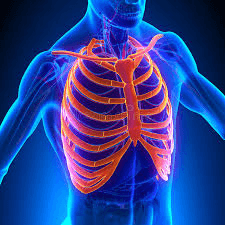
What bone is highlighted?
Ribs
Cranium
Clavicle
Femur
Tissue found in some bones that makes blood cells
bone marrow
joints
tendons
ligaments

What do the bones make?
veins
cartilage
red blood cells
bone marrow
What does the cranium protect?
heart
eyes
brain
lungs


A nerve cell is called a:
neutron
nerve
neuron
synapse


What is the main function of the nervous system?
to inhale oxygen and exhale carbon dioxide
to break down food consumed by a person for nutrients
to control the body's activities by relaying messages
to control the body's movements
What are the two divisions of the nervous system?
Central and Lower nervous systems
Central and Peripheral nervous systems
Lower and Cerebral nervous systems
Central and Muscular nervous systems
A nerve cell is called a:
neutron
nerve
neuron
synapse
What controls the nervous system and all decision-making?
Brain
Spinal Cord
Nerves
Neurons
The column of tissue connecting the brain to nerves is...
spinal cord
central nervous system
peripheral nervous system
All of the above
What part of peripheral nervous system controls voluntary movement via skeletal muscle ?
central nervous
Somatic Nervous System
peripheral nervous system
autonomic nervous system
What part of the peripheral nervous system controls involuntary functions such as heart rate and smooth muscle ?
peripheral nervous system
central nervous system
Choroid Plexus
Autonomic Nervous System

The Peripheral Nervous System is made up of
the brain and spinal cord
all of the neurons in the body
the neurons outside of the brain and spinal cord
the neurons in your arms and legs
This is a potentially life-threatening infection of the connective membranes in the spine
Meningitis
Brain tumor
Epilepsy
Multiple sclerosis (MS).
This is an abnormal growth of tissue that kills normal neurons around it. It is also called brain cancer
Meningitis
Brain tumor
Epilepsy
Multiple sclerosis (MS).
This is an illness in which a small area of the brain is damaged. The result is seizures, episodes of uncontrollable muscle activity.
Meningitis
Brain tumor
Epilepsy
Multiple sclerosis (MS).
With this disease, the protective outer coating of the nerves is damaged. They no longer work properly.
Meningitis
Brain tumor
Epilepsy
Multiple sclerosis (MS).

What is the biological explanation for the blind spot in the eye?
There is no retina in this spot.
There is just a hole in the back of the eye.
There are no photoreceptors here.
This is just a myth.
Short-sightedness can be corrected using
Convex lense
Concave lense
Eye lense
Cylindrical lense
A person who suffers from long-sightedness is unable to see ______ objects clearly.
left
right
near
far
Near objects appear blurry for a person who suffers long-sightedness because the image is focused ________ the retina.
at the side
away from
in front of
behind


Name structure C
Ciliary Muscles
Retina
Optic Nerve
Iris
Photoreceptors that detect the level of light but not the color
rods
cones
bipolar neurons
ganglion
Photoreceptors that detect colors and give a fine detailed image
cones
rods
ganglion neurons
bipolar neurons
What is myopia?
Near Sightedness
Far sightedness
The ability of our eyes to adjust its focal length is called
Aperture
Accomodation
Adjustment
Cataract
A child is not able to read letters in the book clearly and has to keep the book far away to read it clearly. In this defect, the image is formed
In front of retina
On the retina
Behind the retina
This problem arises due to foggy or cloudy lens .
presbyopia
myopia
cataract
hypermetropia

