
 Worksheets
lower
Total questions: 126
Worksheet time: 1hrs 19mins
Extends thigh at hip
biceps femoris
gracilis
gluteus maximus
gluteus medius
extends leg at knee
check all that apply
vastus lateralis
sartorius
vastus medialis
adductor longus
compresses abdomen, flexes & rotates vertebral column
check all that apply
external oblique
internal oblique
adductor longus
sartorius
flexes leg at knee, extends thigh at hip
check all that apply
rectus femoris
semitendinosus
semimembranosus
biceps femoris
extends leg at knee, flexes thigh at hip
semimembranosus
rectus abdominus
rectus femoris
gracilis
adducts thigh, flexes thigh at hip
tibialis anterior
external oblique
biceps femoris
adductor longus
adducts thigh, flexes thigh at hip, rotates lower limb medially
sartorius
biceps femoris
gracilis
vastus lateralis
flexes leg at knee, flexes thigh at hip, rotates lower limb medially
gluteus medius
gluteus maximus
rectus abdominus
sartorius
compresses abdomen, flexes vertebral column
rectus abdominus
internal oblique
gluteus medius
external oblique
abducts thigh, rotates thigh medially
gluteus maximus
soleus
gluteus medius
rectus abdominus
dorsiflexion and inversion of foot
tibialis anterior
gastrocnemius
soleus
gracilis
plantar flexion of foot, flexion of leg at knee
gastrocnemius
soleus
tibialis anterior
satorius
plantar flexion of foot
soleus
gastrocnemius
gracilis
adductor longus


What is this muscle?
sartorius
gluteus maxillus
gluteus medius

What is this muscle
sarcasticus
notorius
sartorius


What muscles are highlighted in the picture?
Adductor Muscles
Tibialis Anterior
Iliopsoas
Quadriceps Femoris

What muscle is highlighted in the picture?
Quadriceps Femoris
Peroneus Longus
Iliopsoas
Adductor Muscles

What muscle is highlighted in the picture?
Quadriceps Femoris
Peroneus Longus
Tibialis Anterior
Peroneus Brevis

gastrocnemius
soleus
achilles
patella

adductors
abductors
soleus
patella

Which muscle is highlighted in the picture? (Deep muscle)
Soleus
Gastrocnemius
Semitendinosus
Semimebranosus



The head of the femur articulates with the coxal bones at the _____________________________________.
Obturator Foramen
Acetabulum
Greater Trochanter
Lesser Trochanter
The floating bone in the knee is the ______________________.
Patella
Meniscus
Fibula
Tibia


Which muscle does mainly acts in hip abduction?
Gluteus minimus
Gluteus medius
Gluteus maximus
The medial border of the femoral triangle is formed by ....?
Inguinal ligament
Sartorius muscle
Adductor longus muscle
Which is correct about "sacral plexus"?
Aries from L1 - S4
Mostly supply posterior structure
Compose of Femoral nerve, Obturator nerve and Tibial nerve

What muscle is B?
Rectus femoris
Sartorius
Tensor fascia latae
Gracilis

What is F?
Joint capsule
Synovial membrane
Articular cartilage
Joint cavity

What muscle makes up the lateral border?
Pectineus
Sartorius
Iliopsoas
Adductor longus
What muscle makes up the medial border?
Pectineus
Sartorius
Iliopsoas
Adductor longus

Is D medial or lateral?
Lateral
Medial
What is A?
Femoral Artery
Tibial Artery
Popliteal Artery
Fibular Artery
What is the contents from lateral to medial?
Femoral Artery, Femoral Vein, Tibial Nerve, Common fibular Nerve
Tibial Artery, Tibial Vein, Tibial Nerve, Common fibular Nerve
Common fibular nerve, Tibial nerve, Popliteal Vein, Popliteal Artery
Popliteal Artery, Popliteal Vein, Tibial Nerve, Common fibular Nerve

What muscle is A
Semitendinosis
Biceps femoris
Semimembranosus
Adductor magnus
What muscle is E?
Plantaris
Soleus
Gastrocnemius medial head
Gastrocnemius lateral head
What muscle is D?
Plantaris
Soleus
Gastrocnemius medial head
Gastrocnemius lateral head
What muscle is A?
Vastus medialis
Sartorius
Adductor magnus
Adductor longus
Sacral plexus originates from which nerve roots?
C5, C6, C7, C8, T1
L4, L5, S1, S2, S3
T4, T5, T6, T7, T8
S1, S2, S3, S4, S5
What nerve roots does the femoral never originate?
L2, L3, L4
T1, T2, T2
S1, S2, S3
C5, C6, C7
Where does the Cauda Equine Start
C8-T1
T5-T6
T12-L1
S1-S2
How do peripheral nerve receive their nutrients?
Nervi Vascularis
Femoral Artery
Vasa Vasorum
Vasa Navorum
What ascending tract does pain move up to the brain?
Spinocerebellar Tract
Fascicular Gracilis
Spinothalamic Tract
Fascicular Cuneatus
What processes are related a to nerve injury?
Altered blood flow
Altered Axoplasmic flow
Development of abnormal impulse generating sites (AIGs)
All of the above
Which nerve is associated with hamstring pain?
Sciatic Nerve
Fermoral Nerve
Common Perineal Nerve
Tibial Nerve
Which nerve is associated with shin pain.
Femoral Nerve
Common Perineal Nerve
Posterior Tibial Nerve
Sciatic Nerve
Which nerve is associated with anterior thigh pain?
Sciatic Nerve
Posterior Tibial Nerve
Femoral Nerve
Common Perineal Nerve
Which sensitising movement would you perform on the ankle to assess the Common Perineal Nerve?
Dorsiflexion and Eversion
Plantarflexion and Inversion
Hip Medial Rotation and Adduction
Dorsiflexion and Inversion
Which sensitising movement would you perform on the ankle to assess the Sciatic Nerve?
Dorsiflexion and Eversion
Hip Medial Rotation and Adduction
Plantarflexion and Inversion
Dorsiflexion and Inversion
What is the test that assess the whole neural structure from our peripheral neural system to our central neural system?
Straight Leg Raise
Muscle Testing
Slump Test
Reflex Testing

Which of the following is TRUE regarding the action of the muscle highlighted in green?
Thigh flexion
Thigh internal rotation
Thigh adduction
Leg flexion
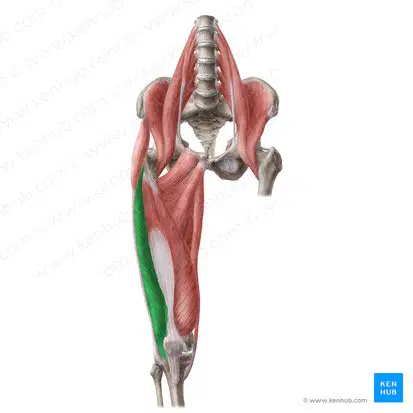
Which of the following nerve innervates the muscle highlighted in green?
Sciatic nerve
Obturator nerve
Superior gluteal nerve
Femoral nerve
Nerve to quadratus femoris
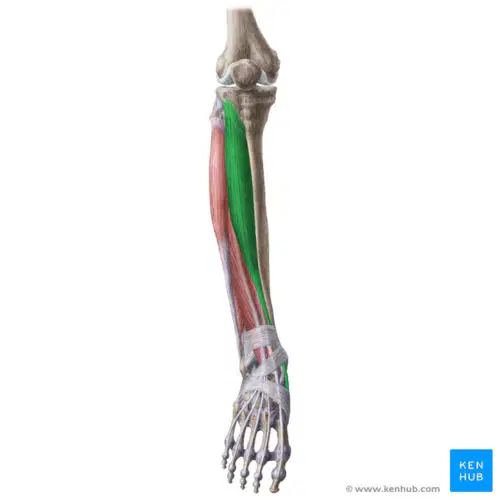
The main function of the muscle highlighted in green is?
Great extension
Digit 2-5 extension
Dorsiflexion
Inversion
Eversion
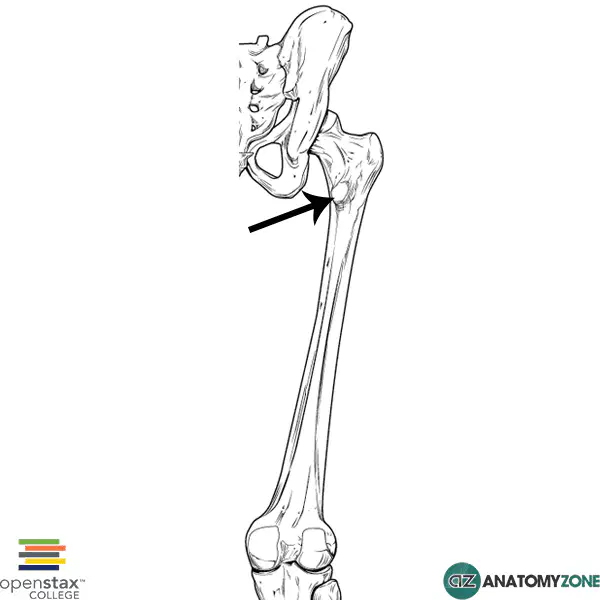
Which of the following muscle inserts over this structure?
Pectineus
Piriformis
Superior gemellus
Iliacus
Quadratus femoris
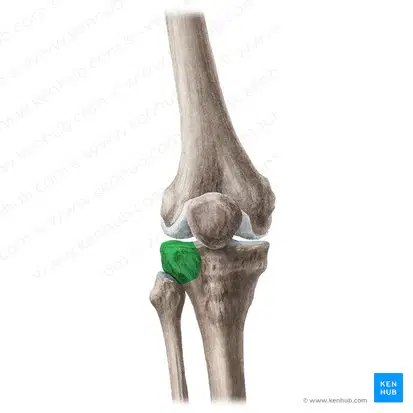
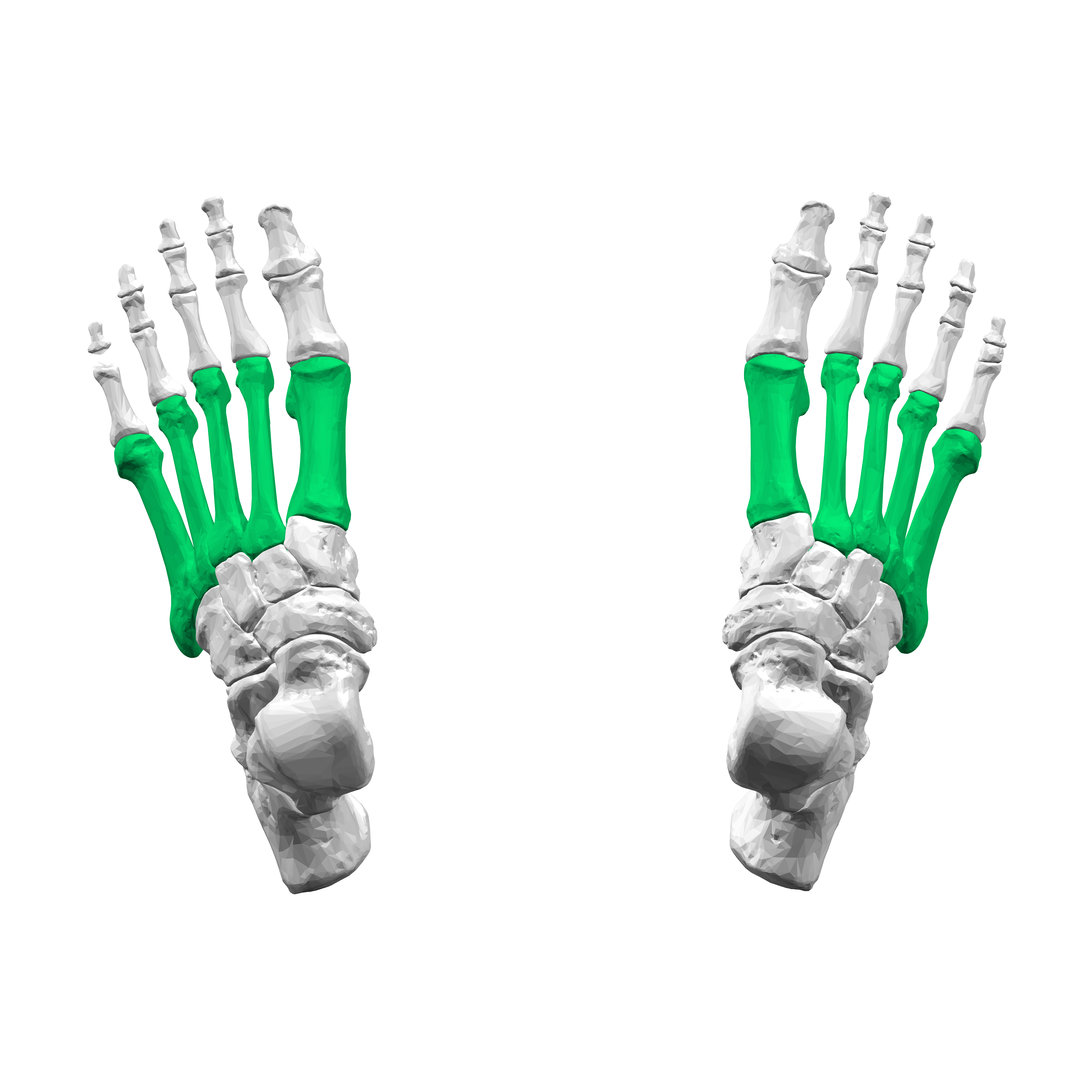
The following muscles originates from the structure highlighted in green, EXCEPT ________.
Peroneus Tertius
Tibialis Anterior
Extensor Digitorum Longus
Extensor Hallucis Longus
Which of the following muscles forms the Triceps Coxae?
Piriformis
Inferior Gemellus
Superior Gemellus
Obturator Externus
Obturator Internus

Which of the following deep hip muscles originates from the area indicated in red?
Piriformis
Superior Gemellus
Inferior Gemellus
Obturator Internus
Quadratus Femoris

Which of the following nerves innervates the muscle shown in the image?
Superior Gluteal Nerve
Inferior Gluteal Nerve
Femoral Nerve
Sciatic Nerve
Nerve to Piriformis
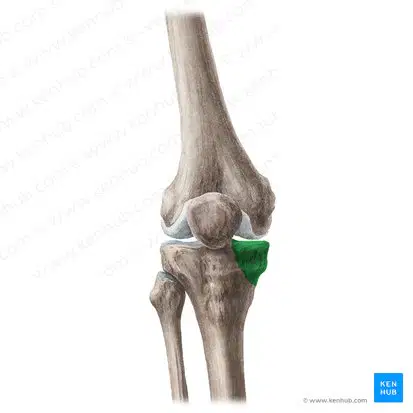
Any muscles that inserts over this structure will definitely be involved in ________________
Leg flexion and lateral rotation
Leg flexion and medial rotation
Leg extension and lateral rotation
Leg extension and medial rotation
Leg flexion only
The following are biarticular muscles, EXCEPT ________.
Semitendinosus
Sartorius
Pectineus
Vastus Medialis
Plantaris
Which of the following is NOT TRUE regarding the superficial posterior compartment muscles of the leg?
Innervated by Deep Peroneal Nerve
Has common origin
Main function is plantar flexion
The gastrocnemius, soleus and tibialis posterior forms the superficial layer
Gastrocnemius is the most superficial muscle

Which of the following is TRUE regarding the muscle indicated in red?
It is known as the extensor digitorum brevis muscle
It is innervated by the superficial fibularis nerve
It is an anterior compartment muscle
It's function is to flex the little toe at MTP joint
It is a prime evertor
Which of the following muscles tendon passes the superior and inferior retinaculum of the ankle?
Tibialis anterior
Peroneus brevis
Peroneus longus
Extensor digitorum longus
The levator ani muscles are formed by the following, EXCEPT __________
Iliococcygeus
Ischiocavernosus
Puboanalis
Coccygeus
Pubococcygeus
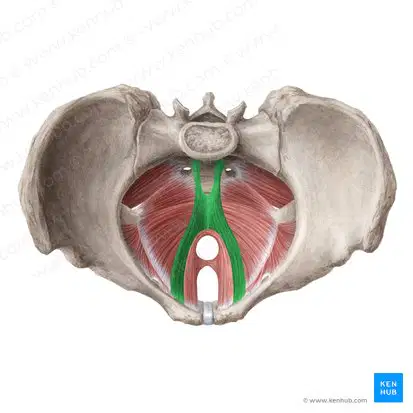
Identify the following muscle.
Iliococcygeus
Pubococcygeus
Puborectalis
Coccgeus
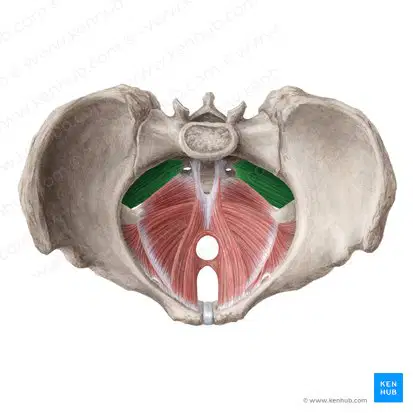
Which of the following nerves innervates the muscle highlighted in green?
Pudendal nerve
Deep perineal nerve
Inferior gluteal nerve
Piriformis nerve
Which of the following muscles has a point of attachment at the tendon of flexor digitorum longus?
Adductor hallucis
Flexor hallucis brevis
Quadratus plantae
Plantar interossei
Lumbricals
Which of the following muscles of the plantar aspect that has two heads arising from two origin point?
Abductor Hallucis
Flexor Hallucis Brevis
Adductor Hallucis
Quadratus Plantae
Which of the following is TRUE regarding the intrinsic muscles of the foot?
Extensor Hallucis Longus and Extensor Digitorum Brevis is the dorsal foot muscles
Abductor Hallucis and Flexor Digiti Minimi is the lateral foot muscles
The deep peroneal nerve supply the dorsal aspect of the foot
The Dorsal Interrosei is a muscle of the dorsal aspect

What is the action of the following muscle?
Hip abductor
Knee flexor
Knee extensor
Hip flexor
Which of the following muscles originates from the lateral aspect of distal fibula and inserts over the tubercle of of the fifth metatarsal bone?
Fibularis Longus
Fibularis Brevis
Fibularis Tertius
Extensor Hallucis Longus
Which of the following muscles originates from the lateral proximal fibula and inserts on the plantar surface of medial cuneiform and base of 1st metatarsal?
Fibularis Longus
Fibularis Brevis
Fibularis Tertius
Extensor Digitorum Longus
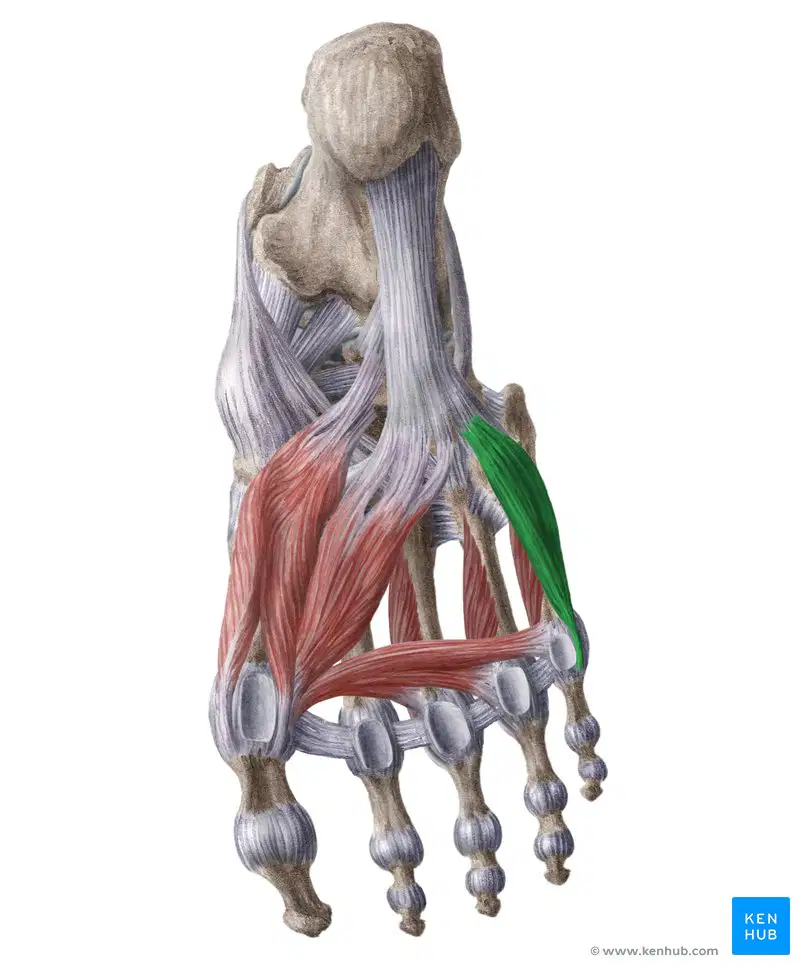
The muscle highlighted in green is responsible for _____________.
Abduction of the little toe
Adduction of the little toe
Flexion of the little toe
Extension of the little toe
T/F: Origins moves towards insertion when a muscle is contracting
true
false
which of the following muscles is lateral to rectus femoris ?
vastus medialis
vastus lateralis
vastus intermedius
piriformis
T/F: All anterior thigh muscles have the same insertion
True
False
which of the following is the actions of tensor fasciae latae?
extends thigh abducts thigh and laterally rotates thigh
abducts thigh, laterally rotates thigh, and flexes thigh
abducts thigh, medially rotates thigh, and flexes thigh
abducts thigh and medially rotates thigh
T/F: the gluteus medius, gluteus minimus, and piriformis have the same insertion
True
False
which of the following crosses the hip joint anteriorly?
iliopsoas
gluteus maximus
vastus intermedius
semitendinosus
which hamstring muscle does not cross the hip joint (only the knee joint)?
biceps femoris long head
semitendinsosus
semimembranosus
biceps femoris short head
which of the following is not a medial thigh muscle ?
pectineus
adductor longus
piriformis
gracilis
all are medial thigh muscles
which of the following medial thigh muscles does not insert on the linea aspera?
adductor longus
gracilis
adductor brevis
adductor magnus
what action do the hamstring muscles ALL have in common?
extend thigh
extend leg
flex thigh
flex leg
what is the origin of piriformis?
anterior surface of sacrum
greater trochanter
posterior surface of sacrum
none of the above
which muscle can be classified as a hamstring AND an adductor muscle?
gracilis
semitendensosus
adductor magnus
semimebranosus
We hope you all have a great spring break!!!
going on vacation
staying in Hburg
going home

