
 Worksheets
CP Physical Science Championship Game Practice
Total questions: 81
Worksheet time: 1hrs 19mins

Newton said that any two masses will...
combine into a larger mass.
attract each other.
create gravitational fields.
push each other apart.

According to Newton's law of gravitation, the Earth and the Moon are gravitationally attracted to each other. The more massive Earth attracts the Moon with...
a stronger force than the Moon attracts the Earth.
a weaker force than the Moon attracts the Earth.
the same force as the Moon attracts the Earth.
a force that is sometimes stronger and other times weaker than the Moon attracts the Earth.

The picture shows three objects gravitationally interacting with each other. Which object exerts the greatest force on object B?
Object A
Object C
A and C exert an equal force on B
Cannot be determined

The picture shows three objects gravitationally interacting with each other. Which object exerts the greatest force on object B?
Object A
Object C
A and C exert an equal force on B
Cannot be determined
A massive object and a less massive object exert a gravitational force on each other. Which of the following picture correctly shows the magnitude and direction of the forces involved in this interaction?


The picture shows three bodies (A, B, and C) that gravitationally attract each other. Between which two bodies is the force of gravity the strongest?
A and B
A and C
B and C
Equal for all
The amount of matter in an object
mass
weight
inertia
gravity
The moon and other satellites rotate around the Earth. Identify the force that keeps these satellites in orbit.
gravity
friction
a strong force
electromagnetic force
Two factors affecting the magnitude of the force of gravity between 2 objects are...
mass and distance
mass and matter
distance and weight
weight and mass
The force of gravity is directly proportional to
Mass
Weight
Distance
Time
Force of gravity is inversely proportional to
Mass
Weight
Distance
Time
The path a planet travels around the sun is called its
orbit
ellipse
barycenter
precession
Two objects move toward each other gravitationally. As they get closer, the force between them:
remains constant
increases
decreases
What states that "every object in the universe attracts every other object"?
Law of Universal Gravitation
Newton's First Law of Motion
My mother
Inertia & gravity
Which of the following is Newton's Law of Gravitation?
F=Gm1m2/r
F = Gm1m2/r2
F = Gm1m2/2r
F = m1m2/2r
If I double the distance between two objects, what happens to their gravitational force?
4x bigger
4x smaller
2x bigger
2x smaller
What is thermodynamics?
movement of heat
it's magic
measurement of heat
none of them
Energy due to motion is ____________ energy.
Potential
Energy
Kinetic
Friction

High temperature is connected to:
Low kinetic energy.
High kinetic energy.
Zero net energy.
Equal kinetic energies.

Heat transfers from an area of ____ temperature to an area of ____ temperature.
high to low
low to high
high to high

Which direction will the heat flow while this ice cap melts?
there is no heat transfer
from the ice cap to the water
from the water to the ice cap

Which direction will the heat flow while this person holds a hot cup of tea?
from the cup to her hand
from her hand to the cup
no heat is transferred
A student is holding the end of a pendulum. The student releases the pendulum. What energy transfers are taking place?
Potential energy is transferred to kinetic energy
Chemical energy to thermal energy
Mechanical energy to chemical energy
Kinetic energy is transferred to potential energy

Where is the potential energy the greatest?
A
B
C
D
The ability to do work
A. chemical energy
B. Friction
C. electrical energy
D. Energy
After an energy conversion, you end up with the same total amount of energy as the original amount of potential energy. Which of the following laws explains this rule?
a. law of energy changes
b. law of conservation of energy
c. law of power and energy
d. law of potential energy
When is the potential energy the greatest in a roller coaster?
a. at the bottom of the first hill
b. at the top of the first hill
c. at the top of the second hill
d. at the bottom of the second hill
What is potential energy?
moving energy
stored energy
renewable energy
non-renewable energy
Two factors that determine work are:
force
acceleration
mass
distance
velocity
Units of force are
newtons
grams
joules
meters
Units for work are
newtons
joules
meters
seconds
If you push a cart with a force of 60 N for 2 m, how much work have you done?
120 J
30 J
120 N
30 N
What is the formula for work?
Force = work x distance
Distance = force x work
Work = force x distance
Work = force x mass

A kid applies a force of 70 N to a ball over 1.1 meters. How much work did he do on the ball?
77 J
7.7 J
0.7 J
770 J

At which point of the roller coaster is potential energy the greatest?
W
X
Y
Z
The faster an object moves, the ________ kinetic energy it has.
more
less
Energy transformations occur when...
energy is created through conduction
energy changes from one form to another
two forces slide together that are touching
a chemical reaction takes place
According to the Law of Conservation of Energy, energy cannot be created or destroyed.
destroyed, destroyed
created, saved
created, destroyed
lost, found
Two like charges
neutralize each other.
repel each other.
must be neutrons.
attract each other.
The charge of an electron is
positive.
negative.
Electrons have no charge
An atom loses an electron. What type of charge does it have now?
positive
negative
An atom gains an electron. What type of charge does it have now?
positive
negative
No charge
What direction are the electric field lines around an electron?
towards the charge
away from the charge
What is the standard unit for charge?
Newtons (N)
Coulombs (C)
Electros (e)
Protos (P)
What is the value of Coulomb's constant?
9 x 10⁹ Nm2C-2
8.987 Nm2C-2
8.987 x 10¹¹ Nm2C-2
7.1 x 104.5 Nm2C-2
A repulsive force exists between which two particles?
Two neutrons
An electron and a neutron
An electron and a proton
Two protons

What direction will the charge in the middle move?
to the right
to the left
stay still
it's a mystery

Based on the arrangement of the electric field lines in the diagram, what are the charges?
Both charges are the same
The charges are opposite
They are neutral; no charge

Which statement best describes the electric fields in the image?
The charges are neutral.
Both charges are negative, so the field lines are alike.
The field lines move toward a positive charge and away from a negative charge.
The field lines move away from a positive charge and toward a negative charge.
Where can an electric field be found?
below a force field
in a gravitational field
in the space surrounding a charged object
outside of a magnetic field

Which diagram correctly shows the electric field around a negative charge?
A
B
They are both positive

Which diagram correctly shows the field lines between two like charges?
A
B
Both
Neither
A positive charge of 1.5 x10⁻⁸ C experiences a force of 0.025 N to the left in an electric field. What is the magnitude of the field?
1.7 x 10⁶ N/C
2.0 x 10⁶ N/C
3.4 x 10⁶ N/C
1 x 10⁶ N/C
Electric potential difference is measured in:
V
C
F
N/C
V or J/C
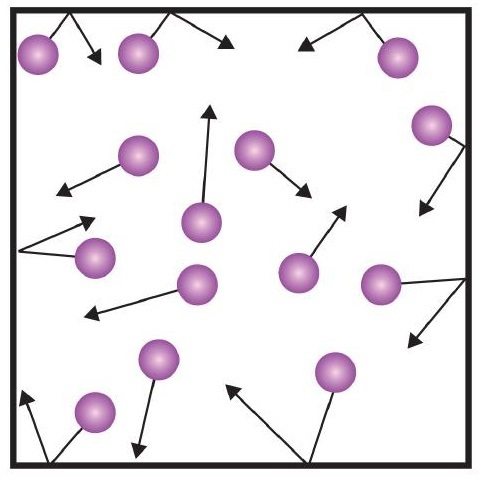
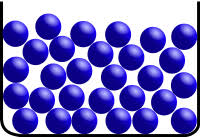

The diagram above shows a point, P, located midway between two oppositely charged parallel plates.
If an electron is introduced at point P, the electron will
accelerate toward the negatively charged plate
travel at constant speed toward the negatively charged plate
travel at constant speed toward the positively charged plate
accelerate toward the positively charged plate

Since the electric field lines are pointing away from the charged particle it must be...
positive
negative
neutral
none of the above


Which will heat up faster?
copper
granite
iron
basalt


Do molecules generally move faster at 45 C or 106 C?
45 C because molecules have more energy than in 106C
106 C because molecules have more energy than in 45C
106 C because molecules have less energy than in 45C
45C because molecules have less energy than in 106 C

What is the unit of force in the International System of Units (SI)?
Newton (N)
Joule (J)
Watt (W)
Pascal (Pa)
Which of the following best describes kinetic energy?
Energy stored in an object
Energy due to an object's motion
Energy due to an object's position
Energy that is not in use
What happens to the kinetic energy of an object if its velocity is doubled?
It remains the same
It doubles
It quadruples
It halves
What is the formula for momentum?
momentum = mass x velocity
momentum = mass x acceleration
momentum = force x distance
momentum = velocity x time
In a perfectly inelastic collision, what happens to the colliding objects?
They bounce off each other with no loss of kinetic energy.
They stick together and move with a common velocity.
They come to a complete stop.
They explode and move in opposite directions.
Which of the following is conserved in an elastic collision?
Only momentum
Only kinetic energy
Both momentum and kinetic energy
Neither momentum nor kinetic energy
What is the principle of conservation of momentum?
The total momentum of a closed system is constant if no external forces act on it.
The total energy of a closed system is constant if no external forces act on it.
The total mass of a closed system is constant if no external forces act on it.
The total velocity of a closed system is constant if no external forces act on it.
In a collision between two objects, how is the total momentum before and after the collision related?
The total momentum before the collision is greater than after the collision.
The total momentum before the collision is less than after the collision.
The total momentum before the collision is equal to the total momentum after the collision.
The total momentum before the collision is unrelated to the total momentum after the collision.
Two ice skaters push off from each other on a frictionless ice rink. If one skater has a mass of 50 kg and the other has a mass of 75 kg, what can be said about their momenta after they push off?
The skater with 50 kg mass will have greater momentum.
The skater with 75 kg mass will have greater momentum.
Both skaters will have equal and opposite momenta.
Both skaters will have zero momentum.

