
 Worksheets
Final Exam Review Questions
Total questions: 50
Worksheet time: 50mins
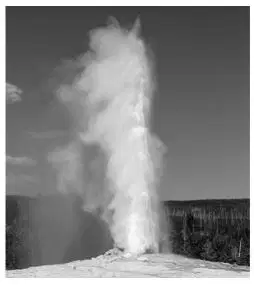
In some places, hot water from underground can shoot up into the air through a hole in the ground. When this happens, the ground surrounding the water increases in temperature. What happens to the molecules in the ground when the temperature of the ground increases?
More heat molecules combine with the molecules in the ground.
The energy of the molecules in the ground decreases.
The energy of the molecules in the ground increases.
The cold energy of the molecules in the ground decreases.
Lin cooked a pot of soup, then put half the soup in the freezer for a while. Now the soup in the pot is hot, and the soup in the freezer is cold. What is the difference between the molecules of the soup in the pot and the molecules of the soup in the freezer?
The molecules of the soup in the pot are moving and the molecules of the soup in the freezer are not moving.
The molecules of the soup in the pot are moving faster than the molecules of the soup in the freezer
There is no difference because all of the soup is made of the same type of molecules.
The molecules of the soup in the freezer are smaller than the molecules of the soup in the pot.
Engineers design computers to cool down quickly so they do not break. What happens to the molecules in a computer when the temperature of the computer decreases?
The energy of the molecules in the computer decreases
The energy of the molecules in the computer increases
The cold energy of the molecules in the computer increases
The computer loses heat molecules.
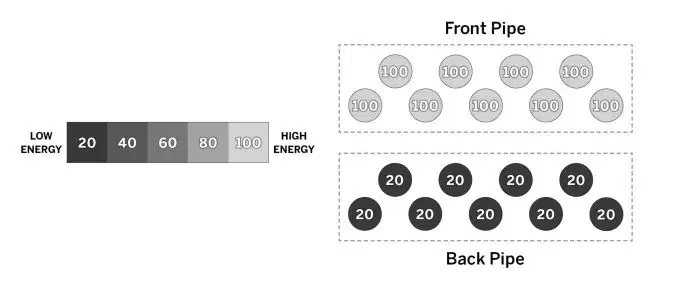
How does the temperature of the front pipe compare with the temperature of the back pipe before the pipes touch? What will happen after the pipes have been touching for a while?
Before the pipes touch, the front pipe is cooler than the back pipe. Once the pipes are touching, the back pipe will transfer kinetic energy to the molecules in the cooler front pipe until both pipes reach the same temperature, which will be in between their starting temperatures.
Before the pipes touch, the two pipes are different temperatures. Once the pipes are touching, the kinetic energy and cold energy will transfer between the molecules in the two pipes until both pipes reach the same temperature, which will be in between their starting temperatures.
Before the pipes touch, the front pipe is hotter than the back pipe. Once the pipes are touching, the cooler back pipe will gain kinetic energy until the molecules in both pipes have an energy of 100, because hotter things increase the temperature of cooler things.
Before the pipes touch, the front pipe is hotter than the back pipe. Once the pipes are touching, the front pipe will transfer kinetic energy to the molecules in the cooler back pipe until both pipes reach the same temperature, which will be in between their starting temperatures.
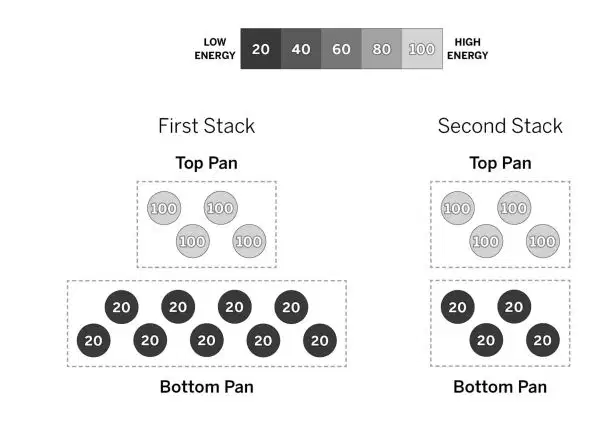
After the pans have been touching for a while, which of the two bottom pans will be cooler, and why?
The smaller bottom pan will be cooler than the larger bottom pan, because less energy has to transfer for the molecules to reach the same temperature as the molecules of the top pan.
The larger bottom pan will be cooler than the smaller bottom pan. It started with more total energy, so less energy had to transfer for both pans to reach the same total energy
The larger bottom pan will be cooler than the smaller bottom pan, because the energy that transferred to it will have spread out over more molecules.
Both pans will be the same temperature because both of the top pans had the same amount of energy to transfer and the molecules in the bottom pans start with the same energy.
Joseph puts a piece of toast on a plate. The toast is hot from the toaster. When he puts the toast on the plate, the energy of the plate increases. What must be true of the energy of the toast?
Its energy stays the same while the energy of the plate increases
Its energy decreases while the energy of the plate increases.
Its energy increases while the energy of the plate increases.
It is impossible to know without data on the number of molecules in each object.
After a candle is blown out, the wax of the candle decreases in temperature. What happens to the molecules of the wax when the temperature of the wax decreases?
The energy of the molecules of the wax decreases.
The cold energy of the molecules of the wax increases
The energy of the molecules of the wax increases.
The wax loses heat molecules.
Eric pours some iced tea into a glass. When he puts the iced tea in the glass, the energy of the glass decreases. What must be true of the energy of the iced tea?
Its energy stays the same while the energy of the glass decreases.
Its energy decreases while the energy of the glass decreases
Its energy increases while the energy of the glass decreases.
It is impossible to know without data on the number of molecules in each object.

Chengdu is closer to the equator than Harbin. Which location has a colder air temperature and why?
Harbin, because less energy is transferred from the sun directly to the surface, and then from the surface to the air.
Harbin, because less energy is transferred from the sun directly to the air.
Chengdu, because less energy is transferred from the sun directly to the surface, and then from the surface to the air
Chengdu, because less energy is transferred from the sun directly to the air.
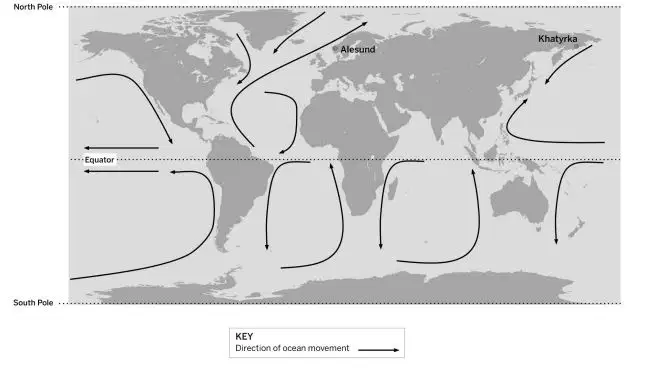
Alesund and Khatyrka are the same distance from the equator and they are both near the ocean. Use the information on the map to answer these questions: How does the air temperature of Alesund compare to the air temperature of Khatyrka? Why? The air at Alesund is
the same as Khatyrka. Even though the ocean water at each location is a different temperature, the same amount of energy is transferred to the air at both locations.
the same as Khatyrka. They are both near moving ocean water, so the same amount of energy is transferred to the air at both locations.
warmer than Khatyrka. At Alesund, energy is transferred from the ocean to the air. At Khatyrka, energy is transferred from the air to the ocean.
warmer than Khatyrka. At Alesund, a lot of energy is transferred from the ocean to the air. At Khatyrka, only a little energy is transferred from the ocean to the air.
Harold is using what he knows about cause-and-effect relationships to write a paper explaining cloud shape. How could he describe cause and effect in his paper?
There is only one cause for cloud shape, because each effect has one cause.
There can be more than one cause for the effect of cloud shape.
It is impossible to determine which factors cause cloud shape and which factors are the effects of cloud shape.
Some things, like cloud shape, do not have a cause because they just happen.

Hopetown is farther from the equator than Kamina. Which location has a colder air temperature and why?
Kamina, because less energy is transferred from the sun directly to the air.
Kamina, because less energy is transferred from the sun directly to the surface, and then from the surface to the air.
Hopetown, because less energy is transferred from the sun directly to the air.
Hopetown, because less energy is transferred from the sun directly to the surface, and then from the surface to the air.
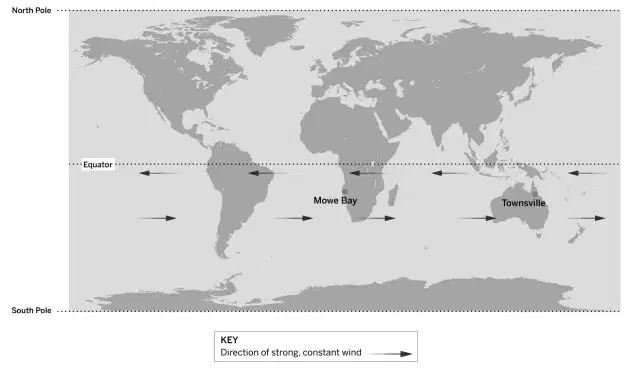
Mowe Bay and Townsville are the same distance from the equator, and they are both near the ocean. Using the information in the map, how does the air temperature of Mowe Bay compare to the air temperature of Townsville? Why? The air at Mowe Bay is
the same as Townsville. Both locations are the same distance from the equator. The winds push the ocean water, and it turns to follow the coast past both locations, so the same amount of energy is transferred to the air.
colder than Townsville. Moving air with only a little energy turns and follows the coast toward Mowe Bay. Moving air with a lot of energy turns and follows the coast toward Townsville.
colder than Townsville. The winds push ocean water that turns and follows the coasts. Energy is transferred from the air to the ocean at Mowe Bay and energy is transferred from the ocean to the air at Townsville.
colder than Townsville. The winds push ocean water that turns and follows the coasts. Only a little energy is transferred from the ocean to the air at Mowe Bay; more energy is transferred from the ocean to the air at Townsville.
Milltown is 15ºC (59ºF) in the spring. What is the source for most of the energy that causes this temperature?
the sun
volcanoes
coal and oil
trees
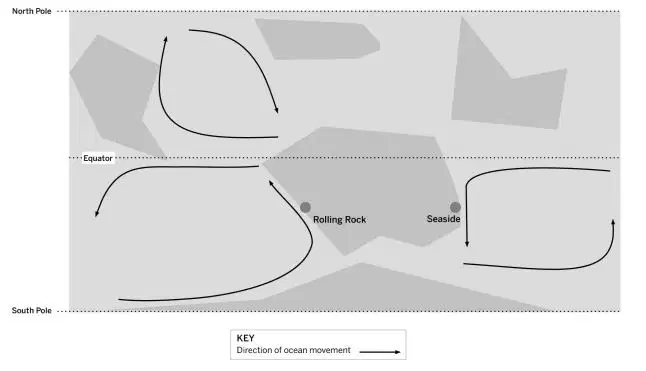
Rolling Rock and Seaside are the same distance from the equator and they are both near the ocean. Use the information on the map to answer these questions: How does the air temperature of Rolling Rock compare to the air temperature of Seaside? Why? The air at Rolling Rock is
the same as Seaside. Even though the ocean water at each location is a different temperature, the same amount of energy is transferred to the air at both locations.
the same as Seaside. They are both near moving ocean water, so the same amount of energy is transferred to the air at both locations.
colder than Seaside. At Rolling Rock, only a little energy is transferred from the ocean to the air. At Seaside, a lot of energy is transferred from the ocean to the air.
colder than Seaside. At Rolling Rock, energy is transferred from the air to the ocean. At Seaside, energy is transferred from the ocean to the air

There were two rainstorms in Hatfield last month. Before Storm 1, Hatfield’s temperature at the surface was 31°C. Before Storm 2, the temperature at the surface was 15°C. The temperature of areas surrounding Hatfield was the same before both storms. There was the same amount of water vapor in the air parcels before both storms.
Storm 1. The air parcel at the surface was warmer and had more energy, so when it moved higher, it lost more energy
Storm 1. The air parcel at the surface was warmer and had more energy, so when cooler air from above came down, it lost more energy.
Storm 2. The air parcel at the surface was cooler and had less energy, so when it moved higher, it gained more energy.
Storm 2. The air parcel at the surface was cooler and had less energy, so with low energy it remained near the surface.
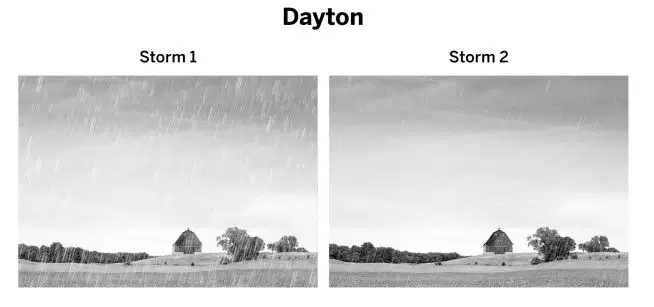
Dayton had two rainstorms in June. Storm 1 had more rainfall than Storm 2. The temperature of the surrounding areas was the same before both storms.
What conditions could have caused Storm 1 to have more rainfall than Storm 2? Before Storm 1, Dayton could have been:
cooler than before Storm 2 and windy. Wind pushed the cooler air parcel even higher and the air parcel gained more energy.
cooler than before Storm 2 and windy. Wind caused the cooler air from above the air parcel to move down, causing the cooler air parcel at the surface to lose more energy
warmer than before Storm 2 and windy. Wind pushed more water vapor out of the warmer air parcel.
warmer than before Storm 2 and windy. Wind pushed the warmer air parcel even higher and the air parcel lost more energy.
The air temperature of Ostley is higher than the air temperature of Eastbrook. What is the main cause for the different air temperatures?
More energy from the sun is transferred to the ground in Ostley than in Eastbrook, and that energy is transferred to the air above it.
More energy from the sun is transferred to the air in Ostley than in Eastbrook, and that energy is transferred from the air to the ground below it.
The heat from the center of Earth transferred more energy to the ground in Ostley than in Eastbrook, and that energy transferred to the air above it.
There was less wind in Ostley and more wind in Eastbrook. Wind moved more energy out of the air in Eastbrook than in Ostley.
Nasha left a hot bowl of soup in a cool room. Her friend tells her that her soup will get cold if she forgets to eat it. How cold could it get?
Only a little colder. It started out much hotter, so it will stop cooling down before it reaches the same temperature as the room.
Only a little colder. It will stop cooling down when its temperature is about halfway between its starting temperature and the temperature of the room.
Only as cold as the temperature of the room. It will stop cooling down when it is exactly the same temperature as the room.
Colder than the temperature of the room. It will keep cooling down for as long as she leaves it in the room.
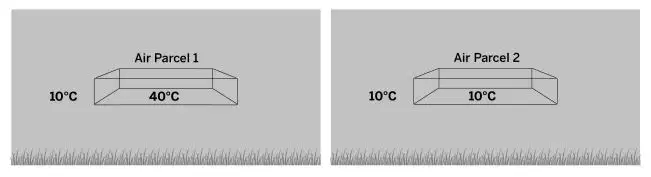
Which air parcel will have more rainfall and why?
a Both air parcels will have the same amount of rain. They have the same surrounding air temperature, so the same amount of water vapor will fall as rain.
Air Parcel 1 will gain energy from the surrounding air, which will cause more water vapor to fall as rain.
Air Parcel 1 will lose energy to the surrounding air, which will cause more water vapor to fall as rain.
Air Parcel 2 is colder than Air Parcel 1, so more water vapor will fall as rain.
Sonya put a glass of water on the table and left the room. When she came back, she found water drops on the outside of the glass. Where did the water on the outside of the glass come from?
The air in the room. Water vapor in the air turned into liquid water.
The air in the room. Oxygen in the air turned into liquid water.
Water inside the glass. The water leaked through the glass.
Water inside the glass. The water moved along the surface of the glass.
Climate researchers are creating a computer simulation to help them understand changes in the Earth system. They want to use the simulation to see what happens when they increase the carbon dioxide in the atmosphere. What should their simulation show about energy absorbed by Earth’s surface?
When carbon dioxide in the atmosphere increases, the amount of energy absorbed by Earth’s surface should . . .
increase.
decrease.
stay at a constant level.
change unpredictably
Scientists found evidence of a time period 3 billion years ago when less energy entered the Earth system than exited. What is one change to the atmosphere that could have caused this, and how did it change the amount of energy in the Earth system?
Methane increased, leading to more energy in the Earth system and more energy absorbed by Earth’s surface.
Methane increased, leading to less energy in the Earth system and less energy absorbed by Earth’s surface.
Methane decreased, leading to more energy in the Earth system and more energy absorbed by Earth’s surface.
Methane decreased, leading to less energy in the Earth system and less energy absorbed by Earth’s surface.
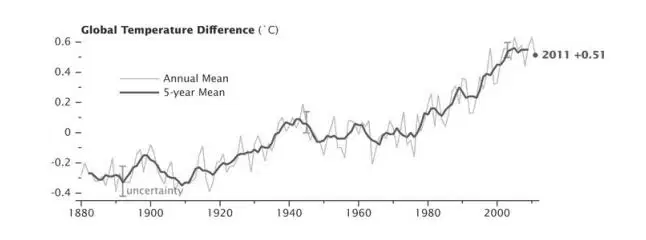
The graph above shows global temperature changes between the years 1880 and 2011. Which of the following best describes the changes seen in the graph?
The graph shows a trend of increasing temperature over time.
The graph shows temperatures go up and down, with no trend.
The graph shows the Annual Mean and 5-Year Mean have different trends.
The graph shows too much fluctuation to be confident about a trend.
What happens when energy hits sulfur dioxide?
When energy hits sulfur dioxide, more energy is created.
Sulfur dioxide traps some energy and holds it in the atmosphere.
Sulfur dioxide redirects (bounces) some incoming energy from the sun back toward outer space.
Energy always passes through sulfur dioxide.
What is one reason that carbon dioxide is increasing in the atmosphere today?
There are more volcanoes than there were in the past.
People are riding bicycles instead of driving cars.
There are more people doing things that use combustion.
People are using solar power.
Scientists who study the atmosphere often need to take samples of the atmosphere in order to learn more. They take some atmosphere samples near the ground. They take other atmosphere samples high in the air, while flying in a helicopter. What would the scientists find out about the samples?
Both samples are made of one kind of gas.
Both samples are made of a mix of several different kinds of gases.
Neither sample is made of anything.
The samples are different from each other because each gas forms its own layer in the atmosphere.

Climate researchers in Greenland can use ice core samples to tell them about carbon dioxide in the atmosphere in the past. The researchers have found an ice core sample that shows there was a period when carbon dioxide in the atmosphere decreased. What happened to the amount of energy absorbed by Earth’s surface during this time?
During this time, the amount of energy absorbed by Earth’s surface . . .
decreased.
increased.
stayed at a constant level.
changed unpredictably.
When making an argument about how climate change is affecting the ice cover on Earth, which of the following would be the least effective type of evidence to support your argument?
data tracking the amount of snowfall for the last 50 years
data tracking the surface temperature for the last 200 years
data tracking carbon dioxide levels for the last 100 years
data tracking glacier size for the last 2 years
What can humans do to help keep carbon dioxide and methane in Earth’s atmosphere from increasing?
Drive their cars less often
Eat less meat so that fewer livestock need to be kept
Both A and B
Humans can’t affect the amount of carbon dioxide or methane in the atmosphere
The role of the digestive system is....
to break down starch into glucose and protein into amino acids
to transport molecules to the cells
to take in oxygen from the air
to perform cellular respiration
Which of these molecules is too big to enter cells?
amino acids
glucose
starch
oxygen
In order to exercise normally....
water and carbon dioxide need to react & release energy
protein needs to get broken down into amino acids
glucose and oxygen need to react & release energy
oxygen and amino acids need to react & release energy
If the digestive system isn't working properly....
you would have trouble breathing
your cells would not get enough molecules from air
your body would not be able to transport molecules to cells
your cells would not get enough molecules from food
In order for our bodies to exercise, our cells need to get....
molecules from food
molecules from food and air
molecules from the air
molecules from drinking water
The role of the circulatory system is....
to break down starch into glucose and protein into amino acids
to take in oxygen from the air
to transport molecules to the cells
to perform cellular respiration
If there is low glucose in the digestive system, that is a sign that...
the digestive system is not breaking down food properly
the circulatory system is not breaking down food properly
the respiratory system is not taking in enough oxygen
the digestive system is working correctly
Which of these molecules is needed by cells in order to make energy?
amino acids
starch
protein
glucose
In the digestive system, starch is broken down into....
oxygen
amino acid
glucose
ATP Energy
If the respiratory system isn't working properly...
the cells won't get enough oxygen
the cells won't get enough amino acids
the cells won't get enough glucose
the cells won't get enough protein
Where does cellular respiration happen?
nucleus
golgi body
mitochondria
endoplasmic retticulum
Which molecules are required to perform cellular respiration?
amino acids and protein
ATP energy
water and carbon dioxide
glucose and oxygen
The role of the respiratory system is....
to break down starch into glucose and protein into amino acids
to transport molecules to the cells
to take in oxygen from the air
to perform cellular respiration
There are two wolves that have the same proteins for paw size in their cells. The wolves have different parents and were raised in different environments. What can you say about their paw size?
They will have the same paw size since their proteins fit together in the same ways to determine paw size.
They will have the same paw size since all wolves have the same paw size even if they were raised in different environments.
They will have different paw sizes since different environments will always cause the proteins to fit together differently.
They will have different paw sizes since only offspring from the same parents have the same size paws.
Two parrots live in two different environments. One parrot has red chest feathers, and the other parrot has yellow chest feathers. Why do the parrots have different feather colors on their chest?
Each parrot has different feather colors because the environment caused each parrot’s genes to connect differently.
The parrots have different versions of the gene for feather color, and the genes are different colors in each parrot’s feathers.
Each parrot has different feather colors because the environment caused each parrot’s proteins to change the color of its genes.
The parrots have different versions of the gene for feather color, which instruct for different proteins that make different feather colors.
A dragonfly has blue wings. Its mother has blue wings, but its father has colorless wings. Which of these statements explains why the dragonfly has blue wings?
The dragonfly inherited one copy of the gene for wing color from its mother and one copy from its father. That gene combination instructs for proteins that make its wings blue.
The dragonfly inherited its copies of the gene for wing color from its mother and not from its father. Those genes connect together to make its wings blue.
The dragonfly inherited one copy of the gene for wing color from its mother and one copy from its father. It must have lived in the same environment as its mother, which resulted in its blue wings.
The dragonfly inherited its copies of the gene for wing color from its mother and not from its father. Just like its mother’s genes, those genes instruct for proteins that make its wings blue.
There are two tree frogs that have different proteins in their cells for tongue length. They were raised in the same environment by different parents. What can you say about their tongue lengths?
They will have the same tongue lengths since tongue length is only determined by what environment the frogs were raised in.
They will have different tongue lengths since their proteins will fit together in different ways to determine tongue length.
They will have different tongue lengths since offspring from different parents will have different tongue lengths.
They will have the same tongue lengths since they both have proteins for tongue length.
A father rabbit had long ears while a mother rabbit had short ears. Which of these statements explains why one of the baby bunnies could have long ears?
The baby bunny inherited its copies of the gene for ear length from its father and not from its mother. Those genes connect together to make its ears long.
The baby bunny inherited its copies of the gene for ear length from its father and not from its mother. Just like its father’s genes, those genes instruct for proteins that make its ears long.
The baby bunny inherited one copy of the gene for ear length from its father and one copy from its mother. That gene combination instructs for proteins that make its ears long.
The baby bunny inherited one copy of the gene for ear length from its father and one copy from its mother. It must have lived in the same environment as its father, which resulted in its long ears.
A shark pup has a pointed fin. Its mother also had a pointed fin, but its father had a rounded fin. Which of these statements explains why the shark pup has a pointed fin?
The shark pup inherited one copy of the gene for fin shape from its mother and one copy from its father. That gene combination instructs for proteins that make its fin pointed.
The shark pup inherited its copies of the gene for fin shape from its mother and not from its father. Those genes connect together to make its fin pointed.
The shark pup inherited one copy of the gene for fin shape from its mother and one copy from its father. It must have lived in the same environment as its mother, which resulted in its pointed fin.
The shark pup inherited its copies of the gene for fin shape from its mother and not from its father. Just like its mother’s genes, those genes instruct for proteins that make its fin pointed.
Spiders have proteins that interact to determine silk flexibility. If the structure of one of a spider's silk proteins changed, but the amount of that protein remained the same, how could that affect the protein's function?
The changed protein interacts differently, but its function doesn’t change.
The changed protein interacts in the same way, but its function changes.
The changed protein interacts differently, so its function changes.
The amount of that type of protein stayed the same, so its function doesn’t change.

