
 Worksheets
Human Anatomy Test
Total questions: 100
Worksheet time: 53mins
Which is not a function of the skeleton?
Gives body shape.
Movement
Produces hormones.
Protection
Found in the walls of hollow organs; also called visceral
smooth
cardiac
skeletal
all
Which type of joint gives you the largest range of motion?
Pivot joint
Ball-and-socket joint
Hinge joint
Gliding joint
What Muscle Type is found in the heart
smooth
cardiac
skeletal
all
The joints in your knees and elbows are most similar to:
The pendulum in a grandfather clock
The wheels on an office chair
The sliding mechanism on a drawer
The hinge on a cupboard door
Found attached to bones throughout the body
smooth
cardiac
skeletal
all
Which pair of joints has the most in common?
Your ankle joints and shoulder joints
The joints in your spine and hip joints
Your elbow joints and knee joints
Your wrist joints and shoulder joints

Type 1 and 2a are muscle fibres found in the body - select the missing muscle fibre type
Type 1a
Type 2c
Type 2x
Type 2z

What happens to a muscle when it contracts?
It crosses a neuron
It stretches
It gets longer
It shortens
How many types of muscle fibre are there
2
3
4
5
Brings blood to the heart from the upper portion of the body.
pulmonary artery
superior vena cava
pulmonary vein
inferior vena cava
Thickest walled chamber of the heart.
left atrium
right ventricle
left ventricle
right atrium
Valve between the left ventricle and the aorta.
aortic valve
pulmonary valve
tricuspid valve
mitral valve
These vessels carry blood to each lung from the right ventricle.
superior vena cava
pulmonary arteries
pulmonary veins
aorta
Valve between the right atrium and the right ventricle.
mitral valve
pulmonary valve
aortic valve
tricuspid valve
Blood in the right atrium:
Oxygenated
Deoxygenated
Blood in the left ventricle:
Oxygenated
Deoxygenated
Blood in the pulmonary artery:
Oxygenated
Deoxygenated
Blood in the pulmonary veins:
Oxygenated
Deoxygenated
Blood in the aorta:
Oxygenated
Deoxygenated
Blood in the left atrium:
Oxygenated
Deoxygenated
Blood in the Inferior Vena Cava:
Oxygenated
Deoxygenated
How many chambers does a human heart have?
1
2
3
4
The heart is made of ______ muscle
skeletal
cardiac
smooth
True or False: the vena cava is the largest vein in the body.
True
False
True or False: the right atrium and left atrium are the 2 chambers on the bottom of the heart
True
False
When blood leaves this chamber of the heart, it heads out to the body (not the lungs)
left atrium
right atrium
left ventricle
right ventricle
When this chamber contracts, it pushes blood through the tricuspid valve
right atria
right ventricle
left atria
left ventricle
When blood leaves this chamber of the heart, it heads to the lungs
right atrium
right ventricle
left atrium
left ventricle
This chamber of the heart receives oxygenated blood from the lungs
right atrium
right ventricle
left atrium
left ventricle
Blood traveling through the pulmonary circuit goes through the right side of the heart and out to the _______
left side of the heart
body
lungs
tricuspid valve
Blood traveling through the systemic circuit goes through the _____ side of the heart and out to the body
right
left
___ is a group of organs and tissues that act as transfer stations carrying needed materials to cells and removing their waste products.
circulatory system
respiratory system
nervous system


The bottom chambers of the heart are called
ventricles
atria
vena cava
valves
The top chambers of the heart are called
ventricles
atria
vena cava
valves

What is the function of the cardiovascular system?
Break down food for nutrients.
Carry materials like gasses, nutrients, and waste around the body.
Movement of body parts.
Collect information and respond with electrical messages.
What type of blood vessel returns blood back to the heart?
vein
artery
capillary
none of the above
What type of blood vessels brings blood AWAY from the heart?
Vein
Artery
Capillary
None of the above
Which component of blood helps deliver oxygen with the protein hemoglobin?
Platelet
White Blood Cell
Red Blood Cell
Plasma
Which component of blood helps stop bleeding and forms clots?
Platelets
White Blood Cell
Red Blood Cell
Plasma
How many chambers (rooms) are in a human heart?
1
2
3
4
From the RIGHT ATRIUM, where does blood flow next?
Right ventricle
Left atrium
Aortra
Pulmonary arteries

Which chamber of the heart is this arrow pointing to?
Right Atrium
Left Atrium
Right Ventricle
Left Ventricle
The aorta is a large blood vessel that carries oxygen-rich blood from the left ventricle out to the body. What type of blood vessel is the aorta?
artery
vein
capillary
vena cava

What is the main function of the respiratory system?
break down food for nutrients
produce hormones (chemical messages)
Structure, support, and protection of body parts.
Bring in oxygen to the body and get rid of carbon dioxide.
What are the tiny air sacs in the lungs that exchange gases (oxygen for carbon dioxide)?
capillary
bronchi
alveoli
bronchiole
What is the dome shaped muscle in the respiratory system that helps control breathing by contracting and relaxing?
diaphragm
biceps
trachea
pharynx

On this picture of the respiratory system, what organ is letter A?
Alveoli
Bronchus (Bronchi)
Nose
Pharynx
On this picture of the respiratory system, what organ is letter B?
Alveoli
Bronchus (Bronchi)
Trachea
Lung
On this picture of the respiratory system, what organ is letter C?
Alveoli
Bronchus (Bronchi)
Trachea
Lung

What is Tidal volume?
The volume of air breathed in and out during one breath
The maximal amount of air a person can expel
The amount of blood pumped from the heart
The additional air that can be forcibly inhaled after normal inspiration

The maximum amount of air exhaled following a maximum inhalation
Vital Capacity
Total Lung Capacity
Residual Volume
Inspiratory Reserve Volume
During exercise, the frequency of breathing...
Increases
Remains the same
Decreases
Stops
You breathe in __________ and breathe out _________.
oxygen, carbon dioxide
carbon dioxide, oxygen
nitrogen, carbon dioxide
oxygen, carbon monoxide
What is the medical terminology prefix for heart?
Hemo-
Itis-
Cardio-
Cerdio-
Capillaries are the smallest blood vessel type.
True
False
The composition of the oxygen in inhaled air is
20%
16%
4%
0.04%
The composition of carbon dioxide in exhaled air is
79%
21%
4%
0.04%
From wrist to fingertip, what is the order of bones?
Carpals, metacarpals, phalanges
Phalanges, metacarpals, carpals
Carpals, phalanges, metacarpals
Metacarpals, carpals, phalanges
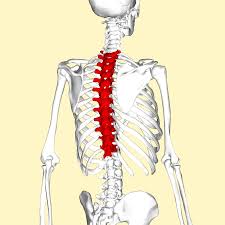

Which of the following is not a function of bones?
Protection
Blood cell formation
Storage
Absorption

Which of the following bones is INCORRECTLY matched with its type?
ribs--irregular
carpals--short
ulna--long
cranium--flat


What type of bone is the cranium

What does a tendon do?
Hold muscles together.
Hold joints in place.
Connect bone to bone.
Connect bone to muscle.
Flexion is a straightening movement around a joint
True
False
What connective tissues joins bone to bone?
(a)
Abduction is movement away from the midline of the body
True
False
Circumduction is the circular movement of a joint. It combines flexion, extension, abduction and adduction
True
False
Flexion is a straightening movement around a joint
True
False
What is the main function of the cranium?
Support
Protection
Mineral storage
Blood cell production

Classify the movement occurring in the picture
Flexion
Extension
Rotation
Abduction

What muscle in this picture is the agonist?
Quadriceps
Hip Flexors
Gluteus Maximus
Hamstring

What is the definition of antagonist?
The muscle within the pair that, at a given time, is relaxing to allow movement to occur.
A moving muscle.
The relaxing one.
The contracting muscle.
How does an antagonistic pair work?
Muscles move.
Paired muscles move.
Muscles relax and contract to move bones.
As one muscle relaxes the other contracts to allow movement at a joint.

What bone is highlighted?
Skull (Cranium)
Scapula
Clavicle
Mandible

What bone is highlighted?
Femur
Tibia
Fibula
Humerus

What bone is highlighted?
Radius
Ulna
Humerus
Carpals
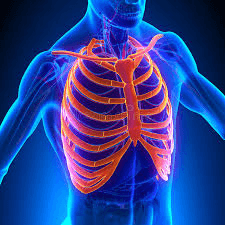
What bone is highlighted?
Ribs
Vertebrae
Clavicle
Femur
What is a joint?
The place where 2 or more bones meet.
A thin membrane that covers the surface of bone.
A band of tissue that hold bones together.
Connective tissue


Which of the following best describes the job of the skeletal system?
Gives shape and support to the body.
Sends messages from the stomach to the brain.
Brings in and breaks down all nutrients for the body
Which of these functions is not a function of the skeletal system?
To help the body breathe
To help support the body and give it structure
To help protect the bodyʻs soft organs
To produce blood cells
To store calcium and other important minerals

do snakes have legs
no
yes
why
answer
What is full of holes but still holds water?
A promise
A sponge
A barber
A bank
What has to be broken before you can use it?
A candle
An egg
A sponge
A promise

