wayground logo

Free Printable Worksheets

Font size

S
M
L
XL
Worksheets

Biology Review

Total questions: 87

Worksheet time: 1hrs 14mins

Name
Class
Date
1.
Evidence is ___________________
a)
A statement or conclusion that answers a question
b)
Scientific data that supports the claim
c)
A justification that connects the claim to the evidence
d)
Not vital when using an argument
2.
Reasoning is __________________.
a)
A statement of conclusion that answers the original question/problem
b)
Scientific data that supports the claim
c)
A justification that connects the evidence to the claim
d)
Empirical Evidence
3.

Pick the reasoning that best explains the evidence:

Claim: People should eat apples

Evidence: Apples have a lot of vitamin C

a)

Vitamin C is important for people because it helps bones, skin, and the immune system stay strong and healthy

b)

Apples contain 8.4 milligrams of vitamin C, or 14% of the recommended daily amount

c)

Apples taste really good with caramel

d)

Apples have also been shown to reduce the risk of heart disease

4.
All living things are made up of _____. 
a)
Cells 
b)
Bacteria 
c)
Virus 
d)
ATP
5.
Which of the following is an example of a prokaryotic cell? 
a)
Virus 
b)
Plant Cell 
c)
Bacteria 
d)
Animal Cell 
6.
Directs all cell activities through the DNA located there.
a)
Lysosomes
b)
Nucleus
c)
ribosomes
d)
Mitochondria
7.
I am the outer most layer of an animal cell. What am I?
a)
cell wall
b)
nucleus
c)
cell membrane 
d)
cell skin
8.
What are tiny organelles that convert glucose into ATP?
a)
Ribosomes
b)
Vesicles
c)
Cytoskeleton
d)
Mitochondria
9.
A rigid layer that lies outside the cell's  membrane is...
a)
Cytoskeleton
b)
Cilia
c)
Cell Wall
d)
Flagella
10.
The site of photosynthesis
a)
ribosome
b)
mitochondria
c)
chloroplast
d)
nucleus
11.
Plants and animal cells are examples of ___ cells 
a)
prokaryotic cells 
b)
eukaryotic cells 
12.
Which of the following would be found in both eukaryotic AND prokaryotic cells?
a)
chloroplast
b)
DNA
c)
nucleus
d)
endoplasmic reticulum
13.

Storage where food nutrients and waste are kep

a)

cytoplasm

b)

mitochondria

c)

vacuole

d)

Golgi Body

14.
Which is an example of a parasitic relationship?
a)
a bee pollinates a flower
b)
a tapeworm takes nutrients from a dog
c)
an orchid lives in a tree but does not harm the tree
15.
In which type of relationship do both species benefit?
a)
parasitism
b)
mutualism
c)
commensalism
16.
Barnacles grow on whales.  Whales give the barnacles a place to live but the barnacles do not help or harm the whale.  Which type of relationship is this?
a)
commensalism
b)
mutualism
c)
parasitiesm
17.
An organism that needs to eat other organisms to obtain energy is known as a:
a)
Autotroph
b)
Producer
c)
Consumer
d)
Mutualist
18.
Consumer that eats plants
a)
heterotroph
b)
herbivore
c)
producer
d)
community
19.
What does a food web represent?
a)
All connections of energy flow throughout all organisms in a habitat.
b)
The specific ways that mutualism is carried out.
c)
A single pathway or energy flow between organisms. 
d)
How carnivores get their food. 
20.
The nonliving aspects of an ecosystem.
a)
Abiotic factors
b)
Biotic factors
21.
A collection of organisms that make up a community as well as all of the nonliving aspects of the environment.
a)
Population
b)
Community
c)
Habitat
d)
Ecosystem
22.
 plants that convert energy from the sun
a)
decomposer
b)
primary consumer
c)
secondary consumer
d)
producer
23.
Different populations living and interacting with each other in the same area
a)
Biome
b)
Ecosystem
c)
Community
d)
Niche
24.
In the energy pyramid here, which organisms have the most energy available?
a)
Producers
b)
Carnivores
c)
Herbivores
d)
Top Predator
25.
If there is 1000 Kcal available in the producers in trophic level 1, how much energy is available in the herbivores in trophic level 2?
a)
10 Kcal
b)
1 Kcal
c)
100 Kcal
d)
1000 Kcal
26.

What do plants need for photosynthesis?

a)

Sunlight and C02

b)

Oxygen and fertilizer

27.

What enters and exits the Stomata?

a)

Oxygen and Carbon Dioxide

b)

Water and Nitrogen

c)

Sunlight and sugar

28.

Which of the following equations represents the overall chemical reaction for photosynthesis?

a)

6O2+ 6H2O → C6H12O6+ 6O2

b)

C6H12O6 + 6H2O→ 6O2+ 6O2

c)

6CO2+ 6H2O→ C6H12O6+ 6O2

d)

6O2 + 6H2O→ C6H12O6 + 6CO2

29.

What are the reactants (taken into) of cellular respiration? (Mark all of them!)

a)

oxygen

b)

glucose

c)

carbon dioxide

d)

water

e)

energy

30.

Cellular Respiration's goal is to

a)

make water

b)

make ATP

c)

make glucose

d)

make oxygen

31.
Which of the following is homozygous dominant?
a)
Yy
b)
Y
c)
yy
d)
YY
32.
Genotype refers to the ...
a)
physical expression of the genes
b)
the possible combination of alleles in a gene
c)
whether an allele is dominant or recessive
d)
how an organism will appear
33.
The hidden form of an inherited trait
a)
dominant trait
b)
recessive trait
c)
purebred
d)
hybrid
34.
T - tall and t = short
In the punnett square below, what belongs in the missing square
a)
tt
b)
Tt
c)
Bb
d)
TT
35.
What is the yellow seed genotype?
a)
aa
b)
Aa
c)
AA
d)
AA or Aa
36.

What is the probability that the offspring will express the dominant trait?

a)

25%

b)

50%

c)

75%

d)

100%

37.

A ____________________ is a large molecule.

a)

Micromolecule

b)

Macromolecule

c)

Amino Acid

d)

Monosaccharide

38.

Which of the following is not one of the four major classes of biomolecules?

a)

Lipids/Fats

b)

Carbohydrates

c)

Nucleic Acids

d)

Bacteria

e)

Proteins

39.

Which macromolecule is used as our main source of energy?

a)

Nucleic Acids

b)

Lipids/fats

c)

Proteins

d)

Carbohydrates

40.

Which of the following is an example of carbohydrates?

a)

Steak

b)

Olive oil

c)

Bread

d)

DNA

41.

Which macromolecule stores energy?

a)

Carbohydrates

b)

Proteins

c)

Lipids/Fats

d)

Nucleic Acids

42.

Protein is found in...

a)

DNA

b)

Olive Oil

c)

Bread

d)

Steak

43.

The monomer of proteins is...

a)

Polymers

b)

Monosaccharides

c)

Fatty Acids

d)

Amino Acids

44.
DNA and RNA are examples of 
a)
Carbohydrates
b)
Lipids
c)
Proteins
d)
Nucleic Acids
45.

The cell theory is...

a)

All living organisms are composed of at least one cell.

b)

building blocks of life. All cells come from

c)

All of the above

d)

Cells arise only from previously existing cells.

46.

A __________________ is a large molecule made of many small ones.

a)

Monomer

b)

Dissacharide

c)

Polymer

d)

Sugar

47.

_______________ are the monomers of carbohydrates.

a)

Monosaccharides

b)

Polymers

c)

Complex sugars

d)

Fructose

48.

The monomer of proteins is...

a)

Polymers

b)

Monosaccharides

c)

Fatty Acids

d)

Amino Acids

49.

What is the monomer of nucleic acids?

a)

RNA

b)

DNA

c)

Nucleotides

d)

Nucleic pieces

50.

What kind of molecule is water?

a)

Ionic

b)

Polar Covalent

c)

Nonpolar Covalent

d)

Metallic

51.

Which part of a water molecule has a Positive Charge?

a)

The Hydrogen

b)

The Oxygen

c)

The Top

d)

The Bottom

52.

Which of the following is an example of COHESION?

a)

water sticking to water

b)

water sticking to glass

c)

oil sticking to plastic

d)

hydrogen sticking to oxygen

53.

Water sticks well to many materials. What term relates to this property of water?

a)

cohesion

b)

adhesion

c)

density

d)

surface tension

54.

A water strider can skate along the top of a pond because:

a)

covalent bonds result in water cohesion (surface tension)

b)

hydrogen bonds result in water cohesion (surface tension)

c)

water striders have adapted to take advantage of water cohesion

d)

water striders are afraid of water and avoid it
55.

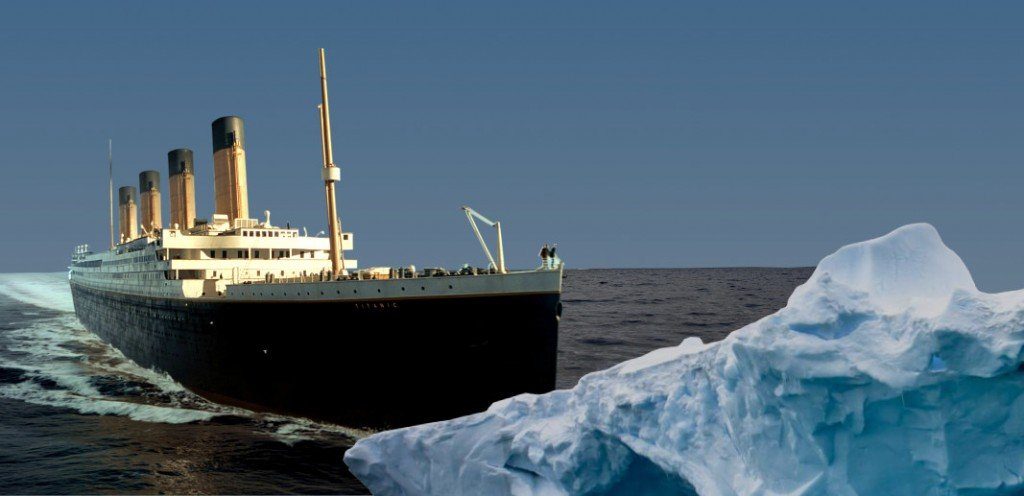
Why does ice float?

a)

water expands when it freezes, making ice less dense than water

b)

water compacts when it freezes, making ice more dense than water

c)

hydrogen bonds in water push the ice to the surface

d)

ice is afraid of water, and avoids it

56.
Which of the following is an example of a prokaryotic cell? 
a)
Virus 
b)
Plant Cell 
c)
Bacteria 
d)
Animal Cell 
57.
Directs all cell activities through the DNA located there.
a)
Lysosomes
b)
Nucleus
c)
ribosomes
d)
Mitochondria
58.
What are tiny organelles that convert glucose into ATP?
a)
Ribosomes
b)
Vesicles
c)
Cytoskeleton
d)
Mitochondria
59.
A rigid layer that lies outside the cell's  membrane is...
a)
Cytoskeleton
b)
Cilia
c)
Cell Wall
d)
Flagella
60.
Plants and animal cells are examples of ___ cells 
a)
prokaryotic cells 
b)
eukaryotic cells 
61.

RNA has what base that is instead of thymine?

a)

guanine

b)

adenine

c)

thymine

d)

uracil

62.
If one strand of DNA has the sequence TTACCG, the sequence of the other strand of the same molecule will be
a)
AATGGC
b)
TTACCG
c)
AACGGC
d)
AATGGG
63.
Where does transcription take place?
a)
nucleus
b)
cytoplasm
c)
ribosome
64.
RNA is read in sections called:
a)
Triplets
b)
Genes
c)
Codons
d)
Genes
65.
tRNA is involved in
a)
carrying amino acids 
b)
carrying ribosomes
c)
carrying glucose
d)
carrying lipids
66.

What enters and exits the Stomata?

a)

Oxygen and Carbon Dioxide

b)

Water and Nitrogen

c)

Sunlight and sugar

67.

Which 2 are outputs for photosynthesis?

(Pick 2)

a)

Carbon Dioxide

b)

Oxygen

c)

Water

d)

Sugar

e)

Sunlight

68.

Which of the following colors is not absorbed by chlorophyll pigments?

a)

green

b)

blue

c)

violet

69.

What side of the photosynthesis equation are the products of photosynthesis?

a)

right side

b)

left side

c)

over the arrow

70.

What is C6H12O6?

a)

carbon dioxide

b)

oxygen

c)

glucose

d)

water

71.

Which of the following is a product of Cellular Respiration?

a)

Glucose

b)

Oxygen

c)

ATP

d)

None of the answers are correct

72.

Besides ATP, what are the products of Cellular Respiration?

a)

Glucose and Water

b)

Water and Oxygen

c)

Water and Carbon Dioxide

d)

Carbon Dioxide and Glucose

73.

ATP Synthase: What 'powers' the ATP Synthase?

a)

Hydrogen Ion

b)

Water

c)

Sugar

d)

Sunlight

e)

ATP

74.

Chromosomes line up at the equator of the cell

Spindle fibers extend from the centrioles to the middle of the chromosomes

a)

Prophase

b)

Metaphase

c)

Anaphase

d)

Interphase

75.

Chromatids separate

a)

Anaphase

b)

Metaphase

c)

Prophase

d)

Telophase

76.
The stages of mitosis in order
a)
Metaphase, Anaphase, Prophase, Telophase
b)
Prophase, Anaphase, Metaphase, Telophase
c)
Prophase, Metaphase, Anaphase, Telophase
d)
Anaphase, Prophase, Telophase, Metaphase
77.

What process is being represented in this diagram?

a)

sexual reproduction

b)

mitosis

c)

meiosis

d)

DNA replication

78.

What process is being represented in this diagram?

a)

asexual reproduction

b)

mitosis

c)

meiosis

d)

DNA replication

79.

How many chromosomes does a sex cell have compared to a body cell?

a)

twice as many

b)

the same amount

c)

the same, but replicated

d)

half as many

80.
What is a producer?
a)
an organism that gets energy from eating other organisms
b)
an organisms that uses sunlight to make its own food
c)
an organism that gets energy from eating dead organisms, non-living material or waste
d)
an organism that uses chemical energy to make its own food
81.
In the energy pyramid here, which organisms have the most energy available?
a)
Producers
b)
Carnivores
c)
Herbivores
d)
Top Predator
82.
If there is 1000 Kcal available in the producers in trophic level 1, how much energy is available in the herbivores in trophic level 2?
a)
10 Kcal
b)
1 Kcal
c)
100 Kcal
d)
1000 Kcal
83.
The process of building up larger molecules from small ones is: 
a)
anabolism
b)
catabolism
c)
physiology
d)
cell division
84.

How many chromosomes make up our DNA?

a)

23

b)

46

c)

21

d)

42

85.
Arteries carry blood ______ from the heart.
a)
Away
b)
To
c)
Across
d)
Around
86.

This attaches bone to bone

a)

cartilage

b)

tendon

c)

ligament

87.

This attaches bone to muscle.

a)

cartilage

b)

tendon

c)

ligament